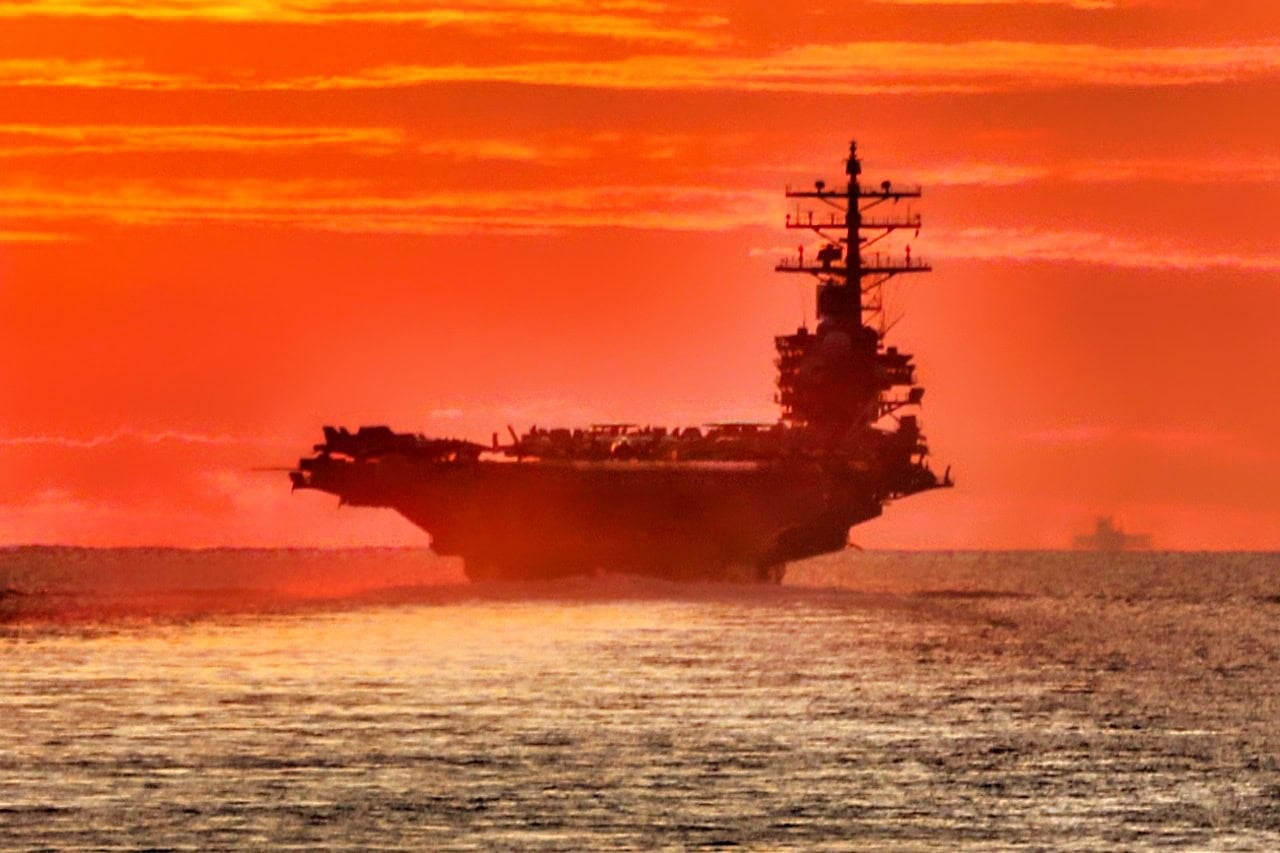
KC-135 Stratotanker

🇺🇸United States
The Boeing Company
1965 – Present
Spotlight

Six decades on, the KC-135 is still the backbone of U.S. global air refueling.

Inside the Air Force's Flying Gas Station | KC-135 Stratotanker (Sam Eckholm)

Watch on YouTube
Overview
KC-135 Stratotanker
The Boeing KC-135 Stratotanker is the centerpiece of the U.S. Air Force's aerial refueling capability, providing support to Air Force, Navy, Marine Corps, and allied nations for over 60 years.
Specifications

General

Crew4
Range Km17,727 km
Fuel Capacity Kg90,718 kg
Refueling Systemboom
Offload Capacity Kg68,039 kg

Other

Height M12.7
Length M41.53
Powerplant4 × CFM International CFM56 (F108) turbofans, 21,634 lbf each (KC-135R/T)
Wingspan M39.88
Max Speed Kmh853 (530 mph at 9,144 m)
Cargo Capacity Kg37,648 (83,000 lb max)
Service Ceiling M15,240
Max Takeoff Weight Kg146,285
Latest Developments
Oct 8, 2026strong signal
U.S. Air Force shows Morocco the F-35A it reportedly wants

The U.S. contingent also includes two aircraft on static display: an HC-130J Combat King II search-and-rescue plane from the Alaska Air National Guard’s 176th Wing at Joint Base Elmendorf-Richardson, and a KC-135 Stratotanker aerial refueling aircraft from the Utah National Guard’s 151st Wing.

Sep 30, 2026strong signal
Many awards for combat flying, few details in Iran war

The Air Force has confirmed that 23 KC-135 tanker pilots and crew have received DFCs during the conflict with Iran.

Sep 22, 2026strong signal
US Air Force F-16 Fighting Falcon Fighter Fleet is Getting a New Mission Computer

A U.S. Air Force KC-135 Stratotanker aircraft, assigned to the 100th Air Refueling Wing, refuels a Hellenic Air Force F-16 Fighting Falcon aircraft during exercise RAMSTEIN FLAG 2024 while flying over the coast of Greece

Sep 21, 2026strong signal
U.S. Air Force F-16s head to Greenland from Alaska

A U.S. Air Force photo released with the announcement shows F-16s taking fuel from a KC-135 Stratotanker over Greenland on Sept. 16.

Sep 15, 2026strong signal
Tanker fleet modernization will continue for decades, US Air Force officials say

The force primarily uses two tanker aircraft: the legacy KC-135 Stratotanker and the next-generation KC-46A Pegasus.

Sep 11, 2026strong signal
Why the Air Force tanker fleet is falling apart

Most of the jets are KC-135s, which are over 60 years old.

Sep 5, 2026weak signal
Trump Calls the Iran War ‘Small Potatoes.’ The Polling Says He Is Right

A U.S. Air Force KC-135 Stratotanker from Fairchild Air Force Base, Washington, refuels a B-52 Stratofortess from Barksdale Air Force Base, Louisiana, during a bomber task force mission over the Pacific Ocean, Dec. 17, 2022.

Featured Coverage
Research Notes

Jet tanker that made global air operations routine

high

The KC-135 turned aerial refueling into a core part of U.S. airpower and has remained in service for more than six decades.

The KC-135 Stratotanker is one of the quiet foundations of U.S. airpower. First delivered in the late 1950s, it gave Strategic Air Command and later the broader Air Force a jet tanker able to extend bomber, fighter, reconnaissance, airlift, and command aircraft operations.

The Air Force notes that Boeing's model 367-80 was the basic design for both the commercial 707 and the KC-135A. The National Museum of the U.S. Air Force describes the KC-135 as serving for more than sixty years as the USAF's principal refueling aircraft.

For HiWars, this page should not be treated as a simple transport-aircraft entry. The KC-135 is part of the infrastructure that makes long-range air operations possible.

Refueling as force multiplication

high

KC-135 capability is measured less by combat payload and more by how many other aircraft it lets reach, remain, and return.

A tanker changes the operational map. By transferring fuel in flight, the KC-135 lets fighters patrol longer, bombers strike farther, reconnaissance aircraft loiter, and airlift or command platforms reach distant theaters.

This means the aircraft's value is relational. A KC-135 sortie may not be visible in a strike headline, but it can determine whether combat aircraft have enough fuel to reach a target, wait for timing, divert around threats, or return safely.

The KC-135's boom refueling system, crew procedures, basing, maintenance, and tanker scheduling are therefore central to air campaign planning. The platform is a logistics aircraft, but it has direct operational consequences.

Aging fleet, re-engining, and KC-46 transition

high

KC-135 longevity is impressive, but fleet age, depot maintenance, and transition to newer tankers shape current readiness.

The KC-135's long service life is a strength and a warning. It shows the value of a durable design and repeated upgrades, but also means the fleet depends on aging airframes, maintenance capacity, parts availability, and careful modernization.

Re-engined KC-135R aircraft extended the aircraft's utility, but the U.S. tanker force is gradually transitioning toward newer KC-46 aircraft. That transition has to preserve enough tanker capacity because every fighter, bomber, and airlift plan depends on reliable refueling availability.

HiWars should connect KC-135 records to basing, tanker units, modernization status, and replacement planning. The tanker fleet is not glamorous, but it is one of the strongest indicators of real long-range airpower.

Key parameters at a glance

high

Figures are from the official U.S. Air Force fact sheet for the KC-135R/T.

Role
Aerial refueling tanker / airlift support
Manufacturer
The Boeing Company
First flight
August 1956 (KC-135A)
Service entry
June 1957, Strategic Air Command
Number built
732 (1957–1965)
Wingspan
39.88m
Max takeoff weight
146,285kg
Speed
853km/h at 9,144 m
Service ceiling
15,240m
Crew
3 (pilot, co-pilot, boom operator)

Program milestones

high

Publicly documented milestones across nearly seventy years of service.

1954-07Dash 80 prototype flies

Boeing's 367-80 demonstrator makes its first flight, providing the airframe basis for both the KC-135 tanker and the 707 airliner.

1956-08KC-135A first flight

The first production KC-135A flies on 31 August 1956, replacing propeller-driven KC-97s with a jet tanker matched to jet bombers.

1957-06First delivery

Castle Air Force Base receives the first operational KC-135A for Strategic Air Command alert refueling duties.

1965Production complete

Boeing delivers the last of 732 KC-135s; the fleet flying today was all built between 1957 and 1965.

1984-07KC-135R re-engining

The first CFM56-powered KC-135R is delivered; re-engining roughly doubles fuel offload at range and cuts noise and fuel burn. KC-135T aircraft are re-engined former KC-135Qs retaining separate body tanks.

2019-01KC-46A deliveries begin

The first KC-46A Pegasus tankers reach the Air Force, starting a slow recapitalization of the KC-135 fleet amid persistent Pegasus deficiencies.

2025Retirements constrained, service life extends

The Air Force scales back its stealthy NGAS concept in favor of additional KC-46 buys, while Congress restricts KC-135 retirements; officials acknowledge some KC-135s could approach 100 years in service.

Strategic significance

medium

The KC-135 is less a single aircraft than the load-bearing structure of American global airpower. Roughly 350-400 Stratotankers still make up the large majority of the U.S. tanker inventory, and virtually every long-range strike, fighter deployment, and airlift surge conducted by the Air Force, Navy, Marine Corps, and allied air arms depends on the fuel they pass. The boom system, supplemented by drogue adapters and wingtip multipoint pods on some aircraft, lets a single type service both Air Force and probe-equipped naval and coalition receivers.

That centrality is now also a vulnerability. The fleet was entirely built between 1957 and 1965, and while CFM56 re-engining and successive avionics upgrades have kept the KC-135R/T effective, average airframe age exceeds sixty years, with rising corrosion and parts-supply burdens. The KC-46A Pegasus was meant to relieve this pressure, but persistent deficiencies - most notably its remote vision system - have led Congress to constrain both KC-46 procurement and KC-135 retirements, keeping legally mandated tanker floors in place.

With the Air Force in 2025 scaling back its stealthy Next-Generation Air Refueling System concept in favor of additional KC-46 purchases, the realistic outlook is that the KC-135 remains operationally indispensable well into the 2040s, and possibly longer. Compared with other aging U.S. fleets, the Stratotanker's replacement path is unusually unsettled: any adversary strategy that targets tankers - as highlighted by attacks and dispersal concerns in recent conflicts - strikes directly at the oldest, least substitutable node in U.S. power projection.

Videos

KC-135 Stratotanker in Action – Aircraft Air Refueling (AiirSource Military)

Watch on YouTube

KC-135 Stratotanker Aerial Refueling F-16s (AIRBOYD)

Watch on YouTube

USAF B-52G Stratofortress and KC-135A tanker takeoff, 1989 archive footage (Bilibili)

Watch on Bilibili
Sources & References
Related Discussions

No discussions about KC-135 Stratotanker yet

Start the first discussion