
Many awards for combat flying, few details in Iran war

Source: Task & Purpose
Loading...Strong SignalCredibility: 81%
Report Content
At a recent ceremony at Langley Air Force Base, Virginia, six F-22 Raptor pilots were awarded Distinguished Flying Crosses, or DFCs, the military’s top award for valor in flight.
The pilots received the DFCs from one of the Air Force’s most senior officers, Gen. Adrian Spain, the commander of Air Combat Command. DFCs are the military’s highest award for flying, and the fourth-highest award of any kind, above the Bronze Star and Purple Heart.
“We haven’t awarded many of these in the last few decades, as it’s intended to recognize true heroism and highly exceptional accomplishment in flight, which means that it should be rare, and it is,” Spain said.
Along with a press release quoting Spain, the Air Force released several photos of the ceremony and the ribbons.
Only one thing was missing: the pilots.
The official pictures of the ceremony only show Spain beside an empty stage.
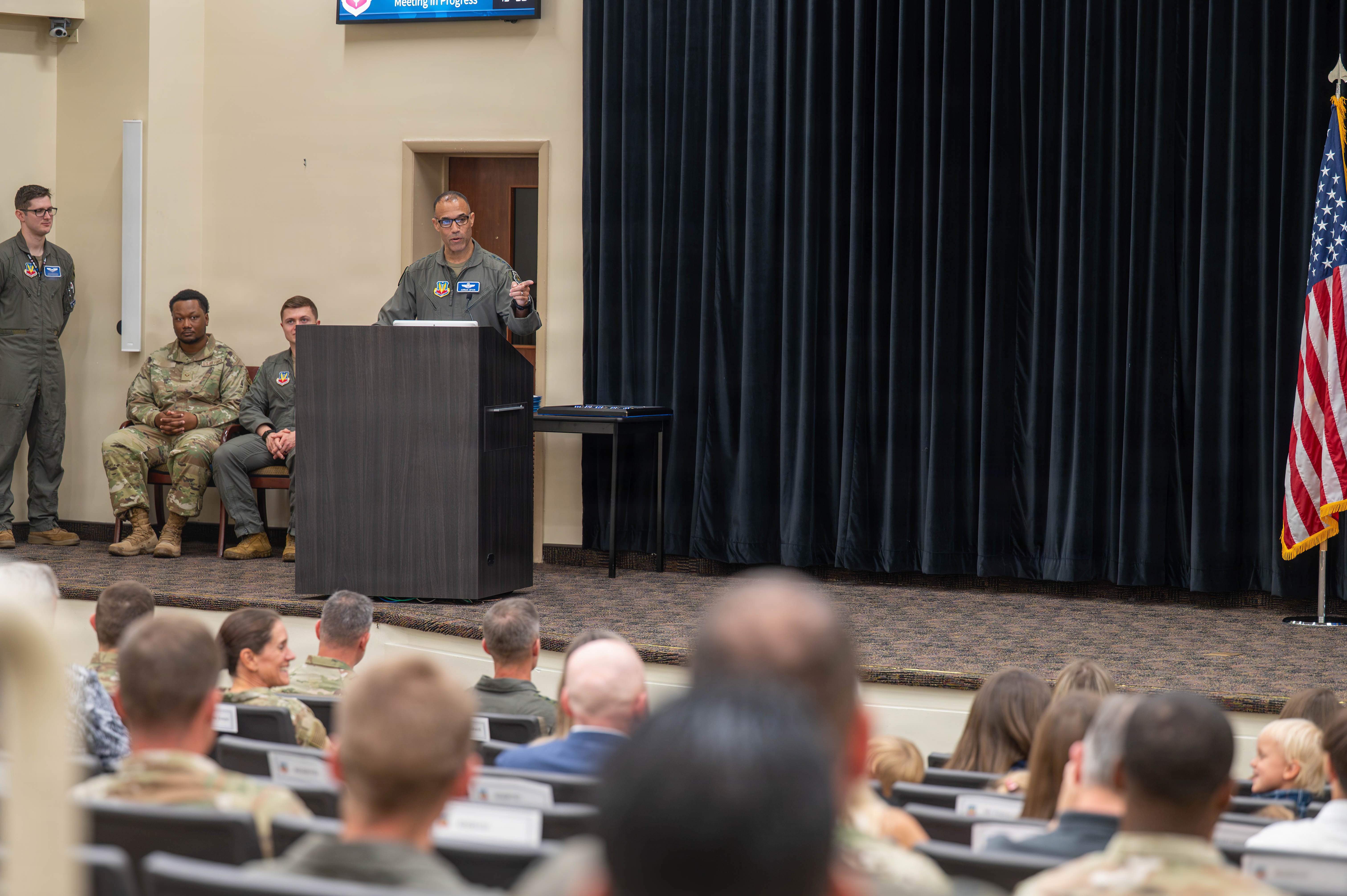 Gen. Adrian Spain, commander of Air Combat Command, speaks during a Distinguished Flying Cross presentation at Langley Air Force Base, Virginia, Aug. 31, 2026, in one of two photographs from the ceremony released by the Air Force without the pilots. Air Force photo by Airman 1st Class Kaden Ciminnisi.
The details of the award were similarly sparse.
“The ceremony highlighted the actions of the warfighters and the role their efforts played in advancing the 1st FW’s mission,” the release said. Spain added: “Their job was to provide air superiority. The bombers and the rest of the support package relied on these Raptor pilots to clear the skies, shield them from surface threats, and ensure a safe route through heavily contested airspace.”
The Air Force did not release the detailed award citations that typically cite the actions that merit an award.
“In the interest of operational security, the [1st Fighter Wing] will not release pilot or any further mission details,” an Air Force official said in an email response to Task & Purpose questions about when the awarded flight took place. Captions on the photographs mentioned the missions supported the June 2025 Operation Midnight Hammer.
A similar announcement covering a DFC awarded to a seventh unidentified F-22 pilot in Essen, Germany, was released Sept. 30 with no indication when the mission occurred or what actions the pilot took.
Top Stories This Week
That lack of information on major flying awards has been a trend in the Air Force over the course of the Iran war.
Since Air Force pilots began flying active combat missions against Iranian missile and drone attacks in April 2024, the service has announced the awards of 76 DFCs to 75 pilots and aircrew for combat flights (one airman received two DFCs for two separate flights). The awards have come at 15 bases, given out to groups ranging from a single fighter pilot in Alaska to 12 tanker pilots and boom operators at a single ceremony at Fairchild Air Force Base, Washington.
Of those, the Air Force has released virtually no information for 11 of those awards. Along with the seven anonymous F-22 pilots, the Air Force released no information on two DFCs awarded to F-16 pilots with the 510th Fighter Squadron at Aviano Air Base, Italy, in June 2025. The same is true for two pilots who appear to have received DFCs this month from Air Force Chief of Staff Kenneth Wilsbach at Spangdahlem Air Base, Germany.
Valor awards play a long-standing and important role in how the public understands American wars and the hardships that military members endure to fight them. As recently as the evacuation of Kabul in 2021, some of the first public insight into the dangers and chaos of the operation emerged from citations for DFCs awarded to aircrews. During the Iran war, the Pentagon has continually reduced press access to its inner workings, and — unlike nearly every conflict since World War II — no U.S. reporters are embedded or hosted by American forces fighting the war.
Still, the government has not been shy to use valor awards to capture the public’s attention. In February, President Donald Trump made the Medal of Honor awarded to an Army special operations pilot and details of the Venezuela raid behind it a centerpiece of his State of the Union address.
But with some exceptions, the Air Force has been more closed-lipped about the missions that its pilots have flown and the dangers they’ve faced against the Iranian military.
Beyond public recognition, a DFC factors into an airman’s chances at future promotions. For officers, a DFC can play prominently in review boards that determine promotions. For enlisted airmen, who earn promotion on a points scale, having a DFC carries more weight than either the Purple Heart or Bronze Star, and can, depending on the stage of an airman’s career, count for more than an extra year of experience.
However, what the public has been told about those awards, and the combat that led to them, varies significantly between the awards.
A war for tanker crews
During previous Middle East wars, DFCs for tanker crews were virtually unheard of. A crew that received the award in 1991’s Desert Storm did so for a flight in which two of the plane’s engines were ripped off by turbulence, not enemy action.
But at least to some extent, the Iran war — in which fighters patrol airspace twice the size of Texas and bombers have flown from bases in the continental U.S. — has been a tanker war.
Notably, the only Air Force personnel killed so far in the war were six KC-135 crew members who died in a mid-air collision. And in a state-of-the-force-style speech last month, Wilsbach noted an instance of heroic flying by tanker crews, pushing into poor weather and refueling a fuel-hungry B-1 bomber. Darkness and a fuel leak, Wilsbach said, forced crews to “refuel by Braille,” taking directions from the tanker crew to connect the planes.
“A bomber pilot who couldn’t see depended on a tanker crew to guide him,” Wilsbach said.
In all, the Air Force has confirmed that 23 KC-135 tanker pilots and crew have received DFCs during the conflict with Iran, including 11 with the Tennessee Air National Guard, six with the 6th Air Refueling Wing at MacDill Air Force Base, Florida, five with the 100th wing at Mildenhall Air Base, England, and one at Scott Air Force Base, Illinois (at least some of those were given to flyers at bases different from those they were assigned to during their DFC missions).
But in many of those cases, the Air Force has not shared details on the missions that earned those awards.
In March, the 92nd Air Refueling Wing awarded DFCs to 12 of its pilots and crew, all with either “V” or “C” devices. A “V” device on a DFC, according to the award’s requirements, means the flights were conducted “in direct combat … with exposure to enemy hostilities and personal risk.” A “C” device, which was introduced to the award in 2016, means the mission was “exposed to hostile action or under significant risk of hostile action.”
Among the recipients was Staff Sgt. Gabrielle Stallings, a boom operator, who was awarded two of the medals, one each with ‘V’ and ‘C’ devices, for two separate missions.
However, what Stallings and the rest of the crews did to earn their awards remains unclear. Officials with the wing did not release citations for any of the awards, or make Stallings or any 92nd Wing leaders available to discuss the awards with either Task & Purpose or a reporter from the Spokesman-Review newspaper who was denied entry to the ceremony.
“Sgt. Stallings received two DFCs, one with a ‘C’ device and another with a ‘V’ device,” Fairchild spokesperson said in response to Task & Purpose’s request for details on the flights that led to Stallings two awards, such as when the flights occurred. “Due to operational security, the only information we can provide at this time can be found in our [press release].”
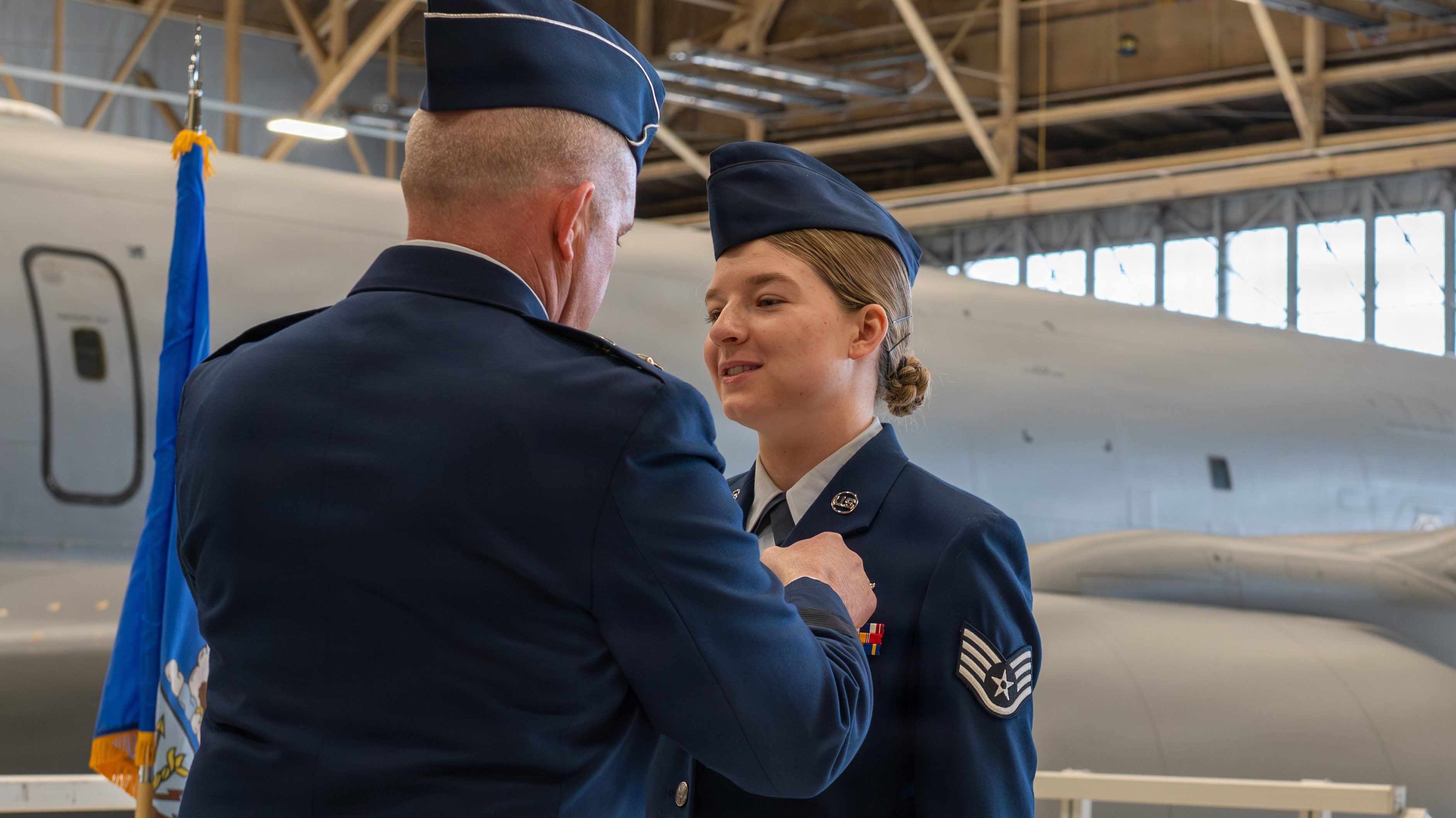 Maj. Gen. Charles Bolton, Eighteenth Air Force commander, pins the Distinguished Flying Cross with “C” Device on Staff Sgt. Gabrielle Stallings, 93rd Air Refueling Squadron KC-135 boom operator, one of two DFCs Stallings received in March at Fairchild Air Force Base, Washington. Air Force Photo by Airman 1st Class Gabriel Conley.
However, a congressman who did attend told the Spokesman-Review that the awards were for Midnight Hammer.
Staff members for Washington Sens. Maria Cantwell and Patty Murray also attended. An aide for Cantwell said the air of secrecy around Air Force awards had caught her boss’ eye.
“The senator has been concerned for some time about the increased limitations on press access to (Department of Defense) issues where appropriate,” Ansley Lacitis, a spokeswoman for Cantwell, told the paper in a statement.
The remainder of the Air Force’s DFC awards have gone to fighter pilots, including 35 to F-16 pilots, 6 to F-35 pilots at Hill Air Force Base, Utah, and 8 to F-15E Strike Eagle pilots based at Seymour-Johnson Air Force Base, North Carolina.
Of those publicly announced awards, the Air Force confirmed most of the names of the pilots and aircrew, but provided few details of the flights.
As for the F-22 pilots at Langley, the veil of secrecy over their DFCs was partially pierced days later by a small newspaper in a midwestern town with a population of just over 3,000 residents. The paper’s only editor noticed a Facebook post by a longtime friend about a trip to Virginia for an award ceremony for an Air Force fighter pilot. The editor asked permission to write about the pilot, referring to them by their graduation year from the local high school.
In the constant quest for operational security, few secrets are invulnerable to a proud mom.
The post Many awards for combat flying, few details in Iran war appeared first on Task & Purpose.
Classification
Region
North America, Europe
Analytical Domain
Operational
Primary Category / Secondary Categories
Military Operations / Casualties & Losses
SALUTE Report
Size
76 Distinguished Flying Crosses awarded to 75 pilots and aircrew
Activity
Award ceremony for combat flying valor
Location
Langley Air Force Base · Virginia · Essen · Germany · Aviano Air Base · Italy · Spangdahlem Air Base · Germany · Fairchild Air Force Base · Washington · Mildenhall Air Base · England · Scott Air Force Base · Illinois
Unit
U.S. Air Force
Time
August 31, 2026
Equipment
F-22 RaptorF-16F-35F-15E Strike EagleKC-135
Summary
Six F-22 Raptor pilots received Distinguished Flying Crosses at Langley Air Force Base, Virginia, on August 31, 2026, recognizing their valor in combat operations. Since April 2024, the U.S. Air Force has awarded 76 DFCs to pilots and aircrew for their roles in combat against Iranian missile and drone attacks. However, details regarding the specific missions and actions taken by the awarded pilots remain largely undisclosed due to operational security concerns.
Key Facts
- Six F-22 pilots awarded Distinguished Flying Crosses at Langley Air Force Base on August 31, 2026.
- 76 DFCs awarded to 75 pilots and aircrew since April 2024 for combat flights against Iranian threats.
- Operational security has limited the release of details regarding the missions that led to the awards.