
004 Aircraft Carrier Dalian Dock Shaped, PLA Nuclear-Powered Deck Still Has Three Hurdles to Overcome
 Li Minghui
The 004 Aircraft Carrier in Dalian Dock Takes Shape: The PLA's Nuclear-Powered Deck Still Faces Three Hurdles
On May 21, the CSIS Hidden Reach project released a set of commercial satellite images of the Dalian Shipyard, stating that China's fourth aircraft carrier has transformed from "suspected segments" to a "clearly identifiable hull." This detail is more interesting than the question of "whether it is nuclear-powered" itself. Because an aircraft carrier is never just a single ship competition; it is a combination of industrial rhythm, carrier aircraft maturity, personnel training, and long-range support capabilities.
Three Signals from Satellite Images
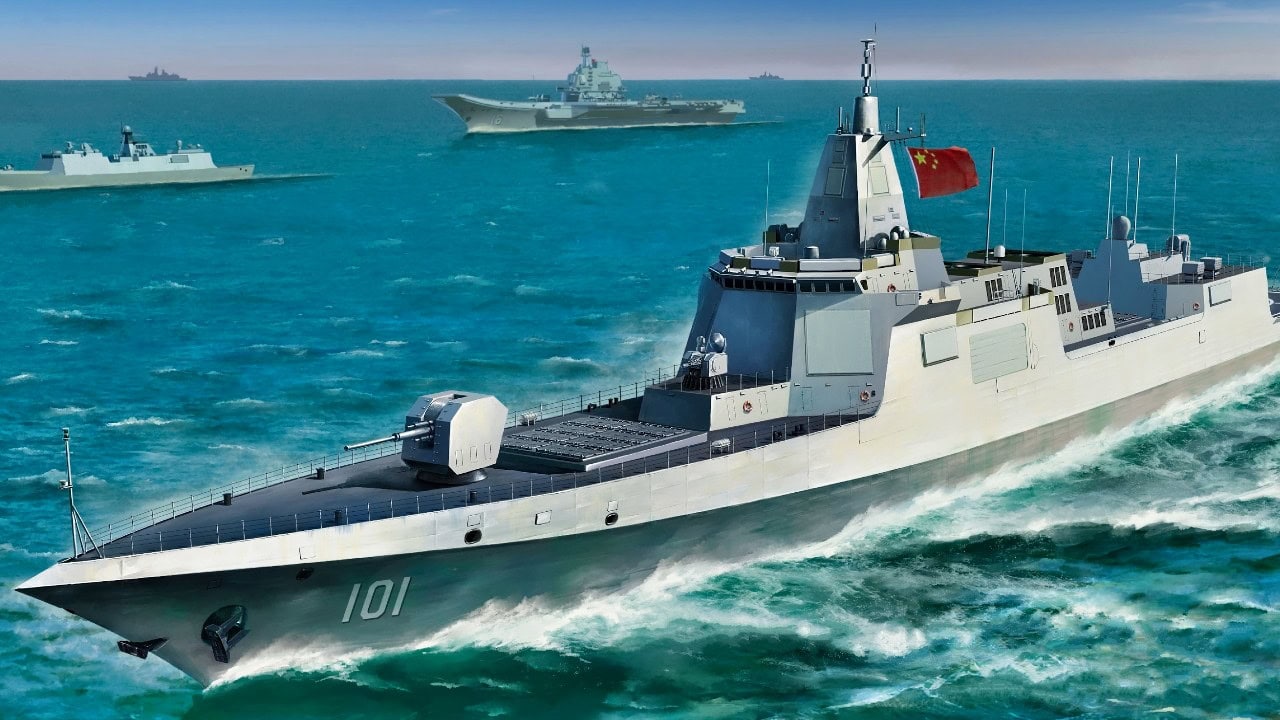
CSIS's assessment is based on changes in dock images from early 2025 to May 2026: prefabricated hull segments have formed a distinct aircraft carrier outline in less than a year; in the May 4 images, two approximately 15-meter square compartments appeared within the hull, believed to have the appearance characteristics of a shielded nuclear reactor compartment; the U.S. Department of Defense had previously assessed that China might have six more aircraft carriers by 2035, bringing the total to nine.
I believe the first two signals can be discussed, but the third number should be approached with caution. Satellite images can see steel but cannot see institutional costs. Nine aircraft carriers are not just nine hulls, but nine sets of carrier aviation, nine sets of nuclear or conventional power maintenance systems, and nine sets of long-range supply and training cycles. Chinese shipyards are indeed fast at assembling segments, but that does not mean the navy can digest them simultaneously.
The Real Breakthrough is Not Tonnage
If the 004 is indeed a nuclear-powered aircraft carrier, it addresses two issues. The first is range and sustained high-speed maneuverability; the fleet does not need to frequently replan its rhythm around fuel resupply like conventional carriers. The second is power redundancy, making it easier to obtain a stable power source for electromagnetic catapults, integrated electric propulsion, high-power radars, and even future directed energy systems.
However, nuclear power is not a free lunch. The experiences of the U.S. Nimitz and Ford classes show that reactors, steam or power conversion, hull shielding, nuclear safety personnel, and overhaul cycles will widen the gap between "can be built" and "can be operated smoothly." In simple terms, a nuclear-powered aircraft carrier is like equipping the fleet with a large server that never shuts down; as computing power increases, the data center, cooling, and maintenance teams must also be upgraded.
The Fujian Ship Has Not Fully Paved the Way for the 004
The 003 type Fujian ship has pushed China's aircraft carriers from ski-jump decks to electromagnetic catapult decks, which is a step that the 004 must cross beforehand. The problem is that the Fujian ship addresses "launching," while the 004 still needs to solve "launching at high intensity, with low failure rates, and sustainably." If the carrier-based J-35, J-15T, KJ-600, and drones cannot form a stable sortie rate, even the largest deck is just an expensive parking lot.
This is also why I hold a reserved attitude towards the "nine aircraft carriers by 2035" claim. The Chinese navy has made rapid progress in hull platforms over the past few years, and CSIS's statistics from February also show that the Liaoning and Shandong aircraft carriers operated a total of 58 days outside the first island chain in 2025, up from 32 days in 2024, with sorties of carrier-based aircraft and helicopters estimated to increase from 1,240 to 1,680. This trend indicates that training intensity has increased, but there is still a distance from the long-accumulated cyclical deployment system of U.S. carriers.
Daily Pressure in the Taiwan Strait and Long-Range Carriers are Two Separate Accounts
On May 22, Taiwan's defense department reported that in the past 24 hours, six PLA military aircraft and ten PLA warships were detected operating around the Taiwan Strait, with all six aircraft entering Taiwan's northern, southwestern, and eastern airspace. This kind of daily maritime and aerial pressure relies more on land-based aviation, rocket forces, coastal radars, and near-sea vessels. Carriers are certainly useful in the Taiwan Strait, but they are more like tools for external line restraint rather than the main actors in the first wave.
Therefore, the value of the 004 lies mainly not within the inner circle of the Taiwan Strait, but in the second island chain, the entrance to the Indian Ocean, and the far seas of the Western Pacific. If a nuclear-powered aircraft carrier is established, the Chinese navy will gain the ability to stay longer in the outer line, which will also force the U.S., Japan, and Australia to recalculate the consumption rates of anti-submarine, long-range anti-ship, and base protection operations.
Shortcomings Still Exist Below the Deck
Outsiders tend to focus on whether the 004's displacement exceeds 100,000 tons or approaches the Ford class. However, from an engineering perspective, we should pay more attention to three less obvious issues: whether the safety redundancy of shipboard nuclear power is mature; whether the engines of carrier-based aircraft and airborne early warning systems can support high-frequency sorties; and whether shipyards like Dalian and Jiangnan can maintain the rhythm of building the 055, 052D, amphibious assault ships, and commercial ship orders while constructing aircraft carriers.
If these questions are answered well, the 004 will be a key point for the Chinese navy to truly move towards a regular presence in the far seas. If answered poorly, it may become a very beautiful, very expensive platform, but with a long training cycle. What is truly worth watching is the less obvious aspects in the next set of satellite images—whether the reactor compartment continues to be sealed, whether the catapult track reservation is clear, and whether the size of the island indicates that China has made a final choice regarding the KJ-600 and drones being deployed on board.
China's fourth aircraft carrier is visibly taking shape at the Dalian shipyard as of May 21, 2023, indicating advancements in its construction and potential nuclear capabilities. The U.S. Department of Defense has assessed that China could possess nine aircraft carriers by 2035. However, operational challenges regarding aircraft deployment and maintenance persist, highlighting the complexities of integrating new naval technologies.
- China's fourth aircraft carrier is taking shape at Dalian shipyard.
- The carrier may feature a nuclear reactor compartment.
- The U.S. estimates China could have nine aircraft carriers by 2035.
- The Fujian aircraft carrier has advanced China’s capabilities with electromagnetic catapults.
- Operational challenges remain regarding aircraft deployment and maintenance.