
U.S. Marine Corps HIMARS Fires 12 Rounds at Fuji, Materializing Island Deterrence for 2026
 Tanaka Takashi
US Marine Corps HIMARS Fires 12 Rounds at Fuji, Solidifying Island Deterrence for 2026
At the Gotemba training area, two HIMARS emerged from the forest and fired 12 rounds before quickly changing their position. This movement over a few minutes was less a flashy display of firepower and more a small experiment demonstrating what the US Marine Corps is attempting to implement within Japan along the first island chain.
Second HIMARS Live Fire at Fuji
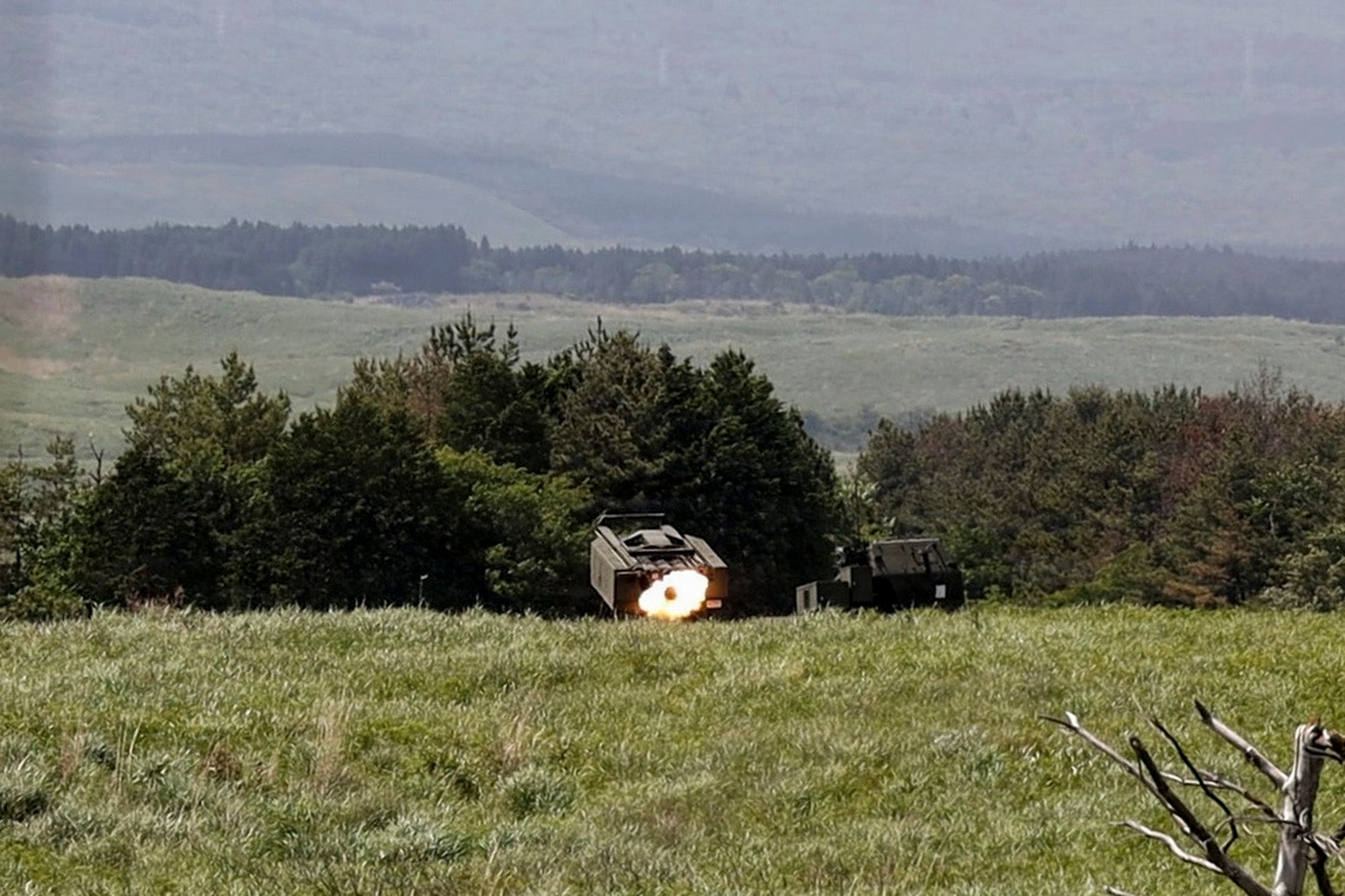
According to DVIDS, the 3rd Battalion, 12th Marine Regiment, 3rd Marine Division conducted HIMARS live-fire training at the Combined Arms Training Center at Camp Fuji on May 20. The Associated Press reported that a total of 12 rounds were fired, and some roads in the Fuji East training area were closed for safety reasons. This marks the second consecutive year of HIMARS live fire at Fuji, and while it cannot yet be considered routine training, it is moving beyond the stage of being an exceptional spectacle.
HIMARS is a vehicle-mounted launcher that typically operates GMLRS-type rockets. The range varies depending on the type of ammunition, but the focus of this training should be seen as being on the procedures of concealment, deployment, firing, and withdrawal rather than the effects of live ammunition. As demonstrated in the Ukraine war, in a battlefield where drones and counter-battery radar are prevalent, the minutes following a launch can determine survivability.
Connection to Japan's Defense
The US announcement emphasized that the terrain, firing range capacity, and safety facilities at Fuji are suitable for long-range firepower training. This is not merely an assessment of facilities. It means that the 3rd Marine Division, based in Okinawa, can repeatedly conduct firepower operations using training bases on Honshu to prepare for crises around the southwestern islands and Taiwan.
The Japan Ground Self-Defense Force is also expanding its Type 12 anti-ship missile capabilities. During Balikatan 2026 in the Philippines, the JGSDF fired the Type 88 anti-ship missile for the first time overseas. While the US Marine Corps' HIMARS and the JGSDF's anti-ship firepower are separate systems, they face the same challenge of needing to share target information, fire control, and movement routes in the confined spaces of island areas.
Strengths and Weaknesses of Deterrence
The signal this training sends to China is clear. The US military is attempting to demonstrate its ability to operate mobile firepower from within Japan, not relying solely on fixed bases for its strike capabilities. However, in my view, the range of HIMARS should not be overestimated. The essence lies not in the ability to strike the Taiwan Strait from Fuji, but in testing the system and political tolerance for the dispersal of launchers, ammunition, and maintenance personnel within the Japanese archipelago.
This type of training enhances the operational viability of the US-Japan alliance while quietly increasing the burden of rear support on the Japanese side. Road closures, resident briefings, ammunition storage, and responsibility sharing in the event of an accident do not appear on operational maps. From the perspective of the Japan Maritime Self-Defense Force, the increase in land-based firepower supporting SLOC (Sea Lines of Communication) defense is welcome. However, if ammunition resupply becomes concentrated at ports and roads, those locations could become vulnerabilities.
Unresolved Issues
DVIDS states that in the future, they will also refine HIMARS Rapid Infiltration, which involves rapid deployment procedures via aircraft. The question here is not about the performance of the launchers, but rather how far Japanese bases, civilian airports, ports, and local governments can move at the same pace.
It has been confirmed that 12 rounds can be fired at Fuji. What remains unconfirmed is where, under whose judgment, and through which roads those same 12 rounds would be transported on the first day of a crisis. The gap in deterrence lies not in a lack of firepower, but in the more mundane aspect of whether peacetime procedures can withstand the speed of wartime.
Main Sources
- DVIDS, CATC Fuji HIMARS Live-Fire Training, 20 May 2026
- Associated Press, U.S. test fires mobile rocket system near Mount Fuji, 20 May 2026
- Stars and Stripes, Marines test-fire HIMARS near Mount Fuji, 20 May 2026
U.S. Marines conducted a live-fire training exercise with HIMARS, firing 12 rounds at Mount Fuji on May 20, 2026. This exercise, involving two HIMARS units, aimed to enhance operational readiness and deterrence capabilities in the region. The training emphasized deployment and withdrawal procedures, reflecting a shift towards mobile firepower in Japan.
- U.S. Marines fired 12 rounds from HIMARS at Mount Fuji.
- The exercise was part of a training to enhance deterrence capabilities in the region.
- The training focused on concealment, deployment, firing, and withdrawal procedures.
- The exercise is part of ongoing military readiness efforts in Japan.
- The training signals U.S. military capabilities to operate from within Japan.