
113 Drones and "Iskanders" Over Ukraine — Russia's Strategy for Overloading Air Defense in Autumn 2026
 Dmitri Volkov
113 drones and "Iskanders" over Ukraine — Russia's strategy of overloading air defense in autumn 2026
One hundred thirteen drones in a single night — a figure that better describes the current logic of the Russian air campaign than any statement. On the night of October 30, Russia also used "Iskander-M" missiles, S-400, and KN-23 against Ukraine, as well as four cruise missiles X-59/69 (according to the ISW report published on October 30). This is not a separate raid or an attempt to solve an operational task with one strike. We are witnessing a method of systematic overload of Ukrainian air defense, combined with pressure on energy and oil infrastructure.
It is important to separate established facts from military propaganda. ISW notes the very combination of means of destruction and the continuation of the Ukrainian campaign of long-range strikes against Russian oil infrastructure and military facilities on October 29–30. The Ukrainian Ministry of Defense, for its part, reported by October 31 about nearly 1.588 million Russian servicemen counted in the assessment of total losses since the beginning of the full-scale war, and about 590,661 destroyed operational-tactical UAVs. These figures are data from one side of the conflict and require cautious handling. But even with this caveat, they show the scale at which the drone has ceased to be an auxiliary means and has turned into a consumable unit of war.
"Shahed" as a tool of munitions economy
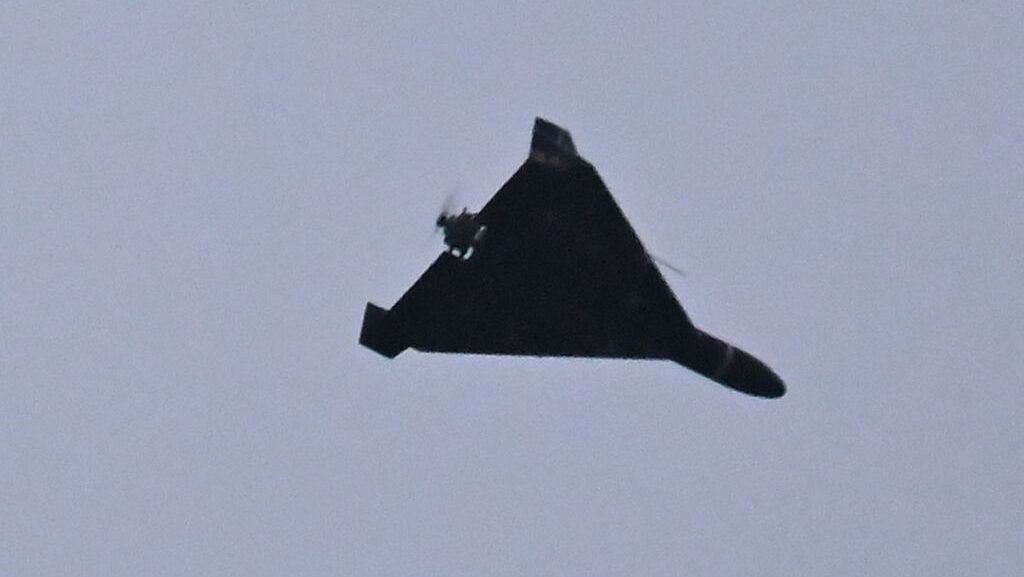
Russia's bet on the mass use of "Geran" — the Russian version of the Iranian Shahed line — has a rational, albeit brutal economic basis. The cheap long-range device forces the defending side to choose between an expensive interceptor missile, a mobile fire group, electronic warfare, and the risk of missing the target. In Soviet military theory, saturating air defense was seen as a condition for breaking through to an important target. Today, this idea has taken on a digital form: instead of a single massive airstrike, Moscow creates a stream of small targets, changing routes, altitudes, and time intervals.
However, economic logic does not imply automatic effectiveness. A low launch price does not guarantee hitting the target, and a large number of devices requires a stable production chain, engines, navigation electronics, and operators. Therefore, each night becomes both a combat operation and a test of industrial endurance. Russia has an advantage in scale, but Ukraine is gradually turning defense into a multi-layered system, where expensive missiles are used for the most dangerous targets, while cheap interceptors and electronic warfare are used against some drones.
Why "Iskanders" are added to drones
The combination of 113 drones with ballistic and quasi-ballistic means of destruction is more important than the sum of individual types of weapons. "Iskander-M," KN-23, and S-400 missiles reduce reaction time and complicate the work of air defense calculations. The "Shaheds," meanwhile, create a background, forcing the activation of radar systems, revealing positions, and distributing attention among dozens of targets. This is a classic saturation task, but with a nod to the modern transparency of the battlefield: the Russian side is simultaneously trying to detect where exactly Ukraine is expending scarce interceptors.
Here, the institutional peculiarity of the Russian doctrine manifests itself. It still prefers to measure pressure by the number of launches and the depth of destruction, rather than the accuracy of achieving political goals. This approach resembles the late Soviet belief that additional mass of fire compensates for a lack of flexibility. But the war of 2026 shows the limits of this model: strikes on infrastructure may increase the cost of Ukrainian defense, but they do not guarantee either a breakthrough on the front or sustainable destruction of Ukrainian governance.
Ukraine's response and limits of Russian adaptation
ISW noted that on October 29–30, Ukrainian forces continued long-range strikes against Russian oil infrastructure and military facilities. There is a mirrored logic in this. Kyiv does not attempt to symmetrically respond to every launch; it selects targets that determine Russia's ability to sustain the war — fuel processing, logistics, warehouses, and command nodes. The Russian command is forced to expend some air defense efforts far from the front line, while industry must distribute resources between replenishing losses and protecting the rear.
That is why reports on the number of downed drones explain little on their own. The key question is how many missiles were intercepted, at what cost, which objects were damaged, and how many hours were required for recovery. The official victory report, as usual, loves one indicator. The military reality consists of a chain of indicators, and the most inconvenient of them is the cost of repeating the operation in a week.
My forecast is cautious. Russia will retain the ability to conduct large mixed raids in the coming months, as long as the production of "Gerans" and missiles does not face stricter component and budget constraints. But mass strikes alone do not create superiority: they merely buy time and force Ukraine to expend resources. If Kyiv continues to expand the cheap layer of interception while simultaneously striking Russian fuel infrastructure, the Russian strategy of overloading air defense will remain dangerous but will cease to be one-sided. This will be a war of attrition of production systems — and in it, the volume of nighttime salvos does not yet equate to a strategic result.
Sources
- Institute for the Study of War, Russian Offensive Campaign Assessment, October 30, 2026, summarized by Kyiv Post.
- Ministry of Defense of Ukraine, summary of total Russian losses as of October 31, 2026.
- RBC-Ukraine, "Russia's losses in Ukraine as of October 31," October 31, 2026.
Russia launched a coordinated airstrike involving 113 drones and various missiles against Ukraine on October 30, 2026, aiming to overload Ukrainian air defenses and target energy infrastructure. This operation included the use of Iskander-M missiles, S-400, and KN-23 systems. Ukrainian forces reported significant Russian military losses, while continuing their own strikes on Russian oil facilities.
- 113 drones were deployed in a single night by Russia against Ukraine.
- Russia used Iskander-M missiles, S-400, and KN-23 in the operation.
- Ukrainian Ministry of Defense reported significant Russian military losses, including 590,661 destroyed tactical drones.
- The operation aims to systematically overload Ukrainian air defenses and pressure energy infrastructure.
- Ukraine continues to conduct long-range strikes against Russian oil infrastructure.