
The First Island Chain Defense Confirmed by Japan-U.S. Defense Ministers: Practical Issues Highlighted by the Philippines Meeting
 Tanaka Takashi
Japan-U.S. Defense Ministers Confirm Denial Defense of the First Island Chain, Practical Issues Highlighted by Philippines Meeting
On October 28, a Japan-U.S. defense ministerial meeting was held in Cebu, Philippines. Defense Minister Shinjiro Koizumi and U.S. Secretary of Defense Pete Hegseth confirmed that this is not merely a statement of alliance strengthening. With China's military activities in mind, they are moving towards a considerably specific operational direction to implement "effective denial defense" along the First Island Chain.
Significance of the Cebu Meeting
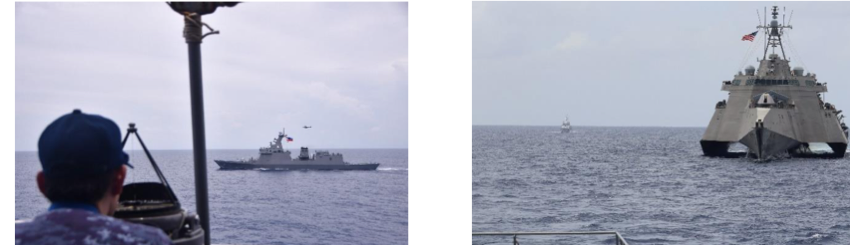
According to the Mainichi Shimbun (distributed by Kyodo News), both ministers confirmed the expansion of defense investments and strategic alignment, with the Japanese side explaining that they would revise security strategy-related documents by the end of the year. The fact that the meeting took place in the Philippines, rather than in Japan or the United States, is significant. The First Island Chain is beginning to be treated as an operational space that does not end with the Japanese archipelago but includes Taiwan, the Philippines, and maritime routes in the South China Sea.
Separating Capability and Intent
The foundation of denial defense lies in long-range strike capabilities such as the Type 12 surface-to-ship guided missile enhancement, the Japan Maritime Self-Defense Force's escort ships and submarines, the Japan Air Self-Defense Force's F-35A/B, and the U.S. military's ISR (Intelligence, Surveillance, and Reconnaissance) and integrated air defense. If the goal is merely to extend range, it may seem like a procurement issue. However, to actually keep enemy vessels away from the maritime area in combat, it becomes crucial to determine who obtains target information, which command approves it within what timeframe, and how to update information for re-attack after firing.
There is no need to overestimate China's intentions. The activities of coast guard ships and naval vessels do not immediately imply the use of force. However, the continuous approach, information gathering, and pressure in maritime and air domains during peacetime will certainly shorten the initial response time in a crisis. Japan's stand-off defense serves as a deterrent to that pressure while also requiring political management to avoid misjudgments.
Overlooked Issues in the Rear Area
Collaboration with the Philippines is inseparable from the protection of SLOC (Sea Lines of Communication), which includes bases, ports, fuel, ammunition, and repair capabilities. Even if the launch units in the southwestern islands are high-performance, if the supply bases are weak, denial defense will end with a single volley. Additionally, measures to prevent recurrence following incidents involving U.S. Marines in Okinawa were also discussed. Losing support from the local population would undermine the very premise of dispersed deployment and sustained operations.
In my view, the weakness of the First Island Chain lies not in a lack of missiles but in whether political decisions, information sharing, and logistics can move at the same speed.
Conclusion
The Cebu meeting is a step towards expanding the Japan-U.S. alliance from the framework of "Japan's defense" to a maritime denial network that includes the Philippines. However, to transform the collaborative lines on the map into actual operations, mundane issues such as command authority, base resilience, and ammunition stockpiling must be resolved first. The most realistic risk is entering a crisis without having completed preparations to implement the defense agreed upon by the alliance.
References
- Mainichi Shimbun / Kyodo News "Japan, US defense chiefs meet in Philippines to boost security alliance" October 28, 2026
- Ministry of Defense "Japan-U.S. Defense Ministerial Meeting (Summary)" October 2026
- Ministry of Defense and Ministry of Foreign Affairs "Japan-U.S. Security Arrangements"
Japan and the United States confirmed effective denial defense along the First Island Chain during a defense ministerial meeting in Cebu, Philippines on October 28, 2026. The ministers discussed expanding defense investments and strategic alignment, with Japan planning to revise its security strategy documents by year-end. The meeting emphasized the operational space of the First Island Chain, which includes Taiwan and the South China Sea, and the need for robust logistics and political management in defense preparations.
- Japan and the U.S. confirmed effective denial defense along the First Island Chain.
- The meeting took place in Cebu, Philippines on October 28, 2026.
- Japan plans to revise its security strategy documents by the end of the year.
- The First Island Chain includes Taiwan, the Philippines, and the South China Sea.
- The report highlights the importance of logistics and political management in defense preparations.