
Full Replacement with Domestic Engines: Core Details Analysis of the J-20 Family Iteration
For ten years, the J-20 has never stopped upgrading. From using imported engines to fully switching to domestically produced engines, from a single-seat air superiority fighter to a dual-seat intelligent collaborative model, the J-20 family continues to iterate and upgrade.
Aviation engines are known as the jewels of the industrial crown and are the most critical components of a fighter jet. At the 2021 Zhuhai Airshow, the J-20 equipped with domestically produced engines made its public debut, marking the most significant breakthrough in its decade-long iteration.
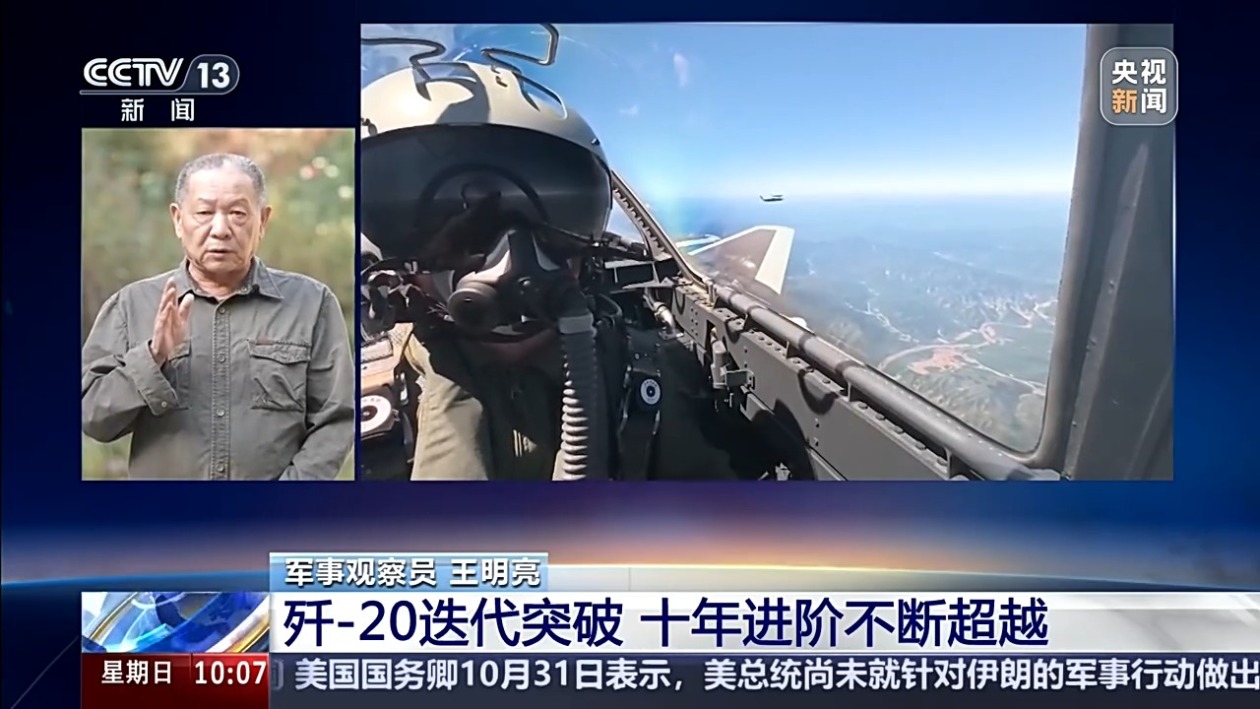
Military Observer Wang Mingliang: Everyone knows that the engine is the heart of the aircraft. After switching to domestically produced engines, its power has become even stronger. For the aircraft itself, it can provide faster speeds, enable long-duration supersonic cruising, and allow for greater overload maneuverability. It has achieved autonomous and controllable power. Another important significance is that it provides a foundation for developing the next generation of more advanced fighter jets.
Based on the switch to domestic power, the single-seat version has been upgraded to the J-20A, optimizing its aerodynamic shape and avionics perception system, with a greater focus on high-speed air superiority strikes.
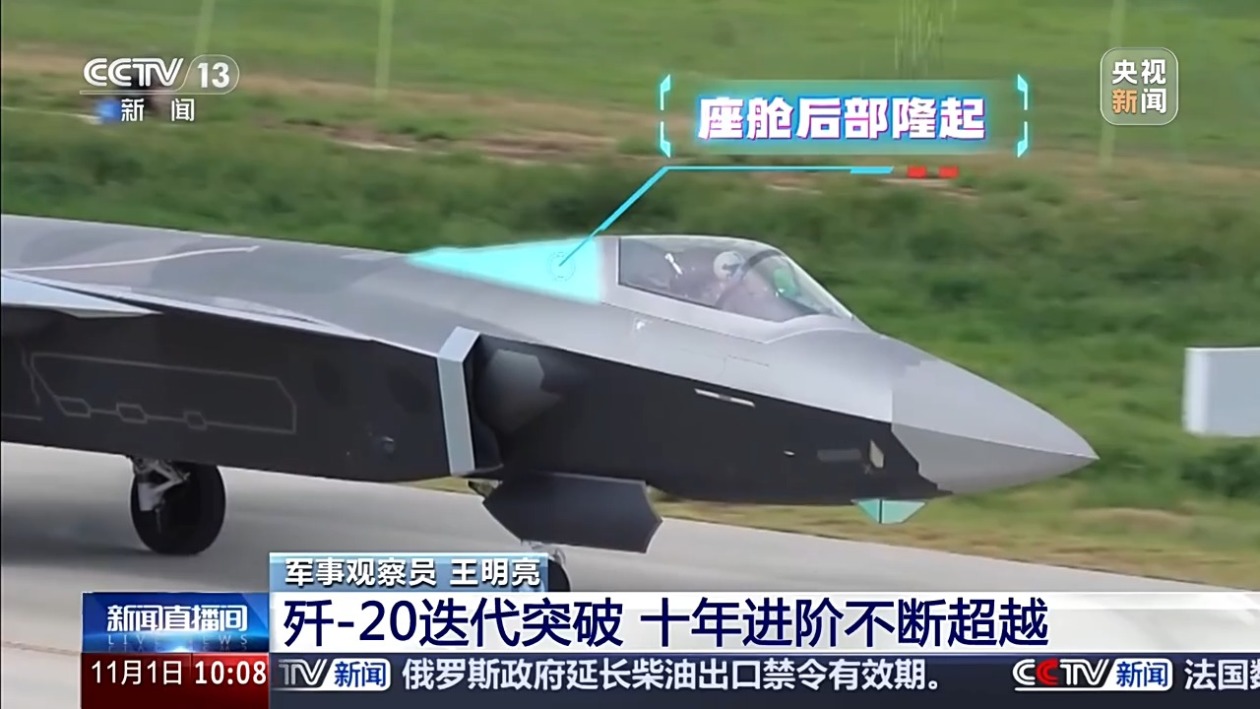
Wang Mingliang: Military enthusiasts have actually noticed two major details. One is that the rear part of the cockpit of the J-20A, which originally had a larger angular connection to the fuselage, has now been raised, making its curve smoother. This is undoubtedly aimed at further improving its aerodynamic performance and increasing flight speed.
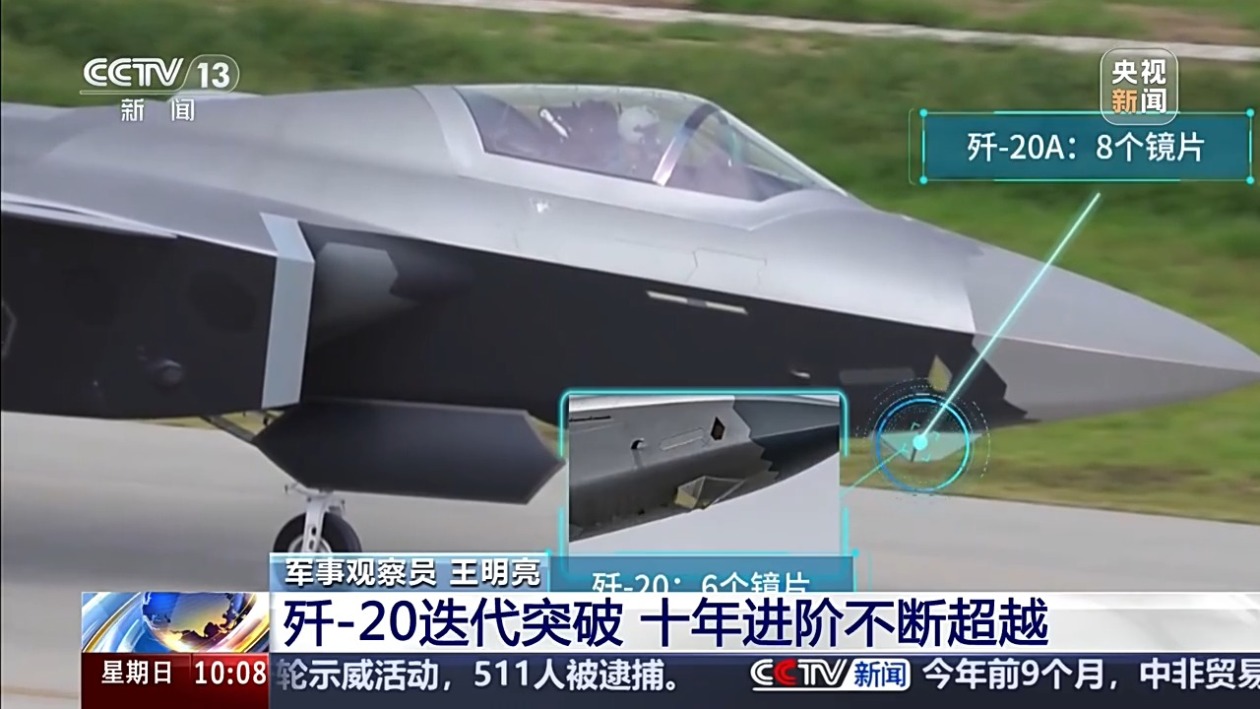
Another detail that netizens have noticed is that below the nose of the J-20, there was originally a protrusion that contained six lenses, which has now changed to eight lenses, significantly upgrading its detection capabilities. This means that the J-20A aircraft possesses stronger capabilities for networked, systematic, and anti-stealth operations.
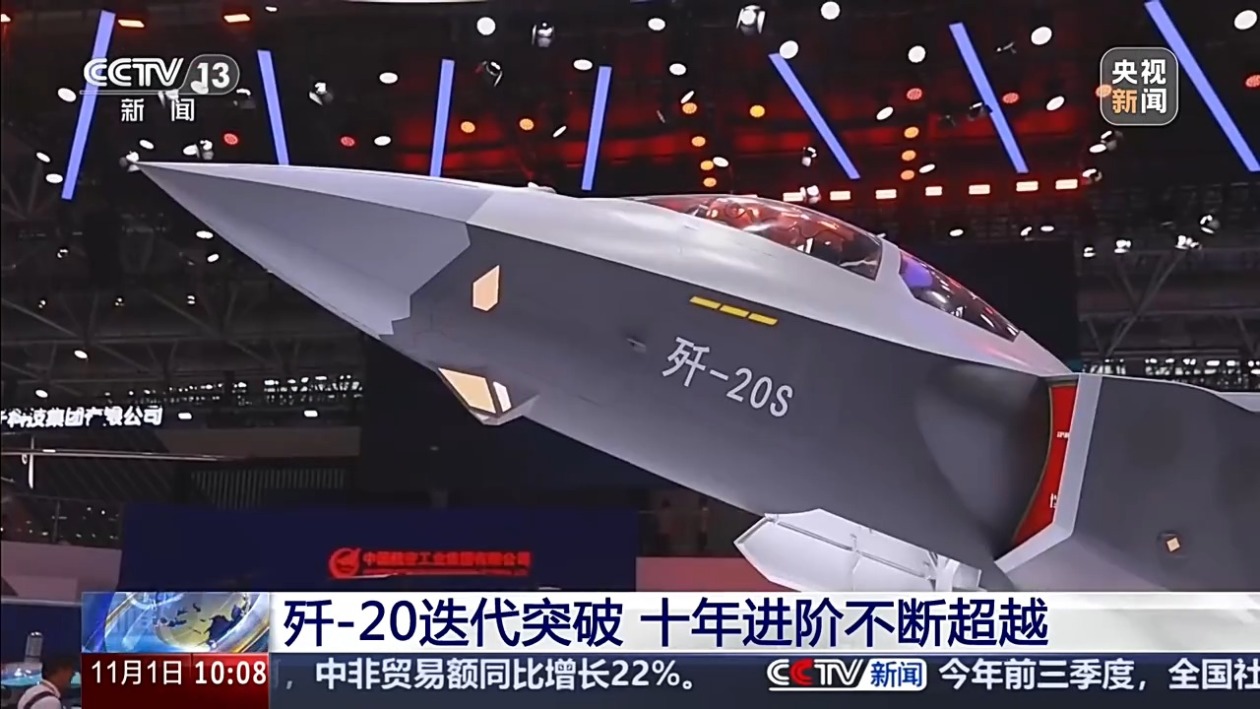
The emergence of the J-20S dual-seat variant expands the traditional operational modes of fifth-generation fighters. As the only publicly unveiled dual-seat stealth fifth-generation fighter in the world, the J-20S breaks the mission limitations of single-seat aircraft. The front cockpit pilot focuses on air combat and tactical control, while the rear cockpit operator concentrates on unmanned formation command, situational coordination, intelligent collaboration, and planning ground and maritime missions, making it more suitable for future intelligent, unmanned, and systematic air combat scenarios.
Wang Mingliang: This means that the J-20 aircraft is no longer just a traditional air superiority fighter; it may also undertake system control functions. In other words, the system controller in the rear cockpit is responsible not only for the aircraft's air combat detection and communication systems but also for providing intelligence information to other aircraft, target designation, task allocation, and coordinating control for systematic operations. Clearly, it can be considered a commander of a new type of aerial combat system.
Soaring in the skies, the J-20's systematic training forms new qualitative combat power
High-performance equipment can only realize its maximum value when integrated into a combat system. From the initial small-scale trial production to the current deployment across multiple forces and regions; from individual training and formation flying to deep integration into the Air Force's joint combat system, regularly participating in system confrontations, maritime patrols, and joint exercises, the systematic deployment of the J-20 has made significant strides in enhancing the combat capabilities of the Air Force's fifth-generation fighters, continuously improving air and space defense, long-range deterrence, and systematic air superiority capabilities.
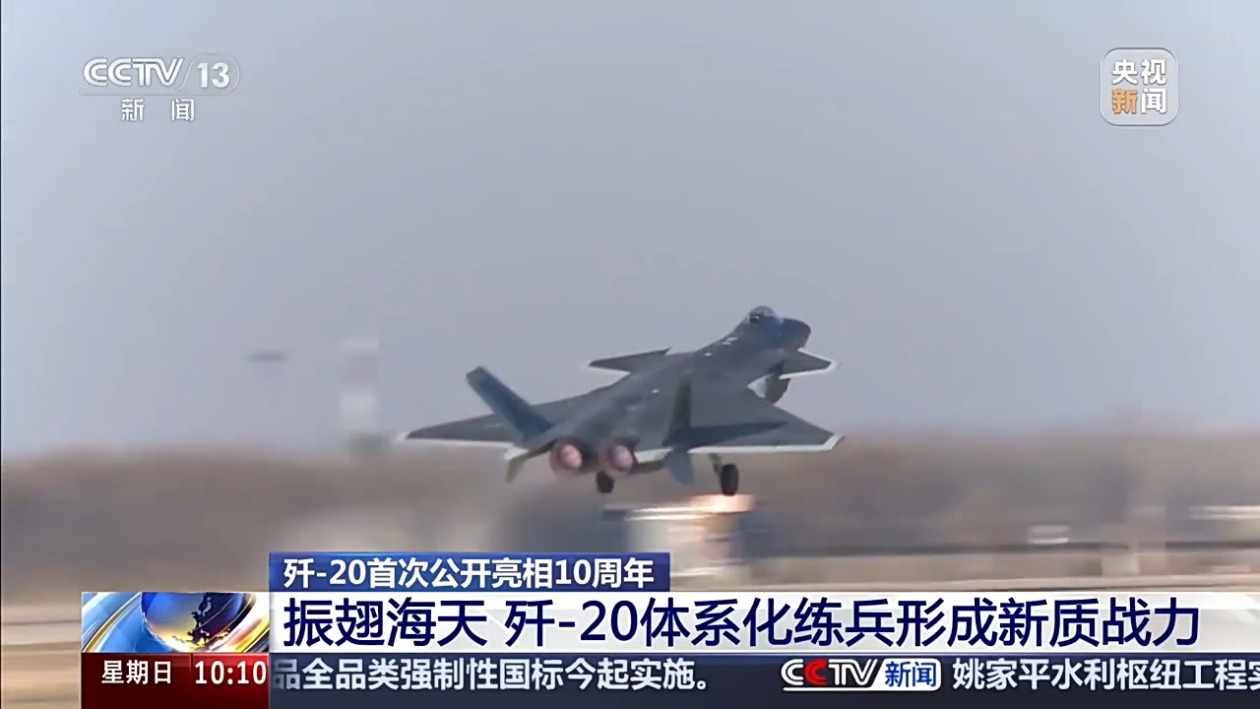
At various Air Force training grounds, fighter jets are taking off with afterburners engaged, conducting realistic training exercises. Pilots are closely adhering to real combat scenarios with complex enemy situations, exploring equipment performance in high-intensity confrontations, and honing their skills to defeat the enemy. Now, the J-20, along with the KJ series early warning aircraft, Y-20 tanker aircraft, J-16, and J-10C, has formed a complete aerial offense and defense combat chain. Various types of aircraft work in tandem, coordinating to extend range through aerial refueling, creating a mature combat methodology that integrates offense and defense.
Wang Mingliang: In a systematic air combat environment, it consists of multiple aircraft types, various elements, including space-based elements, sea-based elements, manned elements, and unmanned elements. This brings not only changes in equipment but also a comprehensive transformation in our entire combat philosophy, tactics, pilot training, and even education, training, and scientific research. The most important shift is from traditional single or multiple aircraft combat to a truly systematic air combat approach.
In recent years, the J-20's trajectory has continuously extended, regularly patrolling the East China Sea, South China Sea, and Taiwan Strait, executing routine combat readiness tasks. In complex airspace, weather, and electromagnetic environments, it continuously hones its capabilities for all-domain response, all-domain operations, and all-domain deterrence. The large-scale deployment and systematic application of the J-20 are accelerating the People's Air Force's strategic transformation into an integrated air and space force capable of both offense and defense.
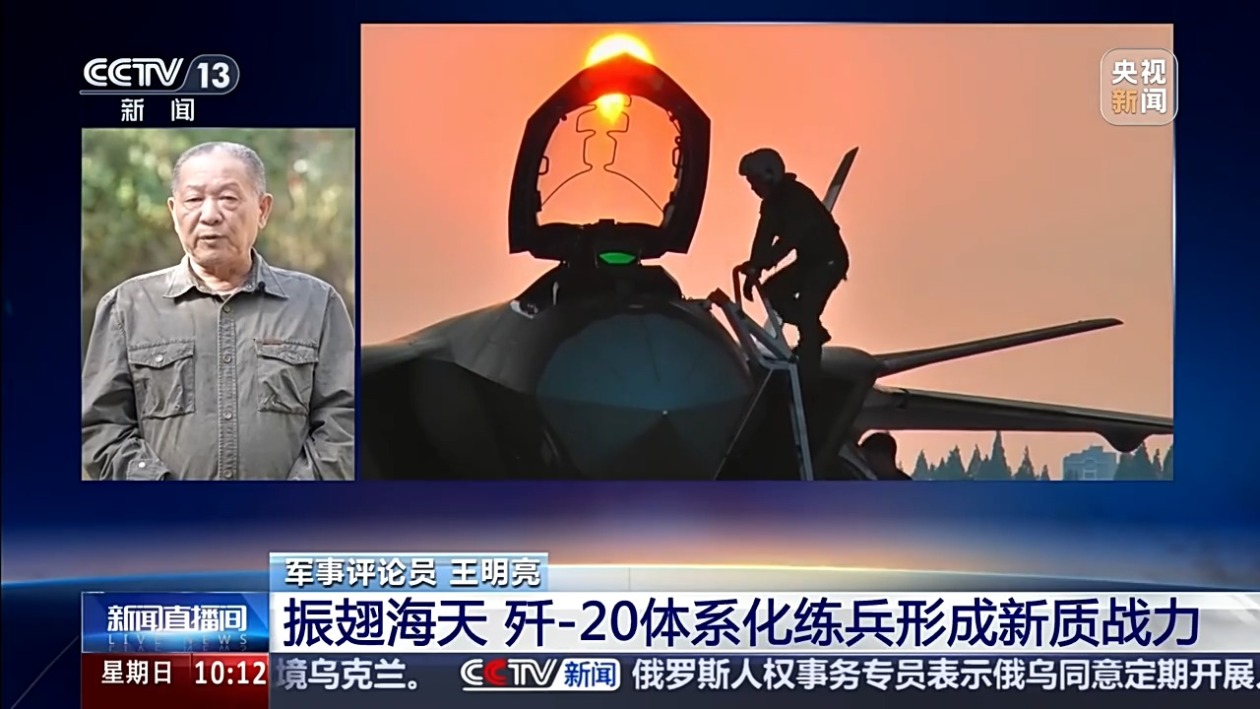
Wang Mingliang: The military is for fighting, so where does the military's combat capability come from? It relies on training that approaches real combat or executing some combat readiness tasks. Now, our People's Air Force's various aircraft are conducting realistic training, even venturing from the mainland coast to the near sea. Through these near-combat exercises, which may even involve potential adversaries, we can collect flight data that closely resembles real combat, including data from potential adversaries. Under the leadership of the Party, our People's Air Force is accelerating its transformation from a homeland defense-oriented air force to one capable of both offense and defense, having already evolved into a regionally dominant air force that can compete with the world's strongest air forces.
The People's Liberation Army Air Force (PLAAF) has upgraded the J-20 fighter jet, replacing imported engines with domestically produced ones and introducing the dual-seat J-20S variant. These enhancements improve speed, maneuverability, and operational capabilities, allowing for a more integrated air combat system. The J-20 is now a key component of China's evolving air force strategy, focusing on offensive capabilities and advanced combat scenarios.
- The J-20 has transitioned to using domestically produced engines, enhancing its performance.
- The J-20A variant has been optimized for high-speed air superiority missions.
- The introduction of the J-20S dual-seat variant expands operational capabilities.
- The J-20 is now integrated into a comprehensive air combat system with other aircraft.
- The PLAAF is transitioning towards a more offensive and integrated air force strategy.