
The Liaoning Carrier Group Appears East of Taiwan, PLA Aircraft Carrier Training Shifts from Nearshore Display to Pushing Beyond the First Island Chain
 Li Minghui
The Liaoning Carrier Group Appears East of Taiwan, PLA Aircraft Carrier Training Shifts from Nearshore Display to Pushing Beyond the First Island Chain
Around October 29, the Liaoning aircraft carrier strike group and several vessels were active in waters east of Taiwan. Voice of America cited assessments from a U.S. think tank, suggesting that such maneuvers may include exercises to break through the First Island Chain. On October 30, the PLA Southern Theater Command organized combat readiness patrols in the territorial sea and airspace around Huangyan Island. These two pieces of news come from different directions but point to a common change: the focus of PLA maritime operations is shifting from "can we break out of the island chain" to "can we continuously organize operations after breaking out of the island chain."
What to Observe in This Liaoning Action
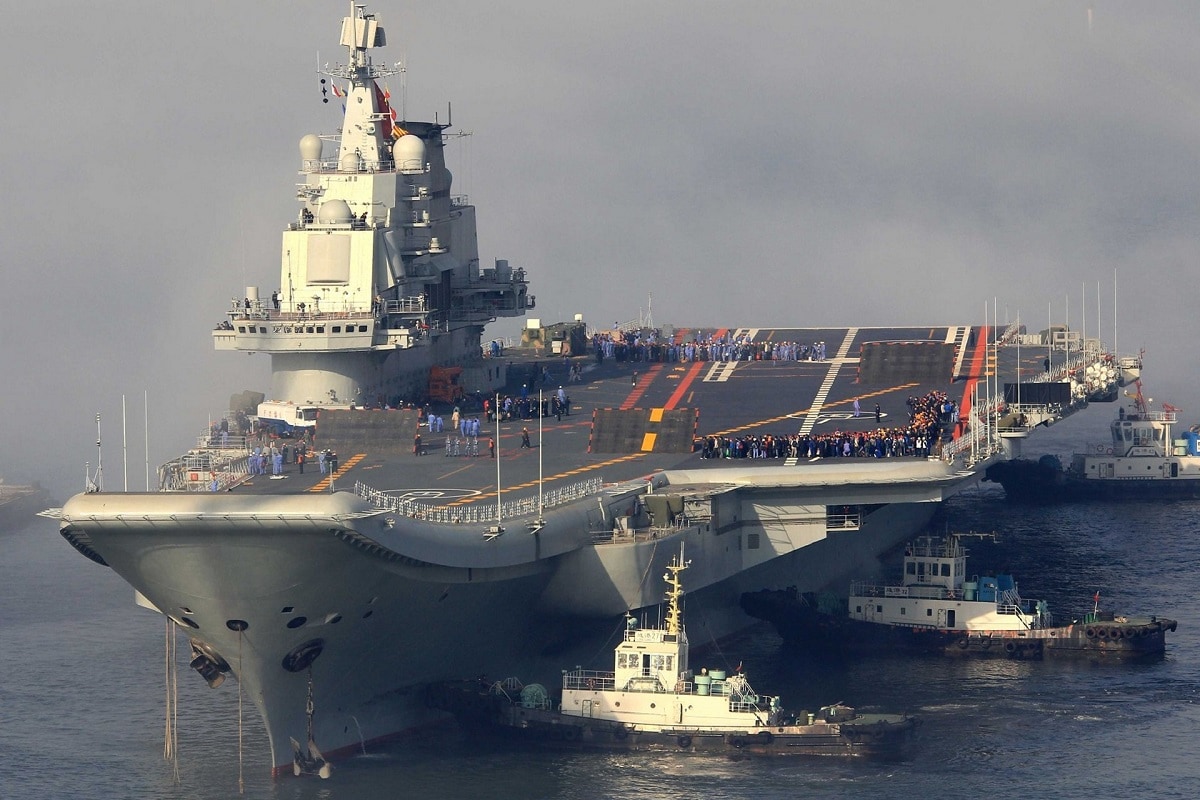
The Liaoning is China's first aircraft carrier, with a full-load displacement of about 60,000 tons, utilizing ski-jump takeoff and arrested landing. Its core mission remains training carrier-based aircraft units, grouping escort vessels, and refining the command chain. Its shortcomings are also clear: compared to catapult-type carriers, the takeoff weight and sortie efficiency of carrier-based aircraft are limited by the deck layout; conventional power means that sustained deployment in distant seas requires more intensive logistical support.
Therefore, a single appearance does not prove that the Liaoning has the same blue-water combat capability as U.S. carriers. What is truly valuable is whether the group can maintain air warning, anti-submarine, resupply, and communication coordination while being far from mainland bases. If it is merely transiting through the waters, the significance is limited; if accompanied by high-frequency takeoffs and landings of carrier-based aircraft and coordinated actions of surface vessels, the training value would be entirely different. Current public information is insufficient to confirm specific subjects, and this cannot be replaced by the phrase "breaking through the First Island Chain."
Why Waters East of Taiwan Are More Worth Observing Than the Taiwan Strait
The waters east of Taiwan are the outer side of the First Island Chain and serve as a passage approaching the Philippine Sea from the southeast. The carrier group operating here can theoretically extend the direction of fighter jets, early warning, and long-range firepower from the west side of Taiwan to the east side, forcing opponents to simultaneously consider pressures from the Strait, the Bashi Channel, and eastern Taiwan. Reports on October 27 regarding U.S.-Japan joint exercises simulating strikes on maritime targets near Taiwan precisely illustrate that both sides are incorporating "the eastern side of Taiwan" into their operational considerations.
However, this does not mean that the PLA has established a stable air superiority system beyond the island chain. The Liaoning requires support from land-based aviation, aerial refueling aircraft, and satellite communications, and the group must also contend with issues such as submarine reconnaissance, long-range anti-ship missiles, and exposed supply lines. In simple terms, the carrier sailing out is just the first step; whether it can safely return under continuous surveillance from the opponent is the true test of systemic capability.
From a Single Voyage to Repeatable Capability
The author believes that what is most worth noting in this action is not the photos of the aircraft carrier, but the changes in training radius and direction. If the Liaoning can rotate with the Shandong and Fujian, along with the 055-class destroyers and large comprehensive supply ships, the PLA may turn sporadic distant sea activities into a repeatable campaign-level rhythm. Meanwhile, the combat readiness patrols towards Huangyan Island indicate that maritime pressures in the southern and eastern directions can be developed in parallel.
Next, three indicators should be observed: how long the carrier group stays east of Taiwan, whether the carrier-based aircraft maintain a high sortie rate, and whether supply ships and underwater forces appear simultaneously. The real question is not whether the Liaoning can reach beyond the First Island Chain, but whether the PLA can turn a single long voyage into a normalized capability that does not rely on a single aircraft carrier.
Sources
- Voice of America, October 29 report on the Liaoning carrier group's activities east of Taiwan and First Island Chain training.
- China News Service, PLA Southern Theater Command, October 30 news on Huangyan Island combat readiness patrols.
- South China Morning Post, October 27 report on U.S.-Japan exercises challenging PLA maritime control around Taiwan.
- U.S. Institute for War Studies, October 30 "Dynamics Between China and Taiwan."
The Liaoning aircraft carrier group conducted operations east of Taiwan around October 29, 2023, potentially practicing breaking through the first island chain. This shift in focus indicates the PLA's intent to maintain sustained naval operations beyond the first island chain, exerting pressure on Taiwan from multiple maritime directions. The operations involve the Liaoning and other vessels, highlighting a strategic military engagement.
- The Liaoning aircraft carrier group was active east of Taiwan around October 29, 2023.
- The operations may involve exercises to break through the first island chain.
- The focus of the PLA's naval operations is shifting to sustained actions beyond the first island chain.
- The Liaoning is China's first aircraft carrier, with a displacement of approximately 60,000 tons.
- The operations are part of a broader strategy to exert pressure on Taiwan from multiple maritime directions.