
14 PLA Military Aircraft and 8 Ships Appear in the Taiwan Strait, Eastern Theater Command's Gray Zone Operations Become Routine
 Li Minghui
14 PLA Aircraft and 8 Ships Appear in the Taiwan Strait, Eastern Theater Command's Gray Zone Operations Become Normalized
On October 7, Taiwan's defense department released monitoring data showing that the PLA dispatched 14 aircraft, 7 warships, and 1 civilian vessel to operate around Taiwan from 6 AM the previous day to 6 AM that day, with 9 aircraft entering Taiwan's northern, central, and southwestern air defense identification zone. The Taiwanese side stated that they had deployed military aircraft and warships and activated shore-based missile systems for monitoring.
The Numbers Aren't Large, the Key is Continuity
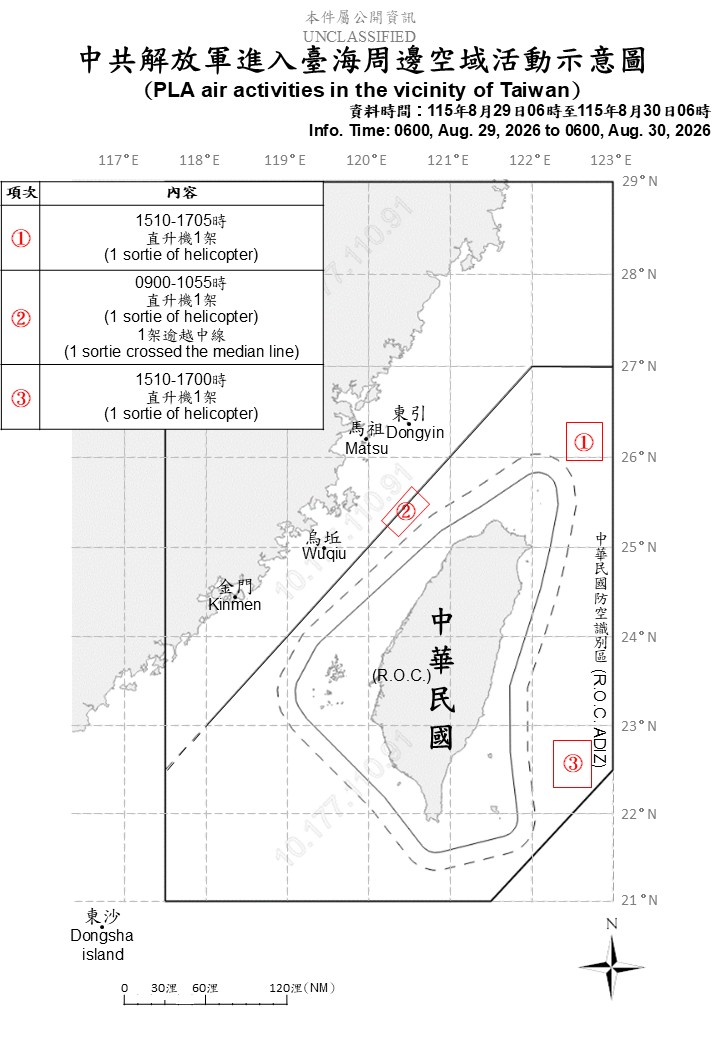
Looking at just the 14 aircraft, this is not a large-scale combat readiness patrol; what is truly informative is the overlap and rhythm of maritime and aerial activities. Since October, Taiwan has recorded 25 instances of PLA aircraft activity and 84 instances of ship activity. In other words, the frequency of maritime platforms appearing is much higher than the scale of aerial strikes, indicating that the focus of operations may be shifting from "creating a one-day show of force" to maintaining an all-weather presence.
The cost structure of such operations is also quite interesting. Military aircraft require pilots, fuel, maintenance, and a high level of readiness, while ships can remain at sea for longer periods and maintain continuous surveillance through radar, communication, and helicopters. For the PLA, the normalization of naval patrols is like laying a layer of mobile sensors around the Taiwan Strait; for Taiwan, the real cost is not a single interception, but the long-term maintenance of personnel on standby and the lifespan of equipment.
From Crossing the Median Line to Multi-Directional Pressure
The Taiwanese defense department disclosed that some of the 14 aircraft activities crossed the median line of the Strait. Combined with public records since September, the PLA's actions are not simply repeating the same flight path, but are diversifying pressure in northern, central, and southwestern Taiwan. The value lies not in approaching Taiwan's main island each time, but in forcing the Taiwanese side to continuously assess whether there is coordination between aircraft, warships, and shore-based missiles.
The South China Morning Post recently noted that the PLA is expanding the maritime use of the Z-10 attack helicopter. Originally designed as an army anti-armor and close support platform, if the Z-10 takes on broader maritime tasks on vessels, its significance is not to replace fixed-wing aircraft, but to provide more flexible low-altitude firepower for near-shore, island, and amphibious formations. This change shares a common logic with gray zone operations in the Taiwan Strait: first, push the platform into more scenarios, and then transform temporary capabilities into callable capabilities through training.
What is Beijing Testing?
The author believes that the most noteworthy observation currently is not how many aircraft the PLA can concentrate on a given day, but whether it can connect aircraft, warships, unmanned systems, and shore-based firepower into a low-intensity but high-frequency pressure network. High-frequency activities can train the command chain, collect Taiwan's radar and interception responses, and even accumulate samples for future blockade or localized isolation operations.
However, there is an easily overlooked limitation: normalization does not equate to unlimited escalation. A decrease in the number of aircraft or stable ship activity may indicate that Beijing is controlling political signals while investing resources into a more sustained maritime presence. If this model continues, Taiwan will need to address not just "how many aircraft came today," but how to maintain identification, tracking, and graded responses without overstretching the lifespan of aircraft and personnel on duty.
Source and Judgment Boundaries
The data in this article is primarily based on Taiwan News report from October 7 and publicly available information from Taiwan's defense department; the background on equipment use references South China Morning Post's report on the Z-10's maritime role. The number of aircraft and ships reported by Taiwan is unilateral monitoring data, and the PLA has not issued corresponding explanations for the actions during this period; specific aircraft types, task formations, and command relationships remain to be confirmed.
The next issue that truly needs to be tracked is: as maritime ship activities approach normalization, will the PLA incorporate more drones, helicopters, and shore-based missiles into the same daily scheduling, and can Taiwan's early warning system withstand this "low-intensity, unending" pressure?
The People's Liberation Army (PLA) deployed 14 aircraft and 8 ships around the Taiwan Strait from October 6 to 7, 2023, with 9 aircraft entering Taiwan's air defense identification zone. This marks a shift towards a sustained military presence, with the PLA conducting operations 25 times for aircraft and 84 times for ships since the beginning of October. The PLA is also expanding the maritime role of the Z-10 attack helicopter.
- 14 PLA aircraft and 8 ships were active around Taiwan on October 6-7, 2023.
- 9 aircraft entered Taiwan's air defense identification zone.
- PLA activities have been recorded 25 times for aircraft and 84 times for ships since October began.
- The PLA is shifting from one-time displays of force to maintaining a continuous presence.
- The Z-10 attack helicopter is being expanded for maritime operations.