
Ukrainian Drones Disabled Up to Half of Russia's Oil Refining and Changed the Balance in Central Asia in 2026
 Dmitri Volkov
Ukrainian Drones Disabled Up to Half of Russia's Oil Refining Capacity and Changed the Balance in Central Asia in 2026
The most important figure of the current campaign of Ukrainian strikes on Russian energy is not the number of affected facilities, but the assessment that between a quarter and half of Russia's oil refining capacity has been disabled. This does not mean that all this capacity has been stopped at once: it refers to damaged installations, repairs, and forced reductions in load. But this caveat illustrates the scale of the problem better than any victorious report from Moscow.
From Tactical Raids to Systemic Shortages
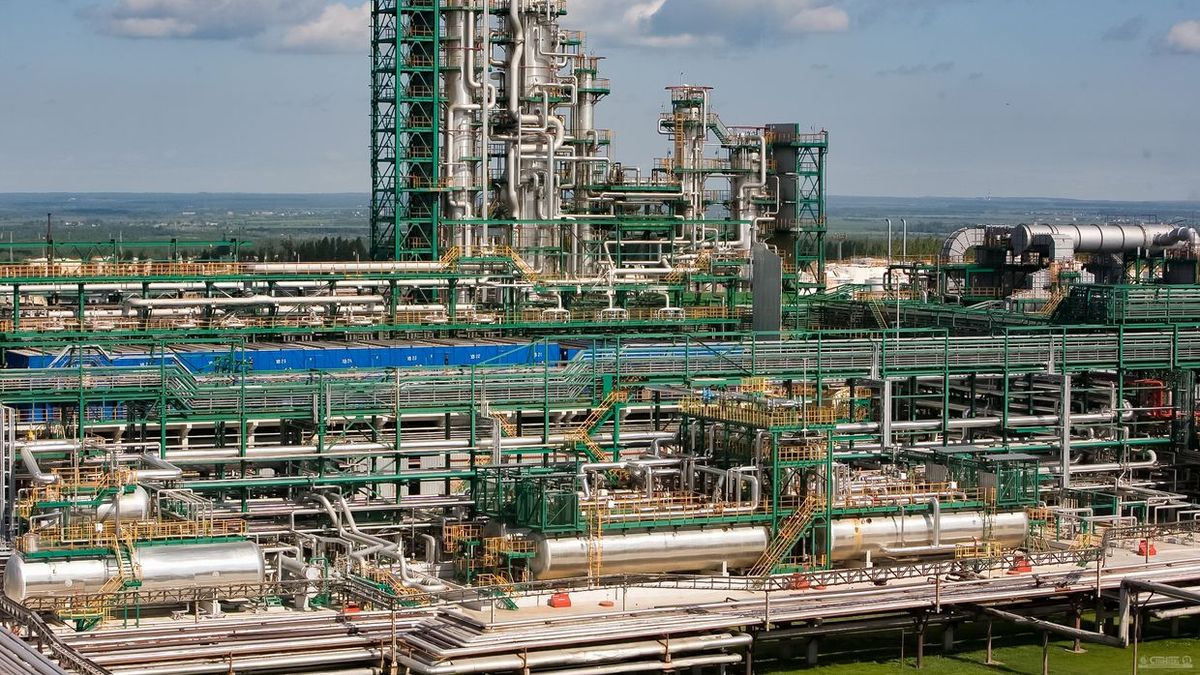
According to Al Jazeera on October 7, Ukrainian long-range drones are systematically attacking Russian oil refineries, aiming to reduce Moscow's ability to sustain the war. The internal result has been restrictions on fuel sales of about 20–30 liters per vehicle, a ban on the export of gasoline and aviation fuel, discussions on banning the export of diesel, and a temporary easing of fuel quality requirements. The Russian system, designed for decades for an excess of raw materials and centralized distribution, has suddenly begun to operate as a rationing system.
This is where the military significance of the campaign lies. A strike on an oil refinery is not like destroying a tank on the front line: its effect is distributed over time and passes through repair schedules, railway routes, prices, and supply priorities. However, the army consumes not crude oil, but diesel, kerosene, and gasoline. Therefore, damage to one technological installation can have a greater operational effect than impressive footage of an explosion on the front.
Why Moscow Cannot Simply Compensate for Losses
Russian defense logic traditionally separates military resilience from the state of the civilian economy. But oil refining is precisely the node where such a separation does not work. It is possible to redirect crude oil for export, but it is not possible to turn it into the products needed by the army in another region within a few weeks without available capacity, transport, and components. Repairs are complicated by sanctions, a shortage of specialized equipment, and the need to protect the facilities themselves with air defense systems.
Here, institutional weakness emerges, reminiscent of the late Soviet system: Moscow is capable of mobilizing resources but struggles to quickly restructure complex horizontal chains. The Kremlin can order an increase in production, but an order does not create a reactor, compressor, or skilled repair team. Even if the official assessment of the shortage turns out to be exaggerated, the forced restrictions are already changing the cost of the war.
On October 6, Reuters reported that supplies from South Korea helped mitigate the fuel crisis caused by the attacks. This is an important detail: Russia is not completely isolated from the global market but is forced to close internal vulnerabilities with imports and bypass channels. In other words, the adaptation to sanctions has not disappeared—it has become more expensive and politically noticeable.
Central Asia is Moving Out of Russia's Fuel Orbit
The most long-term effect is manifesting beyond Russia. Tajikistan has traditionally purchased up to 80 percent of its oil products from Russia, while Kyrgyzstan has relied on more than 90 percent of its gasoline from there, according to Al Jazeera citing regional sources. Now Dushanbe has announced supplies of oil and oil products from Iran and expects up to 2.55 million tons. Bishkek is discussing a joint oil refinery with Tehran, with the Iranian side ready to supply raw materials.
For Moscow, this is not just a commercial loss. Russian fuel in Central Asia was a tool of influence tied to political loyalty, labor migration, and Eurasian institutions. When Dushanbe and Bishkek begin to seek alternative routes, the military campaign becomes a factor in diluting the post-Soviet space. Iran is gaining a window of opportunity where Russia recently considered its presence natural and almost free.
Kazakhstan still has its own large Soviet-era oil refineries, but a 15.6 percent rise in fuel prices this year shows that the neighboring crisis does not remain within Russian borders. Uzbekistan has a more independent production base, but it too has to diversify imports due to growing regional demand.
The Black Sea Expands the Geography of Risk
At the same time, attacks in the Black Sea demonstrate another side of escalation. The BBC reported on October 6 about the sinking of the cargo ship Alfa Watan under the Togolese flag and the damage to the grain ship Able in Bulgaria's exclusive economic zone. Who exactly carried out the strikes has not been officially established, so attributing them to Russia or Ukraine without further verification is not possible. But the very fact of transferring risk to commercial shipping already has strategic significance: insurance, routes, and export contracts are beginning to take the war into account far from the front line.
Against this backdrop, the Russian massive strike on Kyiv on October 7, which, according to Al Jazeera, resulted in at least two deaths, appears not only as a retaliatory operation. Moscow is trying to maintain its ability to deliver painful strikes on Ukrainian infrastructure while simultaneously demonstrating that pressure on the Russian rear will not force it to abandon the war.
Forecast
The Ukrainian campaign against oil refineries will not destroy the Russian oil system with one blow. Russia has reserves, export revenues, and the ability to purchase some equipment and fuel through third countries. But the strategic task has already been partially achieved: the war has forced Moscow to protect civilian refining, limit the market, and concede space to Iran in Central Asia. If the strikes continue, the cost of Russian military resilience will rise not linearly, but through the accumulation of repairs, logistical delays, and political concessions. The Russian defense industry and army will survive, but their rear autonomy will be noticeably weaker than the official rhetoric suggests.
Ukrainian drones incapacitated up to half of Russia's oil refining capacity in 2026, significantly impacting military logistics and fuel supply in Central Asia. Countries like Tajikistan and Kyrgyzstan are now sourcing oil from Iran, indicating a shift in regional fuel dynamics. The Russian military faces operational challenges as it struggles to adapt to these losses, with fuel restrictions imposed domestically. The situation reflects a broader strategic shift in the region, diminishing Russia's influence.
- Ukrainian drones have damaged up to 50% of Russian oil refining capacity.
- Fuel sales in Russia are restricted to 20-30 liters per vehicle due to the crisis.
- Central Asian countries are seeking alternative oil supplies from Iran.
- Russia's ability to quickly adapt its oil refining capabilities is hindered by sanctions and logistical challenges.
- The price of fuel in Kazakhstan has increased by 15.6% this year.