
195,000 contract soldiers do not fill the gap in the Russian army in the summer of 2026
 Dmitri Volkov
195 thousand contractors do not close the gap in the Russian army in the summer of 2026
The figure of 195 thousand looks impressive only until you place the second figure next to it — approximately 196.7 thousand losses for the first half of the year. This ratio, rather than another report about "volunteers," best describes the state of the Russian army replenishment system by mid-July 2026. According to the Ukrainian Foreign Intelligence Service, by the beginning of July, the Russian Ministry of Defense had recruited about 195 thousand contractors against an annual plan of 409 thousand people and an interim planned target of 204.5 thousand. The average daily recruitment rate has decreased to 1070–1090 people compared to about 1200 in 2024–2025. The difference on paper seems small; on the front, it turns into the arithmetic of exhaustion.
The plan of 409 thousand and the real capacity of the mobilization market
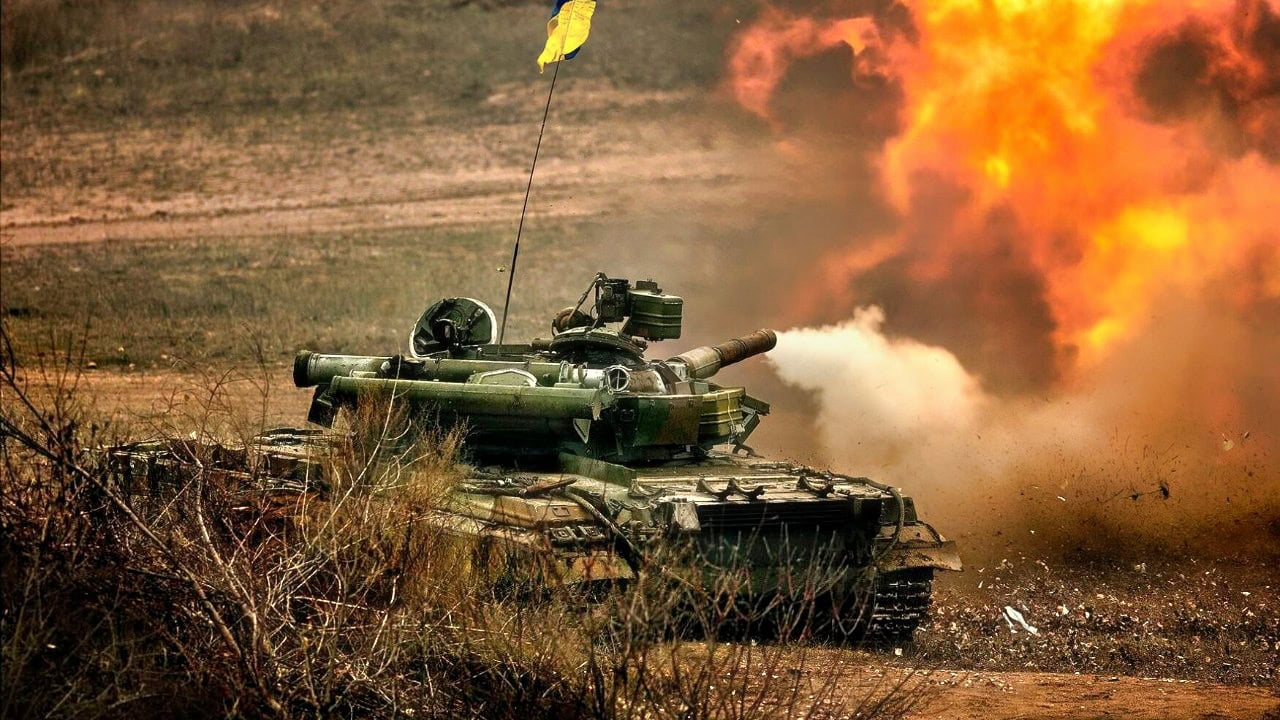
Ukrainian intelligence claims that the current campaign differs from previous ones not only in falling behind schedule but also in a qualitative change in the recruitment itself: medical and functional requirements have been weakened, the processing of candidates has been expedited, and students, foreign labor migrants, and residents of occupied territories in Ukraine are being used more actively. This information requires caution, as the source is a party to the war. However, it aligns with the broader picture described by ISW on July 14: Russian recruitment programs no longer compensate for the rising level of losses amid costly tactical advances. In Soviet terminology, this would be referred to not as a "crisis of spirit," but as a reduction in the throughput capacity of the recruitment system.
The annual plan of 409 thousand people means that Moscow would like to receive an average of more than 34 thousand new contractors each month. The current rate of 1070–1090 people per day yields about 32–33 thousand per month, not accounting for seasonal dips, regional burnout, and the quality of the contingent. On paper, the gap is not large. However, the recruitment system does not operate like a conveyor belt at a constant speed. In 2022–2024, it drew people in through a combination of high regional payments, social pressure, promises of quick citizenship for migrants, and mobilization fear. By 2026, the most accessible categories have already been partially exhausted, and the cost of attracting the next candidate is rising. This is a classic problem of diminishing returns, only expressed in human material.
Losses as a tax on offensive doctrine
The most unpleasant indicator for the Russian General Staff is not the absolute number of losses, but the cost per square kilometer. Commander of the Armed Forces of Ukraine Oleksandr Syrskyi stated on July 14 that Russian troops incur more than 400 losses for every square kilometer captured in the Donetsk region. ISW previously estimated that in June 2026, across the theater, Russian forces lost about 1298 people for every square kilometer of captured or infiltrated territory, while in June 2025, the average was 68 people per kilometer. The methodologies differ, and direct comparison is dangerous, but the direction of change is clear: the offensive is becoming increasingly expensive.
The reason lies not only in Ukrainian drones, although they have made the battlefield transparent and turned the movement of small groups into a lottery. The reason also lies in the Russian doctrine, which, after the failures of maneuver warfare in 2022, increasingly relies on small assault groups, artillery pressure, infiltration, and sequential "squeezing" of defenses. This model can yield local successes, especially when the command is willing to pay with lives for a few positions or streets. But it requires a constant influx of infantry. A tank can be written off, repaired, or replaced with an older machine from storage; replacing a trained assault soldier is more difficult, especially if their training effectively amounts to a short survival course before being sent to the FPV drone strike zone.
Lowering standards as an indicator of institutional fatigue
The report from the GRU about the easing of medical and administrative requirements is important precisely as a symptom. In a normal army, lowering the entry filter signifies not humanity, but a deficit. If there are enough candidates, the military selects the best; if there are not enough candidates, it broadens the definition of suitability. This has already been observed in the late Soviet army of the 1980s, when formal numbers concealed a deterioration in the quality of personnel, discipline, and training. The difference is that back then, the country was not engaged in a high-intensity war with daily use of drones, precision artillery, and long-range strikes on logistics.
The student block is particularly indicative. According to Ukrainian data, the Russian Ministry of Defense, together with the Ministry of Education, planned to recruit more than 50 thousand university and secondary vocational school students, but consent is given by about one in 400 students. Even if this ratio is inflated for propaganda purposes, the direction is clear: young Russians do not want to turn a contract into a ticket to the front. Administrative pressure works better in poorer regions, among migrants, and in occupied areas than among urban students. Therefore, the burden falls on Bashkortostan, Tatarstan, the Volga region, the Central Federal District, and vulnerable groups to whom the state can offer money, citizenship, or the threat of deportation.
Foreigners and occupied territories as a reserve for coercion
The plan to increase the recruitment of foreigners from 16 to 18.5 thousand people and attract about 7.9 thousand residents of occupied territories in Ukraine shows that the Russian replenishment system is increasingly moving away from the voluntary market to a gray zone of coercion. A migrant from Central Asia can be lured with the promise of a well-paid job and then confronted with a signed contract. A resident of an occupied territory can be pressured with paperwork, work, local administration, and fear of law enforcement agencies. From a military standpoint, this provides numbers. From an organizational standpoint, it creates units with low motivation, poor training, and a high risk of disciplinary problems.
The Kremlin continues to publicly speak the language of adaptation. At a briefing on July 14, Dmitry Peskov stated that Russia has learned to circumvent thousands of sanctions and minimize their effect. This thesis is usually applied to the economy and technology, but it can be transferred to mobilization: Moscow indeed knows how to bypass restrictions, redistribute the burden, and find new social pockets for recruitment. The mistake begins where the workaround is taken for a sustainable system. Sanctions can be circumvented through intermediaries; demographics and regional fatigue are harder to bypass.
Why this does not yet mean an immediate mobilization collapse
It would be too convenient to declare that the Russian army is on the brink of a personnel collapse. It is not. The state still has money, a repressive apparatus, regional quotas, prisons, a migration service, and vast experience in bureaucratic pressure. Unlike Ukraine, Russia is waging war without a full open mobilization of society, but with a constant hidden mobilization of the periphery. This model may exist longer than its opponents would like, especially if the front does not require a sharp, immediate expansion of the army.
But the strategic meaning of the July figures lies elsewhere. Russia is capable of continuing the war, but is increasingly less able to cheaply acquire infantry. If losses indeed exceeded recruitment rates as early as March 2026, as ISW estimates, then each month of offensive activity deteriorates the quality of personnel and raises the political cost of the next decision. The Kremlin may opt for a new wave of forced mobilization, but this would destroy the convenient myth of a war being fought by "volunteers" and poor regions. It can continue the contract model, but then it will have to contend with falling standards, rising payments, and a shrinking operational reserve.
The Russian army is not yet hitting empty barracks. It is hitting something more dangerous — a decline in the quality of replenishment while maintaining a doctrine that consumes infantry faster than the system can politically produce it painlessly.
Cold forecast
In the coming months, Moscow is unlikely to announce a classic general mobilization unless a major operational failure occurs. A different scenario is more likely: further increases in regional payments, expansion of recruitment among migrants, intensified pressure on students and occupied territories, as well as even softer medical criteria. This will allow for closing current gaps but will not restore the quality of the army. The Russian military machine will retain the ability to advance, but will do so in an increasingly expensive manner. As they said in the old Soviet school, quantity turns into quality. In this case — into a deterioration of quality.
The Russian Army has recruited about 195,000 contract soldiers by July 2026, falling short of its target of 409,000. Recruitment rates have decreased, leading to concerns over personnel quality and increasing combat losses, particularly in Donetsk Oblast, where Russian forces face significant casualties. The military's reliance on less qualified recruits and foreign labor indicates a shift towards coercive recruitment methods.
- Russian Army has recruited approximately 195,000 contract soldiers by July 2026 against a target of 409,000.
- The average daily recruitment rate has decreased to 1,070-1,090 soldiers.
- Russian forces are experiencing high casualty rates, with over 400 losses per square kilometer in Donetsk.
- The quality of recruits is declining due to relaxed medical and functional standards.