
The Fujian Ship Drives Expansion of PLA Aircraft Carrier Recruitment, 2026 Carrier Aviation Bottleneck Shifts to Personnel Pipeline
 Li Minghui
The Fujian Aircraft Carrier Drives the PLA Navy's Expansion of Carrier Aviation Recruitment, Shifting Focus to Personnel Pipeline by 2026
On July 13, the South China Morning Post cited a new report from the International Institute for Strategic Studies, stating that the PLA Navy is expanding its recruitment and training channels for carrier-based pilots and support personnel. This news may not be as eye-catching as the test launches of new missiles, but in my view, it may better illustrate which stage China's aircraft carrier program has entered.
In the past, discussions about the Liaoning, Shandong, and Fujian carriers often focused on deck length, electromagnetic catapults, the J-35, or the KJ-600. While hardware is certainly important, an aircraft carrier is not simply a large ship with dozens of aircraft. What is truly difficult to replicate is a complete set of personnel: pilots, landing commanders, maintenance crews, munitions, fuel, scheduling, deck safety, and damage control personnel. In simple terms, the combat effectiveness of an aircraft carrier ultimately relies on a group of individuals who can repeatedly operate correctly in a high-noise, high-risk, and high-tempo environment.
From Drawing Pilots to Building a Pipeline
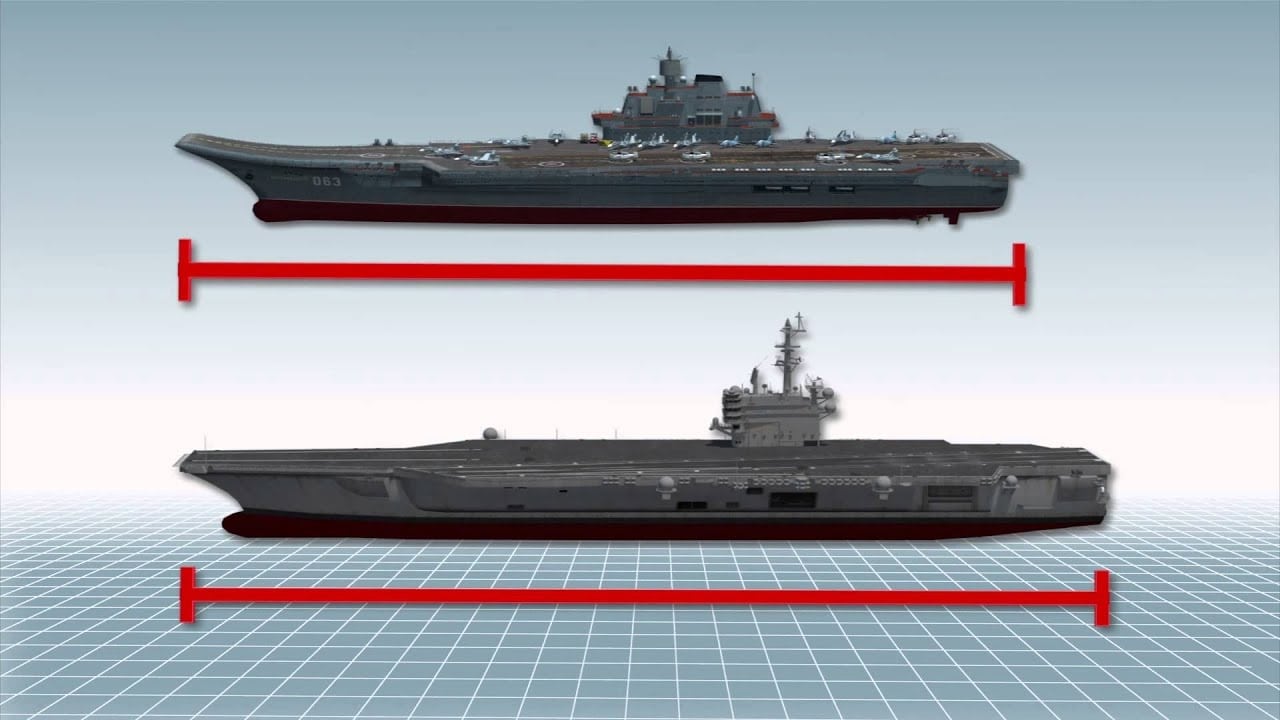
One of the most interesting points in the SCMP report is that the Navy is no longer primarily relying on drawing experienced pilots from active aviation units, but is incorporating channels such as specialized training for graduates from civilian universities and high schools into the long-term supply of carrier-based aviation. This change indicates that carrier-based pilots are no longer seen as temporary patches for a few elite positions, but are being integrated into a stable production system similar to an industrial chain.
This is related to the Fujian carrier. The Liaoning and Shandong carriers use ski-jump takeoffs, limiting the scale and complexity of carrier aviation; the Fujian carrier employs electromagnetic catapults and may in the future carry the J-35, J-15T, KJ-600, as well as electronic warfare and anti-submarine support platforms. Each additional aircraft type complicates the training syllabus, spare parts system, deck procedures, and safety boundaries. While equipment can be concentrated on breakthroughs, personnel cannot be suddenly created through a blitzkrieg approach.
The Real Pressure on the Fujian Carrier is Deck Rhythm
Outsiders often summarize the key indicators of the Fujian carrier as a displacement of over 80,000 tons, electromagnetic catapults, three catapults, and stealth carrier-based aircraft. However, I am more concerned with another issue: can it maintain a stable sortie rate over the long term? The experience of the U.S. Navy's aircraft carriers indicates that the combat effectiveness of carrier aviation is not about the performance of a single aircraft, but rather how many safe cycles of takeoffs, landings, refueling, munitions loading, and maintenance can be completed in a day.
The Chinese Navy has made a leap from nothing to something over the past decade, but "being able to fly onto a carrier" and "being able to conduct high-intensity operations in distant seas" are two different matters. The former can be achieved by a few excellent pilots and engineering support, while the latter requires a large number of mid-level personnel and standardized processes. This difference is akin to a prototype in a laboratory versus a mass production line: a successful prototype is encouraging, but a stable production line truly changes the balance of power.
- On the pilot side: more carrier-based pilots with night, complex weather, and formation coordination capabilities are needed.
- On the deck side: a large number of professionals familiar with electromagnetic catapults, arrestor recovery, munitions transfer, and deck safety are required.
- On the maintenance side: the J-35 and KJ-600 will bring pressures related to stealth maintenance, electronic equipment calibration, and onboard spare parts management.
- On the command side: the mixed operation of multiple aircraft types requires more stable data link coordination between the carrier, escort ships, early warning aircraft, and shore-based systems.
Carrier Expansion is Not a Single Ship Competition
If one only looks at the Fujian carrier, it is easy to draw an overly simplistic conclusion: China will soon have a third aircraft carrier, so its capabilities in distant seas will naturally increase. However, the recruitment reforms mentioned in the IISS report remind us that the PLA Navy's goal is not to have the Fujian carrier occasionally conduct impressive training, but to prepare for multiple carriers to rotate over the long term. To achieve this, the reserve of pilots must exceed the full complement requirement of a single carrier, as training, injuries, transfers, and instructor positions will all consume personnel.
This is also a typical characteristic of China's military-industrial system: hardware platforms are advancing rapidly, but the supporting talent, software, standards, and logistics are still catching up. Whether the Fujian carrier can form a true capability for distant sea combat groups depends not only on when the J-35 is publicly deployed on the carrier but also on whether the Navy can establish a sufficiently robust cadre of carrier aviation instructors. Without instructors, expanding recruitment is just a number; with instructors, experience can be solidified into a system.
What It Means for the Western Pacific
From a geopolitical perspective, the expansion of carrier recruitment will not immediately change the situation in the Taiwan Strait or the South China Sea. In the short term, the PLA will still primarily rely on land-based aviation, rocket forces, and a joint air-sea system within the first island chain, with aircraft carriers taking on more roles in mobile deterrence and distant sea training. However, in the medium to long term, a stable talent pipeline will allow Chinese aircraft carriers to transition from "showcase platforms" to "sustainable deployment platforms." This shift is more worthy of tracking than a single transit through the Taiwan Strait.
According to SCMP, the Fujian carrier is expected to carry a more complex combination of carrier-based aircraft, including the J-35 stealth fighter and KJ-600 early warning aircraft, which requires a deeper talent pool and a more specialized support system.
I remain skeptical of some optimistic statements. Electromagnetic catapults, stealth carrier-based aircraft, and early warning aircraft can create a strong impact in public imagery, but what truly reveals capability is whether the deck can maintain its rhythm after weeks of continuous training, whether spare parts can keep up, and whether pilot recovery rates are stable. There is little public information on these numbers, so we can only continue to observe.
The real question is not whether the Fujian carrier can complete its first distant sea deployment, but whether the Chinese Navy can cultivate enough second and third generation carrier aviation personnel before 2030. The most valuable asset in the aircraft carrier era may not be the hull or the aircraft, but those who have made mistakes, corrected them, and can pass on their experience to the next generation.
The Chinese Navy is expanding its recruitment and training for carrier-based pilots and support personnel as of July 13. This initiative is part of a strategic shift to enhance the operational capabilities of its aircraft carriers, particularly the Fujian, which will utilize advanced technologies. The focus is on creating a stable pipeline of trained personnel to support long-term naval operations.
- The Chinese Navy is expanding recruitment for carrier-based pilots and support personnel.
- The Fujian aircraft carrier will utilize electromagnetic catapults and is expected to carry advanced aircraft.
- The recruitment reform indicates a shift towards a stable production of naval aviation personnel.
- The Chinese Navy aims for long-term operational capability with multiple aircraft carriers.
- The report highlights the need for a robust training pipeline for naval aviation personnel.