

Summary and Key Points: The F-14 Tomcat, the Top Gun icon, made one of the most dangerous carrier landings imaginable.
The F-14 Tomcat Is a Real US Navy and Military History Legend
The Grumman F-14 Tomcat remains one of the most iconic warplanes the United States Navy has ever deployed. And we love photographing it. As you can see from this article, we have included many of our best F-14 Tomcat photos from various trips we have taken over the last 18 months to see this fighter up close.
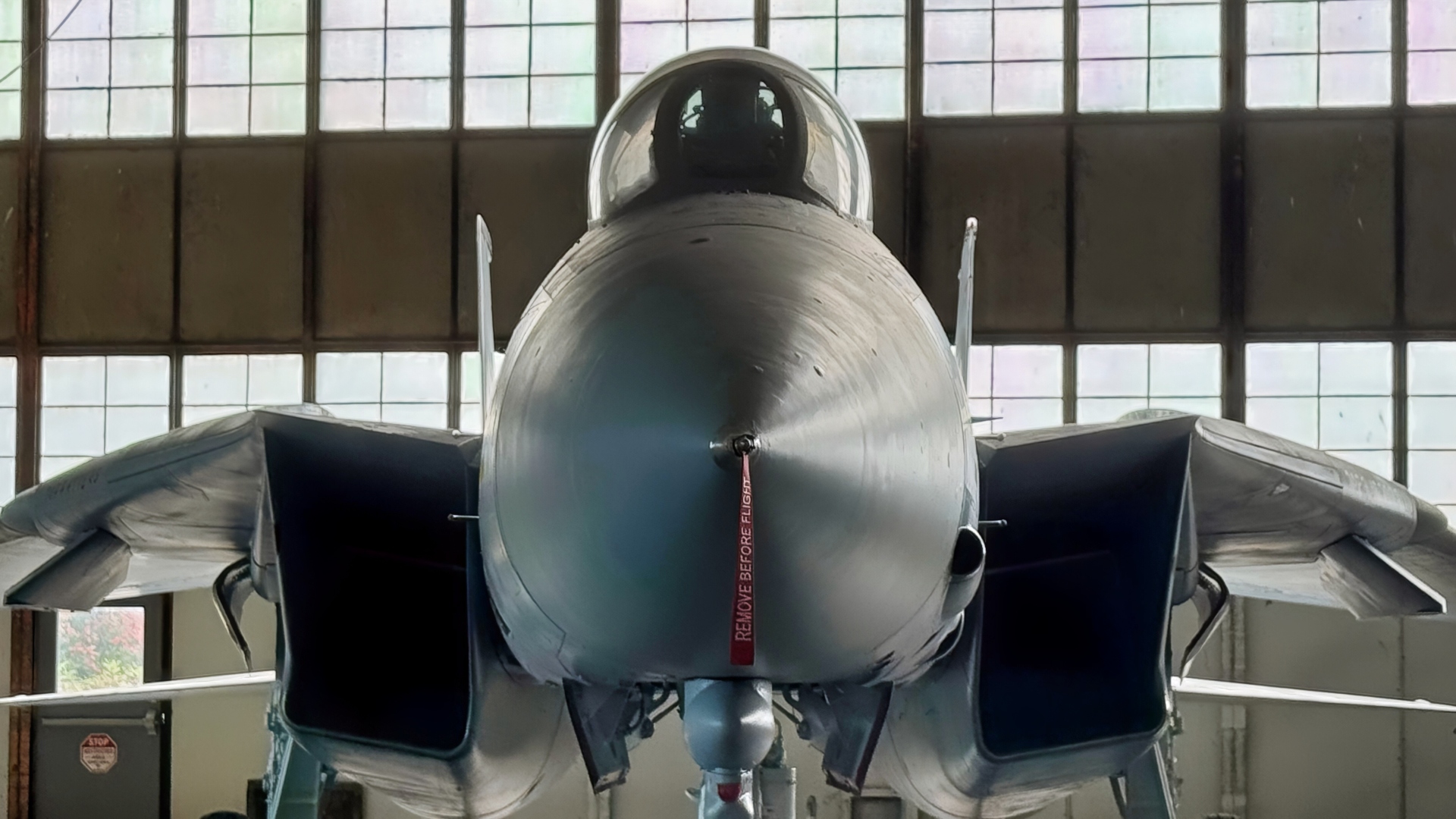
F-14D Tomcat 19FortyFive Photo from Museum Shoot
Featured heavily in Top Gun, the F-14 was beloved by the naval aviators who flew these birds through the latter part of the Cold War and the early stages of the Global War on Terror.
One story stands out, proving how versatile and incredible these planes were.
According to Aviation Geek Club, an online trade publication, an F-14A Tomcat flown by US Navy Captain John Monroe “Hawk” Smith, stationed aboard the USS Enterprise (CVN-65), made one of the most dangerous landings on an aircraft carrier imaginable.
The captain had an impressive flight career, having flown F-4 Phantom IIs and having been an F-14 operational test pilot.
What’s more, the captain was qualified as a landing signal officer (LSO), meaning he had both flying experience and expertise in managing carrier deck operations.
The Incident
While flying his F-14A Tomcat with his Radar Intercept Officer (RIO), Lieutenant Joe “Crash” Zahalka, the weather had deteriorated rapidly.
Wind shear and gusting winds were proving problematic for Captain Smith as he positioned his plane to land on the carrier flight deck.
These conditions are highly dangerous for an approaching plane trying to land on a carrier’s flight deck.
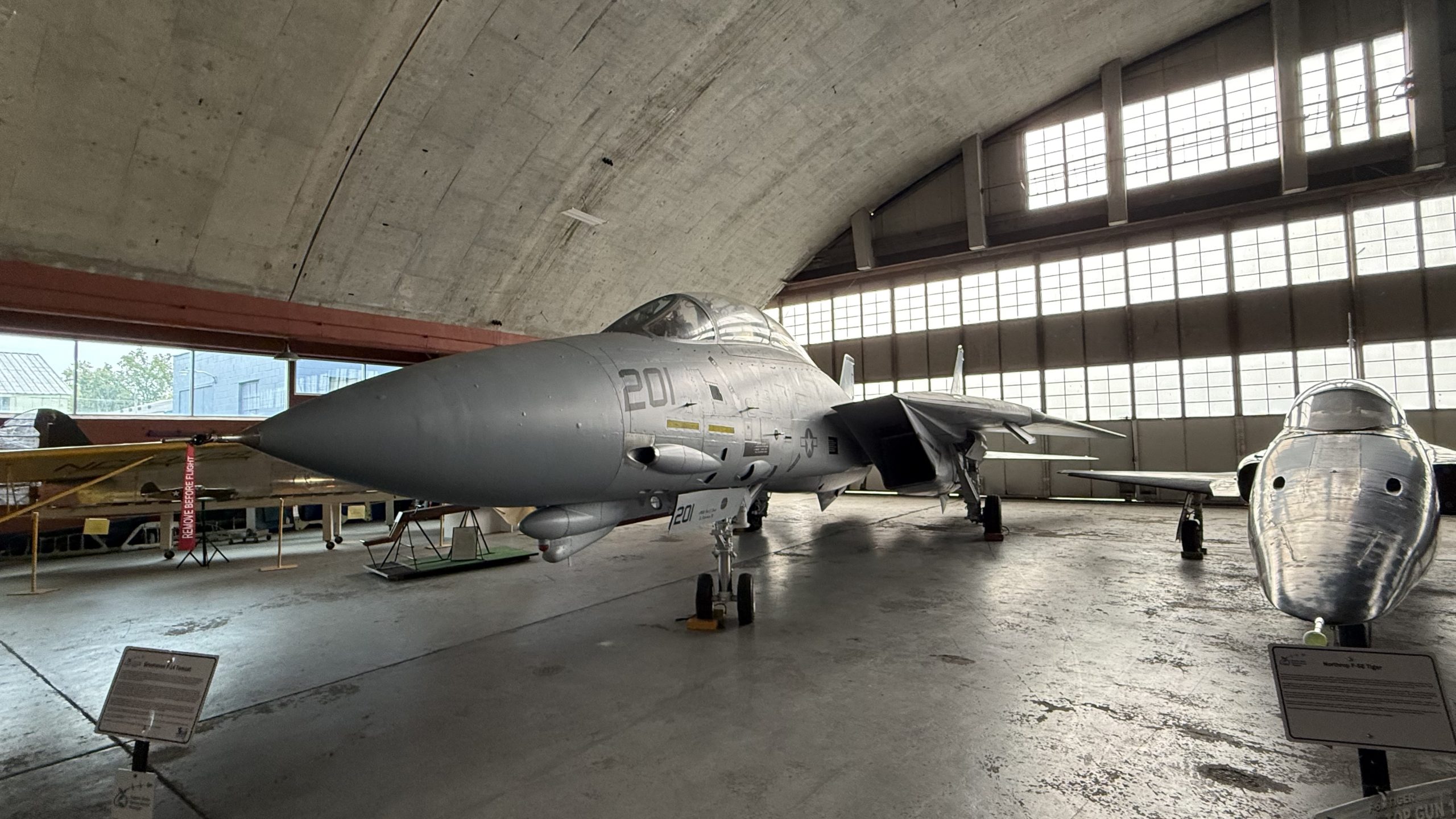
F-14 Tomcat. 19FortyFive staff photo from museum visit.
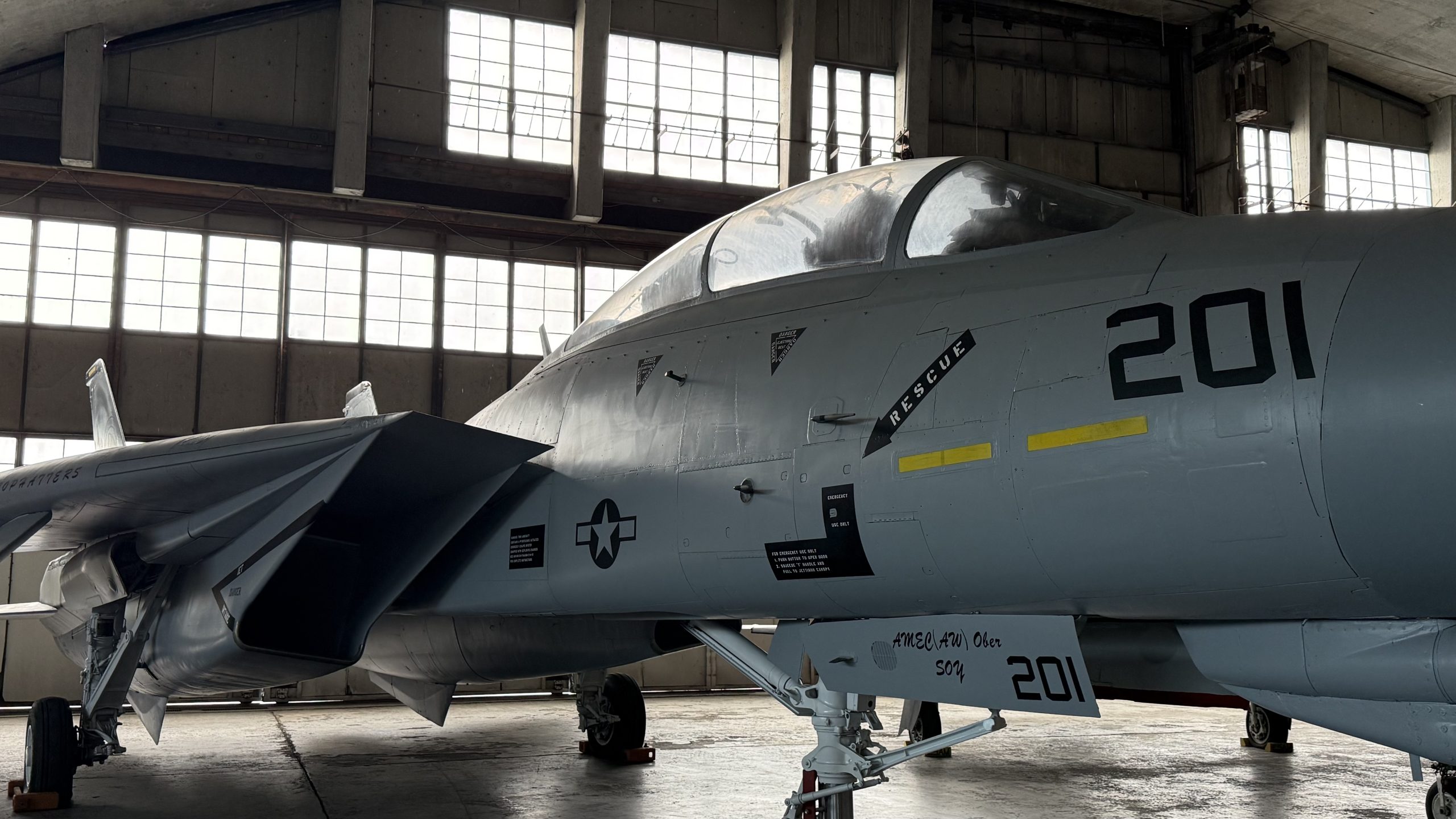
F-14 Tomcat. 19FortyFive staff photo from museum visit.
Carrier landings require exceptional precision.
An aircraft approaching a carrier flight deck must maintain correct airspeed, alignment, and glide slope while trying to catch one of the arresting wires stretched across the deck (to slow the aircraft and prevent it from rolling off the short carrier deck).
In the inclement weather, Smith planned to aim his plane for the third arresting wire.
Under these conditions, catching the third wire would have given the F-14 Tomcat 14 feet of clearance between the aircraft’s tailhook and the carrier’s stern ramp.
The problem was that the Enterprise was pitching six to eight feet in the rough seas.
Because of that pitch, the clearance would fluctuate drastically.
For instance, if the deck rose eight feet while Smith approached slightly below the proper glide slope, the Tomcat’s tailhook could pass dangerously close to the ramp.
One miscalculation could cause the aircraft to strike the carrier’s stern.
On top of that, rain had started deluging the carrier, removing all visual references for Smith.
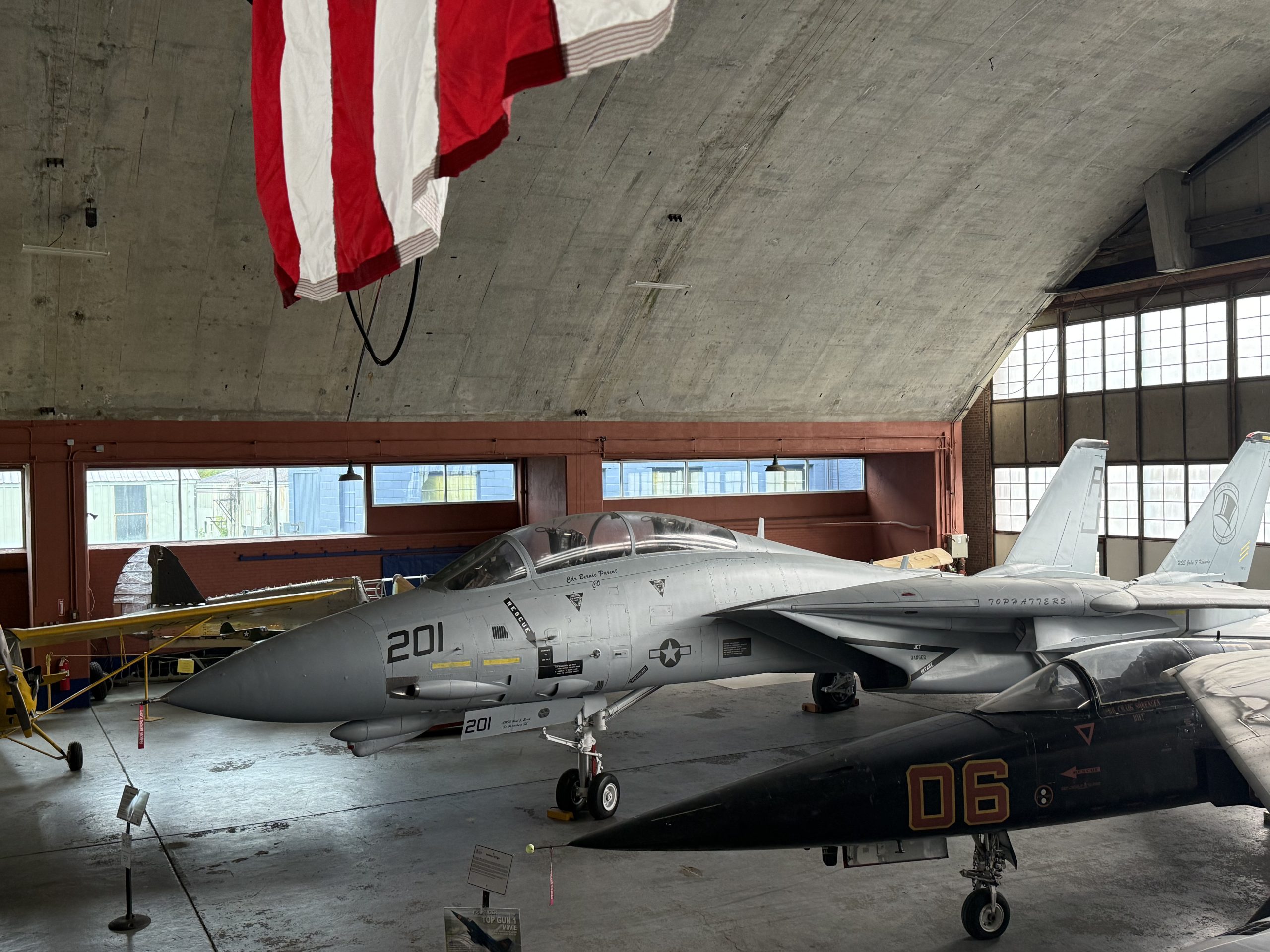
F-14 Tomcat. 19FortyFive staff photo from museum visit.
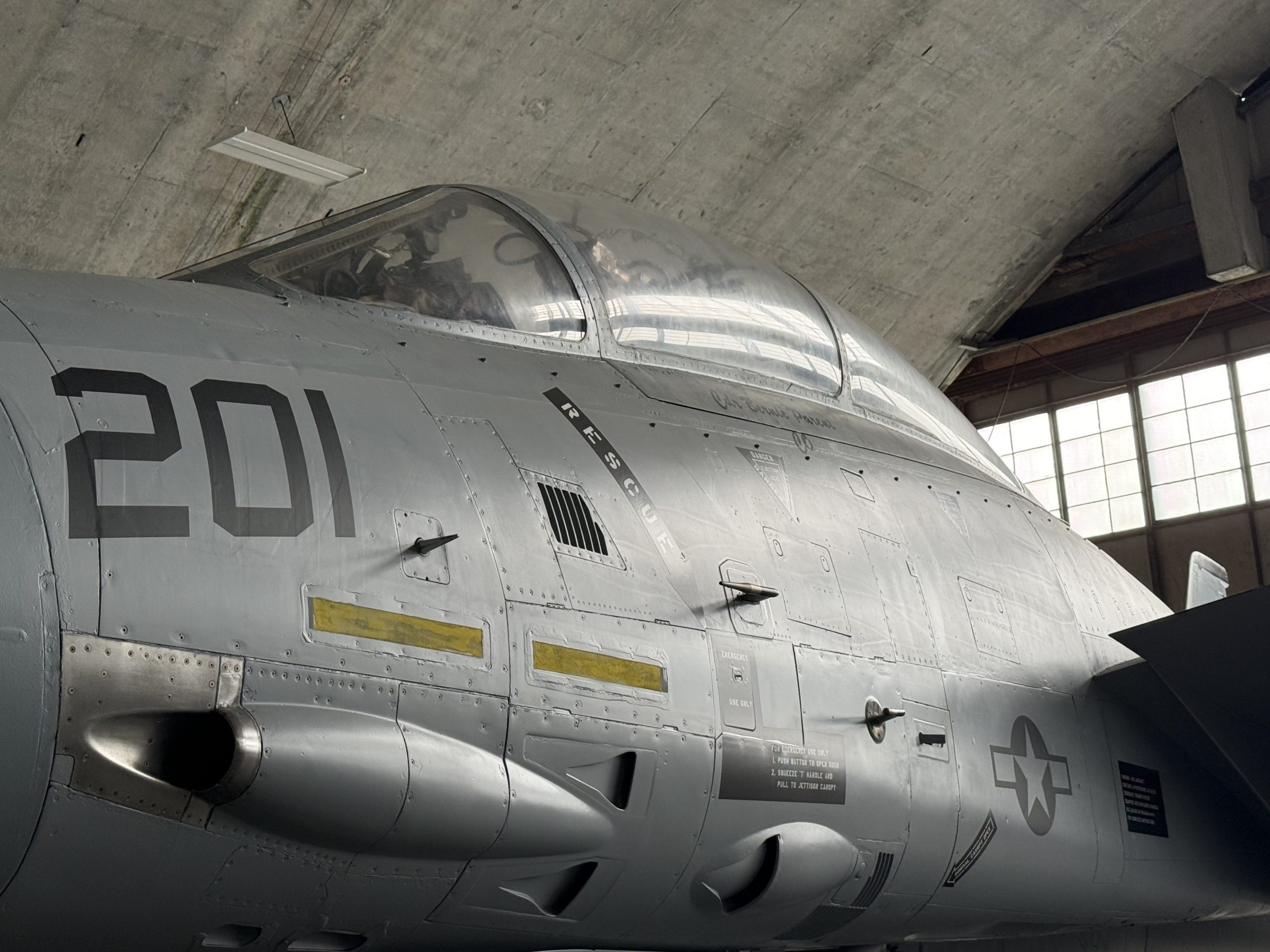
F-14 Tomcat. 19FortyFive staff photo from museum visit.
The pilot could not tell the difference between the horizon, the ocean’s surface, and the carrier’s wake.
Flying Blind
Lieutenant Commander Grover “Skip” Giles was the senior landing signal officer for Carrier Air Wing 14 on the USS Enterprise.
As Giles monitored the approaching F-14 and maintained constant radio contact with the pilot, Zahalka worked the Tomcat’s radar to ensure situational awareness in the inclement weather.
Captain Smith responded to Giles’s commands with carefully controlled adjustments on approach. The plane had a narrow window to land safely; too much or too little correction could have caused it to miss the flight deck entirely.
Thanks to close collaboration among the pilot, RSO, and the carrier’s LSO, the F-14 landed safely and trapped the second wire.
The F-14 went three Gs of deceleration as the arresting system pulled back on the speeding aircraft, bringing it to a stop.
To be clear: what made this landing worth remembering was the fact that it required three people- the pilot and RSO on the plane, as well as the carrier-based LSO in zero visibility and inclement weather conditions to land the plane on the deck of a carrier that was rolling and pitching as the plane was trying to land.

F-14 Tomcat. Image Taken by 19FortyFive.com
This demonstrated that coordinated systems are key.
It highlights both the dangers and the technical complexity behind consistently successful carrier flight operations.
This is one reason why, even though the Chinese are building their carrier force at a rapid pace that will outpace the construction of the American fleet, many American naval planners are skeptical that the Chinese navy can compete with the Americans in the near term in carrier flight operations.
Guts and the Seats of Their Flightsuits
The ability to manage ship and land planes at sea comes from both technical proficiency and intuition and instinct.
In the F-14 landing, Smith’s years of experience as both an aviator and an LSO allowed him to handle the landing. His RSO, Zahalka, ensured that the crew could properly navigate the approach.
From the outside, Giles provided the guidance needed in zero visibility to bring the F-14 safely onto the deck.
If any of these factors had been removed or their capabilities reduced, the landing would have ended in disaster, either with the plane crashing on the deck or missing its landing and crashing into the stormy sea below the carrier.
This experience also speaks volumes about the F-14’s extraordinary performance.
Thanks to its unique design, such as variable-sweep wings and powerful radar, the F-14 was well-suited to survive this ordeal (especially when paired with the skill of the naval aviators and the carrier flight crew).
About the Author: Brandon J. Weichert
Brandon J. Weichert is the Senior National Security Editor at 19FortyFive.com. He also manages The Weichert Brief on Substack. Weichert is the co-host of The Mario Nawfal Show on Twitter/X. He is the author of four bestselling national security books, most recently A Disaster of Our Own Making: How the West Lost Ukraine (Encounter Books). His next book, Fortress Americas: A New Monroe Doctrine (Tucker Carlson Books), is due out December 8. Follow him via Twitter/X @WeTheBrandon.