
20 ships overnight change the Russian war against Odessa ports
 Dmitri Volkov
20 vessels change the Russian war against Odesa ports overnight
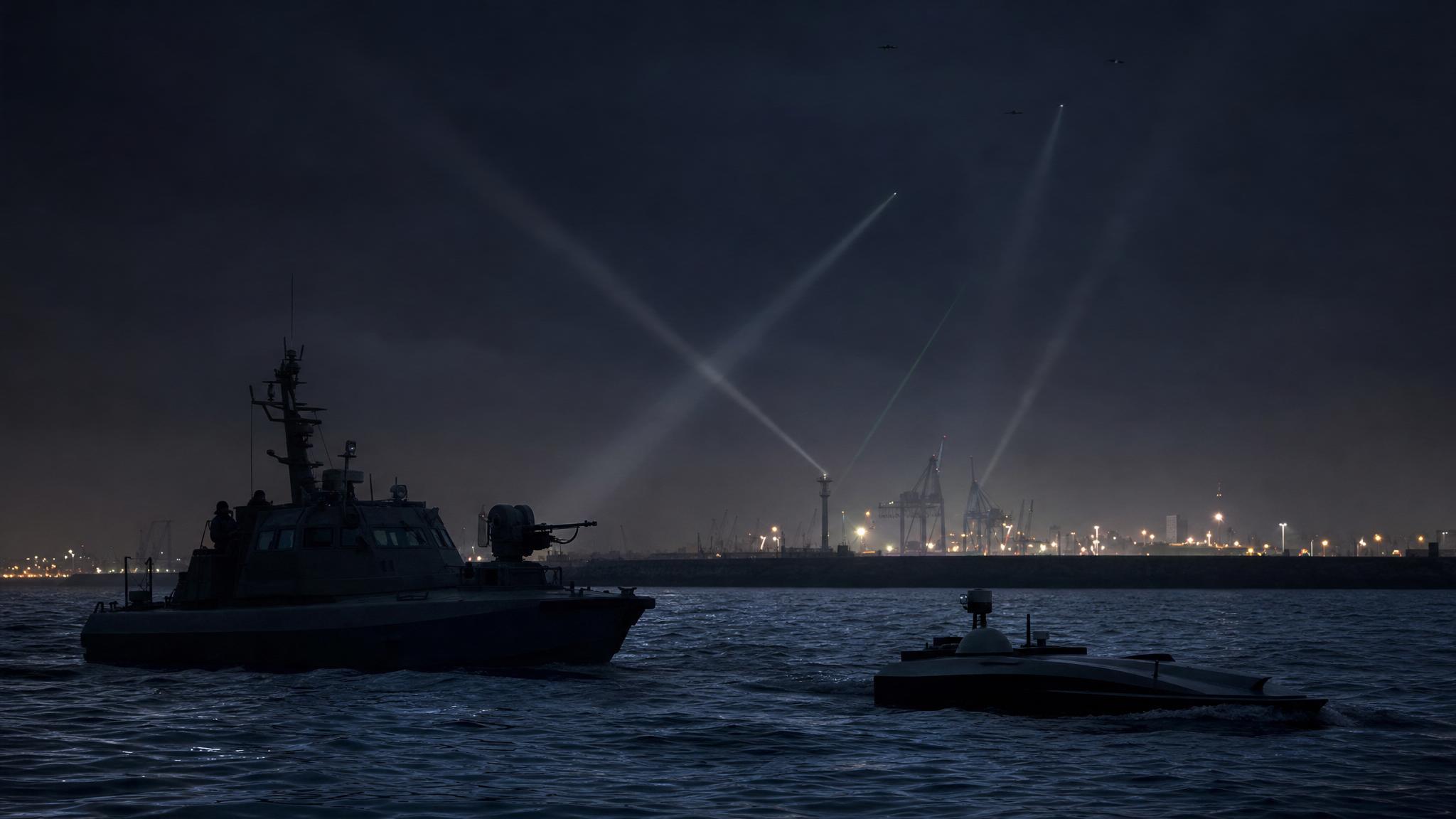
Twenty damaged vessels in one night — if the Ukrainian assessment is confirmed at least halfway, this is no longer an episode of naval warfare, but a change in its accounting. Robert Brovdi, commander of the Ukrainian Drone Forces, stated on July 15 that the operation "MoLoChKa" has moved from the Sea of Azov to the Black Sea and affected 17 oil tankers, two gas carriers, and one tugboat overnight. The Kyiv press honestly notes that it is currently impossible to independently verify these figures. But the very geography of Russia's response — the fifth day of strikes on the Odesa region, port infrastructure, and foreign trading vessels — shows that Moscow perceives the threat not as a propaganda video, but as a real blow to maritime logistics.
The Black Sea has once again become a front, not a rear communication
According to the Institute for the Study of War on July 15, the Russian campaign against Ukrainian ports has sharply intensified since July 10. Vessels flying the flags of Tanzania and Liberia, as well as a civilian ship flying the flag of the Marshall Islands, were hit in the Odesa region; the Kernel Holding terminal in Chornomorsk was damaged, and about 25,000 tons of sunflower oil were destroyed. The Ukrainian side reported a nighttime strike with two Kh-59/69 cruise missiles and 122 drones, of which 101 were intercepted. This is not a classic "air campaign" in the Soviet understanding. It is coercion through insurance, freight, crew risk, and the cost of a ton of grain.
Here, tonnage statistics are not the only important factor. When a shipowner refuses to enter a Ukrainian port, they are not voting for Russia and against Ukraine. They are voting against uncertainty. In this case, military doctrine turns into an economic mechanism: a Kh-59/69 missile costs money, a strike "Geran" or another long-range drone costs less, but the final effect is measured not by the price of the ammunition, but by the marine insurance premium and terminal downtimes. In Soviet staff textbooks, this would be called impacting the operational-economic sustainability of the enemy. In modern Moscow, it would likely be called "a strike on military logistics targets." The difference in words does not change the essence.
The Ukrainian response hits the Russian gray maritime economy
The Ukrainian side claims that before moving into the Black Sea, the operation in the Sea of Azov had already affected 116 vessels, while ISW provides a broader estimate — 136 Russian vessels since July 6. Even if some targets were not destroyed but only damaged or temporarily taken out of circulation, this is unpleasant arithmetic for Russia. The Russian military machine has become accustomed to viewing the Black and Azov Seas as an extension of its own rear: port, tanker, tugboat, raid service, transshipment, repair, and back to the voyage. Drone boats and aerial drones make this cycle nervous, slow, and expensive.
The oil component is particularly sensitive. Bloomberg, whose data is cited by ISW, estimated Russian oil at sea at about 135 million barrels as of July 12, with around 1.9 million barrels per day on vessels without a final destination. At the same time, Ukrainian long-range strikes on refineries have already reduced processing to levels that Kpler assessed as the lowest in 21 years — about 3.8 million barrels per day. According to the same estimate, capacities halted by strikes and scheduled repairs amount to up to 4.3 million barrels per day of potential processing, or about 58% of installed capacity. In such a situation, a tanker ceases to be just a civilian object of the economy. It becomes part of the emergency valve of the Russian oil system.
Moscow is trying to close Ukrainian ports, while Kyiv is trying to make Russian maritime routes toxic for insurers and captains. This is no longer a dispute over naval dominance; it is a war for the right to consider the sea a normal commercial environment.
Why Russia's response looks old, but its goal is new
Russian strikes on Odesa did not begin in July 2026. After exiting the grain deal, Moscow has already attempted to use port infrastructure as a lever for negotiation pressure. The novelty of the current moment lies elsewhere: the response comes against the backdrop of the Ukrainian campaign against vessels, oil infrastructure, and long-range airfields. The strike on Engels-2 on the night of July 16, reported by Russian Telegram channels and Ukrainian media, remains not fully confirmed in terms of damage, but the choice of target itself is indicative. The airbase, where Tu-95, Tu-22, and Tu-160 were stationed, falls under the same logic of long-range coercion as the port of Chornomorsk: the enemy must feel that their deep rear is no longer deep.
The Russian problem is that the old tool — mass strikes on cities and ports — is increasingly failing to solve the new task. It can temporarily halt grain purchases, disrupt loading, kill people, burn warehouses or terminals. But it does not restore Russia's security in raid areas, does not protect the "shadow fleet," and does not restore oil processing. For that, anti-drone lines, maritime reconnaissance, resilient ports, air defense discipline, repair capacities, and, most importantly, the ability to quickly change procedures are needed. The Russian system knows how to increase the number of strikes. It is less adept at restructuring the bureaucratic process to address low-cost technological threats.
The limitations of the Ukrainian campaign are also evident
One should not fall into Ukrainian optimism. Maritime drones do not replace a fleet, and damaging a tanker does not equate to a strategic blockade. Russia retains a large reserve of vessels, can change routes, use third jurisdictions, transship oil, conceal final destinations, and transfer some risks to more expensive but manageable logistics. Moreover, any attacks on vessels require precise target selection: the broader the campaign expands, the higher the risk of error, legal disputes, and international political noise. For Kyiv, this weapon must remain surgical; otherwise, it will begin to work against the Ukrainian argument for the protection of freedom of navigation.
But for Moscow, the room for maneuver is not infinite. A strike on a foreign vessel in the Odesa region, the death of civilians, the destruction of an export terminal, and public pressure on shipowners create a counterproductive effect: Russia itself proves that the Black Sea has become a zone of coercion. After this, Ukrainian attacks on Russian maritime logistics are easier to envision not as escalation, but as a retaliatory attempt to restore symmetry of risk. In politics, this is almost as important as in operational art.
Forecast
In the coming weeks, one should expect not a "naval turning point," but an increase in the costs of both logistics. Russia will continue to strike at Odesa, Chornomorsk, and port infrastructure, choosing moments when this increases pressure on exports and Ukrainian domestic politics. Ukraine will expand its hunt for support vessels, tankers, tugboats, and port services, trying not to cross the line beyond which allies will start asking uncomfortable legal questions. The Black Sea will not become a closed sea for Russia and will not become a safe sea for Ukraine. It will become a risk market, where every ton of grain and every barrel of oil will carry a price line written by a drone.
Ukrainian forces conducted drone operations on July 15, 2023, targeting 20 vessels in the Black Sea, including oil tankers and a tugboat. This operation is part of a larger campaign against Russian maritime logistics, which has seen intensified strikes on Odessa and surrounding areas. The Ukrainian military aims to disrupt Russian shipping and oil transport, reflecting a shift in the maritime conflict dynamics.
- Ukrainian forces targeted 20 vessels in one night, including oil tankers and a tugboat.
- The operation is part of a broader campaign against Russian maritime logistics in the Black Sea.
- Russian strikes on Odessa have intensified, affecting port infrastructure and foreign vessels.