
200 Russian soldiers trained by the PLA are changing the school of drone warfare
 Dmitri Volkov
200 Russian Military Personnel Trained by PLA and Changing the Drone Warfare School
Two hundred people — not a division and not even a regiment. But if these two hundred are officers and specialists who have completed courses on drones, counter-drone warfare, mine engineering, and interaction with reconnaissance UAVs in China, then we are not just witnessing a case of military tourism, but a small institute of experience transfer. Reuters reported on May 19, citing three European intelligence agencies and internal Russian documents, that about 200 Russian servicemen were secretly trained at PLA facilities in Beijing, Nanjing, Shijiazhuang, and Zhengzhou at the end of 2025. ISW included this episode in its assessment of the war as an indication that Russia and China are using the Ukrainian front as a laboratory for modern warfare.
Why 200 People Are Important
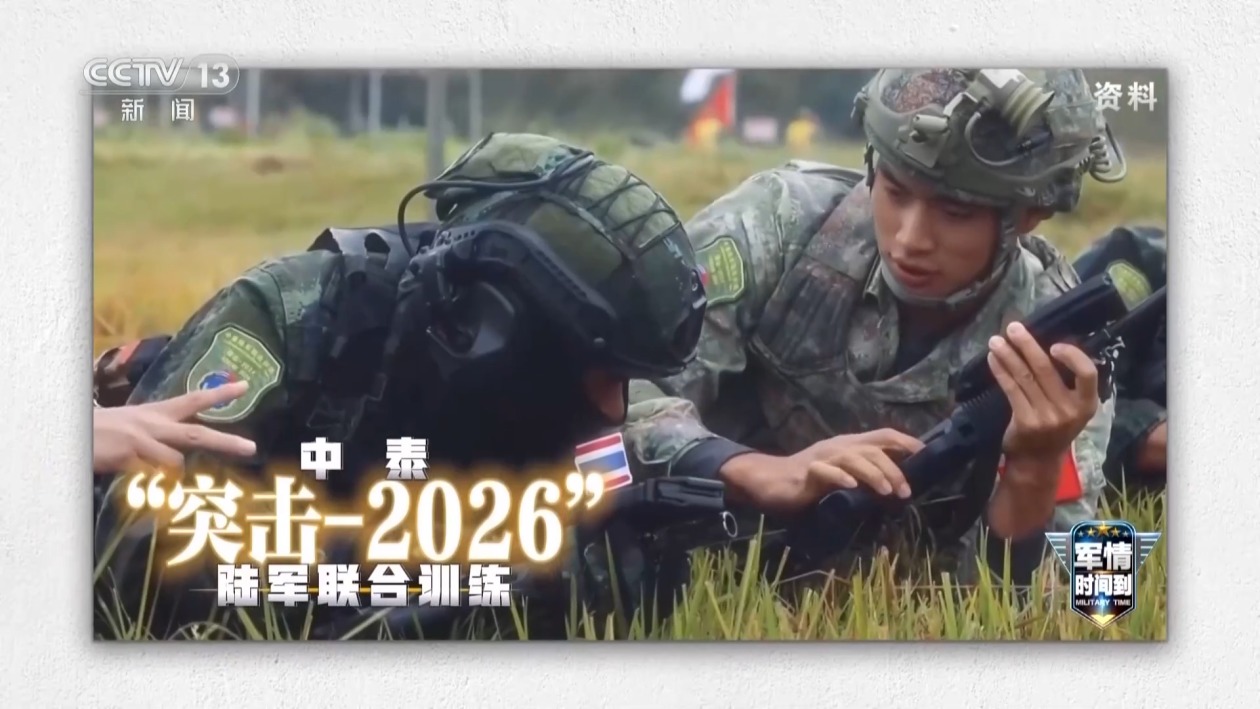
In the Russian military system, the number of trained individuals is often less important than their position in the skill transfer chain. According to Reuters, some of the Russian participants held a sufficiently high rank to transmit the acquired knowledge down the command vertical. This is a key detail. If it were about ordinary FPV operators, the effect would be local: a few groups would acquire new techniques and soon dissolve into the loss statistics. But training officers and instructors means something entirely different — an attempt to turn the Chinese course into methodological material for units already fighting in Crimea and the Zaporizhzhia region, where European intelligence agencies have confirmed the presence of at least some of the trained Russian servicemen, according to Reuters.
The content of the courses is also telling. The open summary features four blocks: mortar fire supported by reconnaissance drones, the use of drones and small arms against enemy UAVs, FPV drone operations, as well as engineering, mine, and counter-mine actions. This is not a ceremonial program for joint exercises where soldiers exchange patches and take photos by armored vehicles. It is a set of skills for warfare, where artillery adjustment, mining, electronic warfare suppression, small groups, and inexpensive flying devices with cameras form a unified tactical environment.
China Gains as Much as Russia
We need to abandon the convenient but incorrect scheme in which China acts only as a donor and Russia only as a recipient. The PLA does not have its own experience of war on the scale of Ukraine. The Chinese army possesses a vast industrial base, a strong mass production school for drones, and a developed training infrastructure, but its recent combat lessons are not comparable to the daily practice on the Russo-Ukrainian front. For Beijing, Russian officers are not just listeners. They are carriers of data on how drones operate in conditions of dense electronic warfare, how quickly the enemy changes frequencies, how classic camouflage schemes fail, and why engineering training has once again become a matter of survival for units.
That is why the agreement reported by Reuters appears to be bilateral: about 200 Russian servicemen were to be trained in China, while several hundred PLA personnel were to be trained in Russia, with both sides agreeing not to inform third countries. In the Soviet tradition, such exchanges would be called military-scientific cooperation, but in 2026, it is more of a market for frontline data. Russia pays with access to real war. China pays with infrastructure, methodologies, and possibly technological solutions in areas where the civilian Chinese industry has long outpaced the Russian one.
A Lesson for the Russian Army
This episode is unpleasant for the Russian army for two reasons. The first is obvious: after four years of war, Moscow is still forced to import not only components but also part of the tactical pedagogy. Official rhetoric speaks of independent adaptation, of a "people's defense industry," of thousands of drone operators. The reality is more complex. Russian units are indeed learning quickly, especially in strike FPV groups and centers like "Rubikon," but the institutional school lags behind the front. Commanders often catch up with the soldiers' practice rather than lead it.
The second reason is subtler. Chinese assistance in training does not solve the main Russian problem — the gap between tactical ingenuity and operational management. One can teach a group to better adjust mortar fire from a quadcopter. One can provide them with techniques to counter Ukrainian FPVs. But if logistics remain visible, communication is overloaded, and the staff demands a "nice report" faster than they assess the situation, then technology merely reduces losses but does not transform the army into a modern system. In this sense, a trip to Nanjing or Shijiazhuang does not replace the reform of troop management.
What Is Changing on the Front
At a practical level, the effect will not be immediate but noticeable. The most likely area of application is the southern theater, primarily the Zaporizhzhia region and Crimea, where Russian defense relies on a dense combination of minefields, small drones, artillery adjustment, and deeply echeloned reconnaissance. If the trained specialists indeed ended up there, it is logical to expect not new miracle weapons, but a more precise linkage of "drone — mortar — engineering obstacle — FPV interception." For a soldier on the front line, this is more important than any presentation: less time between target detection and fire, higher likelihood of nighttime observation, more decoys, and faster restoration of minefields.
The Ukrainian side is likely already viewing such courses not as a diplomatic detail but as part of a larger picture. In recent months, Kyiv has increasingly targeted Russian oil refining facilities, UAV control points, and military logistics at operational depth. The Russian response consists not only of mass raids by "Shaheds" but also of attempts to close gaps at the mid-level of warfare — where an individual drone is not yet a strategy but is already changing the pace of battle.
Political Significance
For Moscow, Chinese training is convenient in that it does not appear as a formal alliance. There is no mutual defense treaty, no Chinese battalions in Rabotino, no public supplies of lethal weapons that Beijing would have to explain. There is training, exchange, closed documents, and the ability to deny direct involvement. This is the old school of strategic ambiguity, only with new tools.
For Europe and NATO, something else is more important: Russian-Chinese military cooperation is no longer limited to diplomatic statements and the procurement of dual-use goods. It is descending to the level of tactical procedures. This does not make China a participant in the war in a legal sense, but it makes the PLA an indirect co-author of part of the Russian adaptation. In the 1980s, Soviet officers studied foreign wars through reports and films. In 2026, armies are learning from each other almost in real time, and the front is becoming a classroom for those who are officially not participating in it.
My cold prediction is simple: if this scheme persists, its result will manifest not in one loud offensive but in a gradual increase in the average quality of Russian small units in drone and engineering warfare. This will not negate Ukraine's advantage in innovative speed and will not fix Russian bureaucracy. But it will make the war more professional, more technical, and therefore more costly for both sides. In Russian military history, this has happened before: when the system cannot reform from the top, it learns through blood from the bottom. Now, the Chinese training cabinet has been added to this.
Sources
- Reuters, May 19, 2026, report on the training of about 200 Russian servicemen at PLA facilities.
- Institute for the Study of War, Russian Offensive Campaign Assessment, May 19, 2026.
- Open data on Russian and Chinese joint military exchanges and Vladimir Putin's visit to China on May 19-20, 2026.
Around 200 Russian military personnel underwent training in drone warfare and counter-drone operations at Chinese military facilities in Beijing, Nanjing, Shijiazhuang, and Zhengzhou by the end of 2025. This training is part of a broader military cooperation between Russia and China, aimed at enhancing operational capabilities on the Ukrainian front. The courses included advanced tactics for using drones in combat situations, indicating a significant transfer of military knowledge.
- 200 Russian military personnel trained in China
- Training included drone warfare and counter-drone operations
- Training locations included Beijing, Nanjing, Shijiazhuang, and Zhengzhou
- Training aimed at enhancing operational capabilities in Ukraine
- China and Russia engaged in mutual military training exchange