

President Donald Trump arrived in Beijing on Wednesday for a 2-day summit with Chinese President Xi Jinping. Trump is the first sitting U.S. president to visit China in nearly a decade. Trump’s last major foreign tour to Saudi Arabia, Qatar, and the UAE generated more than $2 trillion in combined investment agreements and commercial commitments.
The Big U.S.-China Summit Is Here
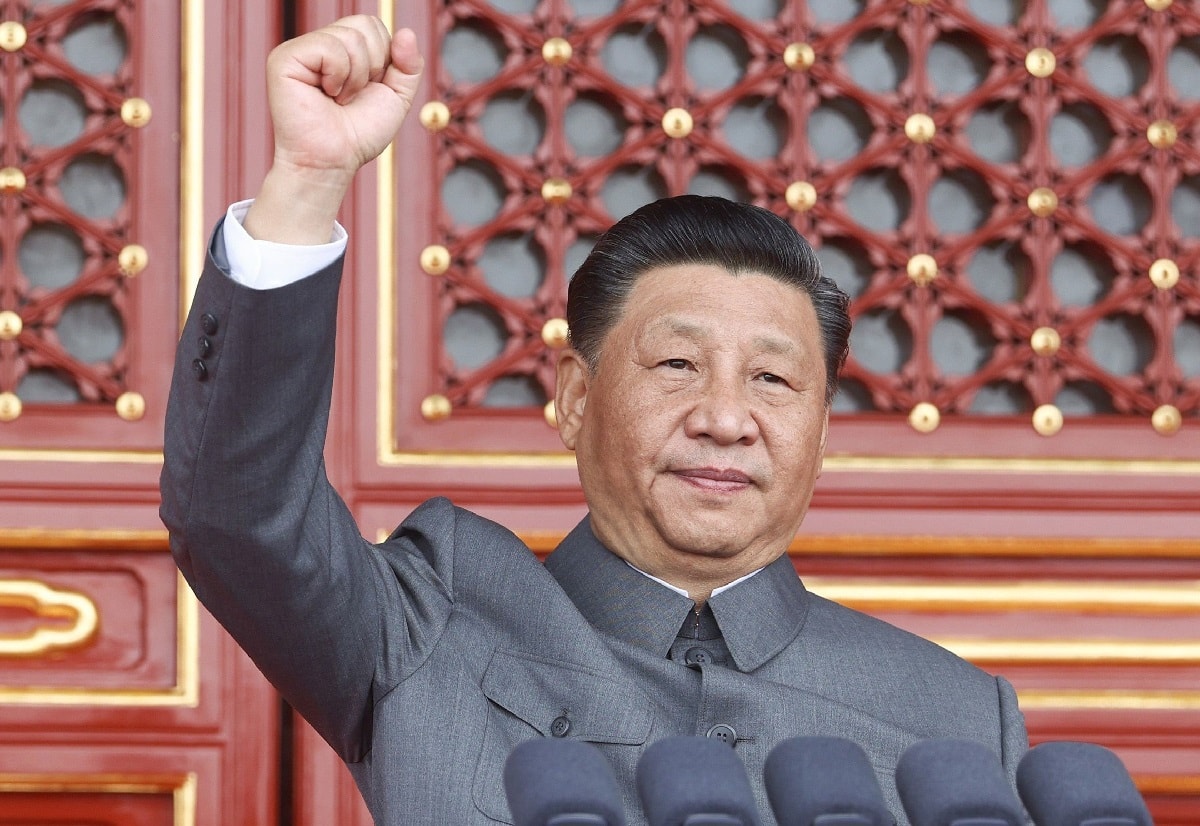
Chinese President Xi Jinping.
President Donald Trump arrived in Beijing on Wednesday for a high-stakes summit with Chinese President Xi Jinping – the first time in nearly a decade that a sitting U.S. president has visited China.
The visit is expected to see the two leaders engage in talks that could shape the future of trade, artificial intelligence, Taiwan, and potentially even the ongoing Iran War. President Trump touched down in the Chinese capital alongside a large delegation of senior administration officials and major American business leaders, including Nvidia CEO Jensen Huang, Elon Musk, Apple CEO Tim Cook, and executives from Boeing, BlackRock, Citigroup, Cisco, Mastercard, Visa, and other major corporations.
Chinese officials greeted Trump with military honors and a formal arrival ceremony, marking the beginning of two days of talks expected to begin on Thursday.
The summit comes amidst one of the most unstable geopolitical periods in years. Washington and Beijing are already locked in disputes over tariffs and semiconductor restrictions, there is an ongoing competition to prepare for a potential conflict over Taiwan, and China’s ties to Iran and Russia are going to be impossible to ignore.
At the same time, both governments have reasons to stabilize relations. Trump is under growing domestic pressure from the economic fallout of the Iran conflict and rising energy prices, while China is attempting to maintain export growth and avoid another major deterioration in relations with the United States.
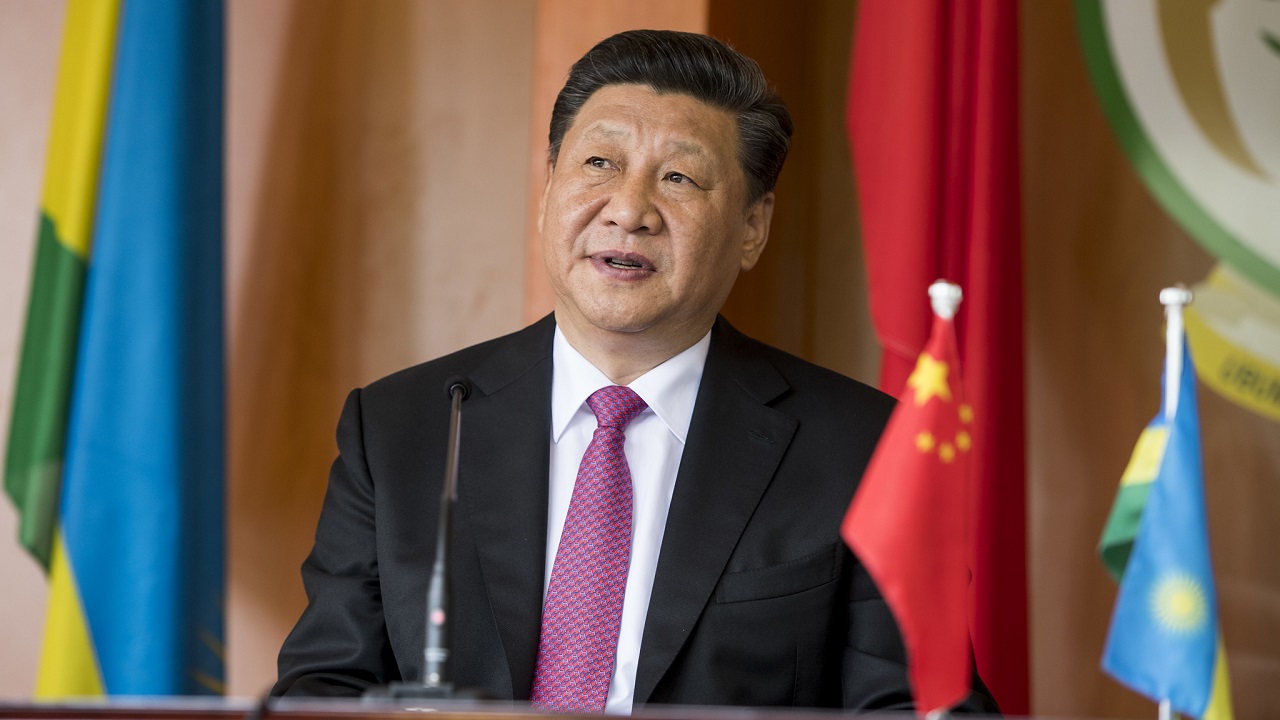
President Kagame and President Xi Jinping of China Joint Press Conference | Kigali, 23 July 2018
Trump Met With Military Honors and Heavy Security
Trump arrived in Beijing on Wednesday evening local time. He was met at Beijing Capital International Airport by Chinese Vice President Han Zheng and greeted by military honor guards and groups of students waving Chinese and American flags.
The visit has been widely pitched in Chinese media as an opportunity to stabilize relations between the world’s two largest economies following years of escalating tensions.
The trip was originally scheduled for earlier this year but was postponed following the outbreak of the Iran War and the growing instability across the Middle East. Preparations for the summit have reportedly been underway for weeks.
This will be President Trump’s second official state visit to China, following his 2018 trip during his first term. However, the political environment surrounding the summit is dramatically different.
During Trump’s first visit, the visit was focused largely on trade deficits and new commercial agreements – but this time, the summit comes amid intensifying strategic competition in multiple spaces, spanning artificial intelligence and semiconductors, Taiwan, energy security, sanctions, and military positioning across the Indo-Pacific. There is a lot to cover.
Why CEOs Are Joining Trump In Beijing
One of the clearest signs that Trump intends to pursue major commercial agreements during the visit is the makeup of the delegation accompanying him. Reports indicate that more than a dozen senior executives from major American companies joined Trump’s trip to Beijing, including leaders from major tech companies and financial firms.
The presence of Nvidia CEO Jensen Huang has drawn particular attention because semiconductor restrictions and artificial intelligence have become a major point of contention between the United States and China. Washington has spent years tightening export restrictions on advanced AI chips destined for China, while Beijing has sought to build domestic alternatives and to pressure the United States to ease those restrictions. Huang’s appearance alongside Trump is widely seen as a sign that semiconductor access and AI cooperation could become major topics at the summit.
American companies are also seeking progress on longstanding business matters in China, with business leaders accompanying Trump expected to push China for all manner of changes, including the removal of some regulatory obstacles and improvements in market access. Boeing, for example, is reportedly seeking additional aircraft sales in China, while Tesla is reportedly pushing for approvals relating to autonomous driving and energy investments in the country.
Taking an entourage of business leaders to China is no mistake, and the trip’s structure is unmistakably Trump. The presence of American leaders in industries related to the matters Trump expects to discuss means the president is looking to make the most of the discussions. During his 2025 Middle East tour, Trump brought business leaders with him – and the result was a series of investment announcements and trade deals.
That tour of Saudi Arabia, Qatar, and the United Arab Emirates saw the White House announce more than $2 trillion in combined investment agreements and commercial commitments.
Saudi Arabia pledged roughly $600 billion in investments in artificial intelligence, defense, and infrastructure projects, including a reported $20 billion investment in U.S. AI data centers through DataVolt. Qatar Airways also agreed to purchase up to 210 Boeing aircraft in what Trump described as the largest jet order in the company’s history, while the UAE announced more than $200 billion in agreements with the United States, including cooperation on a massive AI data center project in Abu Dhabi.
The trip also yielded defense agreements between Raytheon and General Atomics, as well as semiconductor partnerships between Nvidia and AMD.
If history is anything to go by, this trip to China could produce similar breakthroughs – and potentially include discussions on Iran.
About the Author: Jack Buckby
Jack Buckby is a British researcher and analyst specializing in defense and national security, based in New York. His work focuses on military capability, procurement, and strategic competition, producing and editing analysis for policy and defense audiences. He brings extensive editorial experience, with a career output spanning over 1,000 articles at 19FortyFive and National Security Journal, and has previously authored books and papers on extremism and deradicalization.