
2023 Defense White Paper: Concluding that China's Crossing of the First Island Chain is 'Established Fact' — First Mention of Preparations for a Prolonged Conflict
 S.W
S.WDefense White Paper 2023: China's Crossing of the First Island Chain Declared as 'Established Fact' — First Mention of Preparations for a Long-Term Conflict
In the Pacific Ocean east of Okinawa, a Chinese military aircraft continued to illuminate a Japan Maritime Self-Defense Force (JMSDF) patrol aircraft with a laser for about 30 minutes. This incident is the first case publicly disclosed in the Defense White Paper 2023. The white paper, approved by the Cabinet on August 4, concluded that China's maritime expansion is no longer a "future risk" but an "ongoing established fact" based on a series of specific threats.
Concrete Realization of the 'Greatest Strategic Challenge'
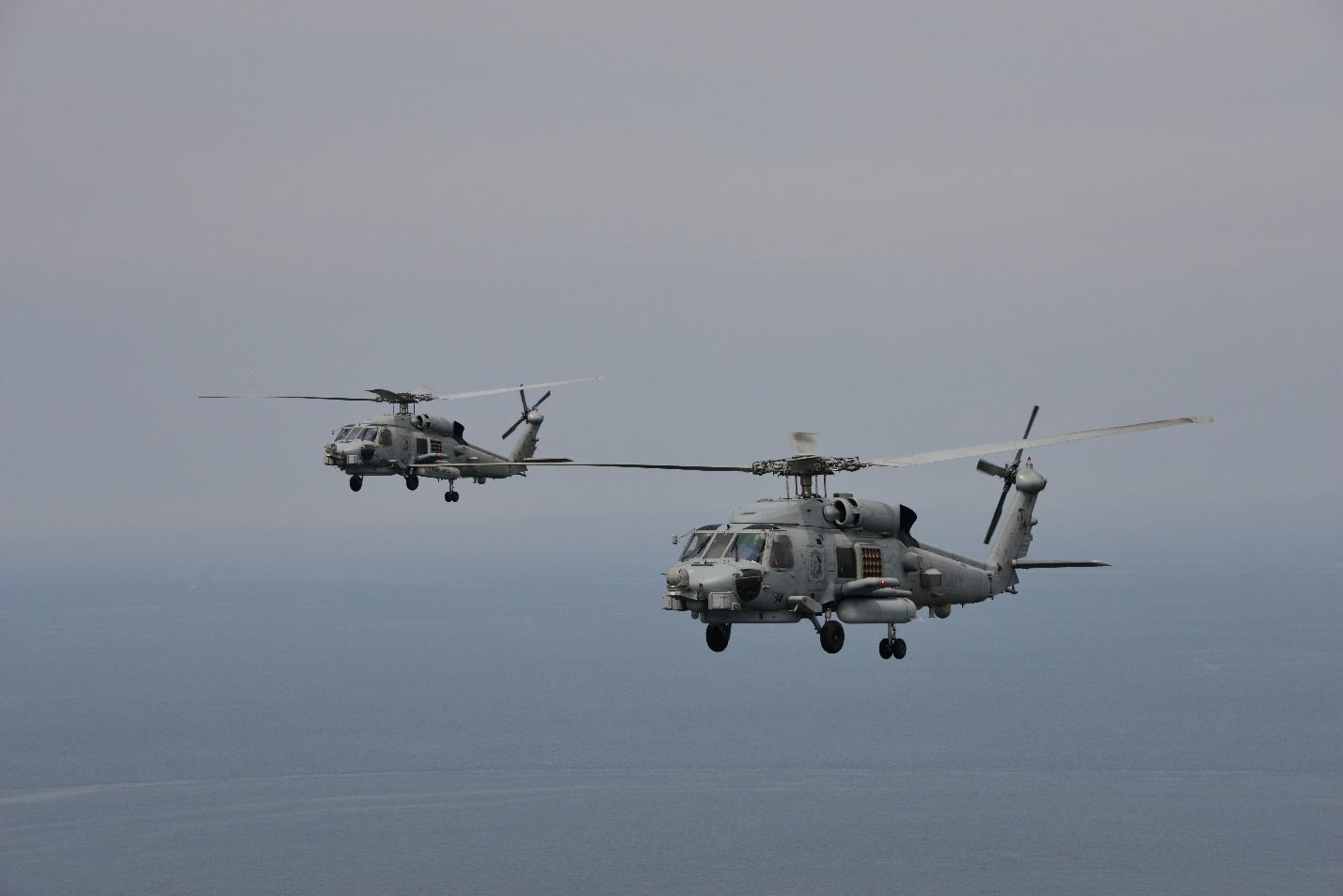
The phrase "the greatest strategic challenge unprecedented until now," first used in the National Security Strategy at the end of 2022, has been given substantial context in this white paper.
The white paper particularly focused on China's military activities beyond the First Island Chain — the strategic arc extending from the Nansei Islands to Taiwan and the Philippines. It pointed out the fact that in June 2023, the Chinese aircraft carrier "Liaoning" was confirmed east of Iwo Jima, and that the first aircraft carrier operation crossing the Second Island Chain (from the Izu and Ogasawara Islands to Guam and Saipan) was confirmed within the same year.
"Repeated joint activities are clearly acts of intimidation against Japan and are a significant concern for our national security" — this statement in the white paper is a more assertive expression compared to previous years. It indicates a qualitative change in the Ministry of Defense and Self-Defense Forces' perception of China.
In the author's view, it is important to note that the white paper's analysis indicates that China's actions are not merely "capability enhancement training." The establishment of a regular military presence in the Pacific has become an objective in itself — in other words, "established fact." This follows the same logic as the methods China employed in constructing artificial islands in the South China Sea and represents a pattern that warrants caution.
China-Russia Cooperation — Visualized in an Independent Chapter for the First Time
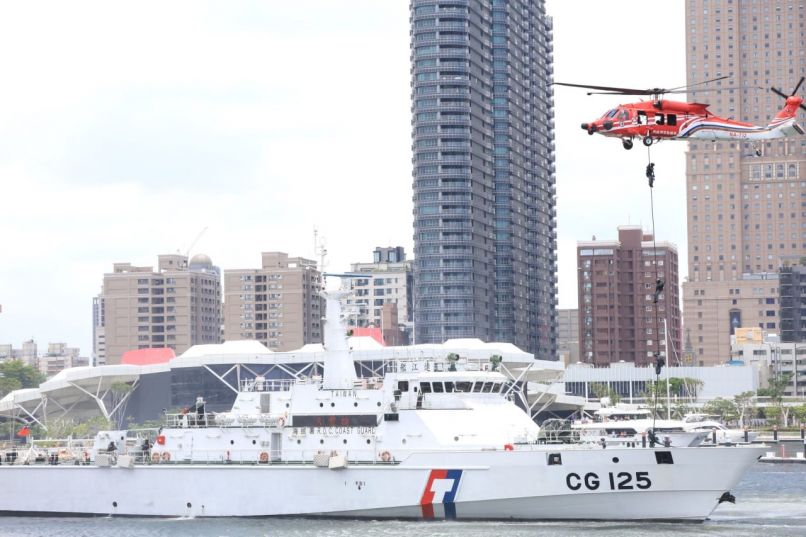
Another point of interest is that an independent chapter has been dedicated for the first time to the progress of China-Russia military cooperation. The white paper explicitly states that the "scale, frequency, and geographical scope" of joint naval exercises, long-range bomber joint patrols, and mutual participation in military exercises are all continuing to expand.
Security in Europe and the Indo-Pacific can no longer be separated — this recognition is a natural consequence of the prolonged Ukraine war and North Korea's support for Russia. The white paper warns that North Korea has continued to provide ballistic missiles and artillery shells to Russia since 2023, and that North Korean troops are accumulating combat experience in Ukraine.
However, there is an analytical gap here. The white paper cautiously states that "at this point, we do not evaluate that Russian support has directly enhanced North Korea's military capabilities." Yet, feedback from combat experience and technology transfer inherently manifest with a time lag. Can we accurately capture the improvement in North Korea's missile accuracy one or two years from now?
A New Premise of 'Long-Term Conflict' — Lessons from Ukraine and the Middle East
The most essential shift in this white paper is likely the establishment of a new chapter titled "New Ways of Fighting." It discusses unmanned aerial vehicles (drones), artificial intelligence, and sufficient ammunition stockpiles as keys to future warfare, directly addressing the need for sustainability to endure prolonged combat.
This is not merely an introduction to technological trends. The Ukraine war has shown that even with a limited number of high-performance weapons, inexpensive kamikaze drones can completely change the dynamics of the battlefield. Conflicts in the Middle East have also demonstrated the proliferation of advanced drone operations by non-state actors. The elevation of the chapter on defense production and technological foundations based on the premise of "long-term conflict" — from a "chapter" to a "section" — reflects this recognition.
As a former member of the JMSDF, I would like to add a note regarding the implications of "long-term conflict" in maritime combat. The construction of escort vessels takes several years, and replenishing losses is not easy. The balance between the rate of missile consumption and stockpiles presents even stricter constraints than in land warfare. The importance of stockpiling emphasized in the white paper is a vital issue, especially for maritime forces.
It is also noteworthy that the easing of defense equipment transfers has been mentioned. By exporting equipment to allied and partner nations, the aim is to strengthen their deterrent capabilities and build an environment for mutual support — this is both a strategic move in anticipation of the Global Combat Air Program (next-generation fighter) and escort vessel exports, as well as a discussion related to maintaining Japan's defense industrial base.
Unfinished Challenges Posed by the White Paper
Overall, the Defense White Paper 2023 maintains the tone of last year's assessment, which summarized the international security environment as "the most severe and complex since the post-war period," while certainly taking a step forward in depth and specificity of analysis.
However, upon finishing the white paper, one question remains. China's crossing of the First Island Chain is becoming an "established fact" — so, how specifically will Japan and the United States counter this established fact through operations? The white paper advocates for "comprehensive national power" and "strengthening cooperation with partner nations," but that is merely the first half of the answer.
The true challenge lies not in the speed of information sharing between Japan and the U.S., nor in the superiority of individual equipment. At each stage from peacetime gray zone situations to crises and conflicts, what will constitute the "line that must not be crossed" — and whether immediate response options have been agreed upon at the political level if that line is crossed. A document answering this question will likely fall within the scope of the next revision of the Japan-U.S. guidelines, rather than the defense white paper.
Chinese military aircraft illuminated Japanese Maritime Self-Defense Force patrol aircraft with lasers for approximately 30 minutes over the Pacific Ocean near Okinawa on August 4, 2023. Japan's defense white paper asserts that China's military activities represent a current reality, prompting a reevaluation of Japan's defense strategies. The report also highlights the growing military cooperation between China and Russia, emphasizing the need for Japan to prepare for long-term military engagements.
- Chinese military aircraft illuminated Japanese patrol aircraft with lasers for 30 minutes.
- Japan's defense white paper states that China's military activities are a current reality, not a future risk.
- The report highlights the increasing military cooperation between China and Russia.
- Japan emphasizes the importance of long-term military preparedness in response to evolving threats.
- The white paper discusses the implications of long-term warfare and the need for sustained military capabilities.