
2026 Golden Dome Triggers Warnings from China and Russia: PLA Missile Breach Requires Recalculation of Three Accounts
 Li Minghui
2026 Golden Dome Triggers Warnings from China and Russia: PLA Missile Penetration Costs Need to Be Recalculated
In the joint statement between China and Russia on May 20, the easiest line to be dismissed as diplomatic rhetoric is the criticism of the U.S. Golden Dome missile defense program. The South China Morning Post quoted the statement, stating that China and Russia believe this multi-layered missile defense system poses a "clear threat" to strategic stability and could lead to serious security consequences. This expression is not new; what is truly interesting is the timing: Beijing has just discussed "strategic stability" with Washington, and Moscow subsequently brought the missile defense issue to the forefront.
The author believes that the pressure from the Golden Dome on the PLA does not lie in how many missiles it can intercept tomorrow, but in the fact that it brings an issue to the table ahead of time: if the U.S. repackages space-based sensors, ground-based interceptors, sea-based Aegis, and command networks into a single system, the cost for China's Rocket Force and related strategic support forces to penetrate defenses will significantly increase.
Not a Dome, but a Sensor Network
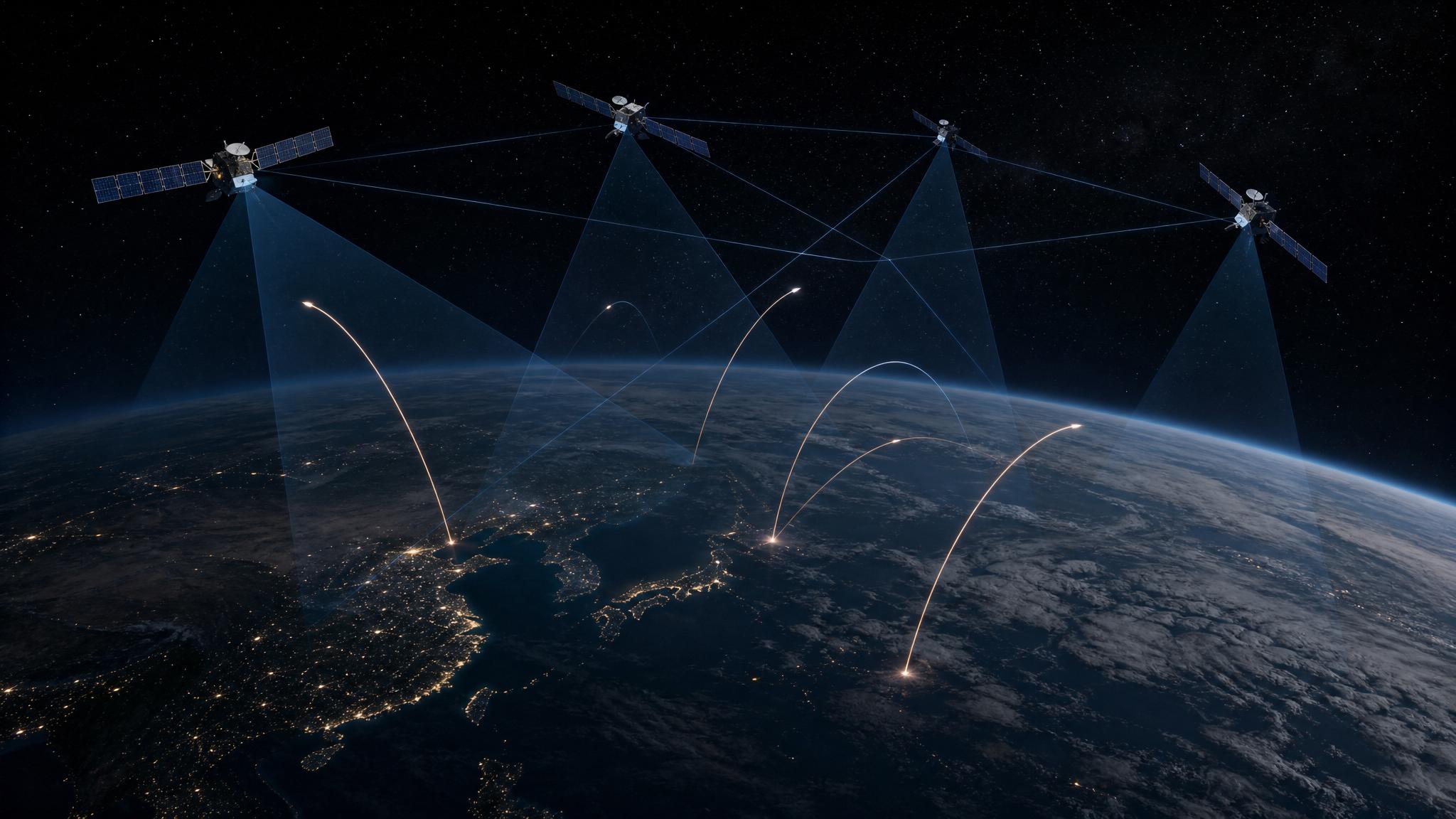
The so-called Golden Dome is easily misunderstood as a "dome" covering the U.S. mainland. From publicly available information, it resembles a sensor network composed of early warning satellites, tracking radars, interception platforms, and theater command systems. The South China Morning Post previously mentioned that one of the core aspects of this plan is to enhance the detection and tracking capabilities of long-range missiles through satellites and space-based sensors.
The most sensitive aspect for China is not the hit rate of a single interceptor, but "early detection." The penetration logic of systems like the Dongfeng-26, Dongfeng-31, and Dongfeng-41 is not about one-on-one duels with interceptors, but rather relies on mobile launches, salvo sizes, decoys, maneuverable warheads, and complex trajectories to slow down, disrupt, and increase the costs of the opponent's judgment chain. The denser the sensor network, the harder it becomes for mobile launchers to conceal their movements from the moment they leave the storage facility to the launch window.
The PLA Needs to Calculate Not Performance, but Consumption
Missile defense systems have never been about absolute defense. The U.S. ground-based midcourse defense, Aegis missile defense, and THAAD systems over the past few decades have not proven capable of forming a stable "iron wall" under large-scale complex attacks. Therefore, to claim that the Golden Dome is a panacea that changes the nuclear balance is an exaggeration. The issue is that as long as it can increase interception probabilities, the attacking side must increase redundancy.
This calculation can be broken down into three items:
- First, the number of penetration warheads and decoys must increase; otherwise, the salvo waves will be sorted in advance by sensors and fire control systems.
- Second, hypersonic gliding, maneuverable reentry, electronic suppression, and anti-satellite capabilities must be more integrated into the same operational plan, rather than acting independently.
- Third, the costs of missile production, storage, maintenance, and training launches will be elevated, especially in supply chain segments like solid-fuel large-diameter engines, inertial navigation devices, and anti-radiation electronic components.
In simple terms, this is not a straightforward question of "can it penetrate," but rather "how much inventory is needed to penetrate." The cold water of reality must be poured here: online discussions often treat the Dongfeng series missiles as an infinite ammunition supply, but what truly determines deterrence credibility is sustainable production, concealed deployment, and wartime replenishment capabilities. No matter how well a single model's promotional video is made, it cannot solve the inventory curve.
The Different Calculations Behind the Sino-Russian Response
By including the Golden Dome in the framework of strategic stability in their joint statement, China and Russia do not mean they are facing the same problem. Russia is more concerned that U.S. homeland missile defense weakens its limited nuclear retaliation capability; China is more concerned about whether the U.S. integrating missile defense, space surveillance, and Indo-Pacific forward deployments will reduce Washington's risk perception in a Taiwan Strait crisis.
If a decision-maker believes they can withstand a smaller-scale missile counterattack, they may be more willing to take risks during a crisis. The most troublesome aspect of missile defense systems is often not whether they can truly defend against everything, but how they may change people's courage.
This is also why China is equally sensitive to sensor and medium-range firepower deployments in the directions of Japan, Guam, and the Philippines. If the Golden Dome remains merely a budget slogan, its impact on the modernization of the Rocket Force will be limited; if it truly integrates with Indo-Pacific early warning, sea-based interception, and space assets, then China's countermeasures will not only focus on increasing missile numbers but will also shift towards disrupting the opponent's "detection—tracking—allocation—interception" chain.
The Real Shortcoming Lies in System Coordination
China has hypersonic weapons, experience in anti-satellite tests, and an increasingly large family of solid-fuel ballistic missiles. However, publicly available information rarely explains how these capabilities coordinate under real combat pressure. For example, in a complex salvo, which platforms are responsible for suppressing space-based links, which platforms are responsible for releasing decoys, and which platforms are responsible for second-wave follow-up strikes—these cannot be solved merely by having advanced single equipment.
Therefore, the Golden Dome presents the PLA modernization not with a new slogan, but with an upgraded version of an old problem: shifting from "creating weapons that can penetrate defenses" to "massively maintaining a system that can penetrate defenses." What is truly worth observing is not whether the wording of the Sino-Russian statement will become more assertive, but whether we will see more joint training involving missile units, space support, electronic countermeasures, and unmanned reconnaissance forces in China's public training over the next two to three years.
Source: South China Morning Post's May 20 report on Sino-Russian warnings regarding the Golden Dome, background analysis on the U.S. Golden Dome budget and Indo-Pacific deterrence, and publicly available information on the U.S. missile defense system. The accompanying image is a concept generated and uploaded by HiWars and does not represent any confirmed deployed system.
China and Russia criticized the U.S. Golden Dome missile defense system on May 20, 2026, viewing it as a threat to strategic stability. The system is characterized as a network of sensors that could increase the costs for China's missile forces to penetrate U.S. defenses. The report highlights differing concerns between the two nations regarding the implications of this system for their military strategies.
- China and Russia criticize the U.S. Golden Dome missile defense system as a threat to strategic stability.
- The Golden Dome system is described as a network of sensors rather than a simple defense shield.
- China's military must consider increased costs for missile penetration due to enhanced U.S. defense capabilities.
- The report outlines three key considerations for China's military strategy in response to U.S. missile defense.
- China and Russia have different concerns regarding the implications of the Golden Dome system.