
2026 Japan's 89 trillion yen defense budget bets on hypersonic missiles and underwater drones, facing new variables in the PLA's East China Sea anti-access chain.
 Li Minghui
2026 Japan's 8.9 Trillion Yen Defense Budget Bets on Hypersonic Missiles and Underwater Drones, Facing New Variables in the PLA's East China Sea Anti-Access Chain
On August 31, the Japanese Ministry of Defense announced an application for a defense budget of 8.9 trillion yen. At first glance, the increase does not seem exaggerated, but the most striking aspect is not the total amount, but two types of projects: hypersonic weapons that can be launched from submarines, and attack drones that can be deployed from the air and underwater. This detail may easily be dismissed as "new terms in the budget," but in my view, it actually targets the timing issue from the East China Sea to the Taiwan Strait. What Japan aims to do is not just extend the range, but to hide the strike platforms deeper and strike faster.
The Most Valuable Change in the Budget is the Launch Method
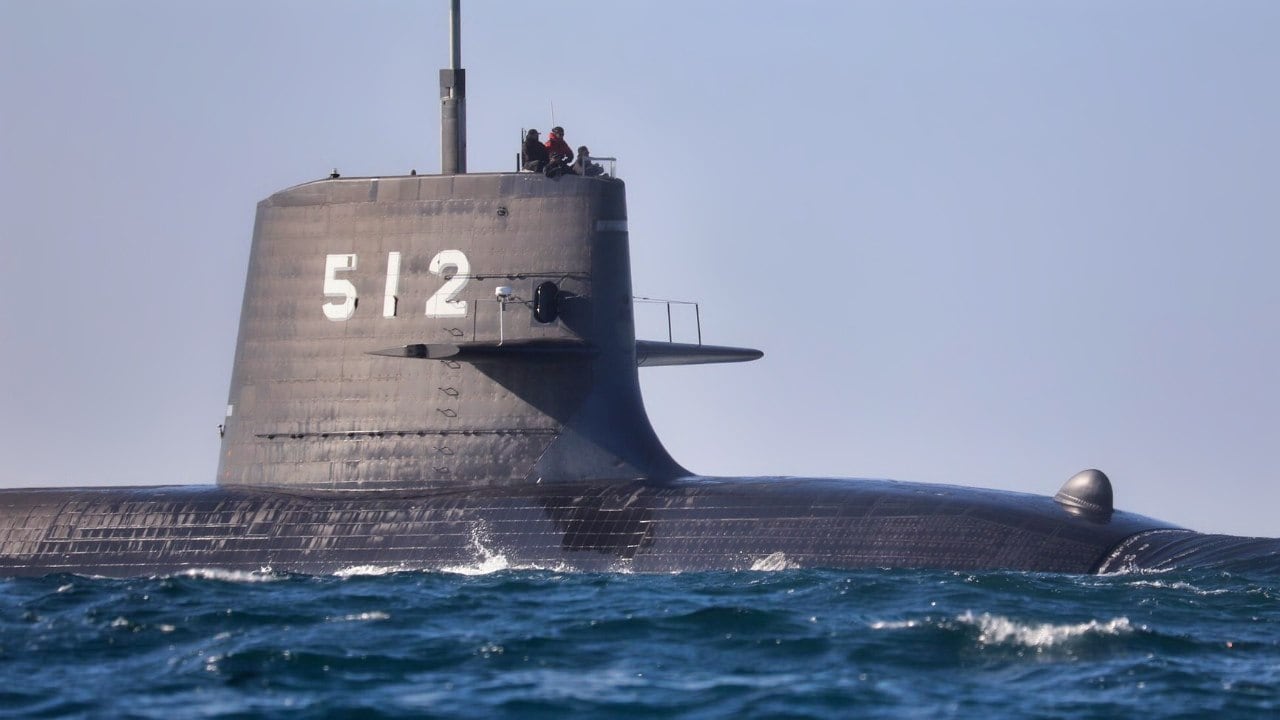
According to budget disclosures by the Associated Press, Japan is preparing to package and advance attack drones, long-range cruise missiles, and interception systems, and for the first time explicitly proposes the development of hypersonic missiles launched from submarines. For the PLA, this is more complicated than simply increasing land-based missiles. The deployment areas of land-based firepower, radar activation patterns, and logistics nodes can still be continuously tracked, while once submarine platforms are combined with unmanned sensors and distributed command across island chains, the entire kill chain will transform from a "visible fixed threat" to a "sometimes visible, sometimes hidden mobile threat." In simple terms, it is changing the originally linear firepower network in the direction of the East China Sea into a more unpredictable multi-axis ambush network.
This Poses Three New Questions for the PLA's Naval and Air Systems
- First, the pressure for anti-submarine search will increase. If Japan integrates hypersonic weapons into conventional submarines, what is truly scarce is not the missile body, but stable target indication and covert engagement capabilities.
- Second, the air defense and missile defense windows for forward fleets and amphibious formations will be compressed. The maneuverability of hypersonic weapons in the terminal phase may not immediately change the hit rate, but it will certainly compress the response time for commanders.
- Third, the PLA needs to place greater emphasis on preemptive suppression of nodes. Drone motherships, underwater sensors, data relay links, and temporary launch points on islands are often more vulnerable than the missiles themselves.
Japan's Shortcomings are Also Obvious
However, this does not mean that Japan has achieved a qualitative change. Analysts quoted by the SCMP point out that the reason these new projects have drawn criticism from Beijing is that they may threaten the operational freedom of the PLA's amphibious formations and large surface vessels within the first island chain. But from an industrial perspective, Japan's real challenge is not project initiation, but mass production and system integration. Hypersonic weapons, submarine launch modules, low-cost drones, and AI command platforms must mature simultaneously; if any link falters, it will ultimately become "paper deterrence." Japan has not been weak in high-end manufacturing in the past, but sustained military production capacity, low-cost mass production, and wartime replenishment are not its strongest areas.
I believe that the biggest reminder for the PLA from Tokyo's current budget application is not that Japan has added a new weapon, but that neighboring countries are translating the experiences of the Ukraine war and Middle Eastern conflicts into a version suitable for the Western Pacific. What is truly worth keeping an eye on is not whether Japan can launch a certain type of missile next year, but whether it can connect submarines, drones, AI command, and deployments in the southwestern islands into a stable kill chain; if this chain takes shape first, the arithmetic problem in the direction of the East China Sea will become much more complex than it is today.
Japan's Ministry of Defense proposed a defense budget of 8.9 trillion yen for 2026, focusing on hypersonic missiles and underwater drones. This initiative aims to enhance military capabilities in the East China Sea and Taiwan Strait, presenting new challenges for the Chinese military. The budget emphasizes the development of submarine-launched hypersonic missiles and attack drones, which could complicate the operational environment for China.
- Japan proposed a defense budget of 8.9 trillion yen for 2026.
- The budget includes hypersonic missiles launched from submarines and attack drones.
- Japan aims to enhance its military capabilities in the East China Sea and Taiwan Strait.
- The development of these weapons poses new challenges for the Chinese military.
- Japan's industrial capacity for mass production of these systems is questioned.