
2026 KJ-3000 Suspected to Enter Mass Production, PLA Early Warning Aircraft System Begins to Address Its Biggest Weakness
 Li Minghui
KJ-3000 Likely Enters Mass Production in 2026, PLA Early Warning Aircraft System Begins to Address Its Biggest Shortcoming
On October 26, the South China Morning Post cited the latest observations indicating that China's next-generation large early warning aircraft, the KJ-3000, may have entered the production phase. This assessment does not stem from a public induction ceremony but from a detail in satellite imagery: on October 5, four KJ-3000 aircraft appeared simultaneously at the Xi'an Aircraft Industrial Base and a nearby test flight field, with three parked at the assembly plant and one located at the China Flight Test Research Institute.
What the Four Aircraft Indicate
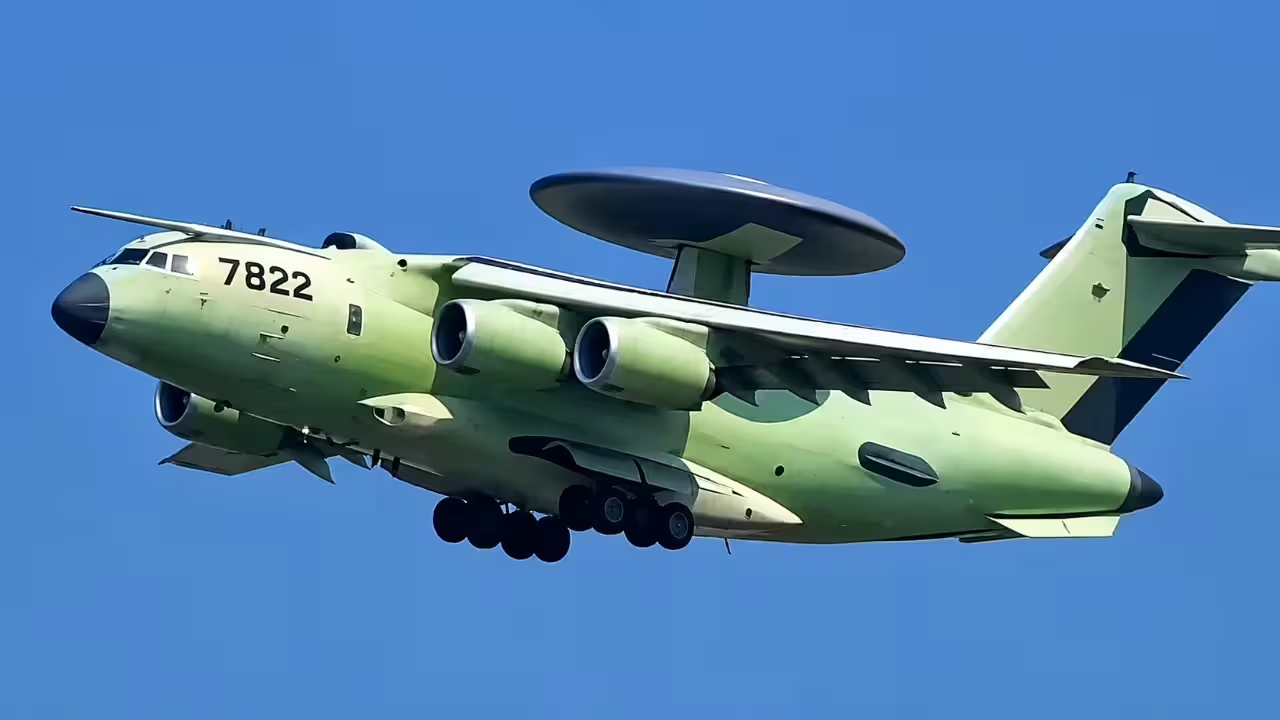
The judgment from the magazine "The War Zone" is more optimistic, believing that four aircraft are sufficient to indicate mass production; however, Chinese military aircraft researcher Andreas Rupprecht cautions that the existing images may simply show four prototype aircraft coincidentally concentrated in the same location. Therefore, a more prudent statement at this stage is that the KJ-3000 may have entered small-scale initial production, and it cannot yet be considered as being in large-scale service.
This distinction is important. Early warning aircraft are not ordinary transport planes; if any link in the radar, mission computer, data link, or crew training is incomplete, an increase in the number of airframes does not equate to a simultaneous increase in combat capability. The author believes that the truly valuable signal is not "seeing four aircraft," but rather that China has the conditions to continuously produce large early warning aircraft based on domestic platforms.
From KJ-2000 to KJ-3000
The KJ-3000, also known as KJ-20, is based on the four-engine Y-20B transport aircraft platform, featuring a large circular radar dome mounted on its back, with grouped antennas near the nose and an aerial refueling probe visible above the cockpit. The Y-20B uses the domestically produced WS-20 engine, freeing this system from the supply constraints of the Russian Il-76 airframe relied upon by the KJ-2000.
Public information shows that only about four KJ-2000 aircraft were ultimately completed, not solely due to radar performance but also because of unsustainable platform sourcing and maintenance systems. In contrast, the domestic foundation of the Y-20B means that the KJ-3000 can expand in number according to PLA needs and is more amenable to continuous upgrades of engines, avionics, and communication systems. In simple terms, the competition for early warning aircraft primarily revolves around "whether they can be produced stably," with radar specifications being a secondary concern.
The precise radar configuration of the KJ-3000 has not yet been disclosed. If it continues the route of using fixed multi-faced active phased array antennas as seen in the current KJ-2000 and KJ-500, it could achieve omnidirectional coverage; aerial refueling capability would help extend loiter time. However, detection range, the number of targets tracked simultaneously, and anti-jamming capabilities cannot currently be inferred solely from satellite photos.
How It Will Change the PLA's Combat Network
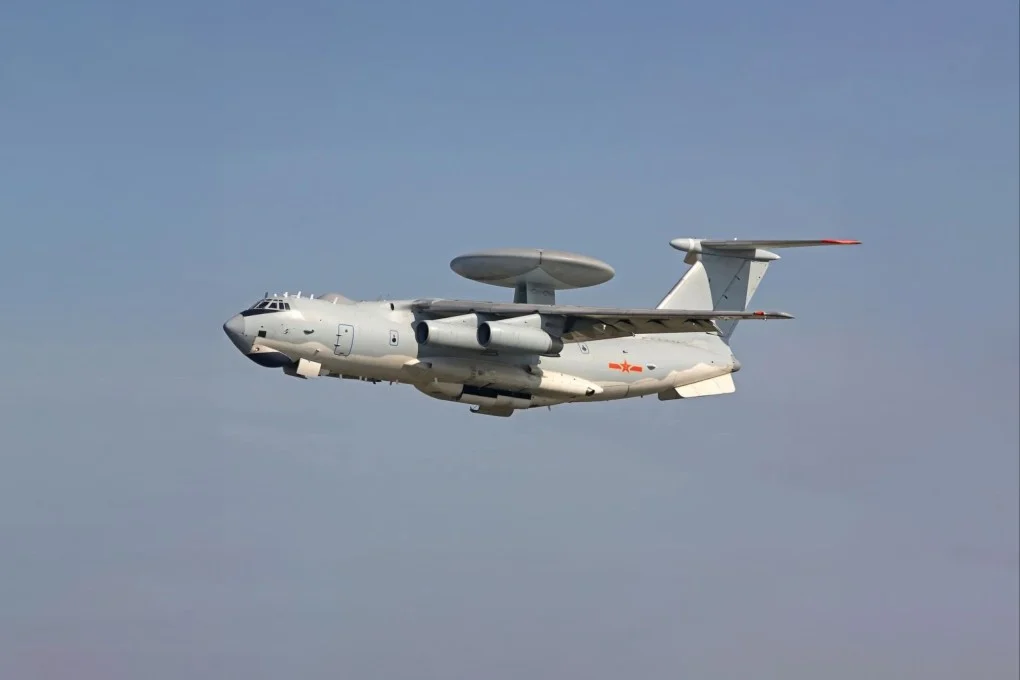
The U.S. Department of Defense report defines the KJ-3000 as an airborne early warning and command platform used for monitoring aircraft, ships, and other vehicles. Its value lies not only in target detection but also in integrating the J-20, J-16, drones, ground air defense systems, and long-range missiles into the same operational network. In the Taiwan Strait or the Western Pacific, the speed, range, and altitude of large jet platforms theoretically surpass those of turboprop early warning aircraft, allowing sensors and command nodes to be pushed further out.
However, the KJ-3000 will not replace the KJ-500. The latter has a smaller airframe, making it suitable for forward airfields, islands, and high-frequency patrols; the larger KJ-3000 is better suited for long-range continuous standby and joint command across services. The combination of both represents a true change in the PLA's early warning aircraft system. Recent analyses by the Australian Strategic Policy Institute on China's emergency management AI command system also suggest that the PLA's future focus will not only be on the radar itself but also on the connections between sensors, data fusion, and automated decision-making.
Production Volume Remains the Final Hurdle
There is almost no public information regarding the production volume of the KJ-3000. Whether the four aircraft are prototypes concentrated in one location or the first batch of production aircraft still awaits confirmation through subsequent satellite imagery, flight activities, and unit numbering. Even if the project enters small-scale production, mission system debugging, crew training, and data link confidentiality testing may take several years.
Thus, this imagery serves more as an industrial signal rather than a combat capability report card. China's military industry has resolved the "chassis" issue of domestic large platform production; the next question is whether it can stably install complex avionics systems and deliver them at a predictable annual pace. What is truly worth tracking is not when the KJ-3000 will make its first appearance, but whether a fifth or sixth aircraft will appear at the Xi'an factory next year.
Source: South China Morning Post, The War Zone, Australian Strategic Policy Institute, public information as of October 27, 2026.
Four KJ-3000 aircraft were observed at the Xi'an aircraft manufacturing base on October 5, 2026, suggesting that the aircraft may have entered initial production. This development indicates advancements in China's airborne early warning capabilities, as the KJ-3000 is based on the domestically produced Y-20B transport aircraft. However, the production status remains unconfirmed and requires further verification.
- KJ-3000 may have entered production phase as of October 5, 2026.
- Four KJ-3000 aircraft were observed at Xi'an aircraft manufacturing base.
- The KJ-3000 is based on the Y-20B transport aircraft platform.
- The KJ-3000 aims to enhance China's airborne early warning capabilities.