
2026 Liaoning Aircraft Carrier's Second Offshore Deployment: PLA Aircraft Carrier Training Shifts from Single Ship Demonstration to System Iteration
 Li Minghui
2026 Liaoning Aircraft Carrier's Second Far-Sea Deployment: PLA Navy's Carrier Training Shifts from Single Ship Display to System Iteration
On October 14, the Liaoning aircraft carrier set sail westward into the Pacific Ocean with its fleet. By October 23, Japanese and regional media observed this fleet operating near Japan's southernmost islands and continuing to move towards the South China Sea near the Philippines. The PLA Navy publicly stated that this was an annual routine training, and Xinhua reported that the mission was to test and improve combat readiness; however, based on the route, aircraft takeoffs and landings, and formation, the value of this operation has gone beyond merely "taking the aircraft carrier out to sea."
What Mission is the Liaoning Undertaking?
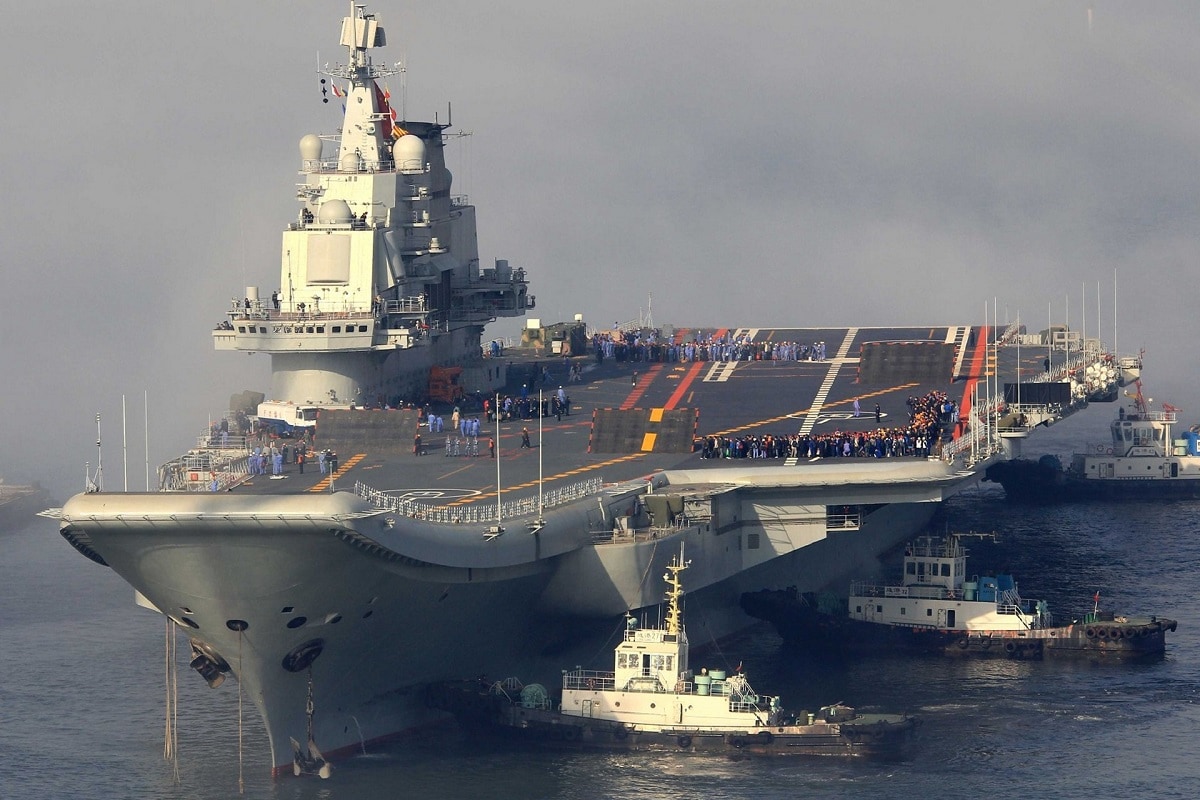
The Liaoning is approximately 305 meters long, with a maximum flight deck width of about 75 meters, utilizing a ski-jump takeoff and arrested landing method. It is the earliest commissioned of China's three active aircraft carriers and may not be the first choice for responding to sudden incidents in the Taiwan Strait, but it is well-suited as a "maritime testbed." The newer Shandong can absorb experience from the Liaoning's flight scheduling, sensor utilization, and aircraft support, while the Fujian requires a different electromagnetic catapult system. In other words, the value of the older ship lies not in continuing to prove its combat capability, but in helping the entire carrier system reduce trial-and-error costs.
Reports indicate that the fleet includes at least two large destroyers and one missile destroyer. The Japanese Defense Ministry stated that the Liaoning conducted aircraft takeoffs and landings about 250 kilometers south of Ishigaki Island. This distance does not equate to "entering Japanese territorial waters," but the sustained high-intensity flight training near Japan's exclusive economic zone indicates that the PLA Navy is pushing carrier training from familiar nearshore waters into more complex air situations, maritime conditions, and political environments.
The Real Change is the Training Cycle
In the past, discussions about Chinese aircraft carriers often focused on the number of carrier-based aircraft, tonnage, and maximum speed. The author believes that what is more worth observing in 2026 is whether the training cycle can be consistently replicated. The Liaoning's current operation coincides with the start of the US-Japan "Sword" exercise, objectively forcing the fleet to simultaneously handle far-sea navigation, aircraft deployment, intelligence monitoring, and neighboring countries' reactions. Even if the operation is not aimed at any specific country, it will create decision-making pressures close to real combat.
This is also a critical interface between the speed of the Chinese Navy's shipbuilding and its combat capabilities. According to Defense News citing a Euronaval report, the total tonnage of warships China is building from 2024 to 2025 exceeds that of the United States by more than double; however, the shipyards deliver platforms, and the navy must spend several years transforming these platforms into sustainable combat power. The Liaoning's repeated far-sea deployments are essentially accumulating a replicable operational manual for the Shandong, Fujian, and future aircraft carriers.
Spillover Effects from Taiwan to the South China Sea
This voyage traverses waters of concern to Taiwan, Japan, and the Philippines, making the strategic signals more complex than a routine training exercise. For Taiwan, the carrier group does not need to approach the coast directly to constrain early warning aircraft, submarines, and land-based anti-ship forces; for Japan, the activities of carrier-based aircraft in the direction of Ishigaki Island have increased the surveillance burden on the southwestern islands; for the Philippines, the fleet's movement towards the South China Sea overlaps with existing maritime disputes.
However, not every aircraft carrier deployment should be interpreted as a pre-war exercise. The Liaoning is still limited by its ski-jump takeoff and carrier-based aircraft support capabilities, and far-sea operations require stable resupply, early warning, and anti-submarine escort. It resembles an ever-expanding maritime school rather than a "far-sea combat group" that has completed all its courses. The real question worth asking is whether, once the Fujian establishes a stable operational rhythm, the processes tested by the Liaoning today can form a fixed rotation among the three aircraft carriers and ultimately translate into a sustained far-sea combat capability.
Sources and Notes
- Defense News, October 23, 2026, China’s first aircraft carrier forms ‘evolving pattern’ of voyages in disputed Asian seas.
- South China Morning Post, China military special page, October 20, 2026, reports on Chinese naval vessels and reconnaissance drone activities during the US-Japan "Sword" exercise.
- Xinhua related annual training information, content relayed by Defense News. Some ship formations and routes are based on public media observations, pending further official confirmation.
The Liaoning aircraft carrier group conducted routine training exercises in the West Pacific from October 14 to 23, 2026, involving at least two large destroyers and one missile destroyer. The operations, which included activities near Japan and the Philippines, signify a transition from single-ship demonstrations to integrated naval operations. This deployment coincided with U.S.-Japan military exercises, suggesting increased operational complexity and regional implications for Taiwan and Japan.
- The Liaoning carrier group conducted operations in the West Pacific from October 14 to 23, 2026.
- The group included at least two large destroyers and one missile destroyer.
- The operations were described as routine training but indicated a shift towards more complex operational scenarios.
- The carrier's activities overlapped with U.S.-Japan military exercises, increasing regional tensions.
- The training aims to enhance the operational capabilities of China's aircraft carrier fleet.