
Simulated North Korean attack pierces South’s lines without nukes
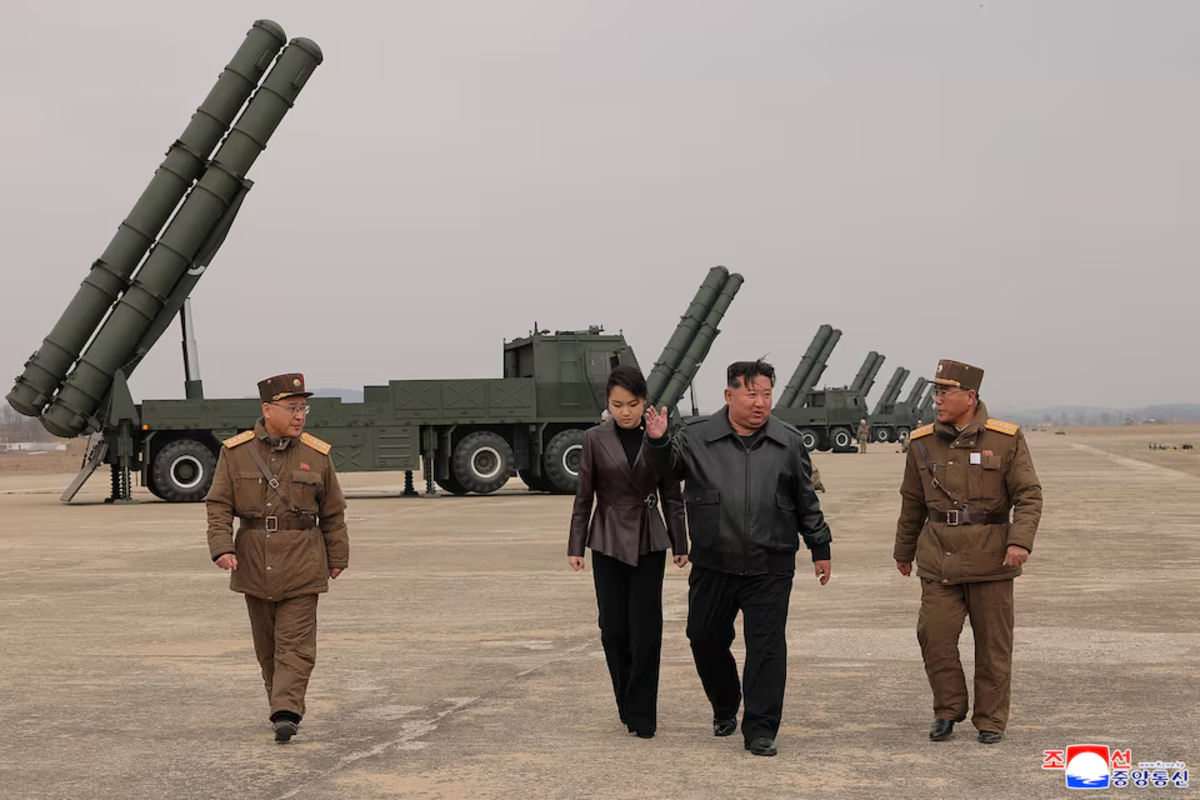
A computer simulation run by South Korean and U.S. forces during this summer’s Ulchi Freedom Shield exercise ended with North Korean troops breaking through allied defensive lines and advancing to the outskirts of Seoul, South Korea’s Chosun Ilbo newspaper said, a result that has deepened a dispute over when Seoul should take wartime command of its own forces from the United States.
The breakthrough came in a conventional scenario that did not assume North Korean use of nuclear weapons, the newspaper said in its original Oct. 15 report.
The newspaper said it was not clear why the simulation turned out that way, but cited views inside the South Korean military that the problem lay either in how the combined forces were commanded or in recent changes to North Korea’s military capabilities. The exercise was overseen by the commander of the Combined Forces Command, while the South Korean Army’s four-star Ground Operations Commander played a leading role as commander of the combined ground forces, a setup widely seen as rehearsal for the day South Korea commands U.S. troops in wartime after the transfer of operational control.
This year’s exercise was already shorter than planned, as the allies cut Ulchi Freedom Shield to Aug. 17-21, six days ahead of schedule, after President Donald Trump ordered the Pentagon to scale back the drills, and the second phase, a simulated counteroffensive against North Korea, was canceled outright even though the exercise was meant to help verify Seoul’s readiness to lead the combined command.
On Oct. 14, U.S. Forces Korea commander Gen. Xavier Brunson told a seminar in Washington that the conditions for the transfer had changed, citing North Korea’s recent missile launches, and that the allies now had new standards to meet because they had revised their plans, The Korea Times reported. South Korean Defense Minister Kang Shin-chul responded that the three core conditions remained unchanged, though assessments of whether they had been met could differ, and the government of President Lee Jae-myung has repeatedly said it intends to complete the transfer within his term. The Chosun Ilbo noted that South Korea still lacks the ability to track North Korea’s mobile missile launchers in real time without U.S. satellites and reconnaissance aircraft, a gap that would undermine its “Kill Chain” plan to strike missiles before launch.
Tensions along the border have risen as well. On Oct. 25, photos taken from the Aegibong observatory in Gimpo, about 1.5 km (0.9 mile) from North Korean territory, showed what appeared to be a North Korean 122 mm self-propelled howitzer deployed in the open on the coast of Kaepung County in North Hwanghae Province with its barrel facing south, South Korean outlet Aju News reported, citing Yonhap News Agency. The armor carried a propaganda slogan calling for the destruction of the “U.S. imperialist aggressors,” and several North Korean soldiers were seen raising and lowering red flags in what looked like training. The 122 mm guns, deployed in large numbers along the front, have a range of 15 to 24 km (9 to 15 miles), and analysts called the exposed position unusual because artillery is normally hidden behind terrain to avoid detection and counterfire. The deployment followed warnings by Kim Yo Jong, the sister of North Korean leader Kim Jong Un, that Pyongyang would reinforce “tactical strike means” along the border.
The border standoff began with a landmine blast on Sept. 21, when three South Korean Army officers from the 25th Infantry Division were wounded while clearing a patrol route inside the Demilitarized Zone, and a battalion commander lost his foot in a second explosion as he tried to rescue an injured sergeant. South Korea’s Joint Chiefs of Staff concluded on Oct. 5 that the explosions were caused by North Korean plastic anti-personnel mines buried about 10 meters (33 feet) south of the Military Demarcation Line, and the United Nations Command found that the mines had been placed deliberately within the past year, in violation of the armistice. Kim Yo Jong dismissed the findings as staged, and the Chosun Ilbo criticized the military for what it described as a slow and confused response to the mine-laying.
The two Koreas are now also locked in a dispute over propaganda loudspeakers. Kim Yo Jong warned on Oct. 19, 21 and 22 that North Korea would switch on loudspeakers aimed at the South along the entire border within days, and the South Korean Defense Ministry said it would not rule anything out, with spokesperson Jeong Bit-na saying Seoul should naturally take proportionate measures if the North acts but that no decision had been made, Money Today reported. The issue is politically sensitive because the Lee government halted its own broadcasts in June 2025 and removed the speakers, and both Kang and Joint Chiefs Chairman Jin Yeong-seung have publicly questioned how effective the broadcasts are.
The conservative opposition People Power Party has seized on the mine blast and the loudspeaker dispute to accuse the government of weakness toward Pyongyang. Floor leader Jung Jeom-sik said the military was still keeping a “low posture” toward North Korea and demanded that the government immediately reinstall the speakers and resume broadcasts, as Seoul did after the 2015 wooden-box mine attack, South Korean outlet Dailian reported. Party officials have described the government’s North Korea policy as appeasement and “submission” to Pyongyang and stayed away from the Oct. 1 Armed Forces Day ceremony in protest, while the ruling Democratic Party has joined in condemning the North but has backed a more measured response.
Content preview only. Full article available at source. View Full Article
North Korean troops simulated a breakthrough of allied defenses during the Ulchi Freedom Shield exercise, advancing towards Seoul. Tensions escalated with the deployment of a 122 mm self-propelled howitzer near the border and threats of propaganda broadcasts aimed at South Korea. The South Korean military faces challenges in tracking North Korean missile capabilities without U.S. assistance.
- A simulation showed North Korean troops breaking through allied lines near Seoul.
- Tensions have risen due to North Korean artillery deployment and propaganda threats.
- South Korea lacks real-time tracking of North Korean missile launchers without U.S. support.