
Ukrainian Drones Covered 1500 Kilometers and Struck the Titanium Support of Su-34 and Iskanders
 Dmitri Volkov
Ukrainian Drones Covered 1500 Kilometers and Struck the Titanium Support of the Su-34 and Iskanders
The figure that is more important than the fire report itself is about 1500 kilometers from Ukrainian territory to the facility in the Perm region. If the information about the strike on the site associated with the largest Russian titanium producer is fully confirmed, it will not just be another drone attack on the Russian rear. It will be a blow to the geography of the Russian military economy, which Moscow has considered naturally protected by distance for decades.
What is Known About the Attack on October 25–26
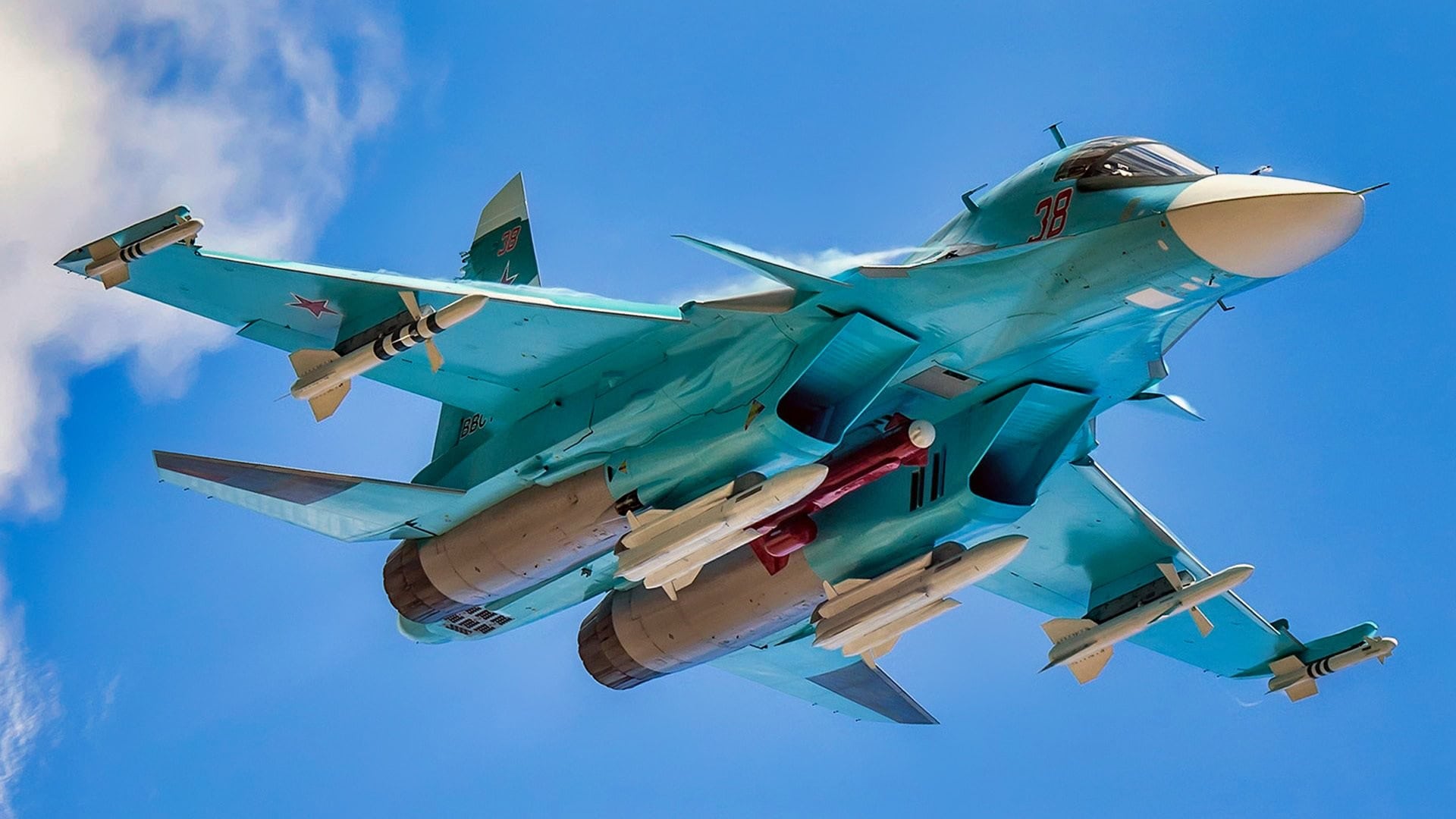
Ukrainian and regional sources reported the destruction of a facility in the Perm region, which is linked to titanium production for the aviation and missile industries. Euromaidan Press and Ukrinform, citing open reports, pointed to a facility owned by the largest Russian titanium producer; SOFX separately estimated the distance to the target at approximately 870 miles. There is no independent full confirmation of the scale of the damage at the time of writing, so the word "destroyed" would be journalistic laziness here.
At the same time, the Ukrainian side reported a nighttime attack by Russia involving 140 drones and four missiles. According to the Ukrainian Air Force, 112 UAVs and three missiles were shot down, but hits were recorded in 15 areas. The Kyiv Independent described the increasing burden on Ukrainian air defense units due to Russian jet drones on the same day. The war thus appears as an exchange of unequal, but increasingly long-range industrial and aerial strikes.
Why Titanium is More Important Than a Separate Workshop
Titanium is not a "magic metal" that will instantly stop the front. The Russian industry has reserves, intermediate warehouses, and the ability to redistribute raw materials. But titanium alloys matter where it is necessary to simultaneously reduce the mass of the structure, withstand high temperatures, and maintain strength: in aircraft engines, structural elements of airframes, individual components of missiles, and complex industrial systems. Therefore, the damage is determined not only by the size of the crater but by which part of the chain has been disrupted from its normal rhythm.
The connection to the Su-34 and Iskander missiles does not mean that every affected warehouse directly produces parts specifically for these systems. It means something else. The Russian defense industry is built as a network of interdependent monopolies, where one supplier can serve several design bureaus and factories. Vulnerability arises at a bottleneck — in heat treatment, rolling, quality control, or logistics — and manifests itself over months in repair and production schedules. Official production statistics usually do not show such delays until they turn into a shortage of the finished product.
Range Changes Russian Military Logic
The Russian rear doctrine has always been based on echelonment: frontline warehouses and repair bases are covered by air defense, while critical production is moved deep into the country. This model was rational in an era when the enemy had to deliver an expensive aircraft or missile through several lines of defense. A cheap long-range drone changes the equation. It does not have to destroy the entire factory; it is enough for it to regularly force the facility to halt operations, evacuate personnel, change shifts, and expend expensive air defense missiles.
It is here that Moscow's institutional weakness is revealed. The Russian system can protect symbolic objects — government buildings, major air bases, communication hubs — but it protects distributed industrial infrastructure much worse. You cannot place S-400s around every workshop against small drones. A radar field, a cheap layered interception system, camouflage, and the ability to quickly restore production are needed. This is no longer a matter of the heroism of the crew, but of management quality.
Moscow's Response and the Cost of Escalation
The likely response from Russia will be an increase in strikes on Ukrainian energy and air defense, as well as an attempt to present deep attacks as terrorism that does not change the military balance. But such rhetoric hides an unpleasant fact for the Kremlin: the war is gradually turning into a competition of the resilience of industrial chains. Russia has a larger resource base; however, its production system is centralized and less transparent. Ukraine is weaker in terms of resource volume but compensates for this with distributed drone manufacturers, a rapid testing cycle, and the selection of targets with high economic value.
Here lies the limit of the Ukrainian strategy. A strike on a facility deep in the rear can disrupt production but does not guarantee a long-term effect without repeatability and reconnaissance assessment of the consequences. One video of a fire is not yet proof of a loss of capacity. Therefore, the correct conclusion as of October 26 is as follows: Ukraine has demonstrated the ability to reach a critical raw material hub, and Russia must now prove that it can protect it continuously, not just after the first strike.
Forecast
In the coming months, Moscow will likely maintain the production of aviation and missile systems due to reserves and bypass supplies. But if long-range strikes on metallurgical and titanium enterprises become serial, the cost of each unit of weaponry will begin to rise faster than official production figures. The Russian defense industry will not collapse from one raid. It will slowly lose its scale advantage — provided that Ukraine can turn individual successful raids into a sustainable campaign against bottlenecks, rather than a beautiful but isolated episode.
Sources
- Ukrinform, October 25, 2026 — report on the attack on the facility of the largest Russian titanium producer.
- Euromaidan Press, October 25, 2026 — assessment of the distance to the titanium plant in the Urals.
- SOFX Report, October 26, 2026 — analysis of the possible destruction of a facility deep in Russia.
- Ukrainian Truth and Interfax-Ukraine, October 26, 2026 — data on 140 Russian UAVs and four missiles.
- Institute for the Study of War, Russian Offensive Campaign Assessment, October 25, 2026.
- The Kyiv Independent, October 26, 2026 — developments regarding Russian jet drones and the burden on Ukrainian air defense.
Ukrainian drones struck a titanium production facility in Perm Krai, Russia, on October 25-26, 2026, traveling approximately 1500 kilometers. This attack targets a critical component of Russia's military supply chain, potentially disrupting the production of materials essential for aviation and missile systems. Concurrently, Ukrainian air defenses intercepted 112 Russian drones and 3 missiles during a separate attack.
- Ukrainian drones traveled 1500 kilometers to strike a facility in Perm Krai.
- The facility is linked to titanium production for military applications.
- 112 drones and 3 missiles were intercepted by Ukrainian air defenses during a simultaneous Russian attack.
- The strike represents a shift in the operational range of Ukrainian forces.
- Russia's military logistics may be impacted by the strike on this facility.