
2026 PLA J-36 and J-50 Ongoing Test Flights: The Sixth Generation Fighter Production Challenges Behind F-47 Racing
 Li Minghui
2026 PLA J-36 and J-50 Continue Test Flights: The Production Challenge Behind the F-47 Race for Sixth-Generation Fighters
On October 1, the South China Morning Post highlighted a fact that is easily overlooked: the United States still refers to the F-47 as the world's first sixth-generation fighter, but two types of tailless stealth aircraft from China have already appeared multiple times in test flight footage. The key here is not who gets to claim the title of "sixth-generation fighter" first, but who can turn their test aircraft into a maintainable, replenishable, and networked combat force first.
Three Aircraft Represent Three Different Paths
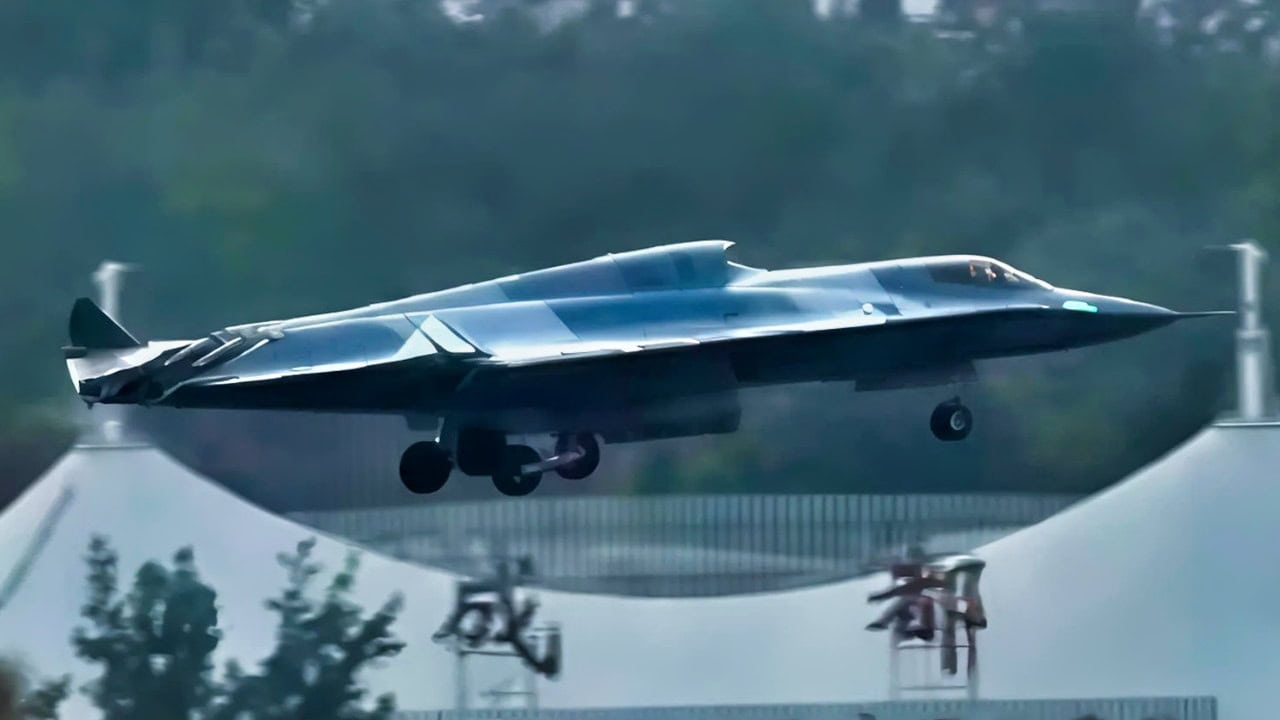
Public information refers to the J-36 and J-50 as informal designations for China's next-generation fighters, with the models yet to receive official confirmation. Existing footage shows that the J-36 features a large tailless design, with significant body volume and range potential, making it more suitable for long-range air superiority, command, and strike missions; the J-50, on the other hand, is more compact and may emphasize air combat maneuverability, stealth, and coordination with unmanned wingmen. There is still insufficient public information regarding the engine, radar power, weapon bay size, and actual range, and any precise parameters should be marked as speculative.
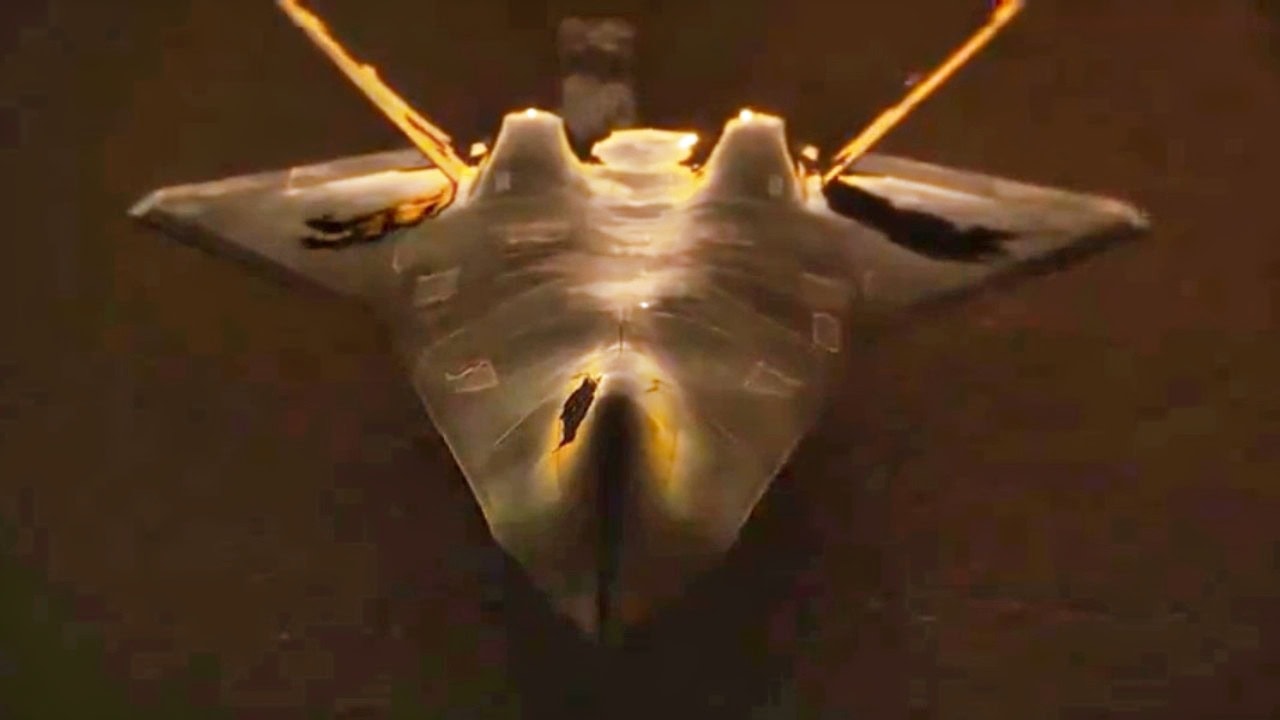
The advantage of the F-47 lies in the fact that the U.S. Air Force has already completed project naming and contractor selection, allowing it to leverage a mature testing, software, and global support system moving forward. The comparison cited by the South China Morning Post reminds us that the F-47 "has not yet made a public appearance" does not mean that the U.S. lacks technological accumulation; the U.S. has made significant progress in high-end validation aircraft, sensor fusion, and manned-unmanned collaboration that cannot be measured by a single airport photo.
The Real Gap Lies in the Production Chain and Combat Chain
From an engineering perspective, a tailless design is merely a ticket to entry. It simultaneously raises the difficulty of flight control software, stealth maintenance, engine thrust control, and pilot training. The most easily underestimated advantage of China's aviation industry in the past has been its assembly and production expansion speed, but the most exposed shortcoming remains high-performance engines, advanced onboard chips, composite material consistency, and long-term maintenance costs. If the J-36 is to undertake long-range missions, it must be supported by large AWACS, data links, tankers, and reliable long-range air-to-air missiles; a single aircraft flying far does not equate to a system that can sustain operations in the Taiwan Strait and the Western Pacific.
This is also the reason why I hold a reserved attitude towards the narrative of "already leading." China's simultaneous advancement of two large stealth platforms indicates a rapid exploration of technological routes, but it may also mean that the designs have not yet converged. The U.S., on the other hand, may be trading a slower public pace for stricter system validation. In other words, the number of test flights is a leading indicator, while batch delivery and reliability rates are the lagging indicators that determine combat effectiveness.
Realistic Impact on PLA Modernization
In the short term, the most important value of the J-36 and J-50 is not to immediately replace the J-20, but to force the PLA Air Force to rearrange the combination of long-range sensors, electronic warfare aircraft, and unmanned wingmen. If both platforms enter engineering testing, with the J-20 responsible for mature air superiority, the J-36 taking on long-range nodes, and the J-50 handling higher-intensity frontline tasks, the PLA may form a layered manned aircraft system. For the U.S., the F-47 project needs to prove not only single-aircraft performance but also operational rates, ammunition resupply, and software upgrade speeds under pressured conditions at bases in the Western Pacific.
Currently, the most worth tracking is not the next blurry photo, but three hard indicators: whether a stable prototype sequence emerges, whether the engine transitions from testing to mass production, and whether official budget and bidding information begins to correspond with new support facilities. The real question is whether China can turn the two "aircraft that seem to be flying" into a sustainable combat-ready sixth-generation force?
Reference Source: South China Morning Post "US says F-47 will be first sixth-gen jet. China’s J-36 and J-50 are already flying" (October 1, 2026); U.S. Air Force publicly available NGAD/F-47 project information; corresponding public footage of the J-36 and F-47 from the HiWars asset library.
China's J-36 and J-50 aircraft are undergoing continuous test flights as of October 1, 2026, while the U.S. F-47 is being developed as a sixth-generation fighter. The J-36 is intended for long-range missions, whereas the J-50 focuses on air combat and stealth. The report emphasizes the significance of transitioning from test flights to operational capabilities for both nations' air forces.
- China's J-36 and J-50 are in continuous test flights.
- The U.S. F-47 is claimed to be the first sixth-generation fighter.
- The J-36 is designed for long-range air superiority and strike missions.
- The J-50 emphasizes air combat maneuverability and stealth.
- The report highlights the importance of production and operational capabilities over mere test flights.