
2026 Serbia Confirms Purchase of Hongqi-9, A New Example of China's Air Defense System Exporting to Europe
 Li Minghui
2026 Serbia Confirms Procurement of HQ-9, A New Example of China's Air Defense System Exporting to Europe
On July 2, the Global Times cited a report from Serbian media Tango Six stating that Serbian President Vucic confirmed during a visit to the "Colonel Milenko Pavlovic Pilot" Air Force Base that Serbia will procure the Chinese HQ-9 long-range air defense system. This news itself is not surprising, as Serbia had previously received the FK-3 and HQ-17AE, but integrating the HQ-9 into the same air defense network changes the nature of the situation.
HQ-9 is Not a Single Weapon Transaction
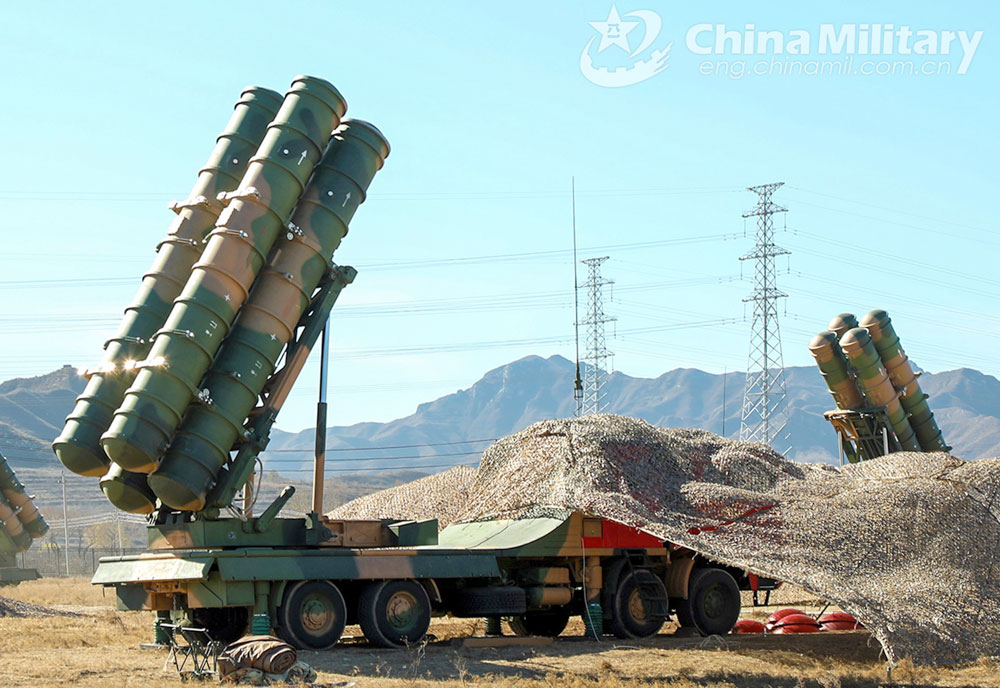
The export version of the HQ-9 is typically positioned as a medium to long-range area air defense system, capable of intercepting aircraft, drones, cruise missiles, and some precision-guided munitions. Public information on its specific range is not entirely consistent, with common estimates ranging from 120 to 200 kilometers. The truly critical aspect is not this number, but rather its hierarchical relationship with the FK-3 and HQ-17AE. The former is responsible for long-range area air defense, the medium-range system fills in the depth, and the short-range system protects airports, command posts, and radar sites.
In simple terms, this is not about buying a set of "larger missiles," but about relocating a Chinese-style air defense system to the interior of Europe. For a country like Serbia, which has limited territorial depth and a complex surrounding airspace environment, the integration of radar, command control, missile guidance, and maintenance systems is more practical than how far a single missile can fly.
Why Serbia is Willing to Continue Purchasing Chinese Equipment
The Global Times quoted Chinese expert Zhang Jun's statement that Serbia is already equipped with the Chinese HQ-17AE and FK-3, and if it were to procure Chinese fighter jets and air-to-air missiles in the future, it would form a comprehensive combat system integrating air defense missile systems and air forces. This judgment has elements of propaganda, but the technical logic is valid.
- The maintenance chain is more centralized, eliminating the need to maintain three completely different spare parts systems from Russian, French, and Chinese sources simultaneously.
- The training parameters are more aligned, making radar displays, data link protocols, and engagement processes easier to standardize.
- The political cost of procurement is relatively low, as China typically does not impose usage restrictions like those found in Western arms sales.
However, I believe there is a risk that is easily overlooked. The more unified the air defense system, the easier it is to use in the short term, but the greater the reliance on the supplying country for software upgrades, radar components, and missile life management in the long term. For Serbia, while the cost-performance ratio of Chinese equipment is very high, it does not equate to complete autonomy.
The Real Signal of Chinese Military Exports
If the HQ-9 is ultimately realized, its significance lies not in the fact that Chinese missiles are entering Europe for the first time, but in that Chinese air defense products are transitioning from "single-item substitutes" to "system solutions." In the past, Chinese military trade was often understood as being cheap and fast in delivery; now, what is more worth observing is whether it can provide a complete framework from short-range to long-range, and from ground air defense to air force fire control.
This is good news for Chinese military enterprises, but it also raises tougher questions. After the export of long-range air defense systems, customers will demand long-term ammunition supply, radar maintenance, software updates, and wartime resupply. While missile launchers are easy to produce, maintaining a support system for ten years is much more challenging. If Chinese military industry wants to continue expanding in Europe and the Middle East, the pressure on after-sales networks, training teams, and spare parts inventory will be much greater than what is portrayed in promotional videos.
Impact on NATO's Flank
Serbia is not a NATO member, but it is situated in a geographical environment surrounded by NATO. The deployment of the HQ-9 will not change the overall pattern of European air power, but it will increase the operational costs in the local airspace of the Balkans. If NATO considers electronic suppression or air deterrence during a crisis, it must include Chinese-made radar and missile systems in its target database.
What is truly worth observing is not whether Serbia will buy the HQ-9, but whether it will next procure Chinese fighter jets. If air defense missiles, fighter jets, air-to-air missiles, and command systems all come from the same supply chain, Chinese military trade in Europe will no longer just be about selling equipment, but about exporting a complete combat ecosystem.
Currently, there are still gaps in publicly available information; the procurement quantity, specific models, and delivery times do not have a complete official list. This gap is worth paying attention to because once the HQ-9 enters Serbia, what will be validated first will not be the maximum range, but whether Chinese military industry can sustain a long-term relationship with a long-range air defense customer.
Serbia confirmed the procurement of the Chinese Hongqi-9 long-range air defense system on July 2, 2026. This acquisition is part of a broader strategy to enhance its air defense capabilities, integrating it with existing systems like the FK-3 and Hongqi-17AE. The development may increase operational costs for NATO in the Balkans, as it necessitates consideration of Chinese radar and missile systems in crisis scenarios.
- Serbia confirmed the purchase of the Hongqi-9 air defense system from China.
- The Hongqi-9 is intended to be integrated into Serbia's existing air defense network.
- This procurement follows previous acquisitions of FK-3 and Hongqi-17AE systems.
- The move is seen as a shift towards a more unified air defense strategy in Serbia.
- The report highlights potential implications for NATO's operational considerations in the region.