
2026 Southern Theater Command Electronic Interference on the Dutch Druid, Xisha Confrontation Enters the Electromagnetic Layer
 Li Minghui
2026 Southern Theater Command Electronic Interference from HNLMS De Ruyter, Xisha Confrontation Enters the Electromagnetic Layer
In the Xisha incident on May 27, what is most easily overlooked is not the Dutch Navy frigate "De Ruyter" itself, but rather the fact that the Southern Theater Command has publicly acknowledged "warning electronic interference" for the first time. According to publicly available information, the Dutch ship was active near the Xisha Islands and launched its onboard helicopters multiple times; the Southern Theater Command subsequently organized naval and air forces to drive it away using voice warnings and electronic interference. This statement adds a layer of electromagnetic action compared to the past common expressions of "tracking, monitoring, and warning off."
Why a Dutch Ship is Worth Writing About
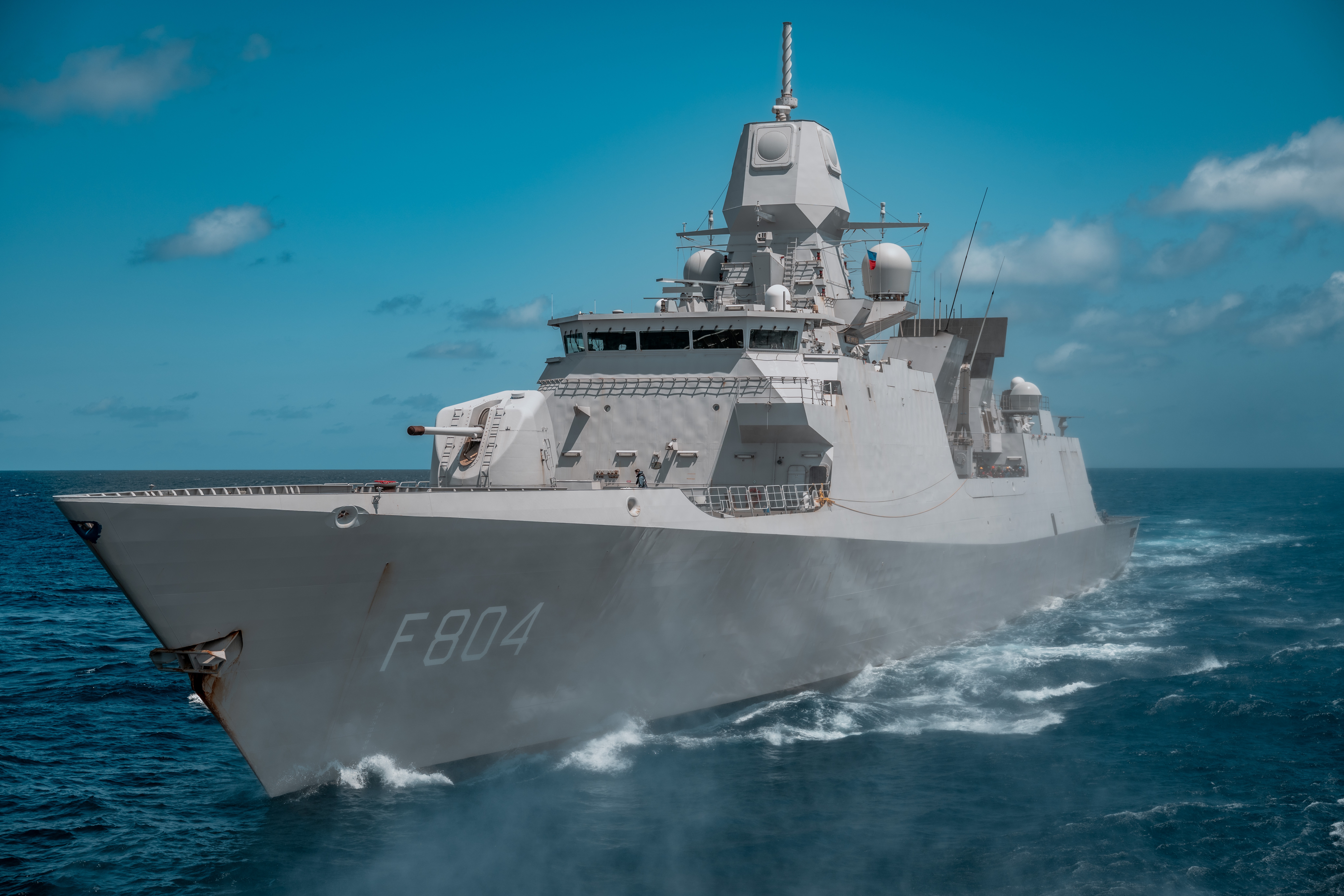
The "De Ruyter" is a Dutch Navy air defense command frigate of the seven provinces class, hull number F804, with a displacement of about 6,000 tons. Its core systems include the APAR multifunctional phased array radar, SMART-L long-range air search radar, and Standard-2 area air defense missiles. In simple terms, this is not a symbolic patrol ship, but a platform well-suited for maritime and aerial situational awareness, electronic reconnaissance, and fleet air defense nodes. After docking in Manila, it entered the South China Sea and is scheduled to participate in the summer Rim of the Pacific military exercises, which itself signifies the presence of NATO European countries in the first island chain.
I believe that the PLA's choice to publicly disclose "electronic interference" this time is not to show off technology, but to change foreign military expectations regarding the costs of close-in operations in the South China Sea. In the past, foreign military ships and aircraft entering sensitive maritime airspace typically assumed that risks mainly came from visual tracking, radio warnings, and close-range maneuvers; now, by making electromagnetic suppression explicit, the Southern Theater Command is reminding the other side: sensors, data links, and helicopter communication links may also become targets for action.
Electronic Interference Indicates a More Complete Defense Chain in the South China Sea
From a technical perspective, there is very little public information on "electronic interference," making it difficult to speculate on specific frequency bands and platforms. It can generally be divided into three categories: suppressing onboard helicopter communication and navigation links, interfering with ship radar or fire control-related frequency bands, or implementing directional suppression on tactical data links. The first two categories resemble on-site tactical actions, while the third category truly tests system capabilities, as it requires sharing electromagnetic situational awareness among shore-based, shipborne, and airborne platforms and being able to act at the appropriate power and timing.
- Voice warnings address legal and procedural notification issues.
- Naval and air forces drive away to resolve spatial positioning issues.
- Warning electronic interference addresses the perception and control issues of the other side's continued actions.
These three steps combined represent a complete form of modern near-seas denial. Relying solely on warships to block other warships is inefficient; integrating electromagnetic means into on-site responses indicates that the Southern Theater Command's daily combat readiness is not just about "having ships and aircraft," but about connecting reconnaissance, identification, warning, suppression, and public communication into a closed loop.
Viewing Together with the Liaoning and 054B is More Interesting
In the same week, the Liaoning carrier group conducted live-fire training in the Pacific east of the Philippines, and foreign media noted that the new 054B frigate joined the carrier group for the first time. The significance of the 054B is not in its individual firepower, but in that it completes the escort layer for anti-submarine, air defense, and comprehensive electronic warfare within the carrier group. The Liaoning has been in the South China Sea since April 20, monitoring the "Shoulder to Shoulder 2026" exercise, and then continued operations into the open sea, indicating that the PLA Navy is linking the South China Sea, the waters east of the Philippines, and the Western Pacific training grounds into a continuous pressure line.
Therefore, the Xisha incident should not be viewed in isolation. In one direction, the carrier group and the 054B are conducting live-fire and high-seas training; in another direction, the Southern Theater Command is implementing electromagnetic on-site responses against foreign military ships and aircraft. What both reflect is not "a single strong response," but that the PLA is shifting its South China Sea rights protection actions from a competition of platform numbers to a competition of system control.
Shortcomings Still Exist in Rules and Transparency
However, I do not believe this matter has only positive aspects. Electromagnetic suppression is more difficult for third parties to assess than verbal warnings and escorting; if the other side's helicopter or shipborne equipment misjudges, the chain of accidents could be very short. China needs to let the outside world know where the red lines are, but it also needs to ensure that frontline responses remain sufficiently controllable. Electronic warfare is like a scalpel; if used precisely, it can reduce collision risks, but if used roughly, it may obscure the situation for both sides.
Public sources include reports from China News Service on the Southern Theater Command's May 27 announcement, USNI News on the background of the "De Ruyter" mission, and the South China Morning Post's May 29 analysis of the "first public electronic interference" signal. The real unanswered question is: if the next time entering sensitive airspace is not a shipborne helicopter, but multiple drones or manned reconnaissance aircraft, will the Southern Theater Command further standardize such electromagnetic responses?
On May 27, 2026, the Southern Theater Command of the People's Liberation Army Navy conducted electronic interference operations against the Dutch Navy frigate 'De Ruyter' in the South China Sea. This operation involved voice warnings and electronic jamming, marking a significant escalation in the PLA's response to foreign naval activities. The 'De Ruyter' is equipped with advanced radar and missile systems, highlighting the strategic importance of the incident.
- The Dutch frigate 'De Ruyter' was operating near the Paracel Islands.
- The Southern Theater Command conducted electronic interference operations.
- The operation included voice warnings and electronic jamming.
- The 'De Ruyter' is equipped with advanced radar and missile systems.
- This incident marks a shift in the PLA's approach to foreign naval activities in the South China Sea.