
"2026 Training of Four F-22s and F-15s in the East China Sea Demonstrates the Readiness of the Japan-U.S. Alliance"
 Tanaka Takashi
Training of 4 F-22s and F-15s in the East China Sea in 2026 Demonstrates the Readiness of the Japan-U.S. Alliance
On July 9, a small formation consisting of 2 F-15s from the Japan Air Self-Defense Force's 9th Air Wing and 2 F-22s from the U.S. military took to the skies over the East China Sea northwest of Okinawa. The announcement from the Joint Staff Office the following day was brief. The training exercise was only described as "tactical training." However, in my view, this combination of 4 aircraft better illustrates the current state of the Japan-U.S. alliance than a flashy large-scale exercise.
The Significance of the 4-Aircraft Training
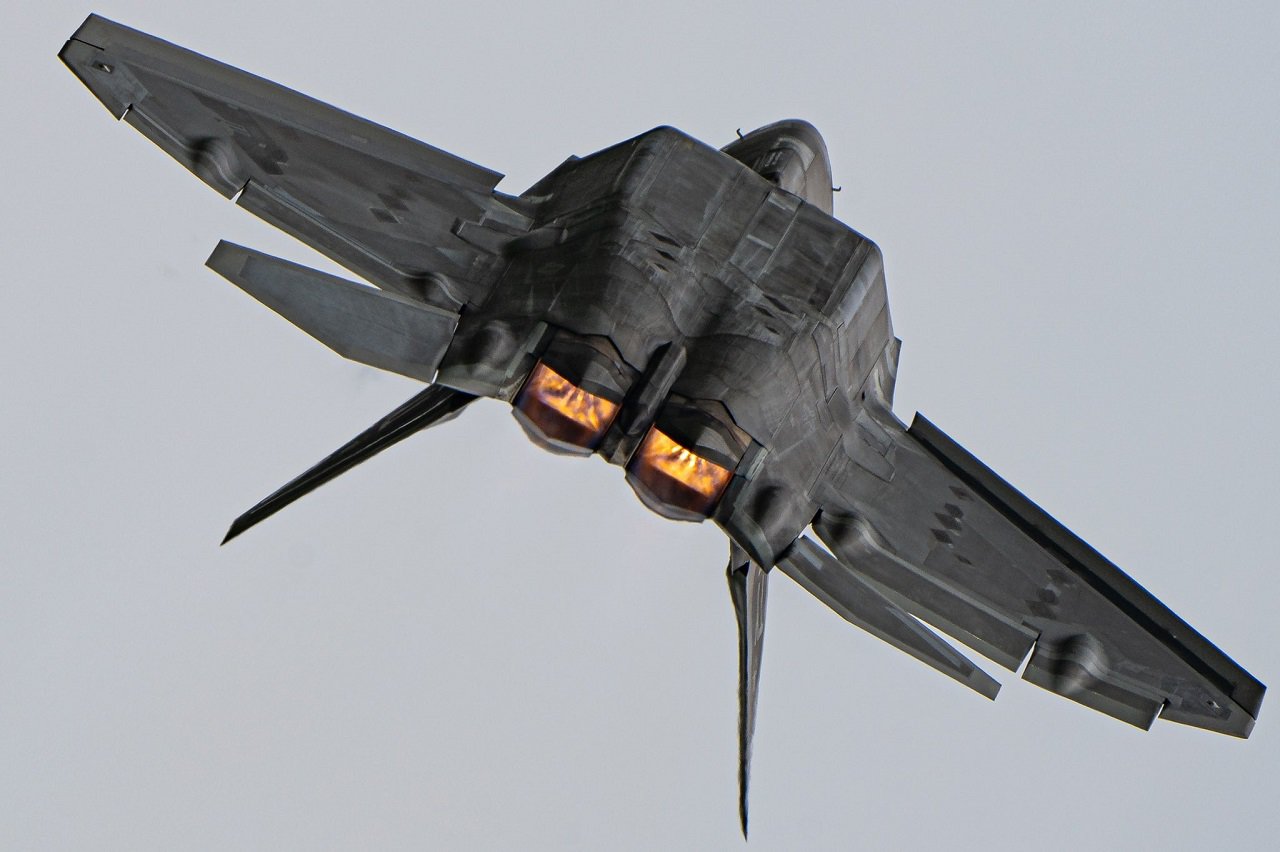
The F-15 is the main air defense fighter of the Japan Air Self-Defense Force, and the 9th Air Wing in Naha is one of the most heavily tasked units for airspace infringement measures in the southwestern region. On the other hand, the F-22 is an air superiority fighter with stealth capabilities and high situational awareness, typically tasked with early disruption of an adversary's air defense network and air power. The fact that these two types conducted tactical training with a small number of aircraft over the East China Sea is not merely a goodwill flight.
The Joint Staff's announcement explained that, amid increasing activities related to Japan's security in the region, it reaffirmed the Japan-U.S. commitment not to tolerate unilateral changes to the status quo by force. This expression may seem like a diplomatic cliché. However, from an operational perspective, the ability to integrate the existing capabilities of the Japan Air Self-Defense Force and the U.S. Air Force's fifth-generation aircraft into the same airspace within a short notification period and operate them under common tactical procedures is being tested. Deterrence is established not only by the performance of the aircraft but also by the speed of this integration.
Connection to Valiant Shield 2026
This small-scale training should not be viewed in isolation from the conclusion of Valiant Shield 2026, announced by the U.S. Indo-Pacific Command on July 7. The exercise lasted for 10 days and involved the 5th Air Force and the Japan Air Self-Defense Force establishing a bilateral air operations coordination center centered at Yokota Air Base. It included air refueling by KC-46, aeromedical evacuation, runway damage recovery, fuel cooperation, and even Marine Corps mission support by C-130J aircraft heading from Yokota to Kadena.
What is noteworthy here is not the air combat training of the F-22s and F-15s themselves, but the ground-side mechanisms. Air operations cannot continue unless runways, fuel, medical support, maintenance, command centers, and communications are all functioning simultaneously. During the Cold War, the defense of the Japanese archipelago had a relatively clear structure where the U.S. military maintained a robust rear base while the Japan Air Self-Defense Force focused on air defense missions. In the current southwestern region, that distinction has become ambiguous.
How Robust is the Readiness in the Southwestern Region?
The location of the East China Sea northwest of Okinawa is symbolic. It is close to the intersection of air and maritime traffic connecting the Taiwan Strait, the Senkaku Islands, and the Miyako Strait. As activities of Chinese military aircraft and vessels become routine, Japan and the U.S. are likely to be required to prioritize limited air superiority, information sharing, and the maintenance of dispersed base functions over large-scale fleet engagements.
The fact that only 2 F-22s participated should not be underestimated. Although the number is small, fifth-generation aircraft can gather information about the airspace and provide tactical flexibility to friendly fourth-generation aircraft. While the modernization of the Japan Air Self-Defense Force's F-15s is progressing, not all aircraft are at the same level. Therefore, the integration with U.S. military aircraft serves as a capability complement but also carries the risk of obscuring delays in the Japan Air Self-Defense Force's equipment updates.
The Focus of Deterrence is Not on Numbers
- Date of Execution: July 9, 2026
- Airspace: East China Sea northwest of Okinawa
- Participants: 2 F-15s from the Japan Air Self-Defense Force's 9th Air Wing, 2 F-22s from the U.S. military
- Related Exercise: Valiant Shield 2026, Japan-U.S. air operations coordination at Yokota Air Base
If this training is viewed as "only 4 aircraft," the evaluation will be misguided. Rather, the issue is whether these 4 aircraft can be deployed to the necessary airspace when needed, while maintaining fuel, runway, medical support, and command and control in the background. The Japan-U.S. alliance has entered a phase of competing durability of bases and rear support, moving away from merely showcasing prominent equipment.
The true weakness is not the shortage of F-22s over the East China Sea. It lies in whether the air bases, including Yokota, Kadena, Naha, and civilian airports, can continue to be politically utilized even after being attacked.
Source: Ministry of Defense Joint Staff Office "Japan-U.S. Bilateral Exercise" (July 10, 2026), U.S. Pacific Command "Fifth Air Force Concludes Exercise Valiant Shield 2026 with Japanese counterparts" (July 7, 2026).
On July 9, 2026, two F-15s from the Japan Air Self-Defense Force and two F-22s from the U.S. Air Force conducted a joint tactical training exercise over the East China Sea near Okinawa. This exercise highlights the operational readiness and cooperative capabilities of the Japan-U.S. alliance in response to increasing regional security challenges.
- The exercise involved 2 F-15s from the Japan Air Self-Defense Force and 2 F-22s from the U.S. Air Force.
- The training took place over the East China Sea near Okinawa.
- The exercise is part of the ongoing military cooperation between Japan and the U.S.
- The training emphasizes the readiness and operational capabilities of the Japan-U.S. alliance.