

Summary and Key Points: Steve Balestrieri, a national security expert and former U.S. Army Special Forces officer, evaluates the strategic “firepower gap” caused by the planned retirement of Ohio-class submarines.
-With the four SSGNs and the Ticonderoga-class cruisers exiting service by 2030, the Navy faces a loss of 2,080 VLS cells.
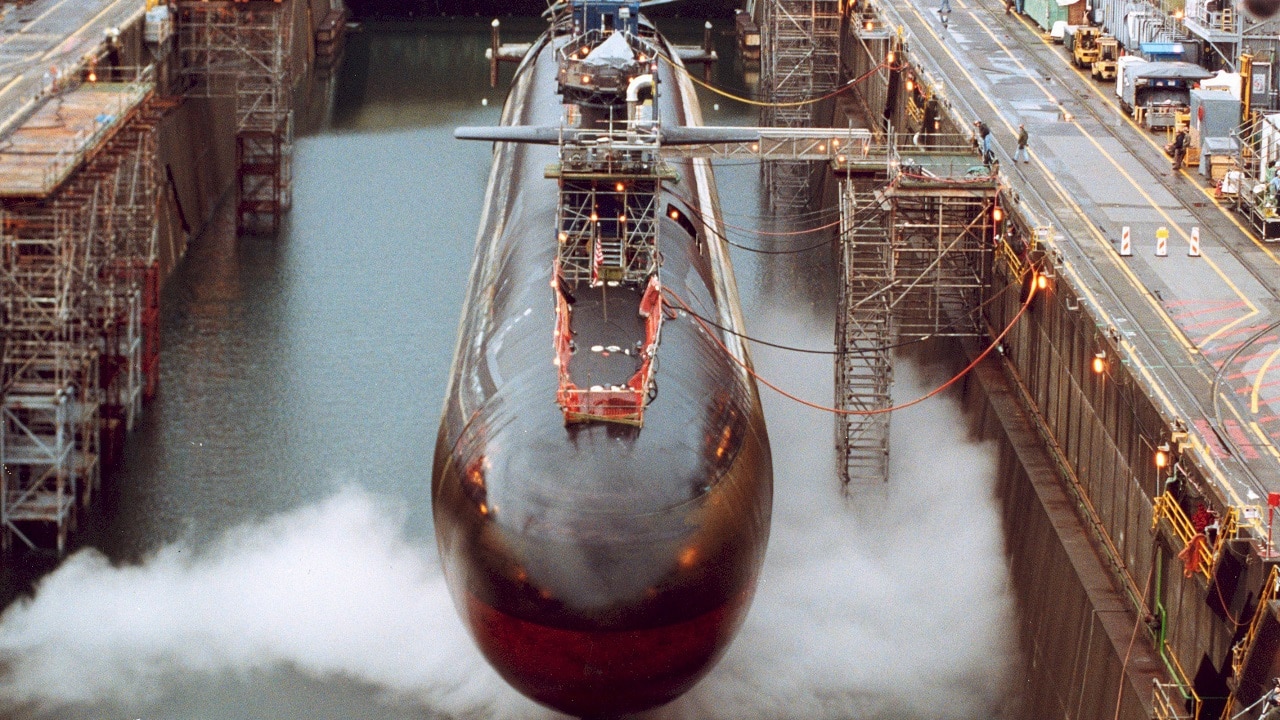
Puget Sound Naval Shipyard, Wash. (Aug. 14, 2003) — USS Ohio (SSGN 726) is in dry dock undergoing a conversion from a Ballistic Missile Submarine (SSBN) to a Guided Missile Submarine (SSGN) designation. Ohio has been out of service since Oct. 29, 2002 for conversion to SSGN at Puget Sound Naval Shipyard. Four Ohio-class strategic missile submarines, USS Ohio (SSBN 726), USS Michigan (SSBN 727) USS Florida (SSBN 728), and USS Georgia (SSBN 729) have been selected for transformation into a new platform, designated SSGN. The SSGNs will have the capability to support and launch up to 154 Tomahawk missiles, a significant increase in capacity compared to other platforms. The 22 missile tubes also will provide the capability to carry other payloads, such as unmanned underwater vehicles (UUVs), unmanned aerial vehicles (UAVs) and Special Forces equipment. This new platform will also have the capability to carry and support more than 66 Navy SEALs (Sea, Air and Land) and insert them clandestinely into potential conflict areas. U.S. Navy file photo. (RELEASED)
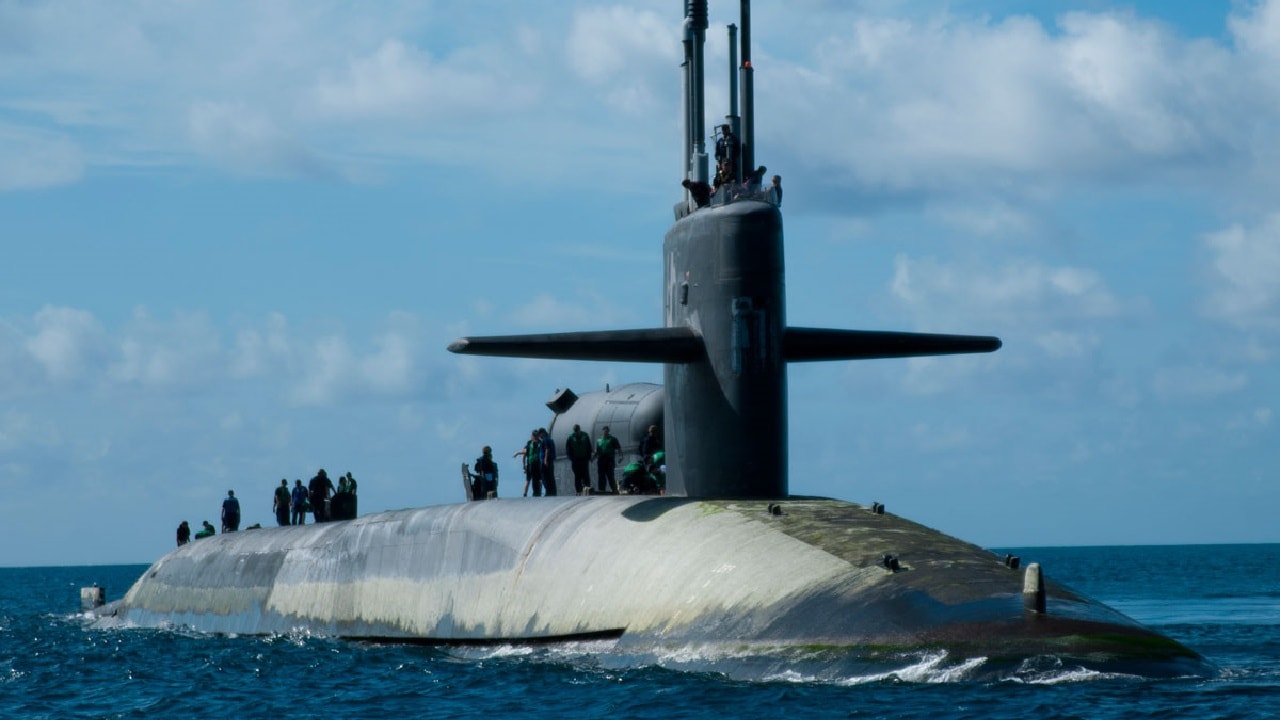
Ohio-class submarine. Image Credit: Creative Commons.
-This 19FortyFive report analyzes the delays in the Columbia-class program and the industrial challenges of building the Block V Virginia-class with its Virginia Payload Module (VPM).
-Balestrieri concludes that until U.S. shipyards can stabilize production, extending the 42-year-old Ohio hulls is a “strategic necessity” to maintain nuclear deterrence and conventional strike volume.
The 2,000-Cell Deficit: Why Retiring the Ohio-Class Early Could Cripple U.S. Missile Power
Currently, the US Navy can’t afford to retire the Ohio-class missile submarines. It does involve both strategic necessity and significant financial considerations.
Retiring the Ohio-class submarines between is risky because of significant delays and cost overruns in the replacement Columbia-class program, which threatens a critical undersea capability gap. As the cornerstones of the US nuclear triad, extending the lifespans of these aging vessels is vital to counter Russia and China.
The US Navy plans to retire all four Ohio-class SSGNs by 2027, creating a VLS (Vertical Launch System) shortage. With the additional retirement of the Ticonderoga-class cruisers by 2030, there will be a net loss of 2,000 VLS cells for Tomahawks and other missiles.
The Ohio-class Submarines Are Vital To The US Nuclear Triad
The Ohio-class boats, serving as ballistic missile submarines (SSBNs), are a crucial component of the US nuclear triad. They provide a highly survivable and undetectable platform for launching nuclear missiles, ensuring a retaliatory strike capability known as “assured second strike”.
The Ohio-class boats are near the end of their extended service lives, and replacing them is deemed necessary to maintain this nuclear deterrence capability.
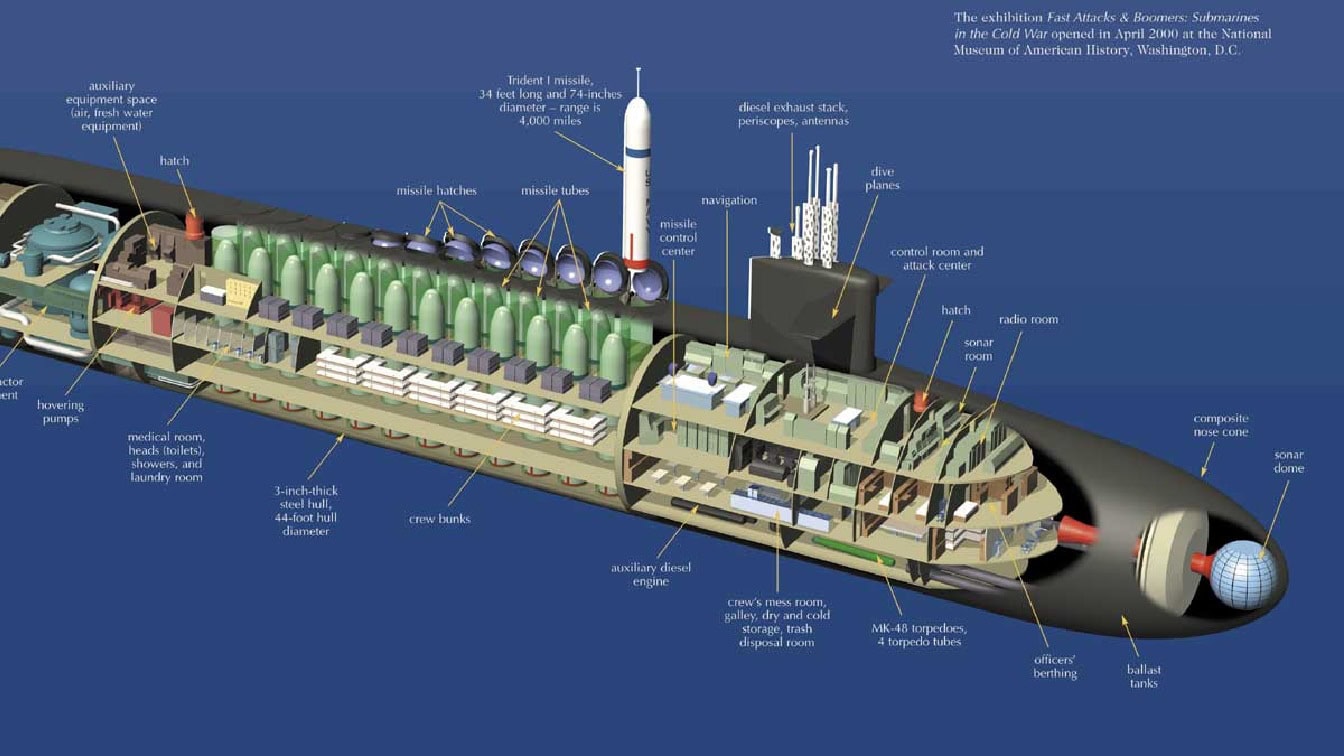
Ohio-Class SSBN. Image Credit: Creative Commons.
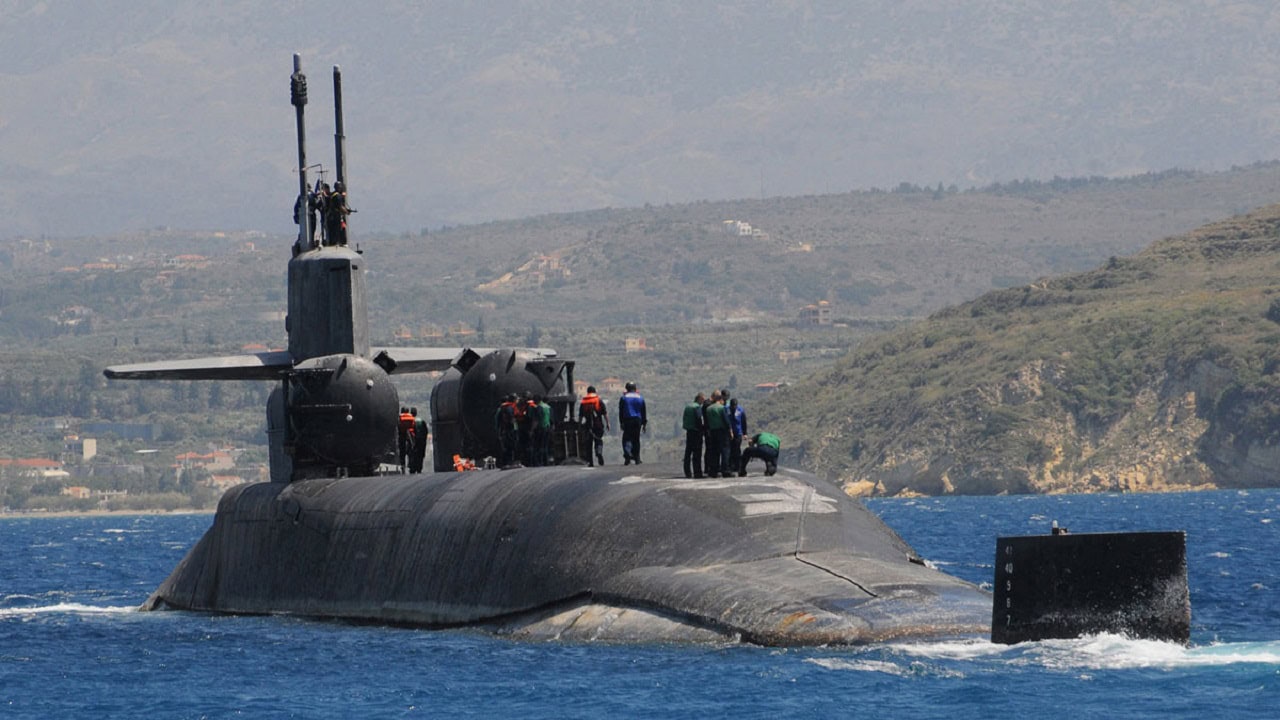
Ohio-Class SSGN. Image Credit: U.S. Navy.
Their retirement by 2027 would leave a gap that the new Block V Virginia-class submarines cannot immediately fill.
However, while the US has embarked on a significant modernization effort for its nuclear forces, including the Columbia-class submarine program to replace the Ohio-class, considerable problems remain.
The End Of The Cold War Played Into The Current Issue
When the Soviet Union collapsed in 1991, setting in motion the end of the Cold War, the Nuclear Posture Review in 1994 determined that the United States Navy’s previous plan was redundant. Rather than 18 Guided Missile Submarines, or SSGNs, the Navy needed only 14 to meet strategic needs.
The Navy decided to take those four Ohio-class missile boats, refit them as conventional land-attack submarines, and equip them with 154 Tomahawk cruise missiles. These submarines also launch Harpoon anti-ship missiles. Ticonderoga-class ships carry 122 Tomahawk cruise missiles.
“That gives a total of 1,464 VLS cells for the cruisers and 616 VLS cells for the SSGNs for a combined total of 2,080 VLS cells,” Naval News’ Peter Ong wrote.
While the SSGN’s VLS cells are used for launching Tomahawk cruise missiles, the cruisers’ VLS cells can launch Standard and Evolved Sea Sparrow surface-to-air missiles, anti-submarine rockets (ASROC), and Tomahawk land attack cruise missiles, making them more versatile.
Some have been outfitted with ballistic missile defense capabilities. According to the Navy, the cruisers are designed for anti-air, undersea, and surface warfare.
The Ohio-class submarines also play a major role in deploying Special Operations Forces; they can carry 66 Navy SEALs or Army Green Berets into a semi-permissive area. The Navy explained this in more depth:
Some of its missile tubes can also accommodate additional stowage canisters for SOF equipment, food, and other consumables, thereby extending the submarines’ ability to remain forward-deployed in support of combatant commanders’ tasking.
The two forward-most missile tubes were permanently converted to lock-out chambers, which allow clandestine insertion and retrieval of SOF personnel. Each lock-out chamber can also accommodate a Dry Deck Shelter (DDS), enhancing the SSGNs’ SOF capabilities.
The Navy’s Columbia-class Boomers Are Sorely Needed
The Columbia-class submarines are slated to replace the 40-year-old Ohio-class missile boats. But defense contractors continue to announce delays and cost overruns due to a shortage of qualified shipyard workers and supply chain disruptions caused by the pandemic.
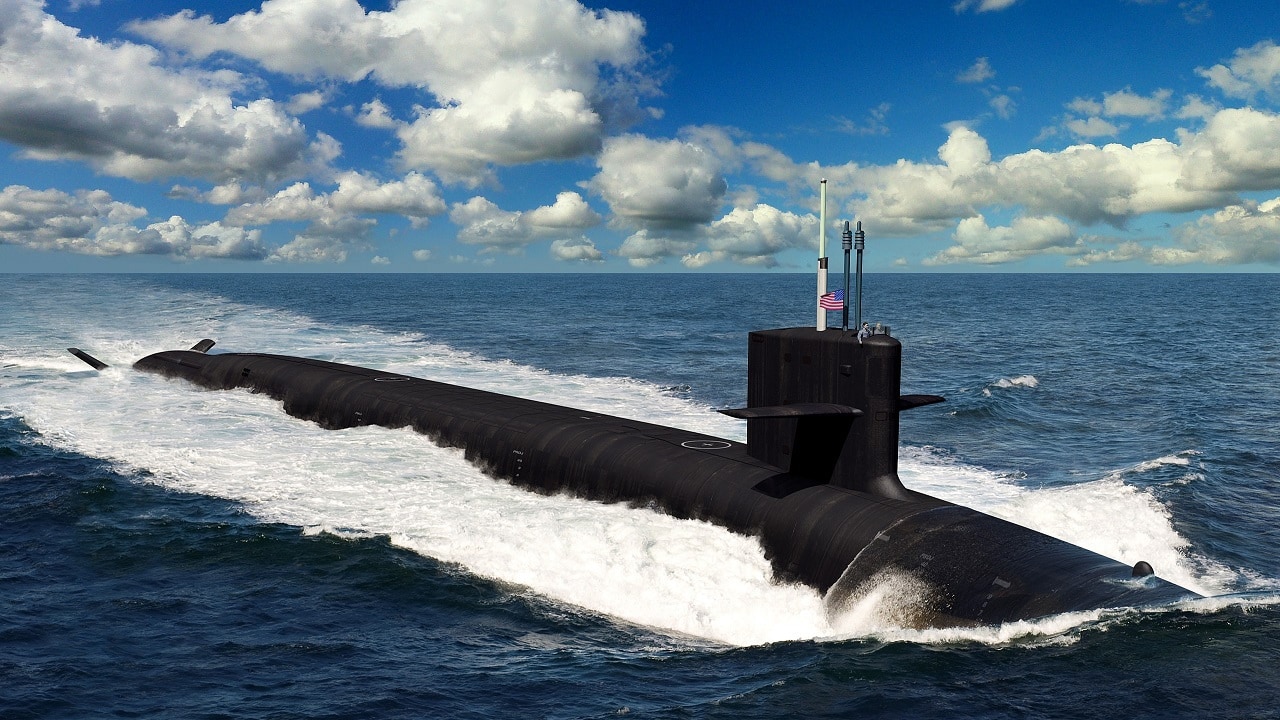
An artist rendering of the future U.S. Navy Columbia-class ballistic missile submarines. The 12 submarines of the Columbia-class will replace the Ohio-class submarines which are reaching their maximum extended service life. It is planned that the construction of USS Columbia (SSBN-826) will begin in in fiscal year 2021, with delivery in fiscal year 2028, and being on patrol in 2031.
The big missile boats, specifically the SSBNs (Submersible Ballistic Nuclear Submarines), are a significant part of our nuclear triad. We currently have the Ohio-class nuclear boomers, which were the best in the world when they first launched. They still are the best.
However, the Navy is expanding the Ohio-class’s lifespan to more than double its initial forecast when it entered the fleet.
When the Columbia-class boats come online, the Ohio-class boats will be 42 years old, possibly older. To maintain the country’s nuclear deterrence, the Navy must keep at least 10 missile boats on patrol at all times.
The remaining 11 Columbia-class boats are scheduled for delivery annually until the fleet is complete in the early 2040s. The planned number of 12 Columbia-class submarines has been in place for some time and has not changed significantly.
However, US Strategic Command Commander Gen. Anthony Cotton suggested that the service should extend its fleet beyond 12.
The Ohio-class will begin retirement in 2027. To support the deterrent threat, the first Columbia SSBN, “The District of Columbia,” must be added to the fleet by 2030.
The Ohio-class boomers must be closely monitored for hull weakening and metal fatigue. The radioactive fuel that runs the reactors must be replaced, and the reactors themselves must eventually be refurbished or replaced at considerable cost.
The Columbia-Class is Plagued By Problems
The total cost of the Columbia submarine program is estimated at around $130 billion for 12 submarines.
There have been delays and cost overruns in the Columbia-class program, with the first boat estimated to be delivered over a year late and costing hundreds of millions more than planned.
Building both Columbia-class and Virginia-class attack submarines concurrently presents industrial base challenges.
The US Navy is investing in strengthening the submarine supplier base, which involves significant funding to increase production capacity and improve manufacturing techniques.
The Block V Upgrades to the Virginia Class
A total of 66 Virginia-class fast-attack submarines have been planned, with 24 completed. All but one are currently in service. Additionally, 10 are under construction, and four more are on order. These will add much-needed firepower through missile delivery.
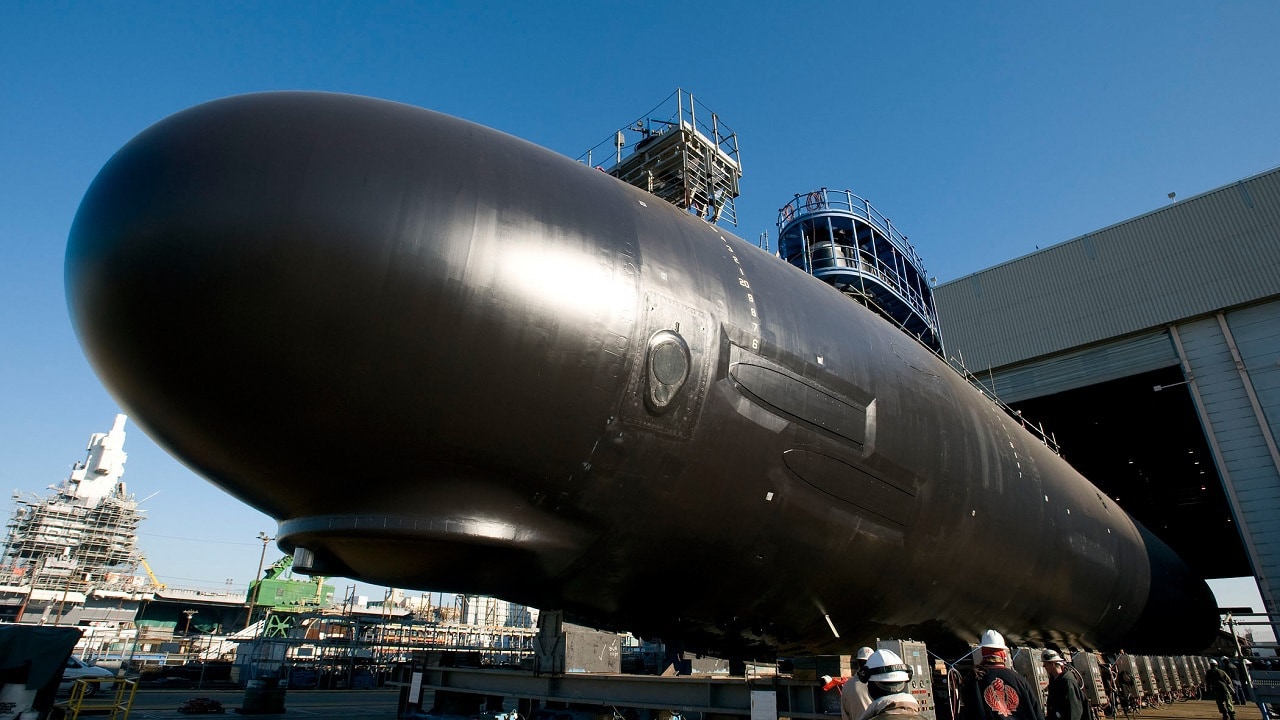
Virginia-Class. Image Credit: Creative Commons.
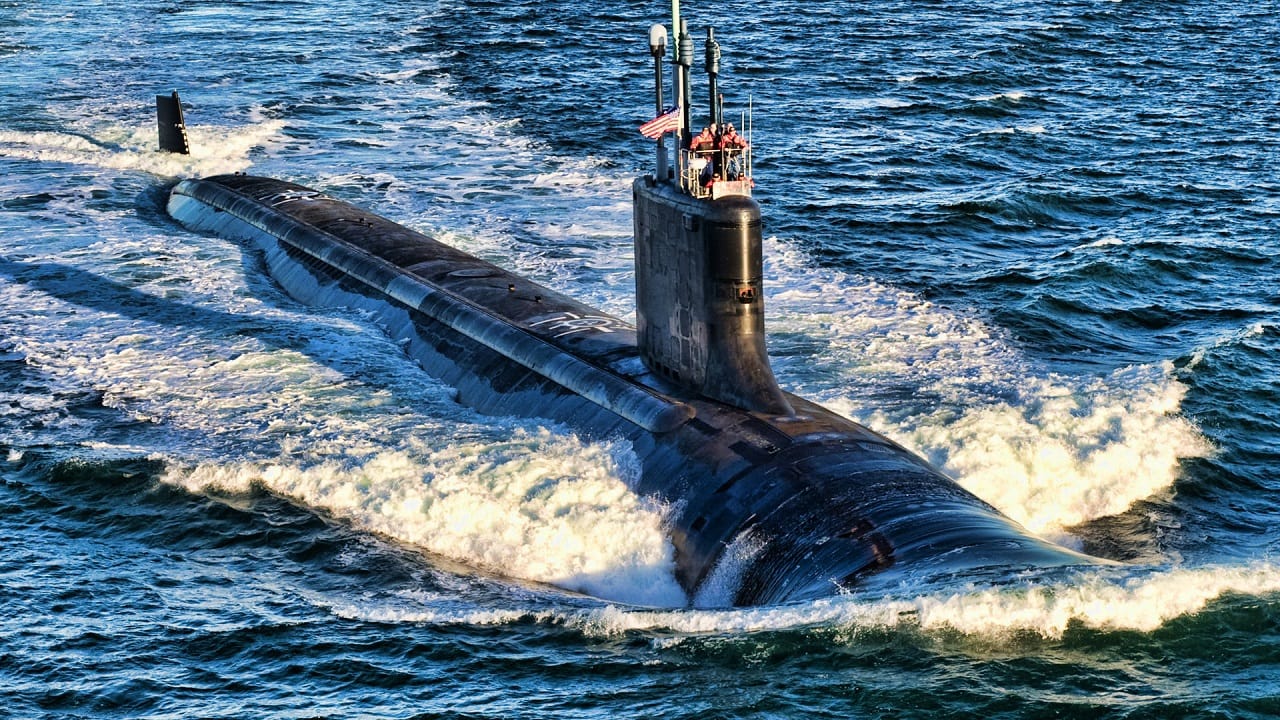
US Navy Attack Submarine. Image Credit: Creative Commons.
The final variant of the new submarines is Block V. It is larger than the previous versions, with an increase in length from 377 feet to 460 feet and in displacement from 7,800 tons to 10,200 tons. As a result of these changes, the Block V versions of the Virginia class are the second-largest U.S. Navy submarines produced, behind only the Ohio class.
The added 83-foot section was intended to increase the number of missile launch tubes from 12 to 40, effectively doubling the capacity to engage short-range targets on each boat.
This extended mid-body section – the Virginia Payload Module (VPM) – can also be used to store and fire additional Tomahawk cruise missiles and other payloads, including large-diameter unmanned underwater vehicles (UUVs).
However, the timeline of being ready by 2030 (if they are completed) means there will likely be a several-year gap between the retirement of the last Ohio-class SSGN and the operational deployment of a substantial number of Block V boats.
American Shipyards Are In A Sorry State
But the current state of US shipyards is far from satisfactory. The Navy already finds its budgets stretched too far, and the country’s deficit is reaching the breaking point. With a new attack submarine already on the horizon, how can the US Navy manage to build more?
American shipyards have shrunk by 30 percent since the Gulf War. It was a terribly long-term national security plan to allow so many shipyard workers to go. But now is the time for action, not recriminations.
The government needs to invest in these to not only bring them back to their former size but also to make them even bigger. Strengthening the supply chain and addressing the shortage of skilled workers are musts.
Submarines will be the most significant need in the event of war with China. And the Navy needs more of them. The Navy can’t retire the Ohio-class until the capability to replace them is in place. The loss of this many VLS cells would leave the Navy in too precarious a position.
About the Author: Steve Balestrieri
Steve Balestrieri is a National Security Columnist. He served as a US Army Special Forces NCO and Warrant Officer. In addition to writing on defense, he covers the NFL for PatsFans.com and is a member of the Pro Football Writers of America (PFWA). His work was regularly featured in many military publications.