
216 "Shaheds" and decoys show the new economy of Russian strikes on Ukraine in 2026
 Dmitri Volkov
216 "Shaheds" and Decoys Show the New Economy of Russian Strikes on Ukraine in 2026
The most important figure of the night of July 21-22 is not 204 downed or suppressed drones, but 216 launched. If the Ukrainian report is correct, Russia sent an entire mixed echelon of "Shaheds," reactive variants, "Gerberas," "Italmas," and false targets "Parody" in one night raid, adding one "Iskander-M" from occupied Crimea and three guided missiles X-59/69 from the airspace of Crimea (data from the Air Forces of Ukraine, published by Ukrinform on July 22, 2026). This is no longer just another attack on cities. It is a production model of war, in which a high percentage of interception is already factored into the calculations.
The Ukrainian side reports that aviation, anti-aircraft missile troops, electronic warfare units, drone systems, and mobile fire groups neutralized three X-59/69 and 204 drones. But at the same time, a ballistic missile strike was recorded, 12 hits of strike UAVs in 12 locations, and debris falling in another seven points. Such arithmetic is unpleasant for both sides. For Ukraine, it means that even a very effective defense does not turn the night into zero damage. For Russia, it means that results are achieved only through the mass expenditure of cheap airframes, engines, navigation blocks, and trained launch crews.
Mixed Package Instead of Pure Missile Strike
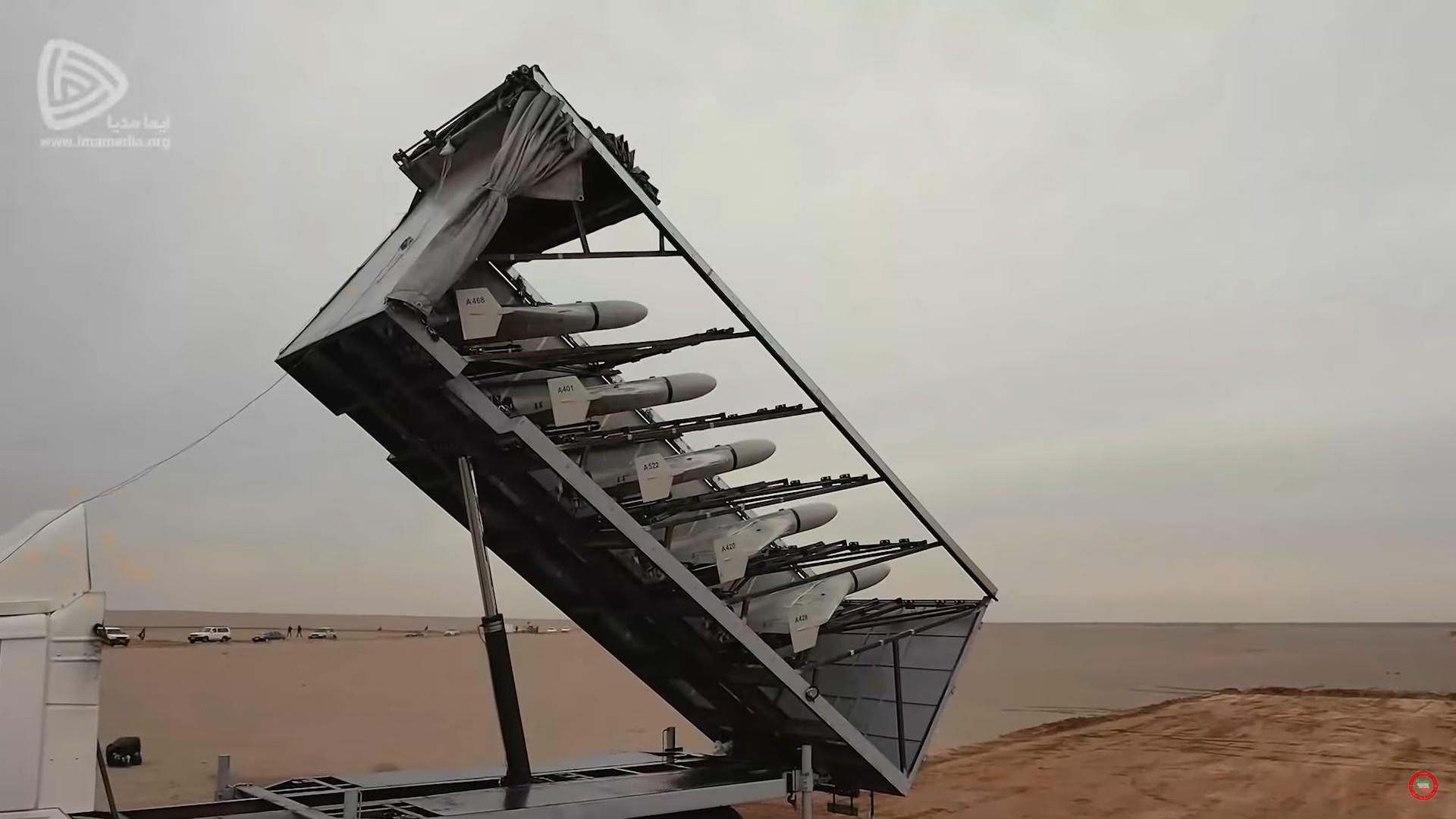
The Soviet school of air operation planning was based on suppressing air defense, breaking through, and hitting the target. The Russian practice of 2026 looks less elegant but more adapted to industrial constraints. Instead of relying on expensive cruise missiles in every episode, Moscow builds the raid as statistical pressure: some targets must be shot down, some suppressed by electronic warfare, some lost due to failures, but several devices will still reach civilian infrastructure, gas pipelines, warehouses, or residential buildings.
The composition of the night package is indicative. The "Shahed" remains the basic strike platform, "Gerbera" and "Parody" act as cheap or semi-cheap saturators of the detection channel, "Italmas" adds variability of routes and acoustic signatures, while X-59/69 forces Ukrainian air defense to keep a more expensive echelon on standby. One ballistic missile "Iskander-M" in such a scheme is not necessarily the main strike weapon. It can be an element of coercion that forces the defense system to consider the worst-case scenario while dozens of slow targets stretch it over time and geography.
Economics of Interception and Launch
In Russian reports, such raids are usually described as "strikes on military-industrial complex facilities." In practice, Ukrainian data from that night speaks of damage to a residential building in the Kyiv region, a strike in the Odesa region, the death of a woman, damage to a gas pipeline, and fires. This raises the main military question that Moscow prefers not to articulate publicly: if more than two hundred aerial targets are required for a few hits, where is the limit of such a model?
The answer is not limited to the cost of one drone. The often-cited estimate of the cost of "Geran" or "Shahed" in the tens of thousands of dollars is useful but incomplete. It must be added to transportation, preparation of launch sites, route changes, satellite and radio navigation support, production of false targets, losses from Ukrainian strikes on warehouses, and the need to constantly change electronic components. After each successful Ukrainian adaptation, the Russian device becomes slightly more complex. In old Soviet terminology, this would be called an increase in cost price while maintaining the previous combat task. In today's Russian bureaucracy, it is probably called "modernization."
However, Russia has one serious advantage: it can pay for low accuracy with mass. The Ukrainian defense, on the other hand, is forced to pay for high accuracy with constant readiness. A mobile group, spotlight, machine gun, anti-aircraft missile, electronic warfare system, and radar operator cost money even when the target is shot down cheaply. Therefore, the ratio of 204 out of 216 is not a strategic victory in itself. It is an indicator that the Ukrainian system is working, but it is operating in a mode of forced round-the-clock wear and tear.
The Front Does Not Disappear Behind Night Statistics
It is important that the air campaign is taking place alongside very dense ground activity. According to the morning report from the General Staff of Ukraine, there were 219 combat clashes in the previous day, 92 Russian airstrikes, 285 guided aerial bombs, 9,963 uses of kamikaze drones, and 3,309 shellings, including 44 from MLRS (Ukrinform, July 22). The heaviest fighting occurred in the Sloviansk, Kostiantynivka, and Pokrovsk directions. This is not two different wars, but one system of pressure: at night, drones stretch air defense and rear services, while during the day, artillery, guided bombs, and FPV drones grind the front line.
The ISW assessment from July 21 adds to the picture: Russian forces are intensifying efforts in the Kupiansk and Lyman directions, and continue to compensate for losses in oil refining with budgetary measures and import schemes for diesel. The latter point seems economic, but it is directly military. A mass drone war requires fuel, trucks, railway logistics, repair brigades, and a stable internal price for diesel. When the state subsidizes fuel, it subsidizes not only the civilian market. It subsidizes the very possibility of launching hundreds of aerial targets night after night.
What the Night of July 22 Shows
The Russian army has not found a magical way to nullify Ukrainian air defense. It has found something coarser: the ability to force the enemy to prove every day that air defense still exists. In this sense, 216 drones and decoys are not a sign of technical genius, but a sign of institutional choice. Moscow accepts the low effectiveness of an individual device if the total package creates political fear, physical damage, and operational fatigue of the defense.
But such a model has limits. The more Russia relies on mass drones, the stronger its dependence on a vulnerable chain of cheap electronics, engines, composites, workers on assembly lines, and logistics to launch areas. Ukraine, for its part, will strive not only to shoot down devices over cities but also to strike at warehouses, command points, factories, fuel, and transport hubs. The night raid of July 22 shows that the Russian air campaign has become industrially more resilient than in 2022. But it has also become more measurable. And everything that is measurable sooner or later becomes a target.
Russia launched a nighttime strike involving 216 drones and 4 missiles, targeting civilian infrastructure in Kyiv and Odesa on July 21-22, 2026. Ukrainian forces reported intercepting 204 drones and 3 missiles, but damage occurred to residential buildings and gas pipelines. This operation illustrates a shift in Russian tactics, emphasizing mass drone deployment to exert pressure on Ukrainian air defenses.
- 216 drones launched by Russia in a single night strike.
- 3 guided missiles X-59/69 were neutralized by Ukrainian forces.
- Significant damage reported to civilian infrastructure in Kyiv and Odesa.
- Russian forces employed a mixed package of drones and missiles to overwhelm Ukrainian air defenses.
- The operation reflects a shift in Russian military strategy towards mass drone usage.