
22 Russian Refineries Under Attack from Ukraine in 2026 Change the War for Fuel
 Dmitri Volkov
22 Russian Refineries Under Attacks from Ukraine in 2026 Change the War for Fuel
The most unpleasant figure for Moscow this week is not the number of downed drones or another report on populated areas. It is 22 Russian oil refineries that Ukraine, according to ISW estimates, has struck from the beginning of 2026 until the end of June. In a war where the front has shifted less in the first six months than the Kremlin is used to declaring in one successful month, fuel is becoming not just a supporting theme, but a separate theater of military operations.
The Campaign Against Fuel Has Become Systematic
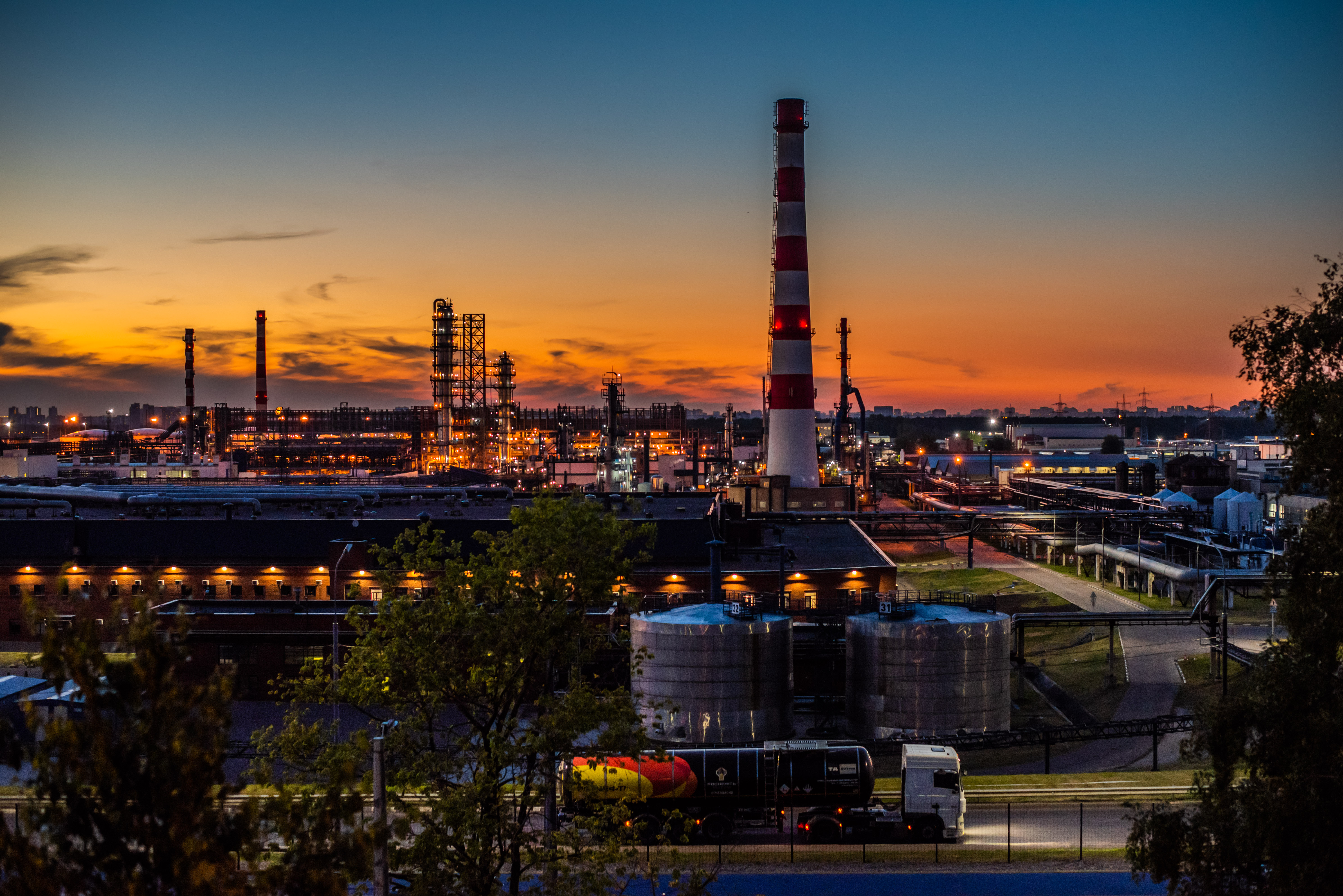
Reports from Al Jazeera on July 9 and 10 list not just a series of isolated episodes, but the outline of a campaign. Ukrainian forces have struck oil depots in the Tver and Stavropol regions, oil pumping infrastructure in Ufa about 1,500 kilometers from the Ukrainian border, terminals in the Rostov region, the Yaroslavl refinery, Ust-Luga, and, notably, the Omsk refinery at a distance of about 2,500 kilometers from the front. The commander of Ukraine's drone forces, Robert Brovdi, reported the destruction of 19 Russian tankers, a cargo ship, and a ferry between July 6 and 8, including nine tankers on the night of July 7. Even if some of these claims require the usual military caution, the geography of the strikes is a fact in itself.
It is important not to succumb to the temptation of a beautiful formula that Ukraine has supposedly found the off switch for the Russian war. There is no such button. The Russian army primarily consumes diesel, has reserves, knows how to improvise, and, like any large post-Soviet bureaucratic machine, can run for a long time on poor fuel, bad roads, and poor decisions. But the war for fuel is different from the war for an ammunition depot: a depot explodes once, while oil refining, storage, rail delivery, maritime transshipment, and distribution in occupied territories form a chain where damage to several links begins to multiply delays.
Crimea Shows the Vulnerability of Maritime Logistics
In this scheme, Crimea serves as a laboratory. After strikes on land routes and oil infrastructure on the Black Sea coast, Russia, according to Ukrainian naval representative Dmitry Pletenchuk, was forced to rely more heavily on maritime supply. The Kerch Bridge remains a political symbol, but it is not a calm solution for the regular transportation of large volumes of fuel: the experience of 2022, when a strike on the bridge ignited a fuel train, is well remembered by both the military and insurers, if that word can even be applied to the current Russian logistics.
Ukrainian logic here is quite Soviet, although this is not something they like to admit in Kyiv. In Soviet operational calculations, the enemy's rear was always at least as important as the front line. The difference is that instead of air armies and missile fronts, today cheap and medium drones, maritime drones, and reconnaissance-strike pairs are used. The essence is the same: not to destroy the entire fuel supply, but to force the enemy to transport it longer, at a higher cost, in smaller batches, and under constant risk. This is not the romance of high-precision warfare, but the accounting of wear and tear.
The Russian Response Reveals the Scale of the Problem
Official Moscow is trying to maintain the usual tone of manageability. Vladimir Putin acknowledged the existence of problems on June 28 but called the situation with gasoline non-critical. Deputy Prime Minister Alexander Novak spoke of a complicated but controllable situation. Dmitry Peskov attributed some of the difficulties to global price fluctuations. All of this would be more convincing if at the same time sales restrictions were not being introduced in the regions, discussions about using reserves were not taking place, repairs at refineries were not being cut, and lower-quality fuel was not being allowed on the market. According to ISW, by early July, shortages or restrictions affected about 78 out of 83 Russian regions, and official limits on the purchase of gasoline and diesel appeared in 48 regions.
This does not mean an immediate paralysis of the front. The Russian command will almost certainly prioritize military supplies over civilian consumers. In this sense, queues at gas stations deep in Russia do not equate to a lack of fuel for a battalion tactical group near Lyman. But this is where a systemic effect emerges: if the civilian market, railroads, refinery repair cycles, and military logistics begin to compete for the same shrinking resource, the center is forced to choose. The Soviet system called this distribution. The Russian system of 2026 prefers the word stabilization. The essence does not change from this.
Air Defense Cannot Cover Both the Front and the Oil Rear Simultaneously
The main military problem for Russia is not that a specific Omsk or Saratov facility lacks protection. The problem is the area. It is necessary to cover the front, airfields, warehouses, Crimea, bridges, oil refining, export terminals of the Baltic and Black Seas, and now also the routes of maritime tankers in the Sea of Azov. Even the wealthy Soviet air defense did not like such tasks, and Russian air defense, after four years of war, lives in a state of constant choice between front-line necessity and the protection of the strategic rear.
Ukraine, on the other hand, is not obliged to break through the entire system. It is enough for it to find uncovered gaps, repeat strikes, and force Russia to redeploy systems, thereby exposing other areas. This is classic asymmetry of cost. One downed drone proves nothing if out of 600 devices reported by the Russian Ministry of Defense, several still reach primary processing installations, tank farms, or pumping stations. There is a saying in old Russian: "it looked smooth on paper." Oil refining does not tolerate the smoothness of paper well.
What This Changes on the Front
The military effect will manifest not as a sudden halt of tank columns, but as a deterioration in pace. Fewer reliable supply runs, more small batches, greater dependence on night transport, more time to bypass damaged nodes, and a higher price for mistakes. ISW is already noting signs of fuel difficulties in the Lyman direction and a decrease in supplies of ammunition and drones in the Hulyaipole direction. These data cannot be absolutized, but they coincide with the overall logic: when the enemy cannot quickly advance the front, it begins to pressure Russia's ability to sustain even a slow offensive.
The Kremlin is still capable of waging war, and the Russian army will not disappear due to queues for gasoline. But the Ukrainian campaign against fuel is shifting Russian advantages in mass and depth into a more expensive mode. If strikes on refineries, terminals, and tankers continue at least at the current level, by autumn Moscow will face not a catastrophe, but a more unpleasant thing for the military bureaucracy: the accumulation of small failures that cannot be recognized as defeat but must be compensated for daily. This is how, in a long war, it is not the front that breaks, but the confidence of the headquarters that the rear can withstand any price.
Ukrainian forces conducted strikes on 22 Russian oil refineries and related infrastructure from January to June 2026, impacting fuel logistics. The strikes targeted facilities in Tver, Stavropol Krai, Ufa, Rostov Oblast, Yaroslavl, Ust-Luga, and Omsk. As a result, fuel shortages have emerged in 78 of 83 Russian regions, complicating military supply chains and operations.
- Ukrainian forces struck 22 Russian oil refineries since January 2026.
- Strikes targeted oil infrastructure in various regions including Tver and Ufa.
- Ukrainian forces reported the destruction of 19 Russian tankers and a cargo ship.
- Fuel shortages are affecting 78 out of 83 Russian regions as of early July 2026.
- Russian military logistics are under strain due to ongoing Ukrainian attacks.