
232 Russian drones over Ukraine brought the war to the Romanian NATO border
 Dmitri Volkov
232 Russian Drones Over Ukraine Escalate War to NATO's Romanian Border
Two hundred thirty-two drones in one night — not a record of the war, but this number on May 29 turned out to be more significant than many of Moscow's louder statements. The Ukrainian Air Force reported that Russia launched one ballistic missile "Iskander-M/S-400" from the Kursk region and 232 drones of the types Shahed, "Gerbera," "Italmas," and "Parody," including jet variants; 217 devices were shot down or suppressed by air defense, electronic warfare, aviation, mobile fire groups, and drone units. The rest hit in fourteen areas, and debris fell in another seven locations. Formally, this looks like a high Ukrainian interception rate. Operationally, it looks different: even with the neutralization of over 93 percent of the carriers, Russia achieves that individual devices pass through saturated defenses and create a political effect far beyond the Ukrainian map.
The Night Attack Was a Test Not Only for Ukrainian Air Defense
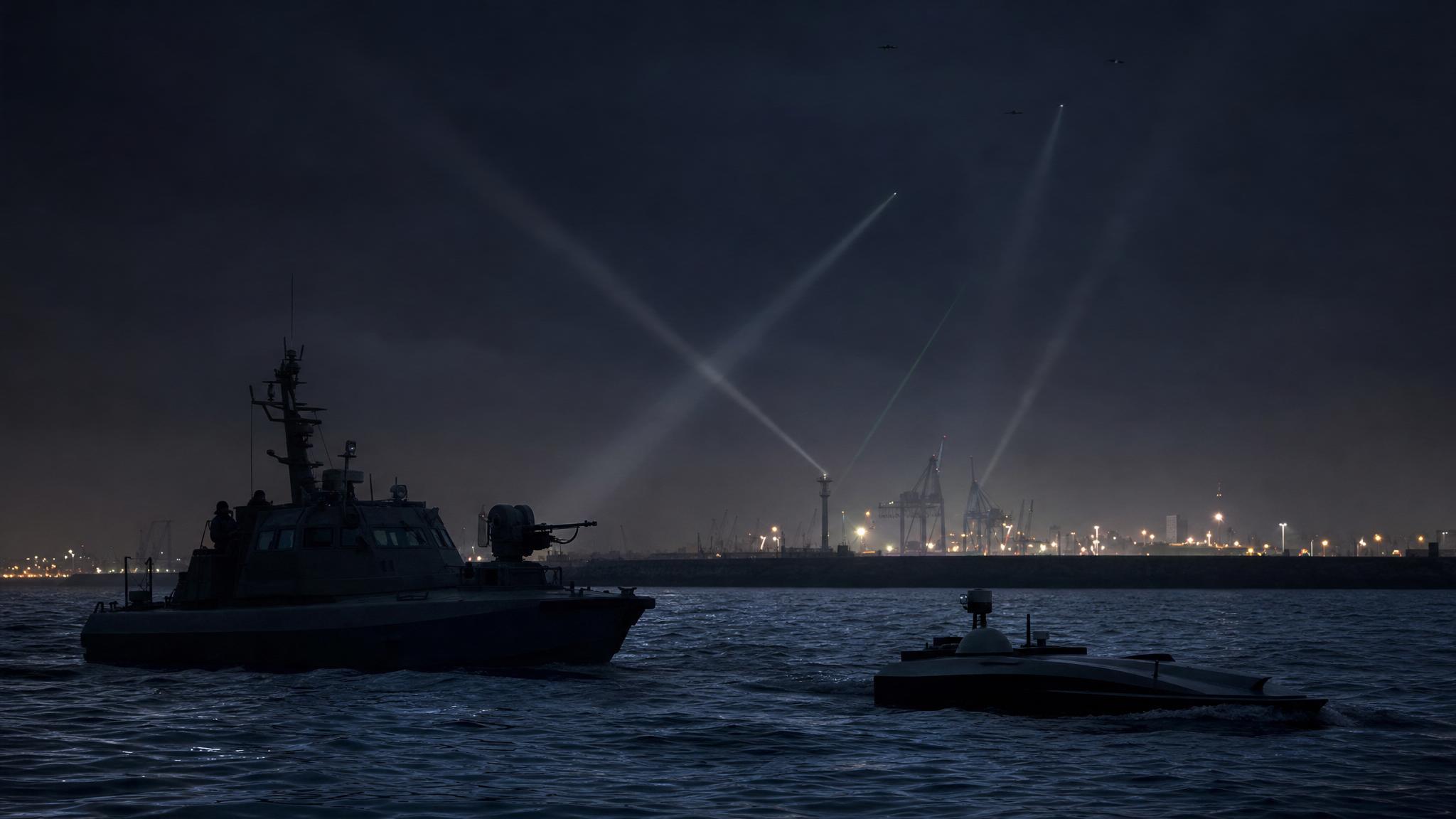
The most telling episode occurred not in Kyiv and not on the front line, but in the Romanian city of Galați. According to Associated Press and the Romanian Ministry of Defense, a Russian strike drone involved in the night attack on Ukraine entered Romanian airspace, was tracked by radars, and crashed onto the roof of a residential building, causing a fire and injuring two people. General George Maxim later emphasized that this was "not an attack by Russia against Romania," but simultaneously acknowledged the obvious: Russia is a threat to the security of countries in the region. President Nicușor Dan called the incident the most serious strike on Romanian territory since the beginning of the full-scale war and convened the Supreme Defense Council. Such a cautious formulation — not an attack, but a threat — captures the nerve of the current moment.
The Russian military logic here is quite transparent. Moscow does not necessarily plan a direct confrontation with NATO; rather, it is expanding the zone of uncertainty around the Ukrainian theater. In Soviet terminology, this would resemble not a breach of the border, but "influence on the enemy's decision-making system." A cheap drone costing tens of thousands of dollars forces a NATO country to discuss the rules of engagement, accelerate the transfer of anti-drone systems, diplomatic measures against Moscow, and the risk of hitting a civilian object with its own air defense systems. This is pure asymmetry: Russia spends a cheap carrier, NATO spends political capital.
The Composition of the Salvo Indicates a Shift to Cheap Saturation
Particularly important is not only the scale but also the composition of the salvo. The "Shahed" or the Russian "Geran" remains the primary strike asset: a piston-powered device with a characteristic low speed, a range of hundreds and over a thousand kilometers depending on the version, and a warhead weighing several dozen kilograms. But alongside it, "Gerberas" and "Parodies" — cheaper decoys and false targets — now regularly accompany it, forcing Ukrainian crews to spend time, detection channels, and sometimes munitions. "Italmas" fills the intermediate niche of a lighter strike UAV. Jet variants add speed and complicate target classification. One "Iskander-M" in such a package serves not so much as a standalone demonstration of power but as a heavy accent in the overall algorithm of overloading defenses.
In this construct, Russia is trying to solve an old problem with quantity and diversity. If high-precision missiles are expensive, limited in production, and dependent on sanctioned microelectronics, then the drone salvo can be increased using less sophisticated but mass platforms. This does not negate the sanctions; it simply shifts the war into an area where low quality is compensated by density. In the Red Army of 1944, such logic had an industrial foundation. In the Russian army of 2026, it has a more fragile base: assembly shops, imported components through third countries, Iranian technological pedigree, and a constant race with Ukrainian electronic warfare. But for a night strike on cities, this is sufficient.
Ukrainian Interceptors Force Russia to Change the Drones Themselves
A separate detail that has emerged in recent days makes the picture even more interesting. First Deputy Minister of Defense of Ukraine Oleksiy Yuskov reported to Business Insider that Russian forces have begun equipping Shahed-like devices with electronic warfare systems to jam Ukrainian interceptor drones. UNITED24, citing this interview, reports that such blocks are installed in the tail section and are intended to disrupt the communication or navigation of small interceptors. The idea itself cannot be called revolutionary: the Russian electronic warfare school is traditionally strong, and attempts to install jamming devices on drone platforms have been recorded before. But the fact is important as a symptom. Russia no longer views Ukrainian interceptors as exotic; it is incorporating them into the design of future salvos.
The Ukrainian side claims that the effectiveness of small air defense against "Shaheds" has doubled over four months, while the monthly volume of Russian launches has increased by about 35 percent. These two figures explain what is happening well. Ukraine is reducing the cost of interception by shifting part of the work from expensive anti-aircraft missiles to FPV interceptors, mobile groups, and electronic warfare. Russia responds not with a qualitative leap but with a complication of the carrier and an increase in the series. Thus, a new economy of air warfare arises: not "missile against missile," but "cheap strike drone against even cheaper interceptor," plus a struggle over frequencies, batteries, thermal imagers, operators, and guidance algorithms.
Galați Reveals the Weak Spot of the Eastern Flank
The Romanian episode is unpleasant for NATO precisely because it does not require an official decision from Moscow regarding an attack. The Danube Delta and the areas of the Ukrainian ports of Izmail, Reni, and Odesa are so close to Romania that a navigation error, the impact of electronic warfare, loss of control, or a deliberately risky trajectory yield the same result: a strike device ends up over the territory of the alliance. Shooting it down over a city is dangerous; not shooting it down is politically humiliating and physically risky. A representative of the Romanian Ministry of Defense, explaining why the drone was not destroyed, effectively formulated the dilemma of low-altitude defense: one cannot create more threats than one prevents.
This is not a new problem, but on May 29, it ceased to be abstract. Romania has already found debris from drones on its territory multiple times; now there are injured civilians. The next step for the alliance will almost inevitably be technical rather than rhetorical: more ground sensors, short-range C-UAS systems, mobile groups, integration of Ukrainian trajectory data, possibly — a permanent anti-drone belt along the Danube. But such defense costs more than the Russian device it must stop. This is the Russian calculation, even if the specific drone in Galați was the result of chaos rather than an order.
The Strategic Meaning of the Salvo
One cannot overstate the military significance of one night. The loss of 217 out of 232 drones is a poor indicator for any army when only hit targets are considered. But Russia has long thought otherwise. It is important for it not only to destroy an object but also to force Ukraine to maintain an expensive multi-layered defense in constant readiness, expend radar and crew resources, distract mobile groups from the front, and make neighboring countries discuss where the line is between an incident and casus belli. From this perspective, even a downed "Shahed" can be useful if it forced aviation to scramble, opened fire, evacuated a house, or convened a security council.
In the coming months, if Ukrainian interceptors indeed continue to reduce the cost of defense, Russian salvos will become more mixed: more false targets, more jet drones, more built-in electronic warfare, more routes through border zones. This is not a sign of strength in the classical sense. Rather, it is a sign of adaptation of an army that cannot achieve an operational breakthrough on the ground and shifts pressure into the air, onto cities, infrastructure, and the nerves of neighbors. The Russian system knows how to produce such a threat en masse. The question is whether it can control the consequences.
The conclusion here is cold: the cheaper the Russian strike drone becomes, the more expensive the political mistake surrounding it becomes. Galați showed that the NATO border is already within the Russian model of air pressure, even if Moscow continues to pretend that it is merely a side effect of the war.
Sources
- RBC-Ukraine, May 29, 2026 — data from the Ukrainian Air Force on the "Iskander-M/S-400" missile, 232 UAVs, and 217 neutralized targets.
- Associated Press, May 29, 2026 — report on the crash of a Russian drone in Galați, injuring two people and Romania's response.
- UNITED24 Media, May 28, 2026 — information on Russian attempts to equip Shahed drones with electronic warfare systems against Ukrainian interceptors.
- Associated Press, May 29, 2026 — context of the escalation of Russian airstrikes and stagnation of ground offensives.
On May 29, 2026, Russian Armed Forces launched 232 drones over Ukraine, with some entering Romanian airspace and causing injuries in Galați. Ukrainian defenses intercepted 217 drones, showcasing a high interception rate. The incident raised concerns about NATO's security, as it highlighted the potential for Russian drones to threaten alliance territory.
- 232 Russian drones were launched in a single night attack over Ukraine.
- 217 drones were intercepted or neutralized by Ukrainian defenses.
- A Russian drone entered Romanian airspace and crashed, injuring two civilians.
- The incident prompted a response from Romanian authorities and discussions about NATO's defense posture.
- Russia is adapting its drone tactics by equipping drones with electronic warfare capabilities.