

How 3 Rebellions Shaped Alexander the Great’s Grand Strategy – “I am not afraid of an army of lions led by a sheep; I am afraid of an army of sheep led by a lion.” Alexander the Great is believed to have said this, though it is apocryphal. Still, it sounds like something that the iconic military leader would have said.
Alexander the Great rose to power by the age of 20. We’ve all seen the legendary scene in Die Hard, the ultimate Christmas movie, in which the villain, Hans Gruber, looks at one of his victims and says, “And Alexander wept for there were no more worlds left to conquer.” That saying, too, captured the wild ambition of Alexander, the man who, beginning at the age of 20, set about conquering much of the Ancient World.
Background on Alexander the Great
His father was Philip II of Macedonia. Philip II was assassinated in 336 BC. The brilliant and ambitious Alexander soon went on a dynamic campaign of conquest. Young Alexander immediately faced challenges within ancient Greece.
Alexander was immediately faced with a challenge from Thessaly. A powerful, wealthy region directly south of Macedonia, Thessaly had the finest heavy cavalry in the land. Once Philip II’s assassination became known to all, the Thessalians revolted against Alexander and tried to block every geographical entry point into central Greece.
A Bloodless Victory
So, Alexander marched out to meet the Thessalian troops in battle at the heavily fortified passes of Mount Ossa and Mount Olympus. Alexander preferred deception as a style of warfare. He ordered his engineers to build makeshift staircases into the side of Mount Ossa. Using those stairs, his army climbed the mountain in complete secrecy and bypassed the Thessalian defensive lines.
Once the Thessalians realized Alexander had completely encircled them, they surrendered without ever attacking. At that point, the young Alexander negotiated with the Thessalians by reminding the Thessalian leaders that his family, supposedly, shared a lineage with the mythical Hercules. Without hesitation, the Thessalians embraced Alexander as “Archon” (leader) and gave him the same titles and respect as his father had received.
But Thessaly was only Alexander’s first early challenge to his reign. There’d be two more. And with each round, the challenge would intensify.
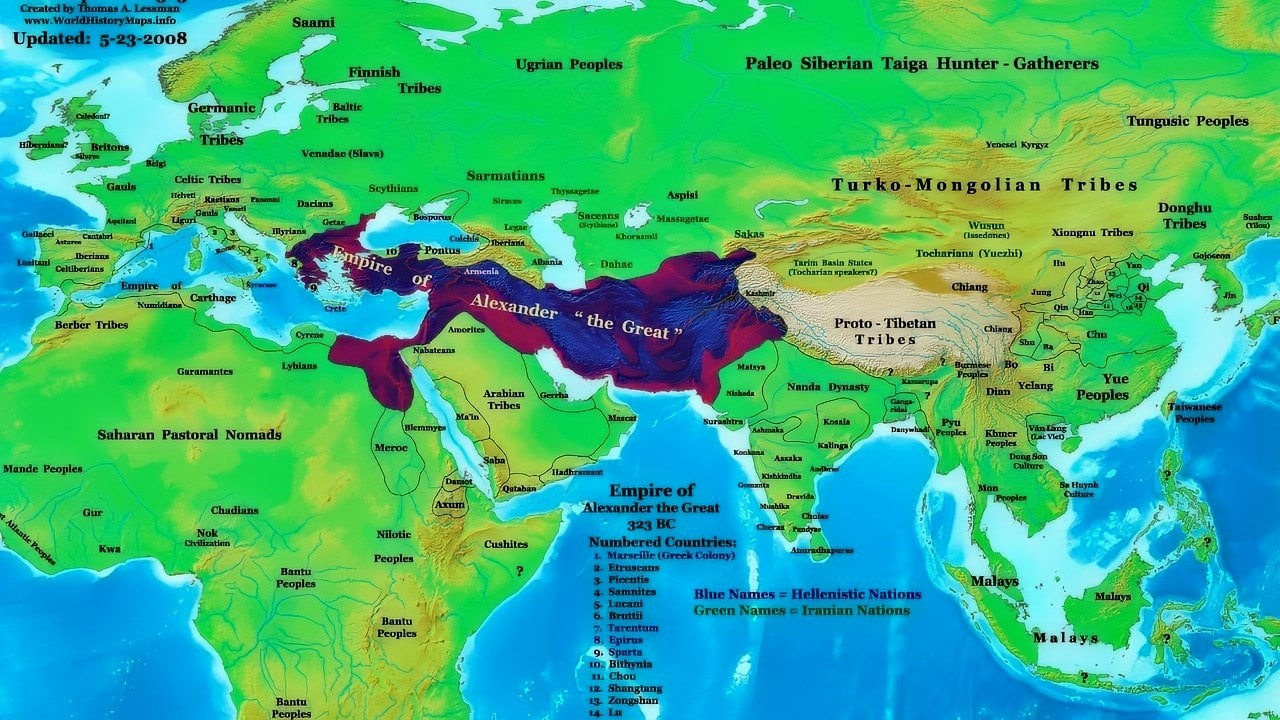
Alexander the Great Map of Conquest Quote of the Day. Image Credit: Creative Commons.
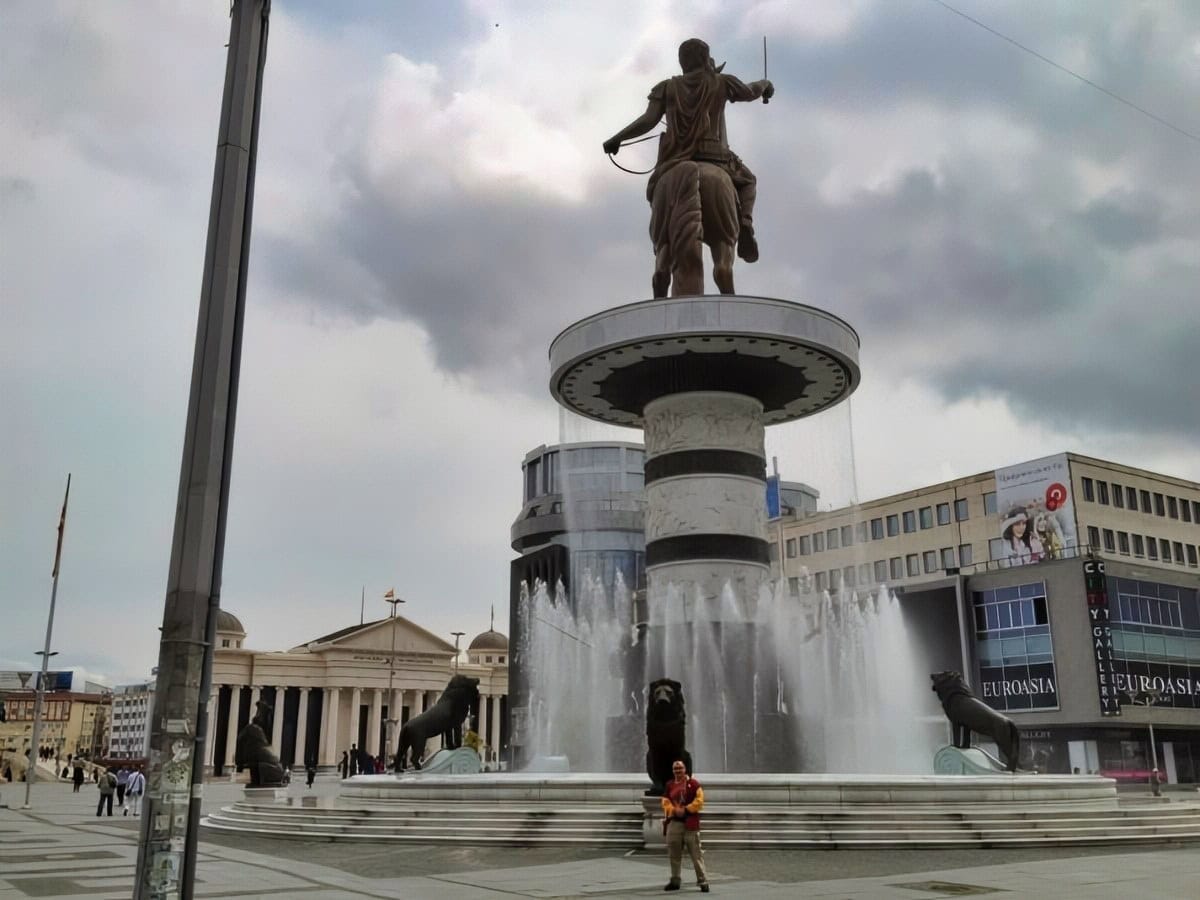
Alexander the Great Statue. Image Credit: Christian D. Orr.
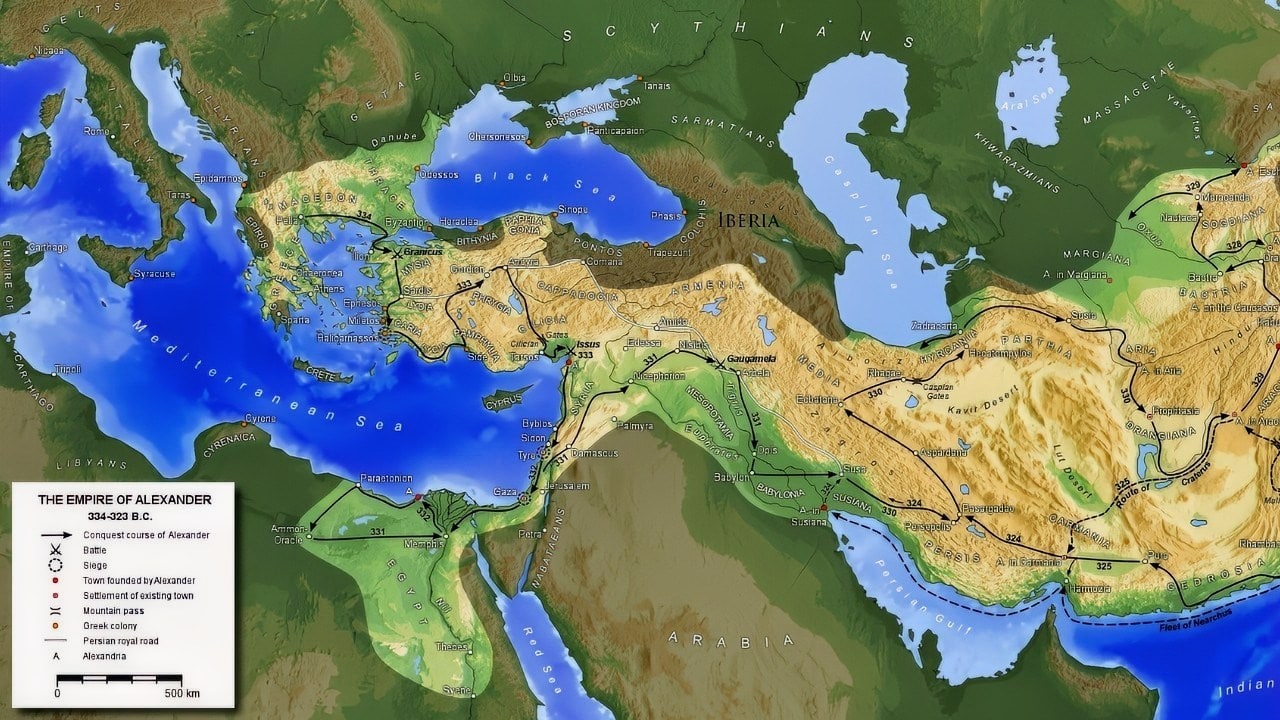
Alexander the Great Empire. Image Credit: Creative Commons.
Deception is the Ultimate Form of Warfare
Next came the revolt from Illyria (modern-day Albania). This was Alexander’s first true challenge, and it would be neither bloodless nor quick. It became known as the Siege of Pelium, and it demonstrated Alexander’s tactical genius. Alexander’s actions there also highlighted Alexander’s flexibility, a key element of any successful military leader.
At the time, King Cleitus of Illyria revolted against Alexander. Soon, King Glaukias of Taulantii was marching to join the rebels of Illyria. Alexander needed to prevent the two armies from merging. If they did, the armies of King Cleitus and King Glaukias could stop Alexander’s army from returning from their campaign along the distant Danube River, thereby denying Alexander access to his kingdom, his throne, and ultimately his rule.
Alexander could not prevent the merger of those two armies. So, facing overwhelming numbers and a bottleneck, Alexander used guile to win. He lined his army up on the valley floor and conducted complex, lightning-fast phalanx drills in absolute silence. When the Illyrian tribesmen saw the mechanical, silent way Alexander’s phalanx moved, they grew scared and ran. Once the Illyrian tribesmen had started to run from battle, Alexander instructed his men to let out a war cry, slam their spears against their shields — at once — and then charge the hills.
Alexander’s forces quickly secured a retreat path from the Illyrian ambush. But Alexander wasn’t done. He knew he had to crush this threat. So, he lulled the Illyrians into a false sense of safety. When night fell, and the Illyrian tribesmen believed they had defeated Alexander’s forces, Alexander’s men launched a devastating surprise attack on the sleeping Illyrians, ultimately securing victory.
Sending One Last Message
However, Alexander’s victory over King Cleitus was hampered by the technology of the day. Rumors often spread faster than the truth or armies. In northern Greece, people claimed that Alexander was cut down in battle by King Cleitus, leading the mighty city of Thebes to openly revolt, believing no king now ruled over them. This forced Alexander to take the same army that had just crushed King Cleitus and march 250 miles south in two weeks to attack Thebes.
Once outside the gates of Thebes, Alexander burned the city to make an example of the rebels. He had just endured three major rebellions and would not allow anyone else under his reign to challenge him.
Alexander’s greatest feats, however, lay ahead of him. Shortly after securing his throne in Greece, the mighty warlord turned his gaze to Greece’s ancient enemy, Persia. That campaign would be like the first three Alexander waged, though it’d be greater, and those earlier experiences would inform Alexander on how best to wage the larger war against Persia.
About the Author: Brandon J. Weichert
Brandon J. Weichert is the Senior National Security Editor at 19FortyFive.com. He also manages The Weichert Brief on Substack. Weichert also hosts “National Security Talk” on Rumble. He is the author of four bestselling national security books, most recently A Disaster of Our Own Making: How the West Lost Ukraine (Encounter Books). Follow him via Twitter/X @WeTheBrandon.