
257 clashes in a day show the new price of Russian pressure near Pokrovsk
 Dmitri Volkov
257 clashes in a day show the new cost of Russian pressure near Pokrovsk
257 clashes in a day is not just another line in the summary from the General Staff of Ukraine. This figure means that the Russian army has once again switched to a pressure model, where the result is measured not in kilometers, but in the ability to force the Ukrainian defense to respond simultaneously to dozens of local crises. According to the Ukrainian General Staff as of 08:00 on June 26, the most tense area has become the Pokrovsk front, where 31 Russian assault actions were repelled; another 23 attacks occurred in the Sloviansk and Konstantynivka directions, and 27 in the Huliaipole direction. In total, this looks like an attempt to stretch Ukrainian reserves along an arc from the Donetsk region to Zaporizhzhia, without expecting a quick operational breakthrough.
Pokrovsk as an indicator, not an exception
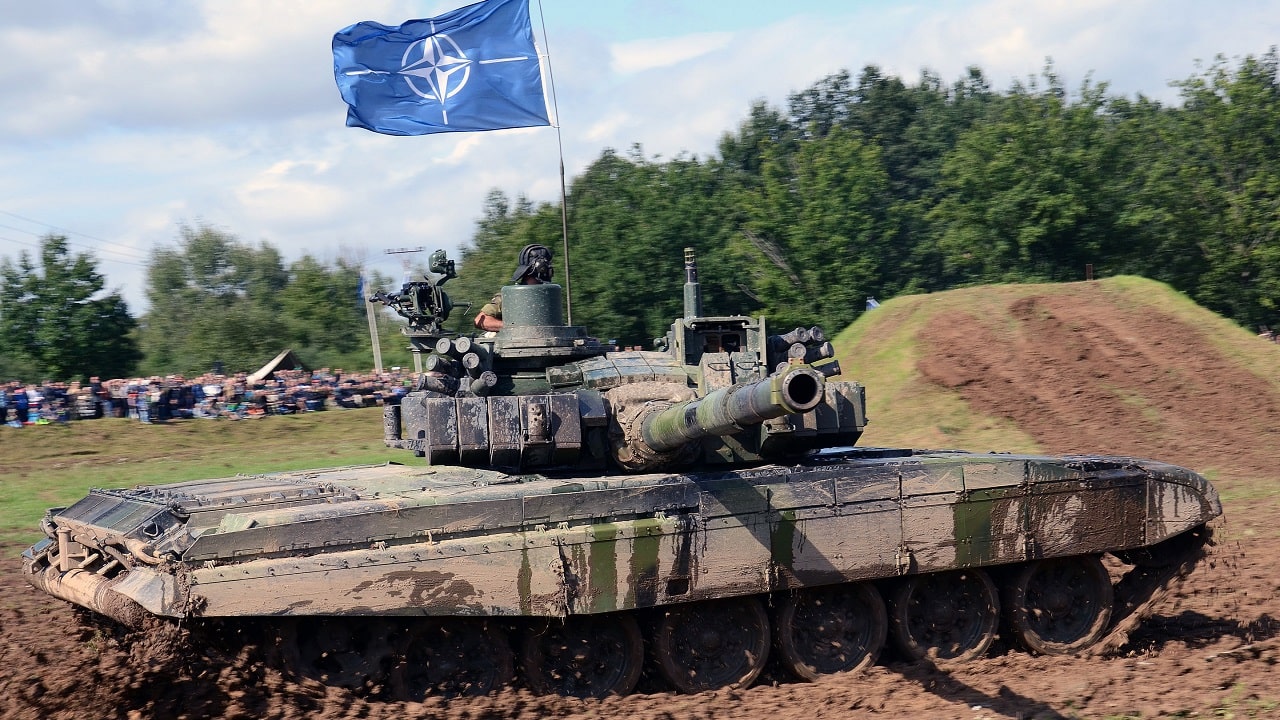
The Pokrovsk direction has long ceased to be just a geographical point on the map. It has become a measure of how capable the Russian army is of turning numerical and fire superiority into sustainable advancement. In a report published by Ukrinform citing the General Staff of the Armed Forces of Ukraine, the settlements around which Russian units attempted to attack are listed: Novoluhanske, Rodynske, Vasylivka, Hryshyne, Kotlyne, Udačne, Molodetske, as well as directions towards Toretske, Kucherov Yar, Ivanivka, Novyi Donbas, Belytske, Shevchenko, and Novopodhorodne. The very list is important: it is not a single strike fist, but a fan of short thrusts, each of which requires reconnaissance, drones, artillery support, evacuation of the wounded, and delivery of ammunition.
In Soviet terminology, this could be called creating "tension along the front." But the Soviet school assumed that the tension would then be converted into a massive breakthrough with the introduction of a success development echelon. The Russian army of 2026 more often demonstrates something different: numerous tactical attacks, in which infantry, FPV drones, small groups of armored vehicles, and guided aerial bombs operate not as a single mechanism of deep operation, but as a tool of gradual wear. This is not necessarily ineffective. It is just an expensive way to wage war, especially if daily losses are confirmed at least close to Ukrainian estimates.
Fire has become cheaper than people only on paper
The same morning summary states that in one day, Russian troops launched one missile strike using three missiles, conducted 101 airstrikes using 310 guided bombs, employed 9,388 strike drones, and shelled Ukrainian positions and settlements 2,896 times, including 71 shellings from multiple launch rocket systems. These figures highlight the main feature of the current Russian tactics: infantry pressure increasingly does not exist separately from the drone and bombing field. Where in 2022 Russian command often tried to compensate for weak reconnaissance with a mass of artillery, in 2026 it more often combines small assault groups with constant observation and cheap strike means.
However, there is an unpleasant paradox for Moscow here. If hundreds of guided bombs and thousands of drones are required daily to attack a single line of defense, then the "cheapness" of such pressure becomes relative. The cost of one FPV or "Geran" is not high by the standards of a large war, but the logistical system, operators, relays, batteries, repair workshops, electronic warfare means, and communication channels create expenses that are not visible in the beautiful summaries of the Ministry of Defense. The system resembles the late Soviet industry: on paper, the output grows, but each additional percentage requires more hidden costs. Old instructors in academies called this the law of diminishing returns, although they usually only recalled it after unsuccessful exercises.
Losses of artillery and personnel change the command's calculations
The Ukrainian side reported on June 26 about 1,310 Russian losses in one day, as well as the loss of 68 artillery systems, four air defense systems, three MLRS, five armored vehicles, 439 vehicles and tanks, nine units of special equipment, and 1,778 tactical drones. These data, as always, require caution: Kyiv publishes its estimates, and independent verification for each category is impossible in real time. But even if taken as an upper limit, the very structure of losses is indicative. Artillery systems and transport are not abstract "units of equipment." They are the ability to maintain the pace of attacks, move ammunition, and keep frontline units in combat for more than a few hours.
The Russian army is better at absorbing losses than is often assumed in Western commentary. Its mobilization base, contract payments, regional battalions, and prison-colonial reserve have not disappeared. But resilience is not the same as infinity. If 257 clashes are recorded in one day, even locally successful attacks begin to turn into an accounting of personnel expenditure. A corps commander does not need to be a humanitarian to understand the problem: a trained stormtrooper, a drone operator, a supply driver, and an artillery crew are not replaced equally quickly. In the Russian system, this difference is often masked by the general term "personnel," which is convenient for reporting and harmful for analysis.
Missiles and drones as a second layer of pressure
Simultaneously with frontline activity, Russia launched a nighttime strike on Ukraine with seven Iskander-M ballistic missiles and 189 drones of various types, including Shaheds, Gerbers, and Italmas (data from the Air Forces of Ukraine published by "Ukrainska Pravda" on June 26). Ukrainian air defense reported the downing or suppression of three missiles and 174 drones; hits from four ballistic missiles and 11 drones were recorded in 12 locations. This is not an isolated episode, but part of the same logic: ground pressure on Pokrovsk and neighboring directions is accompanied by strikes on the rear, energy, industrial facilities, and urban systems.
From a military point of view, such a linkage is rational. Missile and drone strikes force Ukraine to distribute air defense between the front, cities, energy hubs, and industrial facilities. The more Patriot, IRIS-T, NASAMS systems, and mobile groups are used to protect the rear, the harder it becomes to cover the frontline zone from guided bombs and reconnaissance drones. But this rationality has its limits. A mass launch of drones no longer guarantees a strategic effect if a large portion of the devices are shot down or suppressed. It guarantees expenditure. And expenditure, strangely enough, is the most honest indicator of the state of the war.
What a day with 257 battles means
A day with 257 clashes does not indicate an imminent collapse of the Ukrainian defense nor the impotence of the Russian army. It speaks of a war in which both sides have learned not to give the enemy cheap victories. Russia is trying to buy movement forward through simultaneous pressure on many fronts, combining infantry, aerial bombs, artillery, and drones. Ukraine responds with dispersed defense, counter-battery warfare, strikes on warehouses, command points, and drone control centers; according to Ukrinform, Ukrainian forces hit 14 Russian targets in one day, including eight areas of personnel concentration, two artillery systems, a fuel and lubricants warehouse, a command post, and a drone control center.
The main conclusion is unpleasant for both capitals. For Kyiv — because the Russian army retains the ability to maintain a high pace of attacks and does not intend to switch to passive defense. For Moscow — because such a pace increasingly resembles a costly mode of maintaining initiative rather than a path to a decisive result. If July does not bring the Russian command a qualitative breakthrough near Pokrovsk or in adjacent directions, 257 battles in a day will appear not as a sign of strength, but as a symptom of operational inflation: each subsequent meter requires more expenditure than the previous one.
The Russian army can continue this pressure for a long time. But duration should not be confused with effectiveness: exhaustion is a strategy only until one's own costs rise more slowly than the enemy's costs.
On June 26, 2026, Russian forces engaged in 257 combat incidents, with 31 assaults in Pokrovsk and additional attacks in Sloviansk and Huliaipole. Ukrainian reports indicate 1310 Russian personnel losses and significant equipment losses, including 68 artillery systems. The Russian military employed a combination of ground assaults, missile strikes, and drone operations, reflecting a sustained pressure strategy against Ukrainian defenses.
- 257 combat engagements reported in one day
- 1310 Russian personnel losses
- 68 artillery systems lost
- 31 assaults in Pokrovsk
- Russian forces conducted missile and drone strikes