

The Lockheed Martin X-44 MANTA was one of the most radical fighter concepts ever seriously studied by the United States Air Force and NASA. Born in 1999, the X-44 MANTA was built off the F-22 Raptor airframe, except the MANTA eliminated all tail surfaces–so, no vertical stabilizers, no horizontal stabilizers.
Instead of traditional control surfaces, the aircraft would fly using three-dimensional thrust-vectoring alone. The engines would control yaw, pitch, and roll.
(Follow us on YouTube)
Essentially, this was a total reimagining of how an aircraft flies.
X-44 Manta: Why the Air Force Wanted It
The MANTA concept promised three major advantages. First, it would provide stealth on steroids. Second, the MANTA allowed for a greater range and heavier payloads. Third, the plane with its unique design would (in theory) be simpler.
Because the plane lacked a tail and control surfaces, it had fewer radar reflections. As a result, some speculated that the MANTA was stealthier than the F-22 Raptor!
By removing the tail structures, the MANTA had greater fuel volume and way more internal weapons space than conventional birds.
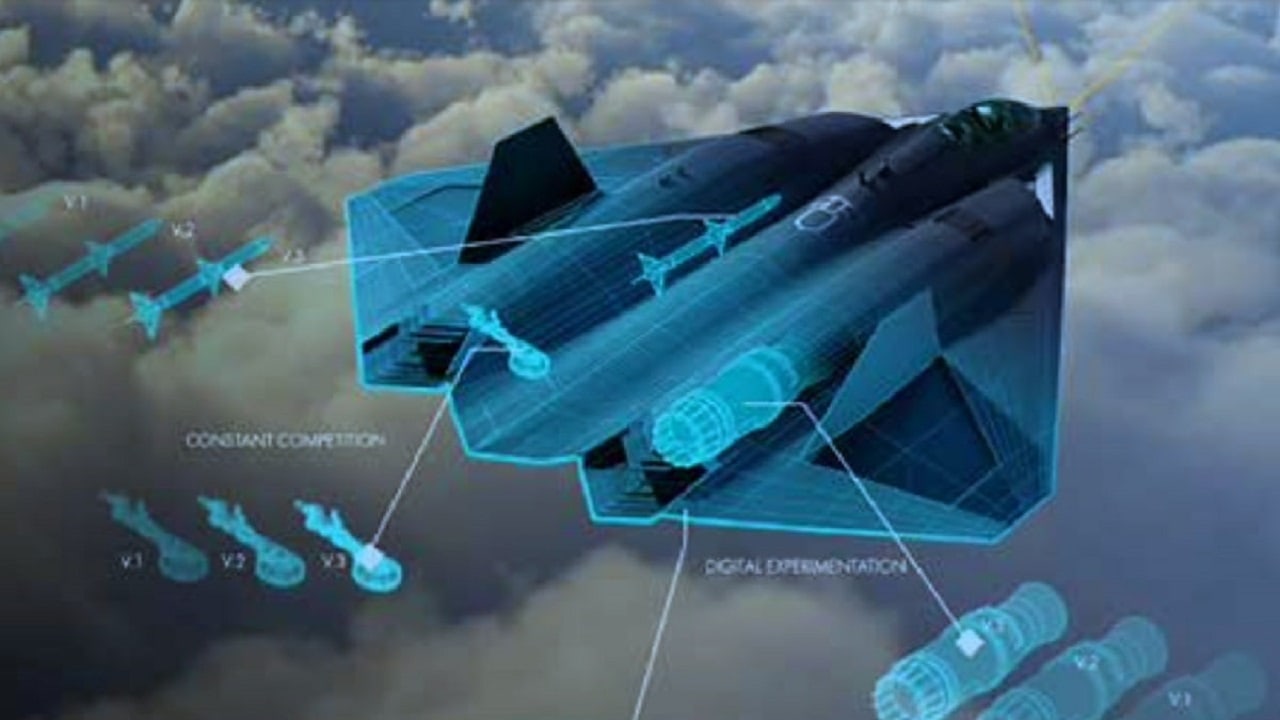
X-44 Manta. Artist Rendering.
Engineers argued that the MANTA was mechanically simpler than other planes, meaning it was lighter and more efficient. Conceivably, the plane would be easier to maintain, too. So, the military was supposed to get a plane with a longer range, better stealth, and fewer parts.
Reality Hits Hard
Since the plane lacked conventional control surfaces and relied entirely on thrust vectoring, no one on the design team thought to ask what would happen if thrust vectoring failed. Well, if thrust-vectoring failed–even briefly–one would lose all control. Since traditional planes have rudders, elevators, and ailerons, if thrust-vectoring failed on such planes, it wouldn’t be a big deal.
The X-44 MANTA lacked these features, meaning that losing thrust vectoring, even for a short while, was catastrophic.
So, the MANTA was technologically risky, extremely difficult to certify, and dangerous for early-2000s flight control systems.
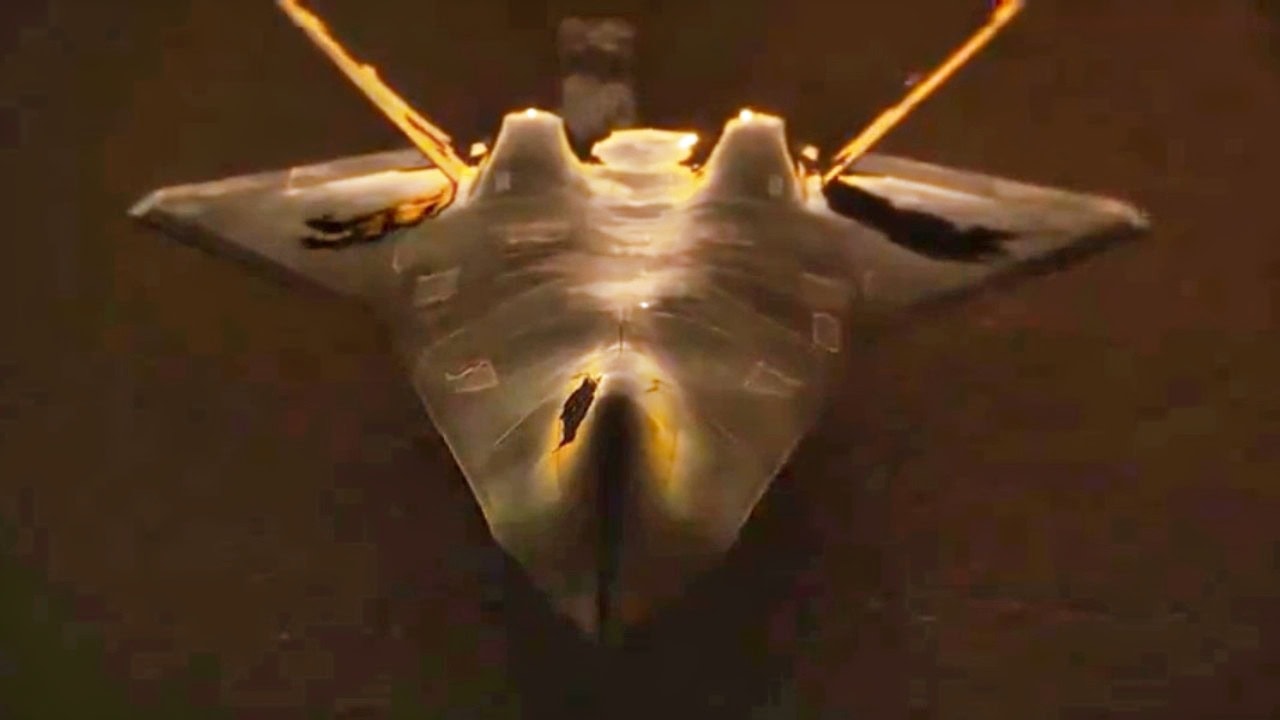
F-47 Fighter from Boeing. Image Credit: U.S. Air Force Screenshot.
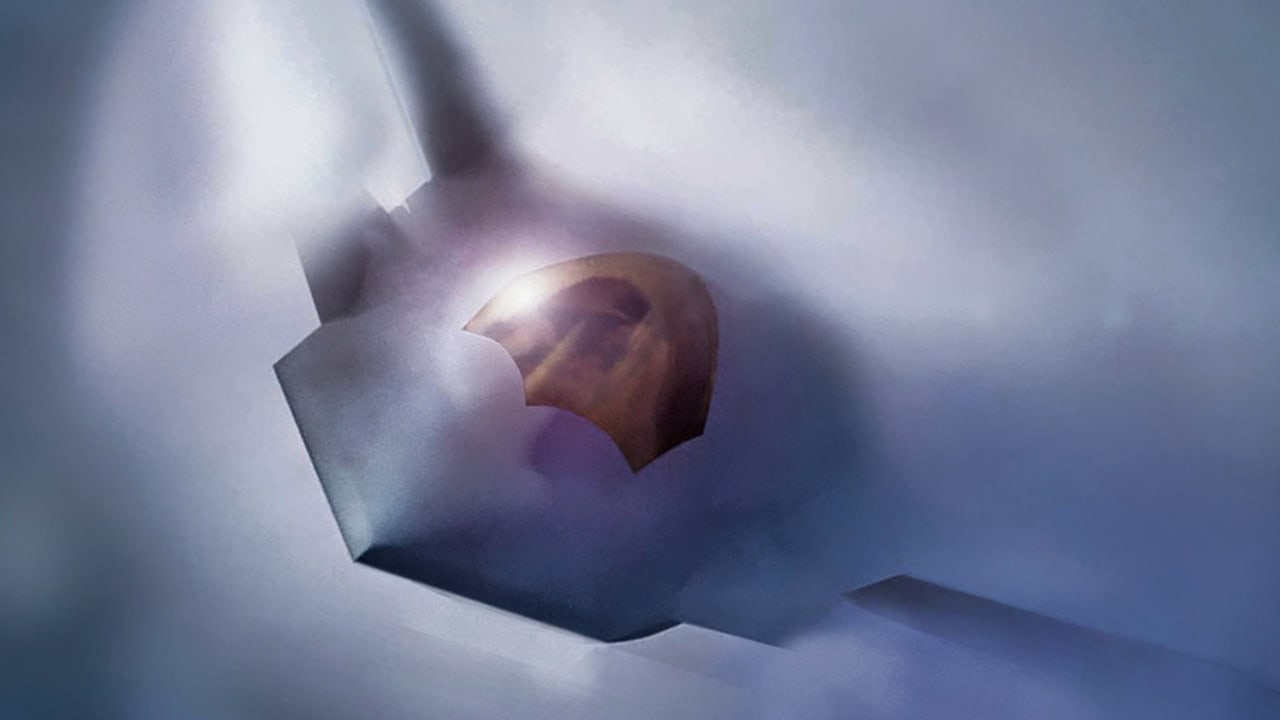
Shown is a graphical artist rendering of the Next Generation Air Dominance (NGAD) Platform. The rendering highlights the Air Force’s sixth generation fighter, the F-47. The NGAD Platform will bring lethal, next-generation technologies to ensure air superiority for the Joint Force in any conflict. (U.S. Air Force graphic)
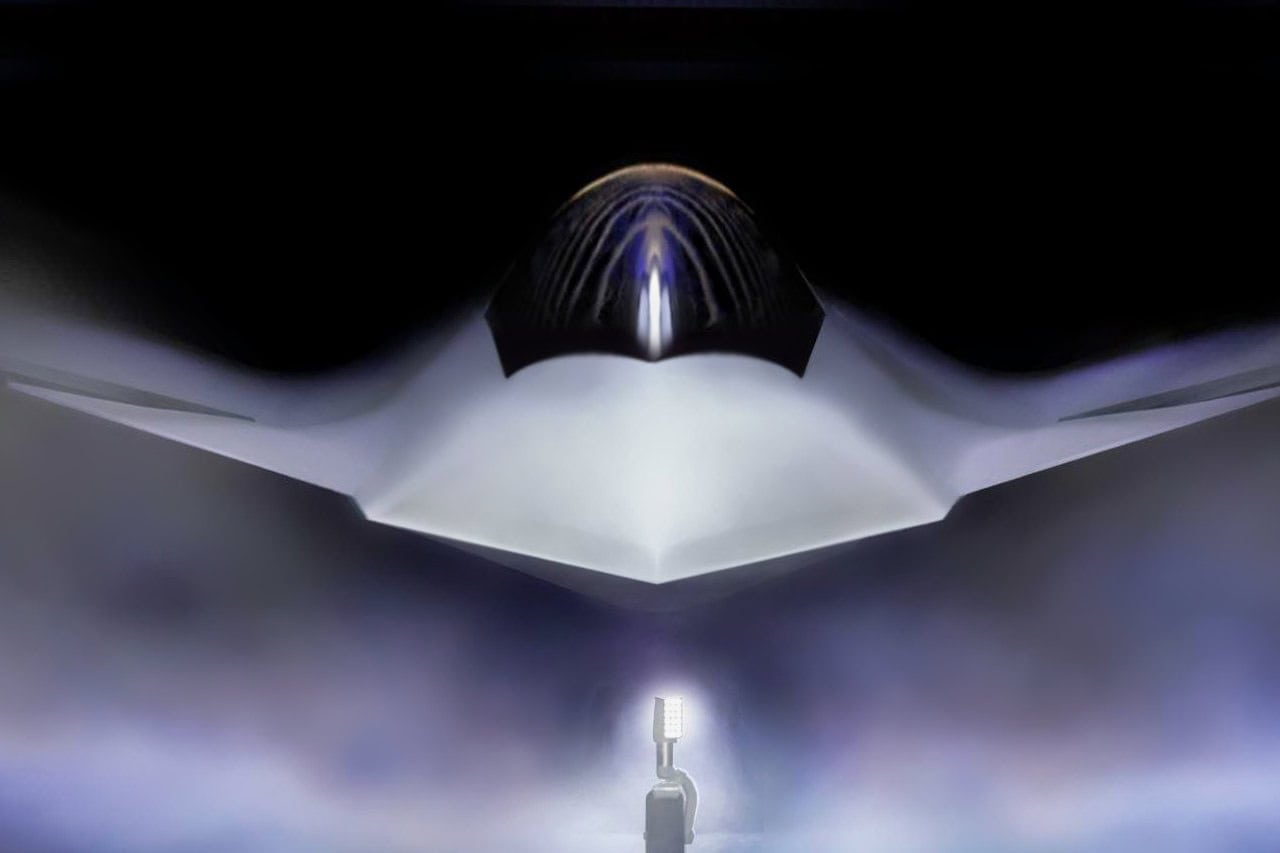
Shown is a graphical artist rendering of the Next Generation Air Dominance (NGAD) Platform. The rendering highlights the Air Force’s sixth generation fighter, the F-47. The NGAD Platform will bring lethal, next-generation technologies to ensure air superiority for the Joint Force in any conflict. (U.S. Air Force graphic)
Strategic Shift
Plus, at the time of the MANTA’s development, the United States military was shifting toward fighting the Global War on Terror.
Not surprisingly, then, the funds and interest in the Pentagon move quickly away from the MANTA, with its highly experimental design, toward cheaper uncrewed aerial vehicles (UAVs) and multirole platforms with greater control and reliability, such as the F-35 Lightning II.
Funding died for the X-44 MANTA in 2000.
Was There a Drone Version of the X-44 MANTA?
Indeed, the interest in UAVs during the Global War on Terror was so intense that designers created the X-44A. Whereas the X-44 MANTA was a fighter concept (never built and purely experimental), the military did build the X-44A based on the MANTA’s ideas.
The X-44A was a secret flying-wing UAV developed by Skunk Works in 1999. It first flew in 2001 and was revealed publicly in 2018.
During the course of its experimental life, the X-44A helped refine tailless aerodynamics, tested stealth shaping and advanced control systems, and served as a bridge between various systems in the Air Force’s arsenal, such as the RQ-3 DarkStar and RQ-170 Sentinel. Basically, the “failed” X-44 MANTA fighter concept lived on in a highly classified, successful drone program, such as the X-44A.
F-47 NGAD Connection
Interestingly, the Next-Generation Air Dominance (NGAD) sixth-generation warplane, the F-47, looks a lot like the X-44. It’s not wild that the F-47 would have many similarities to the X-44, too. That’s because many of the key enablers for the F-47 did not exist in the early 2000s.
Technologies such as AI-assisted flight control, advanced fly-by-wire, improved thrust vectoring, and autonomous systems have been developed and refined over the past 26 years. Lockheed Martin has acknowledged that modern stealth and NGAD work draws heavily on experience with tailless aircraft, such as the X-44.
Not a Failure. Too Early
The X-44 was not a failure. It was just too early. The X-44 tried to eliminate the tail on planes before computers could safely replace them. X-44 got shelved during a strategic lull. Its ideas migrated into stealth drones and next-generation fighters.
What about now?
We’re circling back to the same concept–because the technology finally caught up.
About the Author: Brandon J. Weichert
Brandon J. Weichert is the Senior National Security Editor at 19FortyFive.com. Recently, Weichert became the editor of the “NatSec Guy” section at Emerald. TV. He was previously the senior national security editor at The National Interest. Weichert hosts The National Security Hour on iHeartRadio, where he discusses national security policy every Wednesday at 8 pm Eastern. He hosts a companion show on Rumble entitled “National Security Talk.” Weichert consults regularly with various government institutions and private organizations on geopolitical issues. His writings have appeared in numerous publications, among them Popular Mechanics, National Review, MSN, and The American Spectator. And his books include Winning Space: How America Remains a Superpower, Biohacked: China’s Race to Control Life, and The Shadow War: Iran’s Quest for Supremacy. Weichert’s newest book, A Disaster of Our Own Making: How the West Lost Ukraine, is available for purchase at any bookstore. Follow him via Twitter/X @WeTheBrandon.