
396 Drones on the Night Before Geneva — Russian Military Doctrine of Pressure in Negotiations
 Dmitri Volkov
396 Drones on the Night Before Geneva — Russian Military Doctrine of Pressure During Negotiations
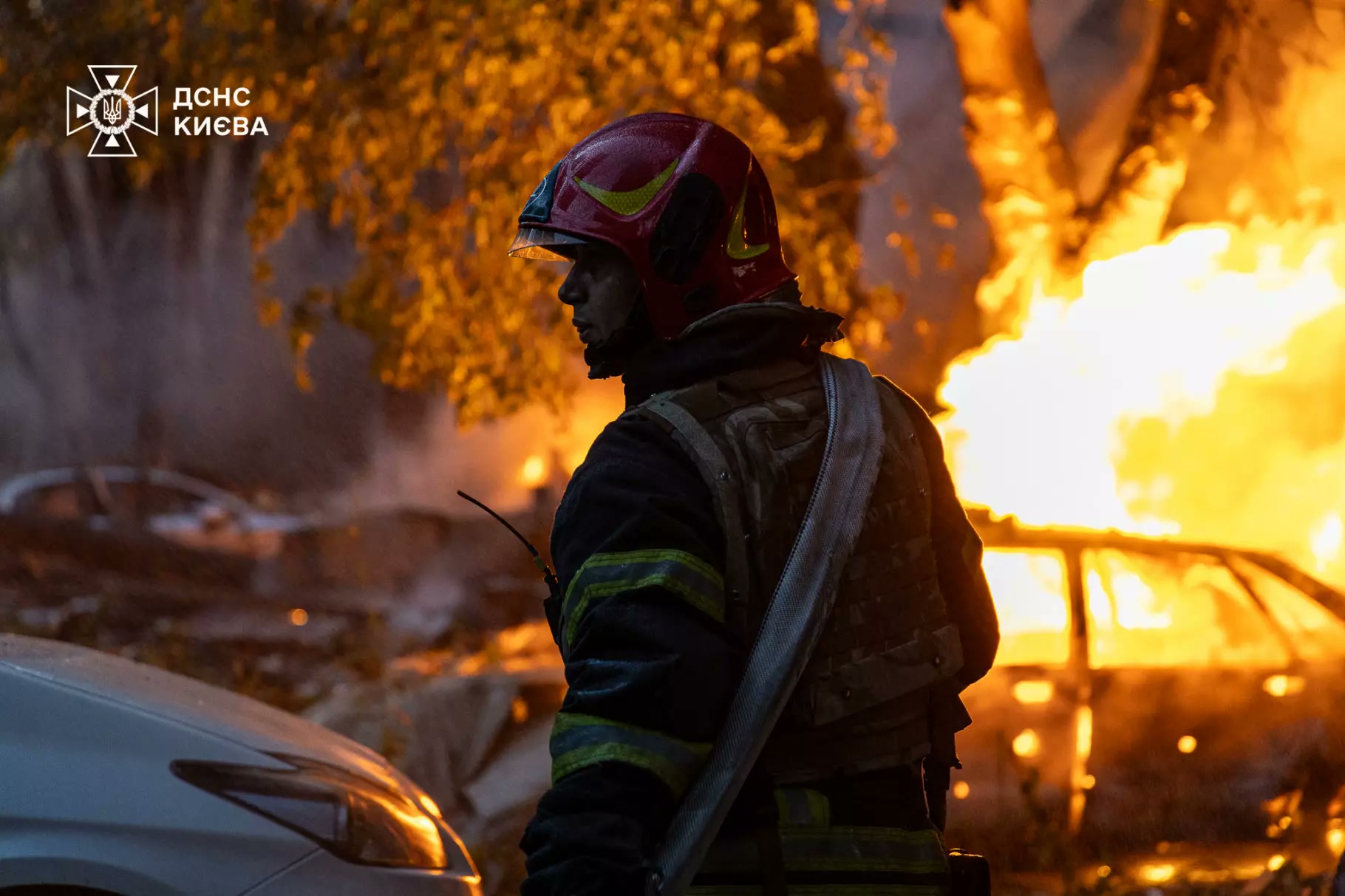
396 drones and 29 missiles — this is how many Russia launched at Ukraine on the night before the opening of the Geneva negotiations on February 17, 2026. Ukrainian air defense shot down 25 missiles and 367 drones. The next morning, the negotiations continued — as did the shelling. This is not a coincidence or a logistics miscalculation. This is doctrine.
What is Happening in Geneva
The third round of American negotiations between Russia and Ukraine took place at the Intercontinental Hotel in Geneva on February 17–18. According to AFP, the first day lasted six hours, and the negotiations were characterized by a source in the Russian delegation as "very tense." Ukrainian representative Rustem Umerov reported that "the discussion focused on practical issues and mechanisms for possible solutions" — a formulation that lacks any concrete substance. Russian press secretary Dmitry Peskov urged not to harbor illusions.
American negotiators — Jared Kushner and Steve Witkoff — sit at the head of a U-shaped table, with the Russian delegation on the right and the Ukrainian delegation even further right. A photograph published by the Ukrainian side captures what diplomats usually conceal: the distance between Washington and its traditional ally Kyiv is visually increasing with each round. The central disagreements remain the same: Moscow demands that Ukraine legally formalize the transfer of occupied territories and withdraw from those areas of Donbas still controlled by Kyiv. For the Ukrainian side, this is a red line. The issue of the Zaporizhzhia Nuclear Power Plant is also unresolved.
Soviet Precedent — Shooting and Talking Simultaneously
Western analysis often perceives the continuation of hostilities during negotiations as a sign of bad faith or internal disarray. This is a mistaken reading. Soviet, and later Russian, military thought has consistently viewed diplomacy and combat operations not as opposites, but as complementary tools of pressure.
One only needs to recall the negotiations for a ceasefire in Korea (1951–1953): combat operations did not cease throughout the two years of negotiations in Panmunjom — it was military pressure that determined which territories would end up on which side when the line of ceasefire was established. Soviet military analysts of that period recorded this lesson in doctrinal documents. Or take the negotiations on Afghanistan in 1988: active combat operations continued alongside the Geneva negotiations, which ultimately formalized the withdrawal of Soviet troops. The doctrine is simple: the negotiating table is a continuation of the command post by other means.
What Moscow Signals with Its Strikes
The massive attack on the night of February 16-17 — 396 drones and 29 missiles — carries several parallel messages simultaneously. First, the military machine is operational and does not depend on the course of negotiations: any agreement will be reached not due to exhaustion, but from a position of active strength. Second, the cost of a ceasefire for Ukraine must be felt physically — the destruction of infrastructure and civilian casualties create a specific pressure that abstract diplomatic formulations do not. Third, the Kremlin demonstrates to Trump: Russia is not blocking negotiations, but is also not sitting under American deadlines. The reaction the next morning is telling — on February 18, Russia struck with an Iskander-M missile and 126 drones. The pace of attacks did not slow down for even an hour.
The position of the Russian side is structurally simple: any temporary ceasefire fixes the current line of contact and deprives Russia of the operational initiative that it maintains. The continuation of military pressure serves precisely this purpose: not to capture new territories in the coming weeks, but to create in the Ukrainian side the feeling that any pause is better than the continuation of war.
What the Parties Really Want
In his address on February 17, Zelensky stated that he is ready to "move quickly towards a dignified agreement," but questioned the seriousness of Moscow's intentions: "What do they need?" — a rhetorical question that carries a justified suspicion. For Kyiv, any agreement must include reliable security guarantees — NATO membership or its functional equivalent, as without this, any peace turns into a frozen conflict with a known outcome.
Moscow, for its part, apparently seeks exactly this frozen variant — de facto recognition of territorial acquisitions with a formal absence of a peace treaty. A legally enshrined neutral status for Ukraine and restrictions on Western armaments — this is what, according to sources in the Russian delegation, constitutes the real minimum. The continuation of military pressure serves precisely this goal.
The American side, in turn, is interested in a deal before the midterm elections — which creates a time horizon that Moscow skillfully exploits. Kushner and Witkoff apply commercial deal-making tools to the military-political conflict. This in itself presents an analytical problem.
Structural Conclusion
The "very tense" negotiations in Geneva concluded without declarations and will resume tomorrow. Meanwhile, Ukrainian air defense continued to operate throughout the night. Neither side has approached the minimum concessions that the other side can publicly accept.
The Geneva format, it seems, will continue — because it is needed by all three participants for different reasons, not because there is real movement towards an agreement. Russia gains diplomatic cover while maintaining military pressure. The U.S. gets a negotiation process that can be sold to the domestic audience. Ukraine gets a chance to maintain Western attention. This is why negotiations will continue, even if none of the key issues are resolved for several more months.
The Russian military machine will strike. Diplomats will convene. This is not a contradiction — this is military doctrine.
Russia launched a massive attack on Ukraine with 396 drones and 29 missiles on February 16-17, 2026, as negotiations in Geneva continued. Ukrainian air defense successfully intercepted 367 drones and 25 missiles. The military actions are part of a strategy to exert pressure during diplomatic talks, highlighting the ongoing conflict and the complexities of the negotiations.
- Russia launched 396 drones and 29 missiles at Ukraine on February 16-17, 2026.
- Ukrainian air defense shot down 367 drones and 25 missiles during the attack.
- Negotiations in Geneva continued despite ongoing military actions.
- The Russian military doctrine integrates military pressure with diplomatic negotiations.
- The attack serves to demonstrate Russia's military capability and influence negotiations.