
400,000 tons of imported gasoline reveal the vulnerability of Russian oil defense in 2026
 Dmitri Volkov
400 thousand tons of imported gasoline reveal the vulnerability of Russian oil defense in 2026
Russia, the largest oil exporter, is now forced to purchase gasoline from India. This statement sounds almost like a bad economic joke, but it contains a military significance regarding the events of summer 2026. According to Reuters, as relayed by ISW on July 1, Moscow has already begun importing Indian gasoline and is considering monthly purchases of up to 400 thousand tons from various countries, including Belarus. AP reported at the end of June long lines at Moscow gas stations and signs saying "no diesel" or "no premium gasoline." Vladimir Putin publicly acknowledged the shortage and queues on June 28, although he called the situation "not critical." For a military analyst, the queue at the pump is not the issue; rather, it is what lies behind it: the Ukrainian campaign of long-range strikes has systematically begun to shift Russian oil infrastructure from the category of a profitable asset to that of a vulnerable rear.
Gasoline imports as an indicator of system damage
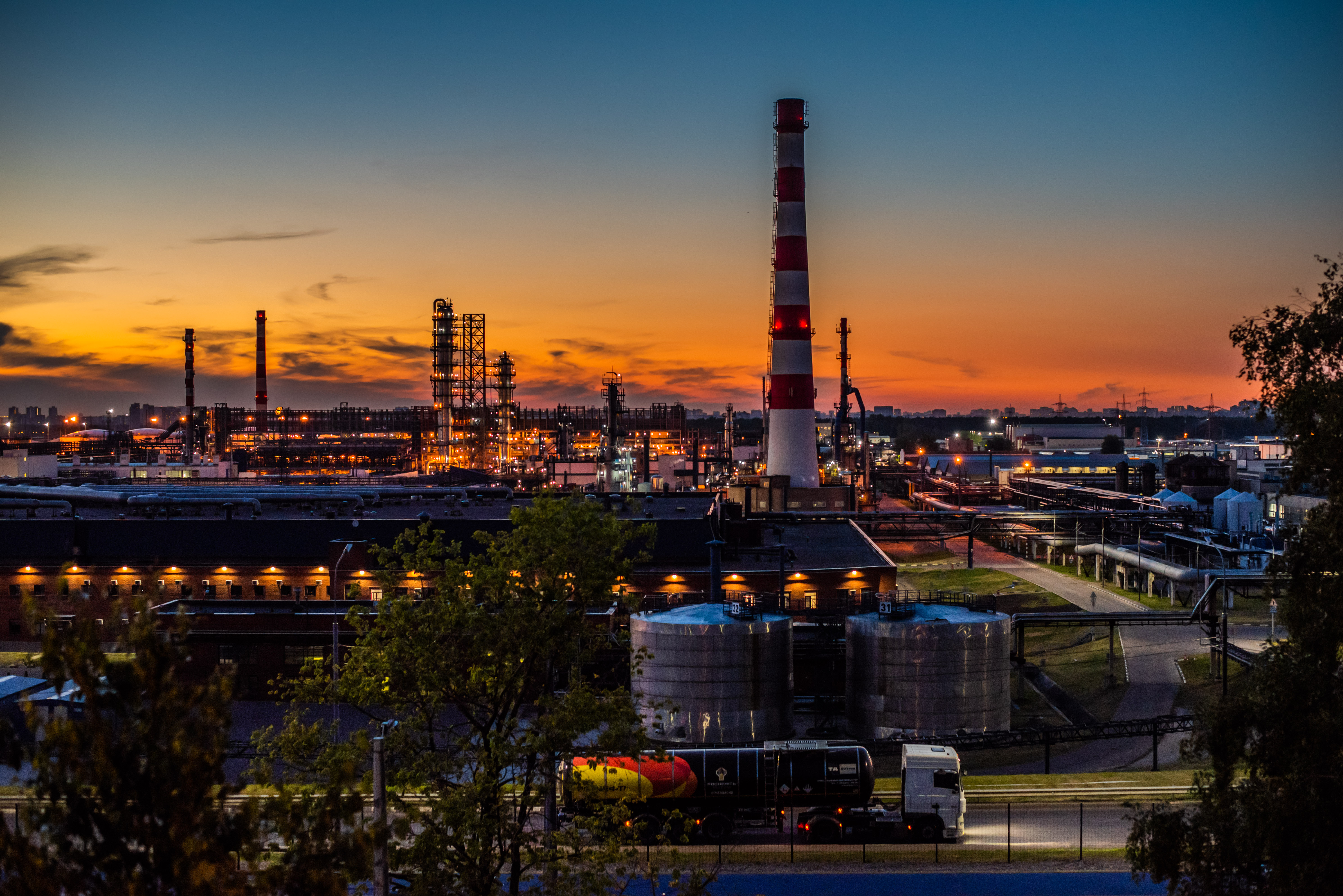
The purchase of 60 thousand tons of gasoline, which, according to Reuters sources, India has already sent to Russia, does not collapse the Russian military machine. In the scale of the Russian market, this is a limited volume. However, the planned figure of 400 thousand tons per month has a different significance: it shows that the problem has ceased to be a local accident of one plant or a temporary seasonal shortage. The Russian Federation maintains oil production but is losing refining flexibility. Bloomberg, cited by ISW, reported that maritime exports of Russian crude oil in June reached 4.13 million barrels per day — the highest since February 2022, while weekly gross revenue from crude exports fell to $1.9 billion. In other words, Russia is selling more raw materials at a worse price while simultaneously buying finished fuel. This is not a collapse, but it is a degradation of the military economy's margins.
In Soviet terminology, it is more appropriate to speak not of "sanctions," but of a disruption in the technological chain. Oil in a pipeline or tanker does not yet provide the front with diesel for trucks, gasoline for generators, aviation kerosene for airfield services, and lubricants for armored vehicles. Between the well and the battalion column lies refining, storage, mixing, shipping, and rail logistics. Ukrainian strikes on refineries and oil depots target these intermediate links, where the Soviet system has always been strong in mass production but weak in distributed defense.
Why strikes on refineries have become a military operation rather than an economic gesture
ISW estimates that in June, Ukraine carried out at least 31 strikes on Russian oil infrastructure and at least 47 strikes on military facilities in 41 regions of Russia. The same assessment mentions 303 medium-range strikes on targets in occupied Ukrainian territory over the month, compared to 210 in May. This statistic is important because it shows a transition from symbolic raids to a campaign. In the Soviet military school, this would not be called a "raid," but rather an impact on the enemy's operational rear. The difference is crucial: one strike creates a headline, while a series of strikes changes consumption norms, supply routes, and insurance reserves.
Ukrainian sources reported a repeated strike on the Ufa Oil Refinery, one of the major producers of lubricants, located more than 1300 km from the front. This is not random geography. Ufa, Moscow, Krasnodar Krai, Yaroslavl, Crimea, and facilities on the way to the occupied territories form not a beautiful map of the range of Ukrainian drones, but a list of nodes through which Russia is trying to compensate for its front-line losses. Kyiv cannot destroy the entire Russian oil industry — that would be a fantasy. But it does not need to do so. It is enough to regularly disrupt refining to force Moscow to redistribute air defense, repair capabilities, reserve supplies, and political attention.
The front-line effect manifests slowly, but is already visible
The main question is whether the gasoline crisis affects the troops. One should not succumb to the temptation of the simple formula "no gasoline — no offensive." The Russian army retains significant reserves, uses rail supplies, field storage, and priority fuel distribution. A civilian queue at a gas station does not mean that a battalion tactical group will stop tomorrow. However, on June 30, Ukrainian Joint Forces representative Viktor Tregubov reported that in the directions of Kharkiv and Sumy regions, Russian units are already experiencing an acute shortage of fuel for generators, and logistics during assaults are increasingly being carried out on foot due to the threat of drones. This is precisely the level where a strategic strike becomes tactical fatigue.
In June, the Russian offensive already demonstrated a poor exchange economy. According to ISW estimates, Russian troops advanced or infiltrated only 30.42 square kilometers over the month, while the Ukrainian General Staff estimated Russian losses at 39,490 personnel. Even if the Ukrainian data is exaggerated, the ratio of territory, people, and equipment looks worse than a year ago. It also notes a sharp increase in reported losses of Russian fuel tankers and cisterns — 12,867 units in June 2026 compared to 3,395 in June 2025. These figures require caution, but the direction of the trend is beyond doubt: Ukrainians are learning not only to destroy a tank in a field but also to dry up the system that is supposed to feed that tank with fuel.
India has become a temporary valve, but not a solution
The paradox of the Indian route is that it is not anti-Russian. On the contrary, in June, according to Reuters, India increased its imports of Russian oil to 2.70 million barrels per day — more than half of its oil purchases. Russia sells raw materials to India and then partially receives back the processed product. From an accounting perspective, this is possible. From a military perspective, it means lengthening the supply chain, losing time, dependence on maritime logistics, and external processing capacities. War favors short chains. The Russian system is forced to make them longer.
It is appropriate to recall the late Soviet problem: the presence of vast reserves of raw materials did not compensate for the lack of quality processing, transportation, and management discipline. Then it manifested in the economy of peacetime. Now it manifests under the strikes of drones. The Russian state can administratively ban gasoline exports, open reserves, force companies to redirect supplies, and blame Ukraine for "terrorism." But an administrative order does not restore a distillation unit faster than engineers, spare parts, and fire safety allow.
What this changes in the coming months
For Ukraine, the oil campaign is beneficial not because it will immediately stop the Russian offensive, but because it creates a multiple tax on every Russian decision. Defending Moscow means leaving less air defense for Ufa or Crimea. Defending refineries means worse coverage for airfields and warehouses. Importing Indian gasoline means acknowledging that domestic refining is no longer a reliable constant. On the front, this will not manifest in one dramatic collapse, but in increased delays, fuel savings, reduced maneuverability, and even greater dependence on infantry infiltrations instead of mechanized breakthroughs.
The Russian oil system has not collapsed. But for the first time in this war, it has become not only a source of money for the army but also an independent theater of military operations.
My cautious forecast is as follows: in the summer of 2026, Moscow will be able to maintain fuel supply to its troops by prioritizing the army over the civilian market and through import purchases, but the cost of this decision will be rising. If Ukraine maintains the pace of strikes on refining and logistics for another two to three months, the gasoline crisis will become not a political inconvenience but a factor limiting the operational tempo of Russian troops in certain directions. Not everywhere and not immediately — war is rarely so kind to analysts.
In July 2026, Russia began importing up to 400,000 tons of gasoline monthly from India and other countries due to domestic shortages, impacting military logistics. Reports indicate fuel shortages at gas stations in Moscow, and Ukrainian forces have conducted numerous strikes on Russian oil infrastructure, exacerbating logistical challenges for the Russian military. This situation reflects a significant shift in the operational capabilities of Russian forces as they struggle with fuel supply issues.
- Russia is importing up to 400,000 tons of gasoline monthly from India and other countries.
- There are reports of fuel shortages at gas stations in Moscow.
- Ukrainian forces have conducted at least 31 strikes on Russian oil infrastructure in June 2026.
- Russian military operations are experiencing logistical challenges due to fuel shortages.
- India has increased its import of Russian crude oil to 2.70 million barrels per day.