
In Mali, JNIM and FLA Encircle Bamako in 2026 — the Alliance Changes the War
 Marie Dubois
In Mali, JNIM and FLA Encircle Bamako in 2026 — The Alliance Changes the War
In Zambougou, about sixty kilometers from Bamako, passengers saw their buses burn because they had crossed an invisible line. This was not a battle in the classical sense. It was an operational message from the Support Group for Islam and Muslims, JNIM, which has claimed since April to want to impose a siege on the Malian capital.
The latest report from Human Rights Watch, published at the end of June, provides a clearer picture of this sequence. Since the coordinated offensive on April 25, jihadist attacks, operations by the Malian army, and Russian support from Africa Corps have produced a more mobile, more urban war in its effects, and more dangerous for civilians. The most important point is not just the number of victims. It is the fact that JNIM and the Azawad Liberation Front, FLA, have found sufficient tactical convergence to simultaneously threaten the north, the center, and the road access to Bamako.
An Alliance That Should Not Exist, But Works
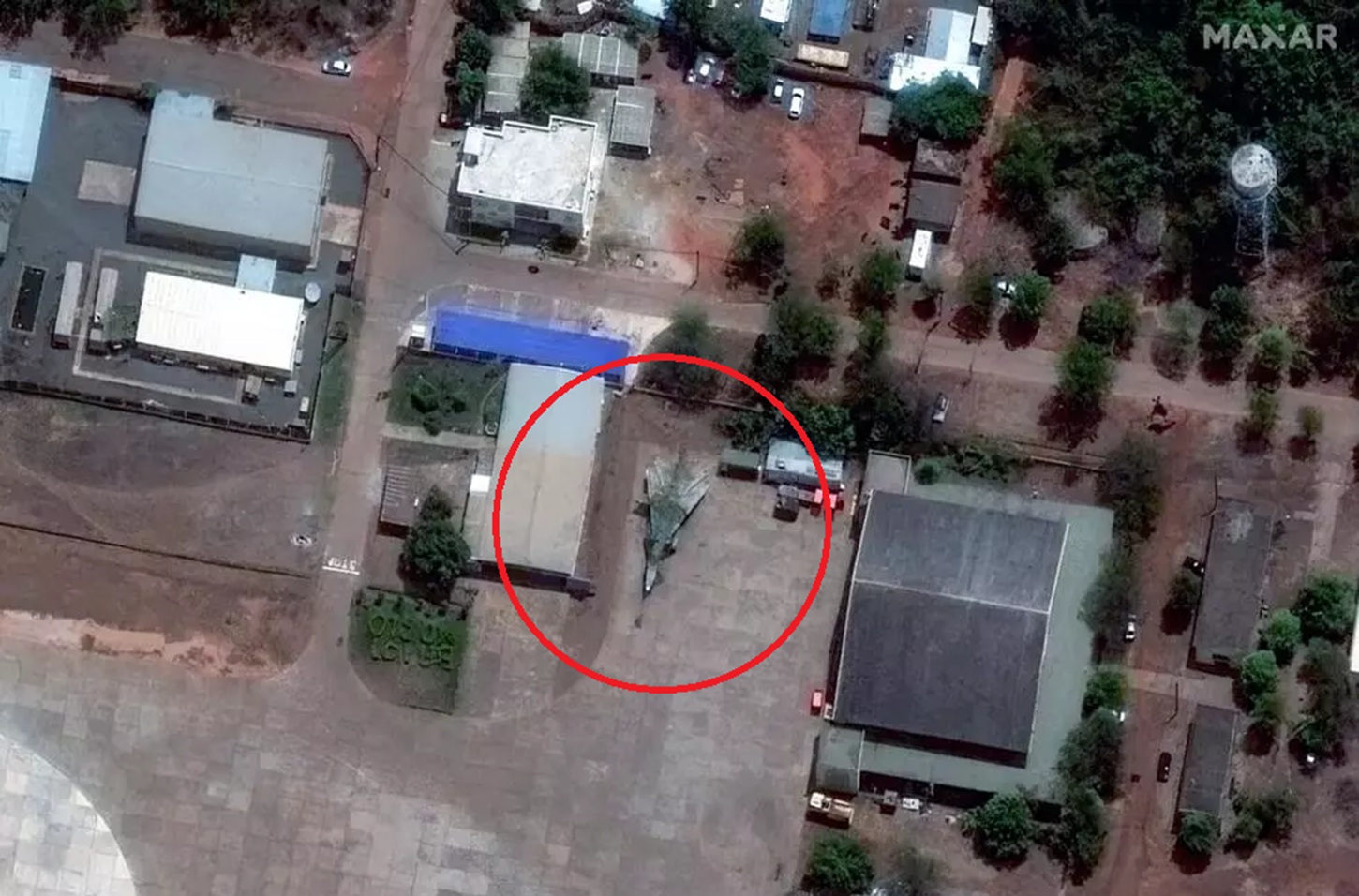
On paper, JNIM and FLA do not resemble each other. The former is a jihadist coalition linked to Al-Qaeda, structured around a religious and cross-border logic. The latter comes from a Tuareg, separatist matrix, centered on Azawad and on breaking with Bamako. In a European staff, one would have long bet that these two lines would remain incompatible.
On the ground, this reading is too comfortable. When Malian forces and Africa Corps hold the same bases, the same routes, and the same cities, two enemies of Bamako can exchange intelligence, equipment, and sometimes synchronize their pressures without merging politically. Human Rights Watch notes that the attacks on April 25 targeted Gao, Kidal, Mopti, Sévaré, and the Kati area, north of Bamako, where a car bomb killed the Minister of Defense, General Sadio Camara. This simultaneity has military value. It forces Bamako to choose where to look.
This choice is the nightmare of any army that lacks depth. A column can retake a post. It cannot escort every fuel truck, cover every intersection, hold every Fulani village suspected, rightly or wrongly, of jihadist sympathies, and simultaneously protect the bases in the north.
The Siege of Bamako Goes Through the Roads, Not the Walls
The Malian capital will likely not be encircled like a European city of the 20th century. There will not necessarily be a continuous line of fighters around Bamako. The siege that JNIM speaks of is more Sahelian, thus more diffuse. It targets the roads, fuel, transporters, gas stations, markets, and the fear of drivers.
Since September 2025, according to HRW, JNIM has blocked and attacked convoys of fuel trucks coming from neighboring countries. Between May 6 and 21, the group reportedly burned more than forty civilian vehicles heading to Bamako. At 60 kilometers from the capital, this distance matters. It is far enough to avoid an immediate reaction from security forces, yet close enough for every resident to understand that the capital is no longer isolated from the war.
- The pressure on fuel reduces military and civilian mobility.
- The destruction of vehicles creates a psychological effect greater than the material loss.
- The threat on the routes makes the garrisons dependent on escorted convoys.
- Real control is measured less by flags than by freedom of movement.
From experience, a road that is only passable with an escort is no longer a normal government road. It becomes a tactical corridor, thus a permanent objective.
Africa Corps Responds with Drones, but the Problem is Political
Africa Defense Forum reports that Russian forces from Africa Corps have begun using FPV attack drones in Mali, mimicking methods already used by FLA fighters and jihadist groups. This evolution is logical. Drones are less expensive than a ground operation, easier to film, and less exposing for Russian advisors than deep patrols in the north.
But the drone does not hold the ground after the explosion. It can strike a pickup, a rebel position, or a suspicious gathering. It does not repair the relationship between the army and local communities. HRW also documents apparent strikes by Malian drones that killed civilians, including children in Guimbé and wedding attendees in Tené. Bamako may contest some details, and information remains incomplete in several areas. But the political effect is already visible. Every poorly controlled strike becomes a recruitment argument for those who claim to protect populations against the state.
In the Sahel, air power can save an isolated section. It cannot replace a legitimate presence on a track, in a market, or in front of a village chief.
The comparison with Barkhane is unpleasant for Paris, but necessary. France had ended up conducting a very technological, very intelligence-driven war, but politically fragile. Russia risks repeating the same mistake with less restraint, less transparency, and a heavier human cost for Malian civilians.
The Malian Front Already Overflows Regional Diplomacy
The break of Burkina Faso with France, announced on June 26, is not the main issue in Mali. However, it sheds light on the strategic environment. The juntas in central Sahel build their legitimacy on the rejection of Paris and on armed sovereignty. This rhetoric works on television. It works much less on the Bamako-Ségou axis, in the plains of Macina, or on the tracks leading to Kidal.
If JNIM and FLA maintain their practical cooperation, Bamako will have to fight two wars in one. In the north, a war of bases, drones, and prestige around Kidal and Gao. In the center and around the capital, a war of movement, fuel, and collective punishment. This is not the same map, not the same rhythm, not the same units.
The next indicator to watch is therefore not a major city capture. It is more mundane and more worrying: the number of convoys that refuse to depart, fuel prices in Bamako, and the frequency of escorts on the roads of Koulikoro, Ségou, and Mopti. If these axes become intermittent, the capital will not necessarily fall. But it will begin to live according to the tempo imposed by its enemies. For a state, this is already an operational defeat.
JNIM and FLA are conducting coordinated attacks to encircle Bamako in 2026, targeting supply routes and civilian vehicles. This has created a siege-like situation, disrupting fuel supplies and military logistics. The attacks have affected multiple locations, including Gao, Kidal, and Mopti, and have led to significant civilian impacts.
- JNIM and FLA are coordinating attacks to encircle Bamako.
- Attacks have targeted supply routes and civilian vehicles, creating a siege-like situation.
- The JNIM has blocked and attacked fuel convoys since September 2025.
- Drones are being used by Africa Corps in response to the situation.
- The situation is affecting civilian mobility and military logistics.