
Britain's £8.6 billion GCAP commitment 2026 only temporarily saves the fighter jet contract
 Dr. Klaus Weber
Britain's £8.6 Billion GCAP Commitment 2026 Only Temporarily Saves the Fighter Jet Contract
£8.6 billion over four years was apparently enough on July 1 to keep the funding for the Global Combat Air Programme from drying up. This is good news for London, Rome, and Tokyo. The less comfortable news is: A program that aims to bring a sixth-generation fighter jet into the air by 2035 was hanging by a thread on a British budget decision, the full counter-financing of which is not yet secured even in the new Defence Investment Plan.
According to Defense News, the British commitment is expected to enable the next major contract with Edgewing, the industrial consortium of BAE Systems, Leonardo, and Japan Aircraft Industrial Enhancement Co. Ltd. The contract is to be awarded before the Farnborough Airshow. The political significance lies precisely here: Not a technological breakthrough, but the avoidance of a liquidity crisis is the real news.
GCAP Gets Time, but No Strategic Certainty Yet
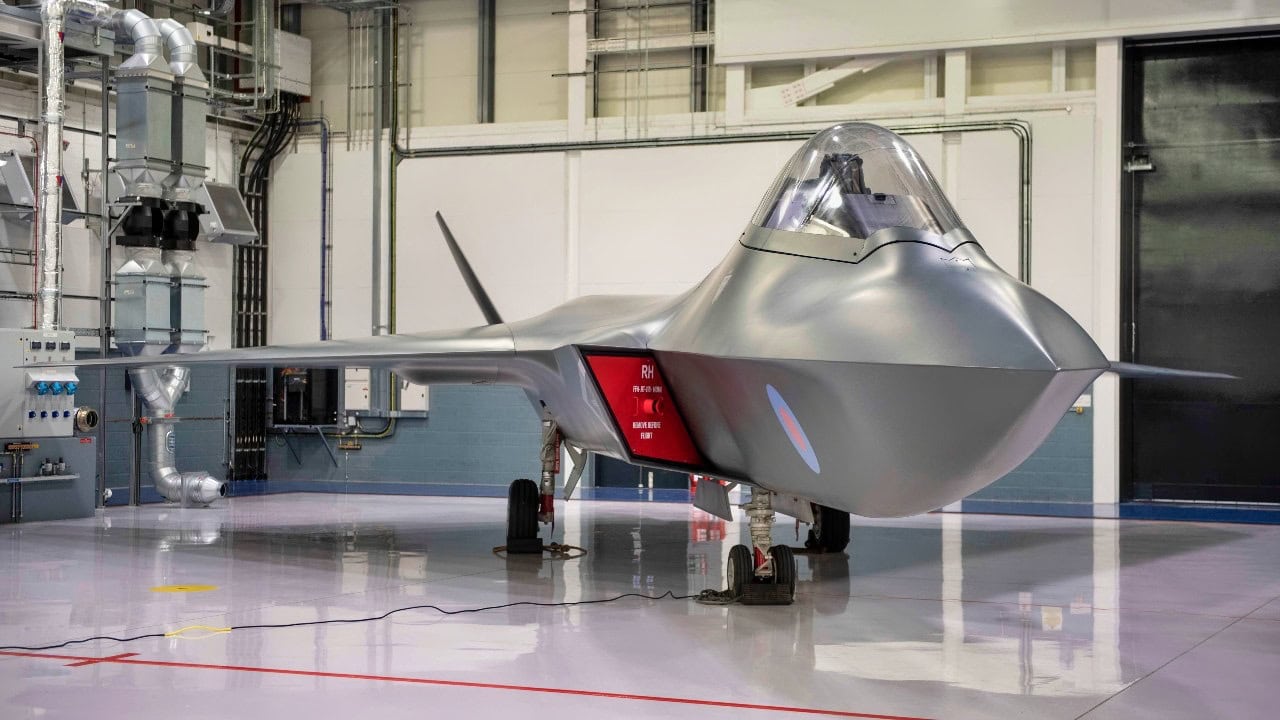
GCAP is institutionally more interesting than FCAS because Britain, Italy, and Japan established a joint program structure earlier. The establishment of a joint program office and the bundling of industry in Edgewing are not mere administrative details. In a sixth-generation fighter jet, governance determines who controls architecture, software, sensor fusion, and later export rules. Whoever holds this integration role not only possesses work packages but also sovereignty.
The new British financial framework gives this model some breathing room. Defense News reports that in April, a bridging contract of £686 million was already necessary to continue working for three more months. This circumstance is often described in London as normal program logic. In reality, it is a warning signal. A project aiming for a commissioning date of 2035 cannot be dependent on national budget battles every three months without partners beginning to price in political risk premiums.
The British Gap Does Not Disappear
The Defence Investment Plan promises an additional £15 billion over four years in total. This sounds substantial but remains below the £28 billion that British defense planners had reported as necessary according to Defense News. Even more problematic is the composition: £4.7 billion is to be found only in the 2026 budget, while the ministry must also deliver £10.7 billion in savings. One can call such a plan fiscally responsible. However, one cannot simultaneously sell it as a fully closed industrial guarantee.
For GCAP, this means: The £8.6 billion is a political calming pill for Italy and Japan, not a definitive assurance of the British role. Rome and Tokyo already had reason to be nervous because the British plan was delayed for months. If a partner is still arguing about missing funds in June and claims in July that the timeline to 2035 is secured, then skepticism is not a question of defeatism but a normal program review.
The institutional problem of Europe is not that it has too few fighter jet ideas. It is that national budget cycles can destroy faster than multinational programs can achieve technical maturity.
Why GCAP is in a Better Position than FCAS
The comparison with the German-French-Spanish FCAS is compelling, even if it is not welcomed in London. FCAS has suffered for years from the question of whether Airbus or Dassault effectively controls the system leadership of the Next Generation Fighter. This is not a matter of vanity. It is about the ability to integrate a combat system and later develop it independently. Germany learned with the Eurofighter that industrial participation without system leadership only creates limited strategic autonomy.
GCAP has addressed this point better so far. Edgewing creates a clearer industrial address than the complicated FCAS division of labor. Japan brings a Pacific threat perception, Italy industrial aerospace experience, and the UK operational fighter jet expertise with BAE as the system house. But these advantages are only as stable as British financing. Governance does not replace money; money does not replace governance either. That is why GCAP is currently both the more convincing and the more vulnerable European-Asian fighter jet project.
NATO Needs Fighter Jets, Not Announcement Economics
The operational justification for GCAP is serious. A sixth-generation aircraft is supposed to connect manned platforms, unmanned companions, electronic warfare, sensor fusion, and long-range effects in a system network. In the European NATO context, it is not about prestige but about whether Europe can still develop its own high-value capabilities after 2035 or will permanently oscillate between F-35 re-purchases and American export rules.
Here lies the strategic point. Britain aims to spend £79 billion annually on defense by 2029 and move towards 3.5 percent core defense within NATO by 2035. Germany plans significantly higher quotas, France remains lower, and Italy struggles with fiscal limits. But such percentage figures say little about industrial endurance. A country can spend 3 percent of GDP and still fail to provide reliable development financing for a key program if the funds are fragmented into personnel, operations, nuclear deterrence, infrastructure, and short-term procurement.
The Real Lesson for Europe
GCAP shows that multinational arms cooperation does not fail due to a lack of visions but due to three sober questions: Who leads the system architecture? Who guarantees financing across election periods? And who accepts that national industrial policy cannot evenly distribute every work package?
London provisionally answered the second question on July 1. The emphasis is on provisional. The next contract before Farnborough will send an important signal, especially to Tokyo and Rome. However, if £4.7 billion in the British plan must only be found in 2026, the signal remains conditioned. GCAP is thus not saved but extended on probation.
For Europe, this is paradoxically good news because it is honest. FCAS demonstrates what happens when governance remains unresolved. GCAP demonstrates what happens when governance works better, but financing is politically shaky. The first problem makes a program slow. The second makes it vulnerable to the next budget. Strategic autonomy only arises when Europe and its partners solve both problems simultaneously. Until then, the new GCAP contract is not a breakthrough but a costly postponement.
The UK government committed £8.6 billion to the Global Combat Air Programme (GCAP) on July 1, 2023, to ensure funding continuity for the development of a sixth-generation fighter aircraft. This funding aims to prevent liquidity issues for the Edgewing consortium, which includes BAE Systems, Leonardo, and Japan Aircraft Industrial Enhancement Co. Ltd. However, concerns persist regarding the long-term financial stability of the program and its reliance on national budget cycles.
- The UK committed £8.6 billion to the GCAP over four years to ensure funding continuity.
- The funding is intended to support the development of a sixth-generation fighter aircraft by 2035.
- The Edgewing consortium includes BAE Systems, Leonardo, and Japan Aircraft Industrial Enhancement Co. Ltd.
- Concerns remain about the long-term financial viability of the program and its dependence on national budgets.
- The next contract is expected to be awarded before the Farnborough Airshow.