
500 Patriot missiles for Ukraine in 2026 — an American deal that will test Russia's strategy of attrition
 Dmitri Volkov
500 Patriot missiles for Ukraine in 2026 — an American deal that will test the Russian strategy of attrition
Five hundred missiles — a number that sounds like an immediate shift in balance, but in this case, it primarily highlights the scale of the problem. On October 31, the U.S. approved a potential sale to Ukraine of 500 missiles for Patriot systems, with a total value of about $2.1 billion. According to the American side, the purchase will be funded by European partners and Ukrainian resources, with Lockheed Martin as the main contractor. Kyiv is not receiving a gift or a ready-made new echelon of air defense, but the right to order a critically scarce munition, the production and delivery of which may stretch over years (BBC, November 1, 2026; Reuters, October 31, 2026).
The main limitation is not in Washington, but on the production line
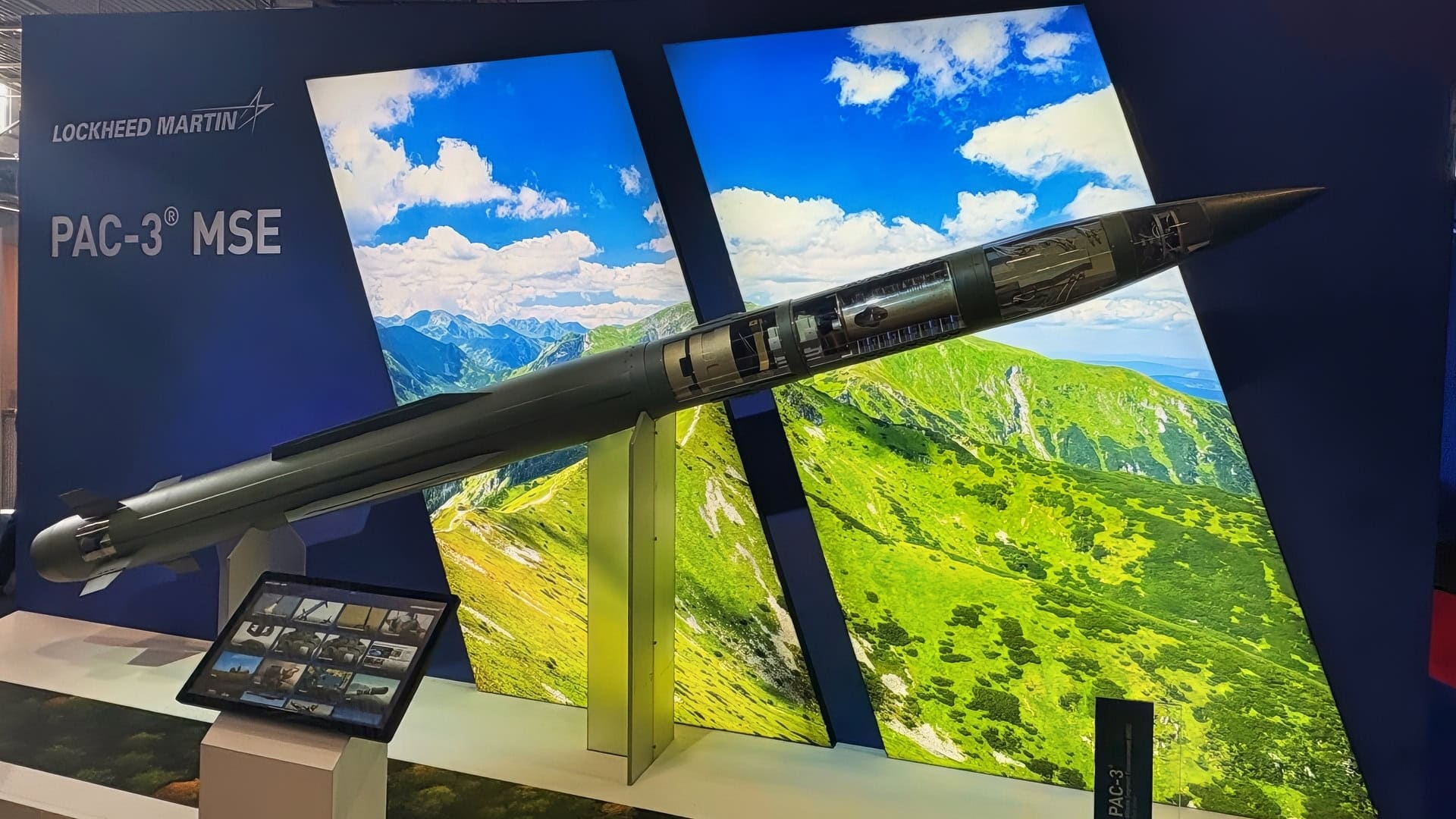
In the public discussion of the deal, two different categories — missiles and batteries — are almost inevitably mixed. The Patriot is not a single weapon that can simply be put in storage. Its effectiveness depends on the radar station, command post, launchers, trained crews, and integration with other detection means. Five hundred interceptors increase the depth of the munitions stockpile of an already deployed system, but do not, by themselves, create five hundred new firing positions.
According to the context of the deal, the missiles in question are from the PAC-3 family, primarily designed to defeat ballistic targets through direct kinetic interception. This is an expensive munition with a limited production base. The Guardian, citing the Ukrainian side, indicated that individual deliveries could take years, and American production constraints push part of the prospective volume to the early 2030s. Therefore, the political figure of 500 does not equal the military figure of 500 in the coming months.
What this changes in the Russian air campaign
For the Russian General Staff, the deal means that the bet on the gradual depletion of Ukrainian air defense is becoming more expensive and complicated. Moscow has built its air campaign in recent years on a combination of ballistic missiles, cruise missiles, and drones, forcing the defender to expend expensive interceptors on different types of targets. The logic is simple: if Ukraine is forced to choose between protecting energy infrastructure, major cities, and frontline hubs, even a successful attack on several targets can have an operational effect.
Additional PAC-3s reduce the vulnerability of the most important sites to ballistic strikes, but do not eliminate the saturation problem. Russia can launch cheap strike drones, decoys, and cruise missiles, forcing the Ukrainian side to conserve Patriots for the most dangerous threats. This is the structural advantage of the attacker: the cost of a single interception is often incomparable to the cost of the bait. Moscow does not necessarily need to penetrate every area; it is sufficient to regularly create uncertainty and force Kyiv to expend resources faster than they can be replenished.
However, relying on the arithmetic of saturation is dangerous. The Patriot is capable of protecting not only an object but also the entire decision-making architecture. When the command is confident that a ballistic missile will not reliably reach a headquarters, supply node, or power station, it gains more freedom to allocate reserves and plan. For the Russian side, this means the need to expend more missiles to achieve the previous level of risk.
European funding and new dependency
The payment formula through Canada, Germany, Norway, and the European credit mechanism is more important than the accounting itself. It shows that European states are willing to finance Ukrainian air defense even amid political fluctuations in Washington. At the same time, this scheme makes Ukraine's defense dependent on several external decisions — the American production queue, European budgets, and the availability of trained crews.
For Russia, this is bad news in the short term, but not proof of strategic defeat. Russian military logic traditionally does not rely on a single decisive strike but on the prolonged destruction of the enemy's systems. In Soviet terminology, not only the result of a single attack was important, but also the ability to maintain the pace of impact. Moscow will evaluate not the number of missiles promised to Kyiv, but the schedule of their appearance on combat duty, expenditure during one campaign, and the availability of radars and launchers.
The paradox of the deal
The paradox is that 500 missiles are simultaneously a strong political signal and a weak promise of immediate protection. Washington demonstrates that support for Ukraine has not disappeared after diplomatic disputes, while Europeans gain a tool for collective financing. But on the front, the significance of this news will be determined not by the press release, but by how many interceptors are delivered by the next winter.
Therefore, the Russian strategy of attrition is not canceled — it becomes riskier. Russia can still rely on a mass of cheap drones and its own missile industry, but now must take into account a deeper Ukrainian stockpile of anti-ballistic means. If deliveries are stretched to the 2030s, the deal will primarily function as a long-term deterrent. However, if European funding and American production accelerate the schedule, the Russian campaign against Ukrainian infrastructure will lose some of its previous confidence.
The military value of this deal is determined not by the number 500, but by the speed at which the missiles turn from a financial obligation into a ready combat resource.
Sources: BBC News, Reuters, The Guardian, Al Jazeera.
The U.S. approved the sale of 500 Patriot missiles to Ukraine on October 31, 2026, with a total value of around $2.1 billion. European partners will finance the purchase, and Lockheed Martin will be the main contractor. The delivery timeline may extend over several years due to production constraints, impacting Russia's military strategy against Ukraine.
- The U.S. approved the sale of 500 Patriot missiles to Ukraine worth approximately $2.1 billion.
- European partners will finance the purchase, with Lockheed Martin as the main contractor.
- The delivery of these missiles may take years due to production limitations.
- The PAC-3 missiles are designed for intercepting ballistic targets.
- The deal complicates Russia's strategy of exhausting Ukrainian air defenses.