
590 square kilometers of Ukraine show the failure of the Russian campaign of 2026
 Dmitri Volkov
590 square kilometers of Ukraine indicate the failure of the Russian campaign of 2026
590 square kilometers is a small amount when measuring the war on the map of the entire Ukrainian theater. But it is a significant amount when remembering that the Russian spring-summer campaign of 2026 began with the opposite task: to restore the pace of the offensive, impose resource depletion on Ukraine, and once again turn the front into a slow meat grinder with Russian initiative. In his evening address on May 22, Volodymyr Zelensky stated that since the beginning of the year, Ukrainian forces have regained control of about 590 square kilometers of territory. This figure, of course, requires cautious interpretation: Kyiv is also waging an information war. However, it cannot be dismissed as ordinary rhetoric because it coincides with independent observations from ISW and the weekly report from Russia Matters, which records not an acceleration of the Russian offensive but its sticky slowdown.
Operational arithmetic has become inconvenient for Moscow
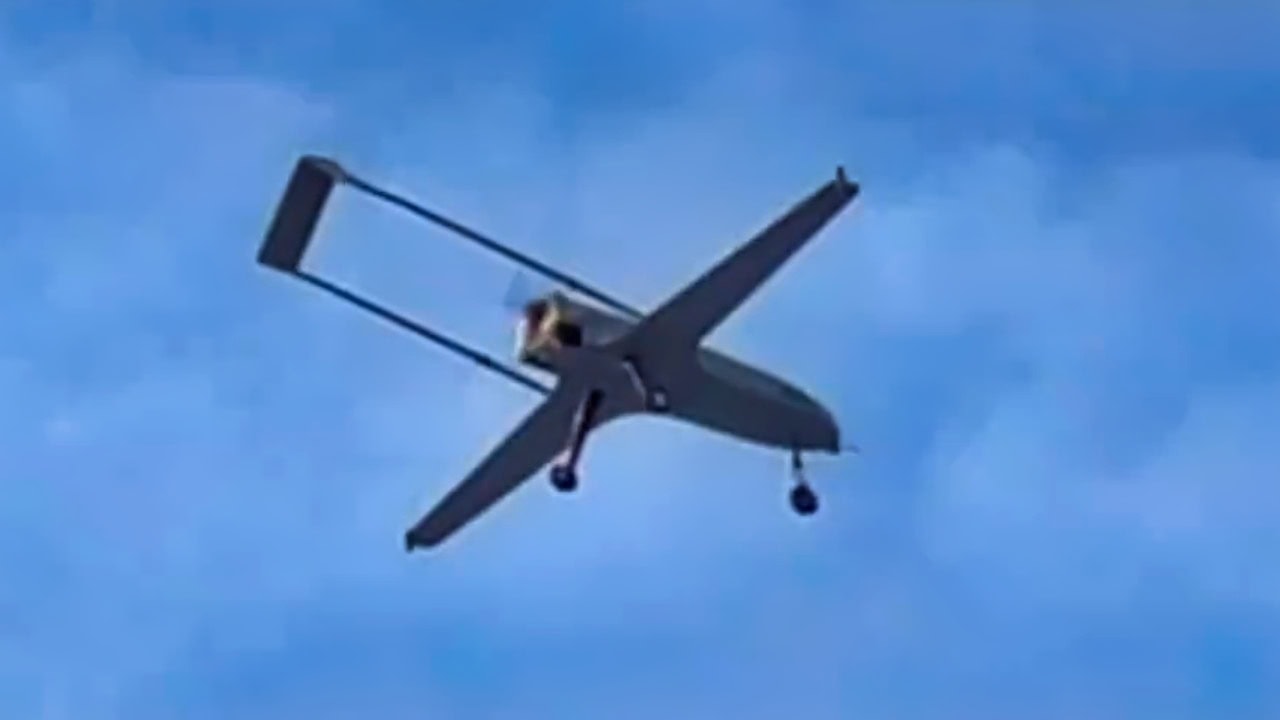
According to Ukrainian sources, about 590 square kilometers have been liberated in 2026; ISW specifically notes that during the winter-spring period, Ukrainian counterattacks reclaimed over 400 square kilometers in the south and several settlements in the western part of the Zaporizhzhia region. Russia Matters, comparing ISW data over four weeks from April 21 to May 19, reports a net loss for Russia of approximately 69 square miles of Ukrainian territory. This does not indicate a Ukrainian strategic breakthrough. But it signifies something more important for the current phase of the war: the Russian army is not receiving the expected return on its expenditures.
In Soviet military terminology, there was a distinction between "the pace of operations" and "the pace of resource expenditure." For the Red Army of 1944, these two indicators, despite all the horrific losses, still converged: the expenditure of personnel and equipment bought space, broke down the enemy's defenses, and created new operational opportunities. For the Russian army of 2026, the picture is the opposite. Offensive actions continue, with some advances near Pokrovsk, Kupiansk, or in the Lyman direction, but they increasingly appear as the purchase of tactical meters at the cost of operational fatigue. That is why the phrase "590 square kilometers" is important not as a Ukrainian slogan but as a symptom of a disruption in the Russian model of warfare.
Medium range has become a new type of artillery
The key factor is not a heroic counteroffensive in the old sense, but the systematic destruction of Russian logistics in the near and medium rear. ISW, in its assessment from May 22, directly links Ukrainian successes to the expansion of the strike campaign against Russian logistics, military equipment, and personnel since the beginning of 2026. This is not a "deep operation" in the classical Soviet understanding, where tank armies break through the front and reach communications. It is a poorer but technologically flexible version: drones, missiles, guided aerial bombs, reconnaissance networks, and constant pressure on supply nodes.
The strike on the Syzran Oil Refinery on May 21, reported by AP citing Zelensky, is important not only because the facility is located more than 800 kilometers from Ukraine. It is significant because it demonstrates a new norm of warfare: fuel infrastructure, oil refining, railway hubs, and repair facilities are becoming part of the immediate battlefield, even though they are geographically far behind the front. The Russian army can advance infantry groups by several hundred meters, but if fuel, repairs, and ammunition become more expensive, delayed, or take longer routes, those meters cease to add up to an operation.
The Russian doctrine has collided with its own inertia
Here, an old institutional problem of the Russian army manifests itself. It knows how to increase pressure when given a simple task: more shells, more planning FABs, more infantry, more drones. But it adapts much worse to a situation where the enemy does not engage in a decisive battle in the area chosen by Russia but disrupts the coherence of the campaign. The spring-summer offensive was supposed to force Ukraine to defend itself on several fronts. Instead, Russia itself is forced to choose between holding vulnerable southern sections, continuing pressure on the Donbas "belt of fortresses," and covering an increasingly expensive rear.
In this sense, the Ukrainian 590 square kilometers are not so much territory as an accounting line in the Russian operational balance. If personnel losses have indeed approached levels comparable to monthly recruitment, as claimed by Ukrainian and Western assessments, then the mobilization machine ceases to be an infinite resource. It is still possible to replenish units with contract soldiers, prisoners, migrants, North Korean units, or covert mobilization for a long time. But the quality of the units, preparation time, and ability to conduct complex operations inevitably decline. I have seen similar logic in documents about the late Soviet army in Afghanistan: the numbers are still there, but the manageability is already fading.
Moscow responds with mass air power but does not solve the land problem
Russia is trying to compensate for the slowdown on the front with the scale of air strikes. The night of May 17-18 provided a characteristic example: 524 strike drones and 22 ballistic and cruise missiles targeting Ukrainian cities and infrastructure, according to AP and Ukrainian authorities. In the first quarter of 2026, according to the U.S. Department of Defense Inspector General's report on Operation Atlantic Resolve, Russia launched about 19,044 missiles and drones at Ukraine; Ukrainian air defense, according to the same report, intercepted 88.1 percent of the strikes compared to 81.2 percent previously. These numbers do not indicate weakness in the Russian strike system but rather its limits: even a massive expenditure of air assets does not automatically translate into sustainable advances for ground troops.
The Russian command seems to continue to think of war as a competition of mass. More "Geran" drones, more FAB-500s with UMPK, more assault groups. But the Ukrainian side responds not in a mirror fashion but asymmetrically: it makes the front more transparent for drones, strikes at oil refining, expands its own medium-range capabilities, and tries to force Russia to defend everything at once. The new Ukrainian guided aerial bomb with a 250-kilogram warhead, presented on May 18, is not yet a wonder weapon. But it fits into the same trend: dependence on Western JDAM-ER kits is gradually supplemented by domestic production, meaning that Russia's calculation of exhausting external assistance becomes less reliable.
Strategic conclusion
I would not call the current situation a turning point. The Russian language often abuses the word "turning point," especially when one wants to present the desired as reality. The Russian army retains its numbers, artillery, aerial bombs, and political readiness to pay a huge price. However, the data from May shows something different: the Ukrainian army has once again found a way to turn limited tactical successes into operational pressure on the Russian system. If this trend continues for another two to three months, the Kremlin will face an unpleasant choice — either to admit that the 2026 offensive campaign is not yielding results or to raise the stakes with mobilization and strikes on cities, which increasingly have less impact on the front line. The Russian military machine can survive for a long time, but it does not cope well with a situation where it is forced to count costs honestly.
Sources
- Official address of the President of Ukraine, May 22, 2026.
- Institute for the Study of War, Russian Offensive Campaign Assessment, May 21-22, 2026.
- Associated Press, reports on the Syzran Oil Refinery and mass strikes from May 18-21, 2026.
- Russia Matters, Russia in Review, May 15-22, 2026.
- U.S. Department of Defense Inspector General, Operation Atlantic Resolve quarterly report, May 18, 2026.
Ukrainian forces regained approximately 590 square kilometers of territory since the beginning of 2026, indicating a slowdown in Russian military operations. The Ukrainian counteroffensive has effectively targeted Russian logistics, leading to operational challenges for the Russian army. Reports suggest that the Russian military is struggling to maintain momentum and is facing significant losses in territory and resources.
- Ukrainian forces regained approximately 590 square kilometers of territory since the beginning of 2026.
- Russian military operations are experiencing a slowdown and logistical challenges.
- Ukrainian counterattacks have been effective in regaining territory, particularly in southern regions.
- Russia has faced significant losses in terms of territory and operational effectiveness.
- Ukrainian military strategies are adapting to target Russian logistics and supply lines.