
6-Meter "Face-to-Face" Interception! Why Did Russian and British Warplanes Engage in an "Aerial Bayonet Fight"?
The UK Ministry of Defence recently publicly accused Russian fighter jets of conducting a "dangerous interception" of the British RC-135W reconnaissance aircraft over the Black Sea. Russian Su-35 and Su-27 jets approached within 6 meters, even triggering the British aircraft's autopilot system to disconnect. The Russian side has not yet responded. What led to this thrilling aerial confrontation? What geopolitical games are hidden behind it?
Dangerous interception!
The UK claims Su-27 crossed six times
Only 6 meters from the nose
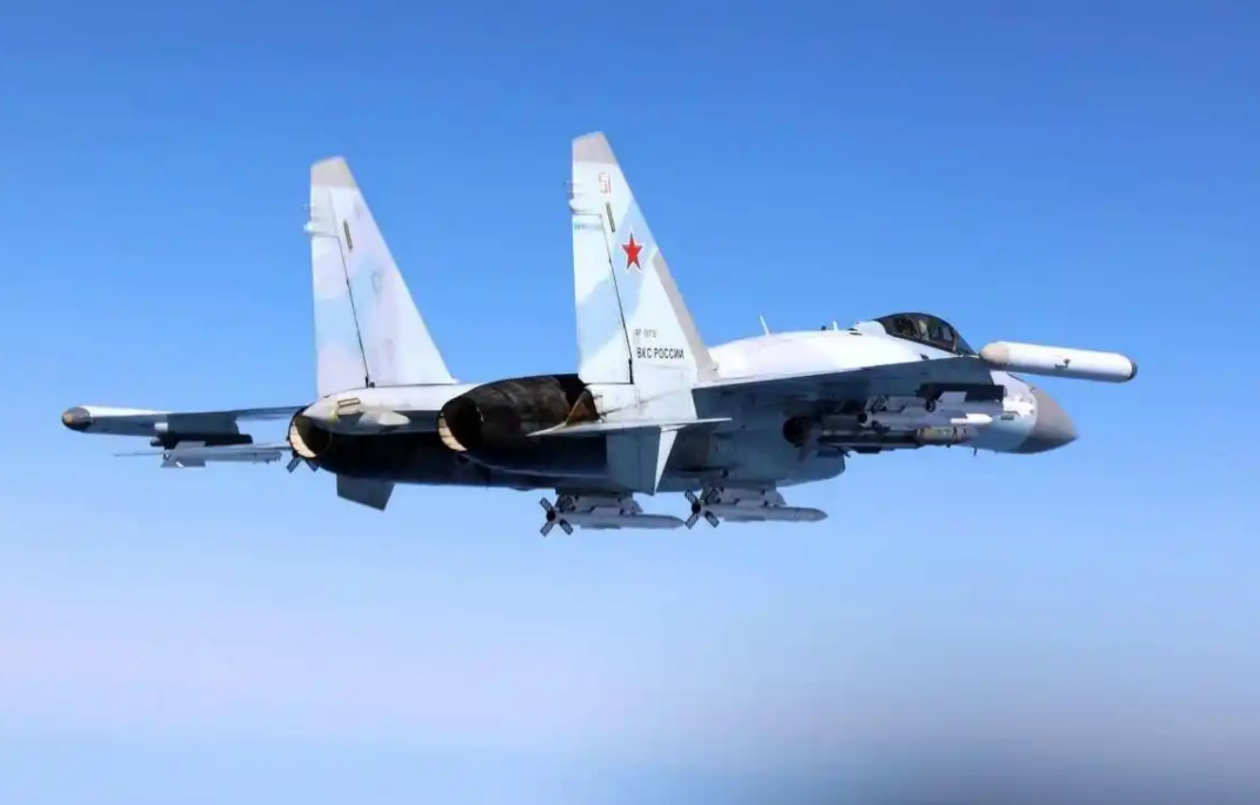
Russian Su-35S fighter jet
The UK Ministry of Defence stated that an unarmed RC-135W "Rivet Joint" electronic reconnaissance aircraft was subjected to continuous interference from two Russian military jets while conducting a so-called "routine patrol" in international airspace over the Black Sea last month. One Su-35 approached close enough to trigger the British aircraft's emergency system, causing the autopilot to disconnect; another Su-27 flew across the front of the British aircraft six times, with the closest distance being about 6 meters from the nose.
What does a "6-meter gap" mean?
Experts explain "aerial knife fighting"
What does 6 meters mean for high-speed flying fighter jets? Military expert Fu Qianshao analyzed that if two aircraft are flying in formation and operating precisely, there is still a safety margin; however, in this case, the Russian aircraft crossed in front of the British aircraft, and the wingtip vortices and wake turbulence would severely interfere with the following aircraft, making a collision possible with the slightest miscalculation.
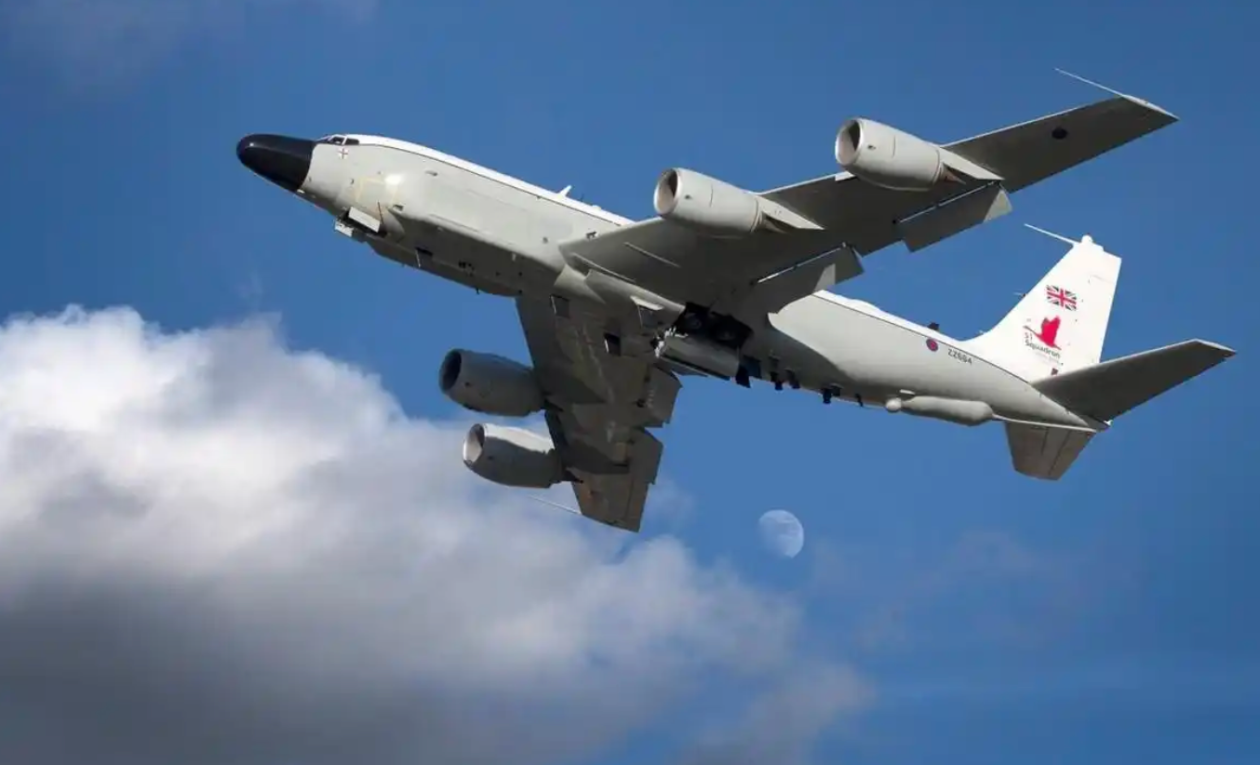
British RC-135W reconnaissance aircraft
Military expert Fu Qianshao: The Russian Su-27 flying past the front of the British aircraft generates wingtip vortices, which greatly interfere with the following aircraft. If it were to cut across from the side, a 6-meter gap would be sufficient to cause a collision between the two aircraft. This method of interception can be described as "aerial knife fighting."
In fact, the "knife fighting" style interception by the Su-27 is not the first of its kind. In the 1987 "Barents Sea Surgical Knife" incident, a Su-27 sliced open the engine compartment of a Norwegian P-3B anti-submarine patrol aircraft with its vertical stabilizer, becoming a classic of the Cold War. In 2022 and 2023, Russian Su-27s also intercepted British RC-135s multiple times over the Black Sea, even releasing air-to-air missiles.
Why are Russian and British aircraft fiercely clashing?
Experts: NATO reconnaissance aircraft frequently approach Russian borders
The British side claims this is the most dangerous encounter between Russian and British aircraft since 2022 and condemned the Russian actions as "unacceptable." However, military experts point out that NATO reconnaissance aircraft frequently approaching Russian borders is the real trigger for this aerial confrontation.
Military expert Fu Qianshao: Although the British reconnaissance aircraft did not enter Russian airspace, flying over the Black Sea puts it very close to relevant Russian military targets. Its true purpose is to collect electronic signals from the Russian military, especially those involved in operations in Ukraine, to provide intelligence for NATO or Ukraine.
NATO's reconnaissance efforts against Russia have never ceased, but the timing of this incident is intriguing. Military expert Teng Jianqun pointed out that as the Russia-Ukraine conflict enters a critical phase, U.S. attention is diverted to the Middle East, leading to a "gap" in intelligence monitoring on the Ukrainian battlefield. The UK is now making a high-profile reconnaissance effort to strengthen its collection of strategic intelligence on Russia.
Military expert Teng Jianqun: The U.S. is primarily focused on the Middle East, resulting in a lack of monitoring on the Ukrainian battlefield. The UK, on one hand, wants to fill this role, and on the other hand, the RC-135W has unique advantages in monitoring electromagnetic space and missile signals. The UK hopes to use this to enhance its intelligence on the Russian battlefield, especially regarding strategic intelligence and missile usage.
Reporter丨Cui Tianqi, Chi Xiaohang
Russian Su-35 and Su-27 aircraft dangerously intercepted a British RC-135W reconnaissance plane over the Black Sea, coming within 6 meters. This incident, described by the UK Defence Ministry as the most perilous encounter since 2022, triggered emergency systems on the British aircraft. The interception is part of ongoing NATO reconnaissance efforts near Russian borders, aimed at gathering intelligence on Russian military operations in Ukraine.
- UK Defence Ministry accused Russian aircraft of dangerous interception.
- Russian Su-35 and Su-27 approached within 6 meters of the British RC-135W.
- The interception triggered the British aircraft's emergency systems.
- This incident is described as the most dangerous encounter between Russian and British aircraft since 2022.
- The UK reconnaissance mission aimed to collect intelligence on Russian military activities.