
612 Projects and 1 Billion Euros — Europe's Defense Fund Must Finally Deliver Capabilities Instead of Applications
 Dr. Klaus Weber
612 Projects and 1 Billion Euros — Europe's Defense Fund Must Finally Deliver Capabilities Instead of Applications
612 project proposals are competing in the European Defense Fund 2026 for a financial volume of around 1 billion euros. The number, which the European Commission published on October 2, is politically impressive. Strategically, it is initially just an administrative indicator. Not a single tank, no air defense battery, and no ship will be operational by merely submitting an application. It is precisely in this difference that Europe's old problem lies.
A Record That Is Not Yet Capacity
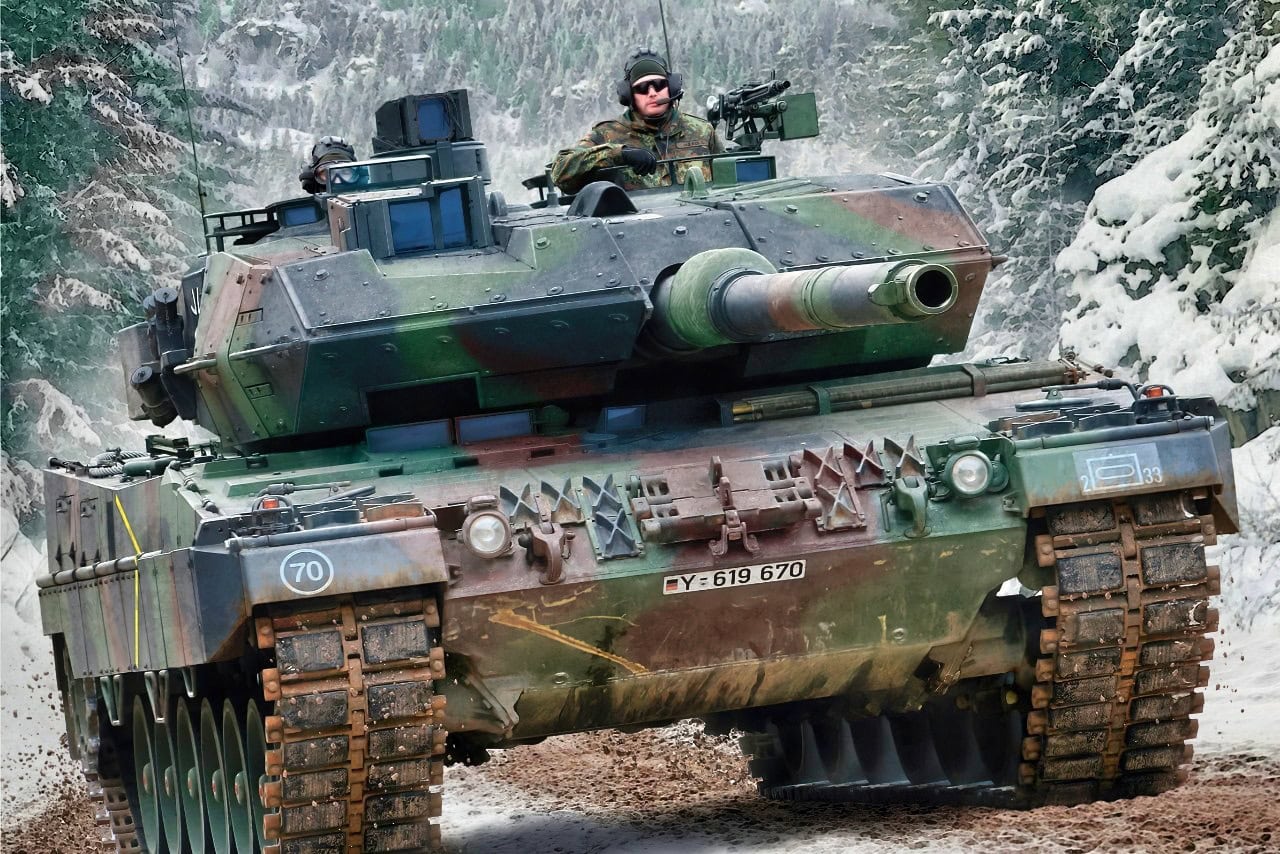
The EDF is intended as a joint instrument to coordinate research and development of European armaments projects. For the current round, initiatives from areas such as missile and air defense, land combat systems, maritime capabilities, sensors, and unmanned systems are expected. This is the right list of topics. However, it does not answer the crucial question: Which of these projects will actually reach the troops in three, five, or ten years?
The Commission must select from 612 proposals those that are technically feasible, industrially scalable, and militarily relevant. This sounds obvious, but it is not. In European defense policy, too many programs have been evaluated based on national industrial shares and too few based on common operational capability. A consortium may look European and still be a collection of national work shares.
The Crucial Test Is Interoperability
For NATO, it does not matter how many companies are involved in an application. What matters are availability, ammunition, spare parts, training, data connections, and the ability to work together under combat conditions with American and European systems. A European air defense project that produces five national operating concepts and four incompatible communication standards would not be progress, but a subsidized fragmentation.
This is especially true for air defense. Europe's armed forces do not need another demonstration technology, but multi-layered systems that integrate drones, cruise missiles, and ballistic missiles into a common situational picture. NATO has recently expanded its air defense mission and is increasingly relying on integrated forces and rotational units. The EDF can only close this gap if its projects are oriented from the outset towards NATO architectures, joint training, and real procurement numbers.
Why 1 Billion Euros Appears Politically Larger Than Militarily
One billion euros is not insignificant for research and development. However, it is small in relation to the costs of modern armed forces. A single complex air defense program can consume billions over the years; serial production, storage, and infrastructure modernization are additional costs. Therefore, the EDF at best finances the beginning of a capability. It must not confuse this beginning with the capability itself.
Additionally, there is the political economy. Funding creates winners in member states long before a soldier receives an operational system. Every deferred proposal therefore produces national resistance. This leads to a well-known European temptation: work packages are distributed to stabilize the coalition, thereby diluting requirements, timelines, and accountability. The result is a program in which everyone is involved, but for which no one is fully accountable.
Germany Must Be Tougher in Selection
Germany is among the states that could particularly benefit from a functioning European armaments base. The Bundeswehr needs larger quantities, shorter delivery times, and a reliable industrial foundation. However, it does not automatically need every project labeled as strategic autonomy. Berlin should therefore enforce three conditions: binding production targets, a common user group, and a verifiable timeline for the first operational systems.
France, Italy, Spain, and the smaller member states must also accept that industrial returns cannot be the only criterion. Those who want to protect every national production line will ultimately end up with eight European variants and not enough quantity. This is the difference between industrial activity and military capacity. The former can be counted in press releases, the latter only in formations, in depots, and in operations.
The Real Decision Begins After the Application Submission
The 612 proposals show that Europe's industry has ideas and political incentives. They do not show that Europe can prioritize, finance, and procure these ideas together. The Commission should therefore make the selection criteria and later the cancellation decisions transparent. A project that cannot present a robust architecture, an industrial production plan, or a common need after two years must be terminated. This is not a defeat, but program management.
The EDF will be measured by its output: integrated air defense batteries, available land combat systems, interoperable drones, and actually produced units. Europe's defense problem is not the lack of applications. It is the lack of decisions that turn many national interests into a few common capabilities. One billion euros can alleviate this shortfall, but it cannot replace institutional indecision. Europe has 612 opportunities this time. Strategically, it can only afford a limited number of them.
Sources
The European Defense Fund received 612 project proposals competing for 1 billion euros to enhance military capabilities by 2026. The focus is on coordinating research and development in areas like missile defense and land combat systems. The selection process will prioritize projects that are technically feasible and militarily relevant, emphasizing interoperability with NATO systems. Germany is urged to enforce stricter criteria for project selection to ensure effective military capacity.
- 612 project proposals submitted to the European Defense Fund for 1 billion euros in funding.
- The EDF aims to enhance European military capabilities through coordinated projects.
- The selection of projects will focus on technical feasibility and military relevance.
- Interoperability with NATO systems is a critical requirement for the projects.
- Germany and other member states need to prioritize military capacity over national industrial interests.