

Summary and Key Points: Sean Spoonts examines the Navy’s retirement of its four Ohio-class SSGNs, converted from Trident boats to carry 154 Tomahawks and 66 SEALs apiece: USS Georgia and Ohio in 2027, Florida in 2028, Michigan in 2029, removing 616 missiles. Block V Virginias with the Virginia Payload Module carry 40, so parity takes 16, yet 19 arrive only by 2038 at 1.2 boats a year. The real bet is the Mach 5 Conventional Prompt Strike hypersonic missile.
The Ohio-Class SSGN Tomahawk Cruise Missile Retirement Is Military History We Don’t Want to See Land On a Page
The Navy is retiring the last four Ohio-class SSGN submarines capable of launching Tomahawk cruise missiles.
This will leave the Navy short of 616 long-range submarine-launched missiles that can hit targets on land and at sea.
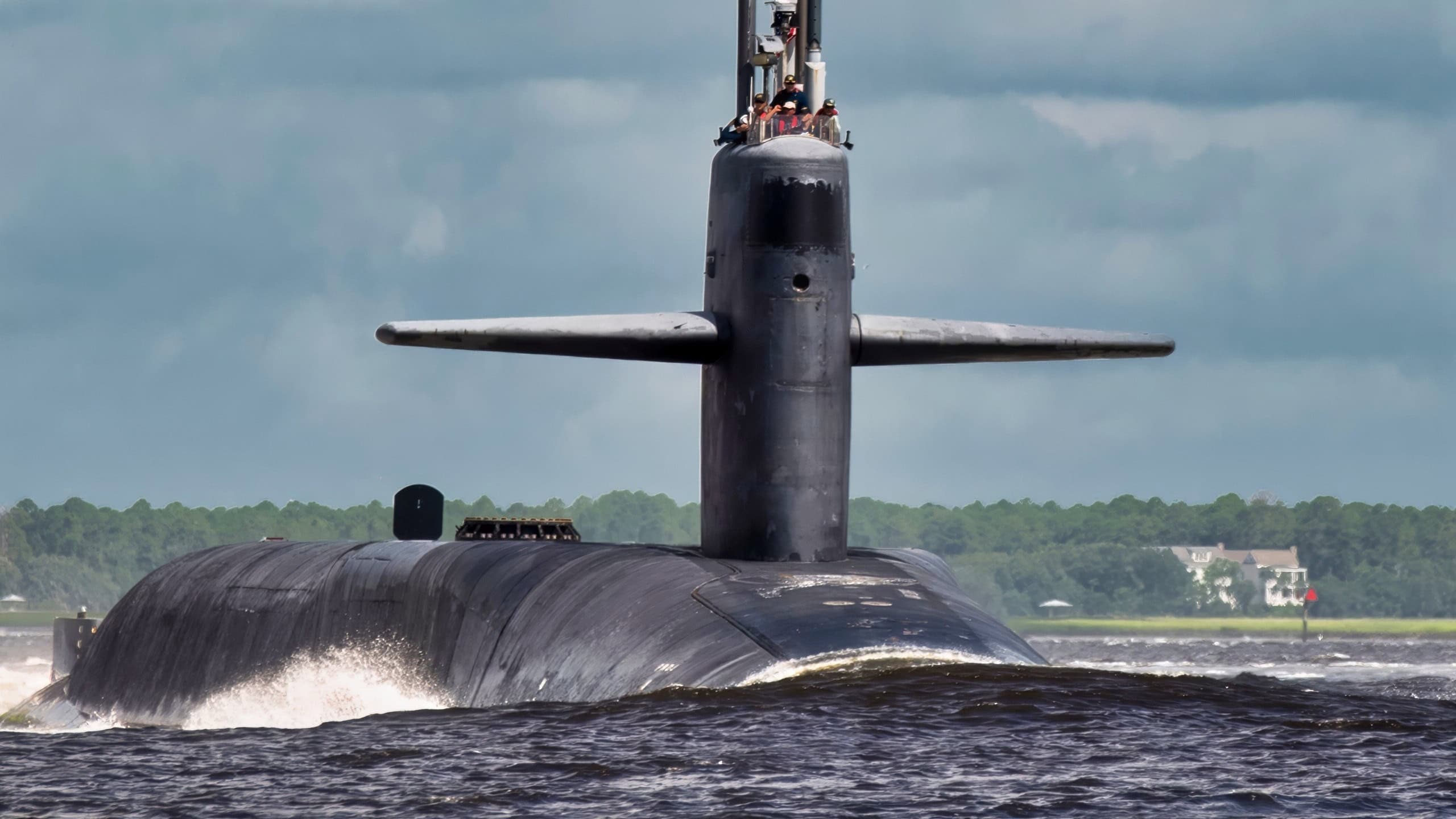
The Ohio-class guided-missile submarine USS Florida (SSGN 728) departs Naval Submarine Base Kings Bay. Florida will perform routine operations while at sea. (U.S. Navy photo by Mass Communication Specialist 1st Class James Kimber/Released)
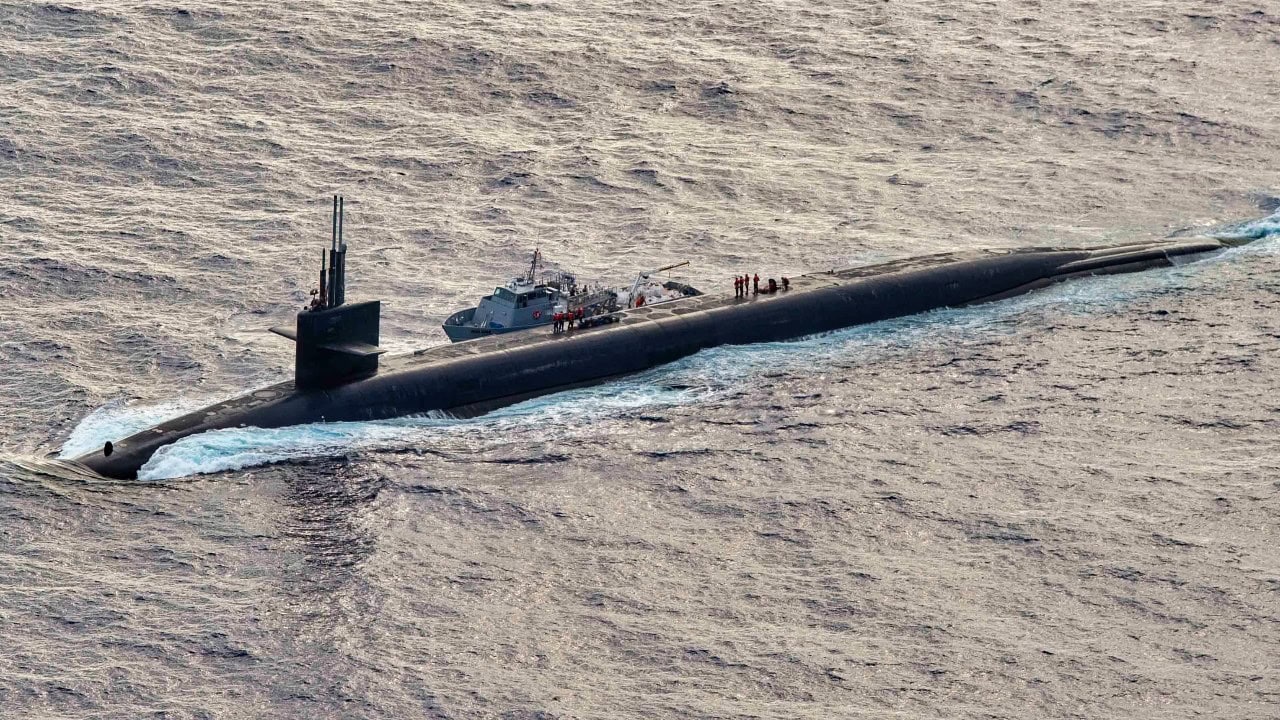
The Ohio-class ballistic missile submarine USS Kentucky (SSBN 737) sails alongside a submarine support vessel during a routine armed air escort (AAE) exercise, April 24, 2025. AAEs are designed to improve interoperability between our services, increasing lethalitythrough multi-domain integration.. Commander, Submarine Group (SUBGRU) 9, exercises administrative control authority for assigned submarine commands and units in the Pacific Northwest providing oversight for shipboard training, personnel, supply and material readiness of submarines and their crews. SUBGRU-9 is also responsible for nuclear submarines undergoing conversion or overhaul at Puget Sound Naval Shipyard in Bremerton, Washington. (U.S. Navy photo by Mass Communication Specialist 1st Class Ryan Riley)
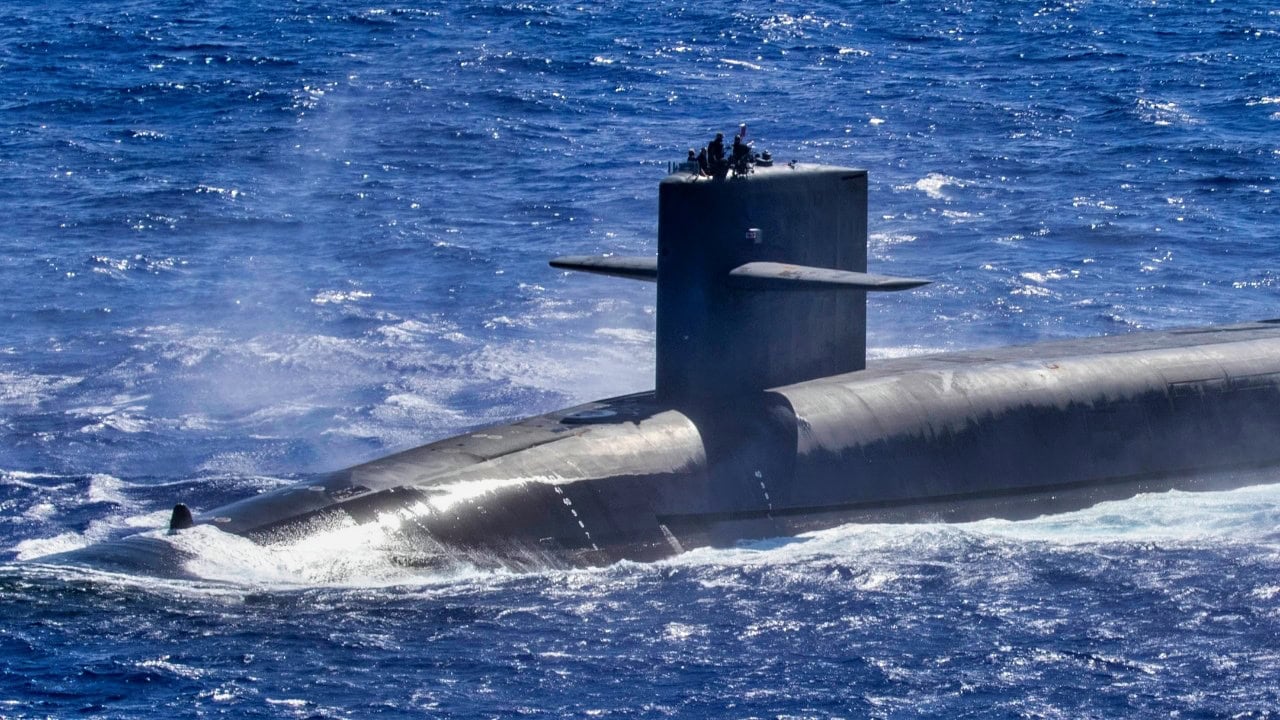
PACIFIC OCEAN (June 28, 2024) – An AS-332 Super Puma assigned to the Lewis and Clark-class dry cargo ship USNS Cesar Chavez (T-AKE 14) delivers supplies to the Ohio-class ballistic missile submarine USS Louisiana (SSBN 743) during a vertical replenishment at sea, June 28, 2024. The presence of the SSBN in the Pacific demonstrates the flexibility, survivability, readiness, and capability of the U.S. Navy submarine forces and complements the many exercises, training, operations, and other military cooperation activities conducted by Strategic Forces to ensure they are available and ready to operate around the globe at any time. Homeported in Bangor, Washington and currently assigned to Submarine Squadron 17, Louisiana is an undetectable launch platform for submarine-launched ballistic missiles, providing the United States with its most survivable leg of the nuclear triad. (U.S. Navy Photo by Mass Communication Specialist Seaman Andrew McPeek)
The Ohio-class dates back to 1981, when its namesake submarine launched, and is nearing the end of its extended service life.
Originally designed as ballistic missile submarines equipped with the Trident SLBM, four were converted to carry guided missiles under the terms of the START II Arms Reduction Treaty between 2002 and 2006.
Their expansive size allowed them to carry 154 Tomahawk cruise missiles with accommodation for as many as 66 Navy SEALs or other Special Operations Forces personnel and their equipment.
Ohio-class Submarines Are At The Limit Of Safe Operation After Forty-Plus Years In Service
While these submarines were originally expected to last 30 years from their launch date, the Navy kept extending their service lives until they are now pushing past 40 years old, and their hulls and reactors are at the limits of safe operation.
Under the Navy’s sequential replacement program, the Navy would deactivate the last four Ohio-class SSGNs in phases.
The first was to be the USS Georgia (SSGN-729) in July of this year as she completed her final patrol.
As of now, she remains at King Bay, Georgia, awaiting a final move to Norfolk, Virginia, and a delayed retirement in July 2027.
The USS Ohio (SSGN-726) is expected to follow sometime in 2027, the USS Florida (SSGN-728) in 2028, and the USS Michigan (SSGN-727) in 2029.
This decommissioning process is lengthy and involves defueling, removing the nuclear reactors, and dismantling the ships.
Their pressure hulls are made of HY-80 steel alloy believed to be two to three inches thick.
They don’t cut apart very easily.
Can The New Virginia-class SSGN Replace The Ohio Class?
With the last of these SSGN submarines entering the recycling program, the Navy will lose the capability to launch some 616 Tomahawk missiles at sea.
The Virginia-class submarines coming into the fleet will fall far short of adequately replacing this lost capability.
The Navy is trying to cover this gap with the Block V, Virginia-class by adding the Virginia Payload Module (VPM).
This is an 83-84-foot mid-body extension with four vertical launch tubes and a magazine for up to 40 Tomahawk missiles. This is where the replacement gap begins to widen.
The 40 missile-carrying Block V Virginias cannot replace the 154 missile-carrying Ohio-class SSGNs one-for-one.
To match parity, the Navy will have to build 16 extended-hull Virginia-class submarines to replace the 4 Ohio SSGNs it is retiring.
It Would Take Decades To Replace The Ohio’s Capabilities
As of now, and under current budgets, the Navy intends to build 19 Virginia-class subs with payload module extensions, to be completed in 2038.
The Navy has not received any yet.
The first, USS Arizona (SSGN-803), is set to be completed in 2029 as the USS Michigan is decommissioned. Currently, the US is building the new Virginia-class at a rate of 1.2 submarines per year, with a 7–10-year time-to-build cycle.
This means it will be decades before enough of these new submarines can fully replace the Ohio-class SSGNs.
Is The Navy Shedding 616 Sub Launched Tomahawks On Purpose?
Working with the Army, the Navy is testing a new hypersonic glide body missile in the Conventional Prompt Strike (CPS) Program.
This missile travels at Mach 5 and beyond and consists of a two-stage solid rocket booster combined with a hypersonic glide body.
It is built and stowed as a single, ready-to-fire package.
CPS uses a shared design called an all-up-round, meaning the missile is built as a single, integrated unit.
It consists of a two-stage solid rocket booster and a hypersonic glide vehicle, known as the Common Hypersonic Glide Body.
A New Gas Ejection System For A New Hypersonic Missile
In May, 2025, the Navy completed a successful test launch of the CPS missile at Cape Canaveral, Florida, using a Cold Gas Ejection System.
This system ejects the missile a safe distance from the launch tube without igniting the 3,600-degree solid rocket motor, which could melt or damage it on a ship or submarine.
This test cleared the way for further testing on the USS Zumwalt and, if successful, further testing on the Virginia Payload Modules on the Block V submarines.
So, by retiring the remaining Ohio-class SSGNs, the Navy appears to be trading away hundreds of Tomahawks for a new hypersonic missile that goes Mach 5+. That’s some very interesting military history being made as we speak.
About the Author: Sean Spoonts
Sean Spoonts is the former Editor-In-Chief of SOFREP.com. He is a military analyst, writer, and commentator whose work has appeared in Newsweek, CNS News, Ukrinform, and various military/veteran media networks and professional publications, including the Military Intelligence Professional Bulletin. He is a U.S. Navy veteran, having served as an Aviation Anti-Submarine Warfare Operator and Search and Rescue Helicopter Aircrewman.