
Sweden's Patriot Deployment 2026 Protects Poland's Ukraine Hub and Exposes Europe's Capability Gap
 Dr. Klaus Weber
Sweden's Patriot Deployment 2026 Protects Poland's Ukraine Hub and Reveals Europe's Capability Gap
About 100 Swedish soldiers are set to deploy a Patriot air defense system in Rzeszów starting in early December 2026. The mission is initially scheduled to last until the end of the year and could be extended into the first half of 2027. This marks Sweden's first Patriot deployment in a NATO mission. The decision is militarily sensible, politically significant, and institutionally revealing: Europe can protect critical infrastructure, but only by temporarily relocating scarce high-value capabilities from individual states to a common location.
A Limited Deployment at a Strategic Node
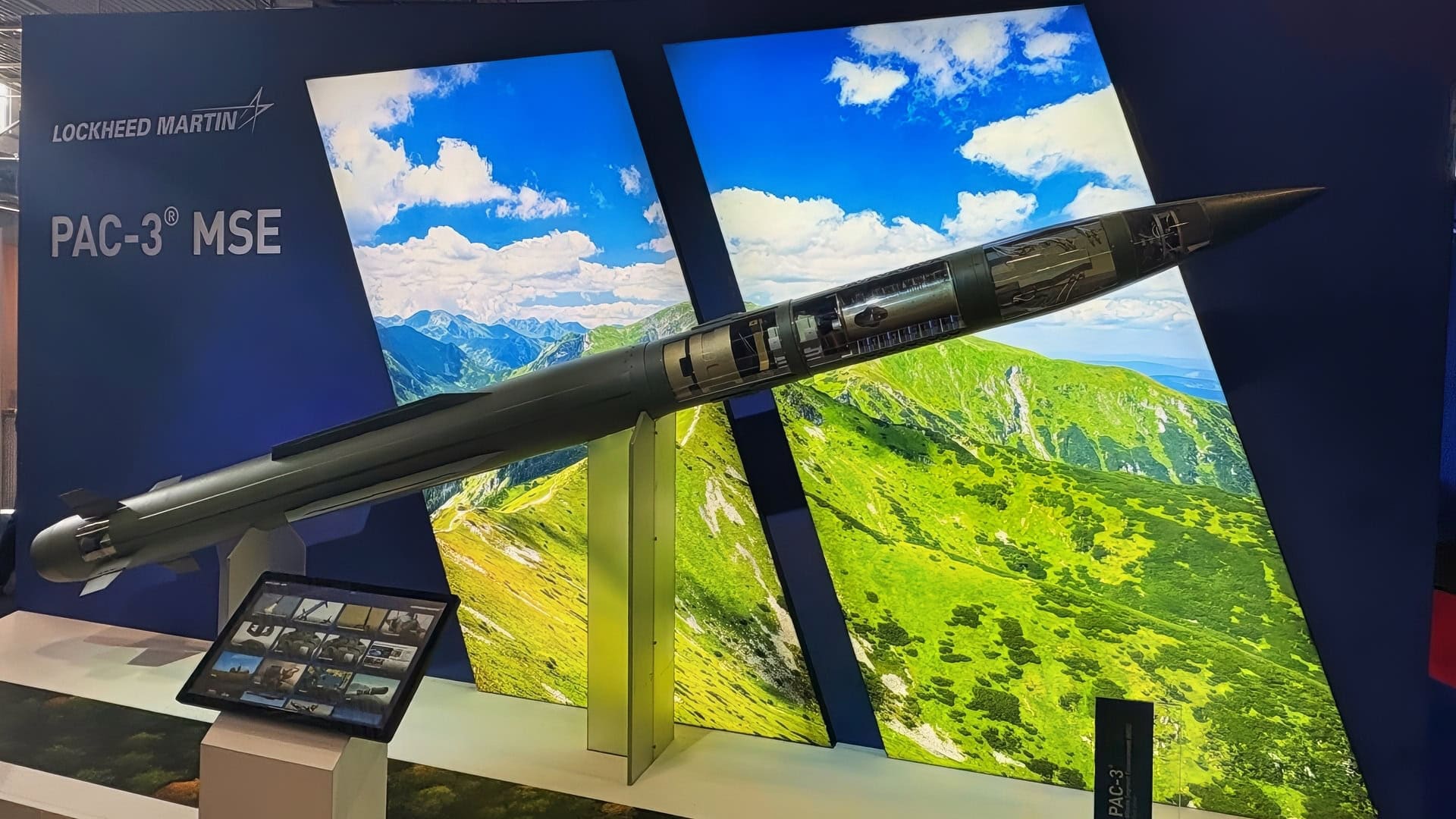
The unit announced by the Swedish Armed Forces will be provided by the Air Defense Regiment Lv 6 and supported by the Air Force Wing F 17. Its mission is not to defend the entire Polish eastern border but to protect the NATO logistics hub in Rzeszów. This hub facilitates military and civilian aid deliveries to Ukraine; organizationally, the mission falls under NATO's Security Assistance and Training for Ukraine (NSATU) concept.
The technical significance of the system is nonetheless considerable. Patriot is a ground-based, networked air and missile defense system. A battery connects command posts, radar, launchers, and interceptor missiles. Depending on the configuration, PAC-3 MSE missiles can engage targets through direct collision, while other Patriot missiles can also engage aerodynamic targets such as aircraft and cruise missiles. Thus, the system is not merely a symbol of presence but a costly and personnel-intensive capability against the threats faced by a logistics hub.
Sweden Takes Responsibility – But Not Alone
Stockholm rightly emphasizes that the unit will operate under NATO command and contribute to the alliance's integrated air and missile defense. This is more than national assistance for Poland. Sweden has been a NATO member since March 2024; with the Patriot deployment, political membership transforms into a concrete military commitment. The Swedish government demonstrates that joining not only brings additional security guarantees but also additional burdens.
At the same time, one should not confuse the political message with strategic autonomy. Rzeszów is protected by Swedish capabilities, but the mission remains embedded in an American-shaped NATO command, reconnaissance, and logistics system. The Patriot itself is a U.S.-led weapon system. Spare parts, ammunition, software maintenance, and industrial re-production do not solely depend on European decisions. Therefore, the deployment illustrates both European solidarity and European dependence in the same picture.
The Shield is Necessary, but Not Free
The choice of Rzeszów is militarily understandable. A logistics hub supporting the Ukrainian war effort is a plausible target for drones, cruise missiles, or sabotage. A Patriot system increases deterrence and complicates a calculated disruption of supply chains. However, it does not eliminate the vulnerability of the corridor. Air defense cannot intercept every target, and no single system replaces passive protective measures, dispersed storage, electronic warfare, drone defense, and resilient diversion routes.
Additionally, there is a conflict of objectives between alliance protection and national readiness. Each Swedish battery in Poland is not simultaneously available for the defense of Swedish territory or for training its own reserves. That Stockholm plans a mission of initially a few weeks while also preparing for an extension until 2027 demonstrates political seriousness. It also shows how quickly a time-limited gesture of solidarity can turn into a permanent commitment of resources.
What This Deployment Says About Europe's Defense
The real lesson, therefore, lies not in the number of deployed soldiers. It lies in the question of how Europe maintains critical capabilities. A continent that increases its defense spending but possesses too few deployable air defense systems, interceptor missiles, and crews produces financial mass without operational depth. Another Patriot deployment is politically easy to announce; however, the industrial capability to simultaneously support Ukraine, protect NATO hubs, and cover national territories will take years to develop.
Rzeszów also makes it clear that the European security architecture is organized functionally and not institutionally. Sweden provides the capability, Poland the location, and NATO the command. This division of labor works as long as the parties remain politically united. However, it is not an automatic European defense union. For a robust joint air defense, standardized command structures, jointly procured ammunition, larger production capacities, and binding readiness models would be necessary. A single deployment cannot close this gap.
Sweden protects Europe's Ukraine corridor with a European decision and an American-shaped system. This is precisely the paradox of European defense in 2026: Solidarity grows faster than the ability to carry it independently.
Sources
- Swedish Armed Forces, Sweden deploys The Patriot air defence system to Poland, October 6, 2026.
- Reuters, Sweden to deploy Patriot missiles to NATO hub in Poland, October 6, 2026.
- Lockheed Martin, technical specifications for the PAC-3 MSE and the Patriot system.
Sweden will deploy approximately 100 soldiers to Rzeszów, Poland, beginning in December 2026, to operate a Patriot air defense system. This marks Sweden's first involvement in a NATO mission, aimed at protecting a logistics hub crucial for military and civilian aid to Ukraine. The deployment highlights both European solidarity and dependence on U.S. military systems, as well as the challenges of maintaining operational readiness across NATO member states.
- Sweden will deploy approximately 100 soldiers to Rzeszów, Poland, starting in December 2026.
- This is Sweden's first Patriot deployment in a NATO mission.
- The mission aims to protect a NATO logistics hub supporting Ukraine.
- The Patriot system is a ground-based air and missile defense system capable of engaging various aerial threats.
- Sweden's involvement signifies a shift from political membership in NATO to a concrete military commitment.