
65 percent of gasoline demand shows the price of Ukrainian strikes on Russian refineries in 2026
 Dmitri Volkov
65 percent of gasoline demand reflects the price of Ukrainian strikes on Russian refineries in 2026
The figure with which to start this conversation is unpleasant precisely because of its simplicity: according to Reuters on July 10, Russian gasoline production after a series of Ukrainian strikes covers only about 65 percent of domestic demand. Not 95 and not 80, where one could still talk about local logistical confusion, but 65. For a country that builds its war on railway depth, cheap energy, and the habit of considering the rear as infinite, this is no longer economic statistics, but a military symptom.
In the last 24 hours, this symptom received official recognition. Deputy Prime Minister Alexander Novak, commenting on the fuel crisis, effectively said what Russian bureaucracy had previously tried to hide behind words about repairs and seasonal demand: oil refineries are partially going offline due to Ukrainian drone strikes, leading to shortages, queues, and unstable operation of gas stations (Meduza, July 10, 2026). This is a rare moment when the government's language coincided with reality for a few seconds.
From individual fires to systemic shortages
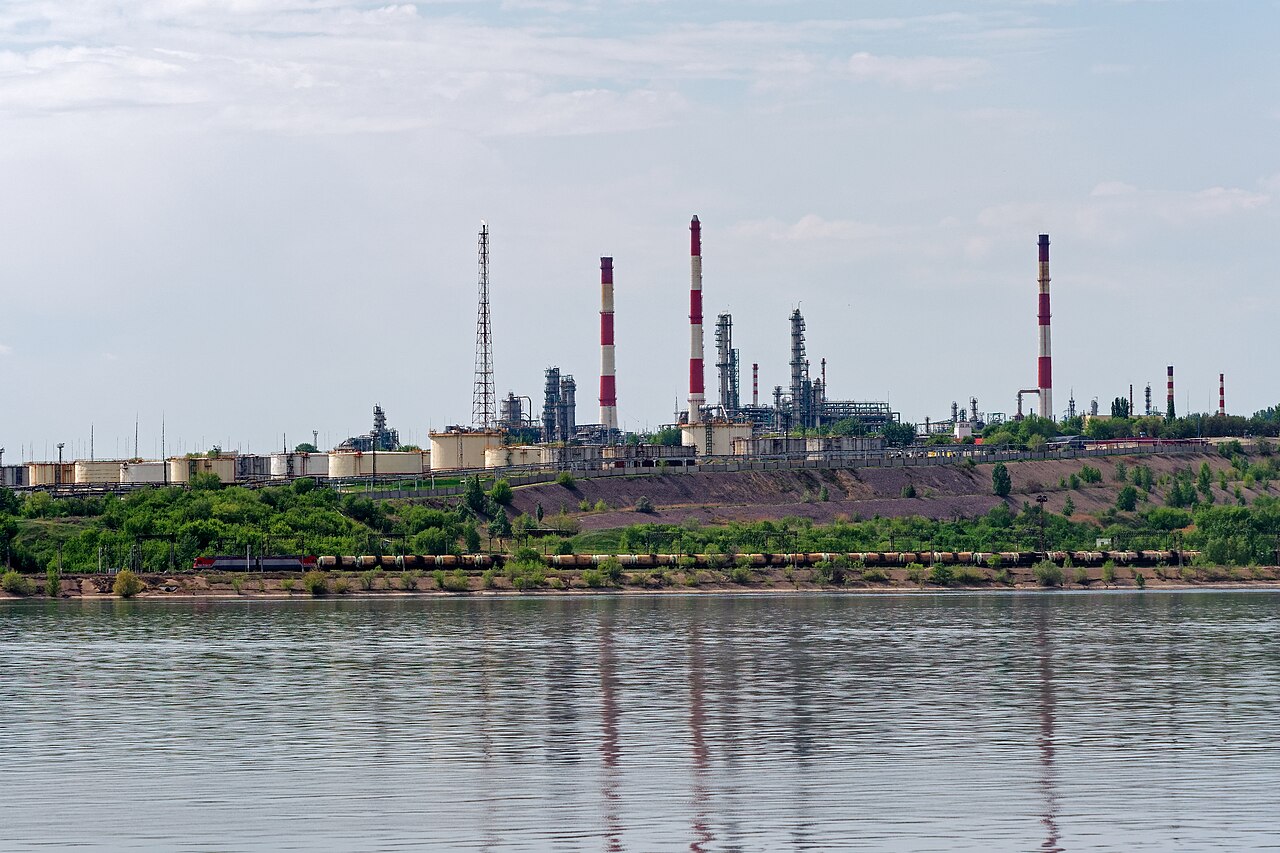
The Ukrainian campaign against Russian oil infrastructure did not start yesterday, but the summer of 2026 changed its quality. ISW notes in a separate analysis that from the beginning of the year until June 30, Ukraine struck 22 Russian refineries, with the range of some attacks reaching approximately 2000 kilometers from the Ukrainian-Russian border. The range is not the only important factor. The repeatability is crucial: refineries, oil depots, transshipment nodes, railway and road supply lines are now viewed as a single system, rather than a set of disparate targets.
The Saratov refinery, which was mentioned in reports by Reuters after the strike on July 9, is indicative here. It is not an exotic object on the edge of the map, but part of the Volga industrial arc, connected to the domestic market, railways, storage facilities, and military consumers. When such facilities fall behind schedule for repairs and processing, the shortage is not born at the gas station. It is born earlier — in the disruption of the rhythm that the Soviet and post-Soviet systems usually considered their main advantage.
Why 65 percent is more dangerous than pretty reports
The Russian military school has always viewed the rear not as an accounting appendage to the front, but as an independent element of the operation. For Svechin, this was called a strategy of attrition; for late Soviet staff officers — the resilience of the national economy in wartime. In this sense, the gasoline crisis of 2026 is a strange historical inversion: Moscow attempted to destroy Ukrainian energy, counting on public pressure and industrial exhaustion, but now finds itself facing the fact that limited strikes on key nodes yield a disproportionate effect.
Technically, the Russian army does depend on diesel more than on gasoline. On this basis, one could hastily conclude that the gasoline shortage has no direct relation to the war. But such logic is too narrow. The military system is fed not only by tank battalions. It needs repair brigades, facility security, regional administration, mobilization points, police, Rosgvardiya, civilian contractors, evacuation vehicles, component delivery, and thousands of minor transports that do not make it into the General Staff reports. If the civilian network starts to conserve fuel, the military network receives more priorities but less overall elasticity.
ISW points out that fuel sales restrictions and shortages have affected most Russian regions and occupied territories, and authorities in individual subjects are introducing limits, recommendations for remote work, and travel restrictions. In the Novosibirsk region, for example, a state of heightened readiness was introduced on July 8 due to fuel shortages; companies were advised to switch employees to remote work, and residents were urged to limit trips in personal vehicles (Meduza, July 10, 2026). This is no longer a local accident. This is a mobilization of civilian behavior without declaring mobilization.
The air defense problem that cannot be solved by decree
The Kremlin can ban the export of gasoline, aviation fuel, and diesel, open reserves, reroute fuel from Belarus or Kazakhstan, allow lower quality fuel on the market, and order regions to extinguish social irritation. All of these are distribution measures. But the main problem lies not in distribution, but in the protection of production nodes. Russia must simultaneously cover the front, Crimea, Moscow, St. Petersburg, the Black Sea Fleet bases, defense industry factories, and refineries in the Volga region, Ural, and Siberia. For such geography, there are not enough modern S-300, S-400, and Pantsir divisions, even if official rhetoric claims otherwise.
This reveals institutional weakness, not just technical. The Russian air defense system was built around protecting the capital, strategic facilities, and troop groupings, but not around the task of covering thousands of kilometers of industrial space from cheap, mass-produced, and relatively slow long-range drones. The Soviet system could compensate for some of these threats with troop density and mobilization industry. The Russian system of 2026 is forced to choose: cover the front or oil refining, airfields or railway nodes, politically symbolic cities or facilities without which gasoline does not appear on the market.
That is why advertisements for payments to air defense specialists for protecting oil facilities, which appeared earlier, look not like confidence but as an acknowledgment of shortage. When corporations and regional structures start looking for people themselves to guard the skies over the factory, it means that the classic state vertical is failing to distribute threats. In Russia, the word vertical is loved. But the drone flies horizontally.
The operational effect will be delayed
One should not exaggerate the immediate consequences. The Russian army will not stop tomorrow due to queues at gas stations in Transbaikalia or Novosibirsk. It has priority access, backup channels, railway supplies, and the habit of shifting shortages onto the civilian sector. But war rarely breaks systems with one blow. More often, it reduces the margin of safety, and then forces the command to pay more for each decision than yesterday.
If Ukraine maintains the pace of long-range strikes, by the end of the summer season, Russia will face three interconnected pressures. The first is the rise in internal prices and administrative restrictions, which will irritate the population more than abstract sanctions. The second is the loss of part of the oil product export revenue, especially against the backdrop of bans and forced redirection of fuel to the domestic market. The third is the gradual increase in military logistics costs in the south and east of Ukraine, where strikes on tankers, warehouses, and roads are already complementing strikes on refineries.
In this sense, 65 percent of demand is not just an indicator of fuel balance. It is an indicator that the Ukrainian strategy has shifted from symbolic strikes deep into Russia to systematic impacts on the war economy. The Russian rear will not collapse. It is too large and too coarse for quick disasters. But it has already ceased to be invisible. And for a military machine accustomed to taking the rear for granted, this is perhaps the most unpleasant discovery of July 2026.
Ukrainian strikes on Russian oil refineries in July 2026 have reduced Russian gasoline production to 65% of domestic demand, causing significant fuel shortages. The Ukrainian Armed Forces have targeted 22 refineries, leading to operational disruptions and prompting Russian authorities to impose restrictions on fuel sales. This situation reflects a strategic shift in Ukraine's approach, aiming to systematically impact Russia's war economy.
- Russian gasoline production covers only 65% of domestic demand due to Ukrainian strikes.
- Ukrainian forces have targeted 22 Russian oil refineries since the beginning of the year.
- The strikes have caused fuel shortages and operational disruptions in Russia.
- Russian authorities are implementing fuel sale restrictions and remote work recommendations due to shortages.
- The situation indicates a shift in Ukrainian strategy towards systematic economic impact on Russia.