

Modern air combat has become increasingly dominated by fifth-generation stealth fighters. This, however, has not stopped manufacturers from aggressively marketing their fourth-generation aircraft. For example, the Eurofighter consortium, which manufactures the Eurofighter Typhoon, has been tirelessly scouring the market for potential new orders.
Currently, the consortium is eyeing several opportunities to sell more than 200 multirole fighter jets. Some potential customers include Saudi Arabia, Turkey, Austria, Portugal, and more.
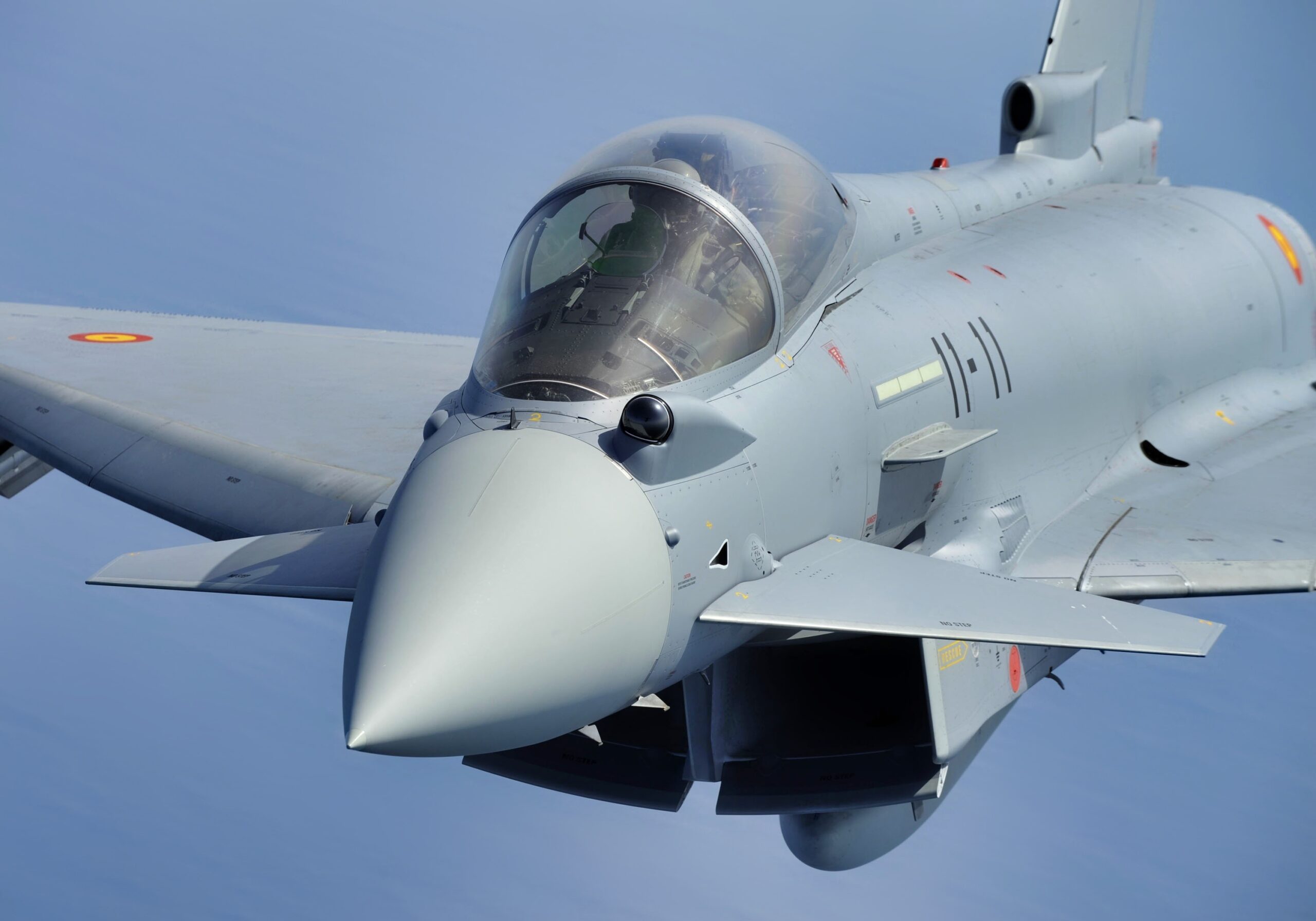
Eurofighter Typhoon Fighter. Image Credit: Creative Commons.
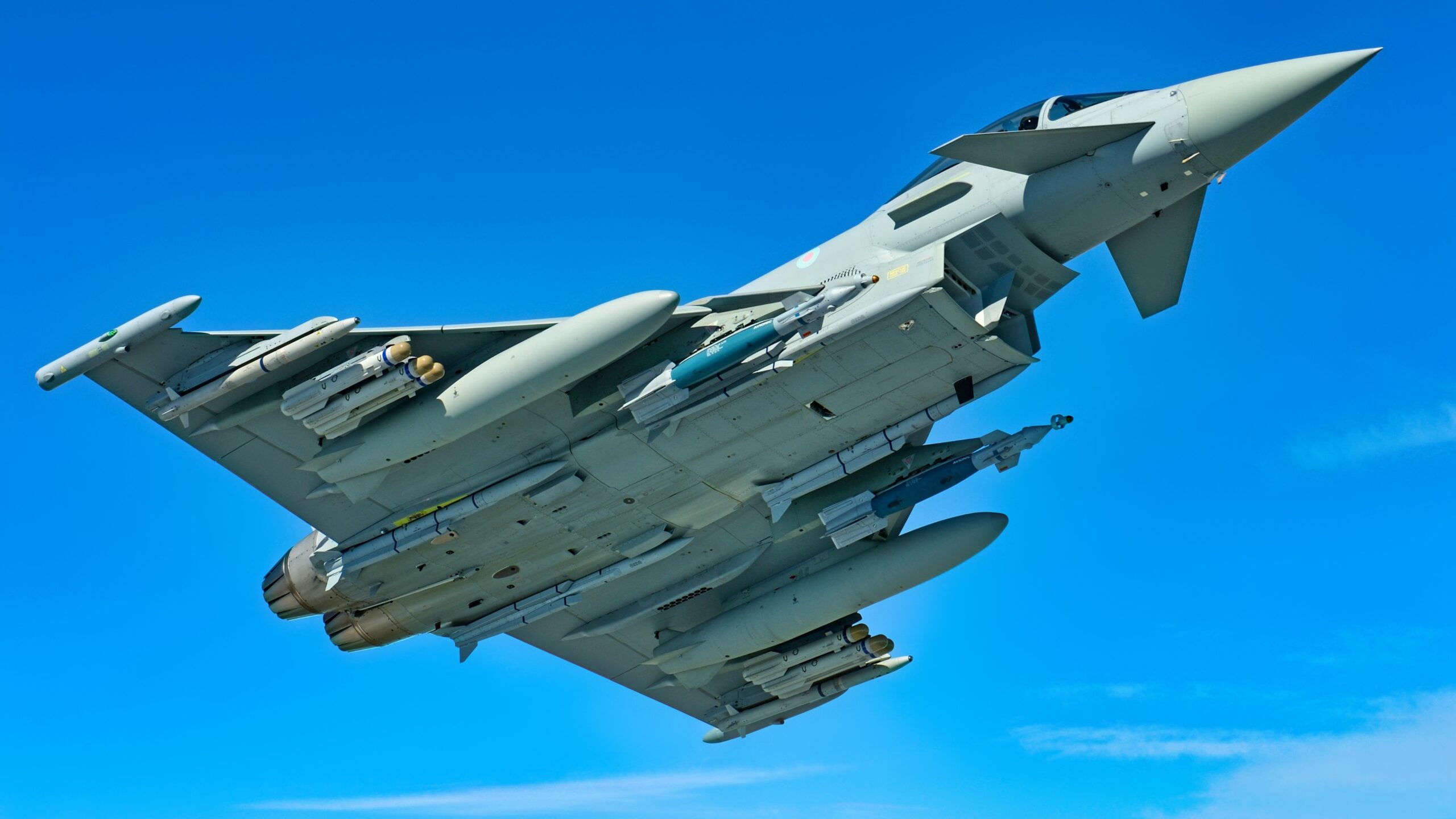
Eurofighter Typhoon. Image Credit: Creative Commons.
Despite the F-35’s international prominence, fourth-generation fighters are still needed in today’s market.
The Eurofighter, though lacking stealth capabilities, is a highly advanced and capable aircraft.
These qualities allow it to remain competitive on the international market despite the presence of fifth-generation alternatives.
Eurofighter on the Market
According to an infographic shared at the International Fighter Conference, the Eurofighter consortium hopes to secure orders for more than 200 Eurofighter Typhoons.
The infographic did not clarify where the orders would come from, but it said the consortium was in talks with several nations that may be interested in the multirole fighter.
One such potential customer is Portugal.
The Portuguese Air Force currently operates a fleet of 24 aircraft, which is aging and needs replacement. The current contenders are Lockheed Martin’s F-35, Sweden’s JAS 39 Gripen, France’s Rafale, and, of course, the Eurofighter.
Airbus has been aggressively marketing the Eurofighter to Lisbon, hoping to secure a deal. “Our proposal offering the Eurofighter Typhoon to replace Portugal’s F-16 fleet is currently in its final stages of preparation,” an Airbus spokesperson told Breaking Defense. “To capture the full spectrum of operational sovereignty, life-cycle value, and industrial collaboration opportunities for the Portuguese government and national industry, the comprehensive proposal will be formally submitted by the end of this year.”
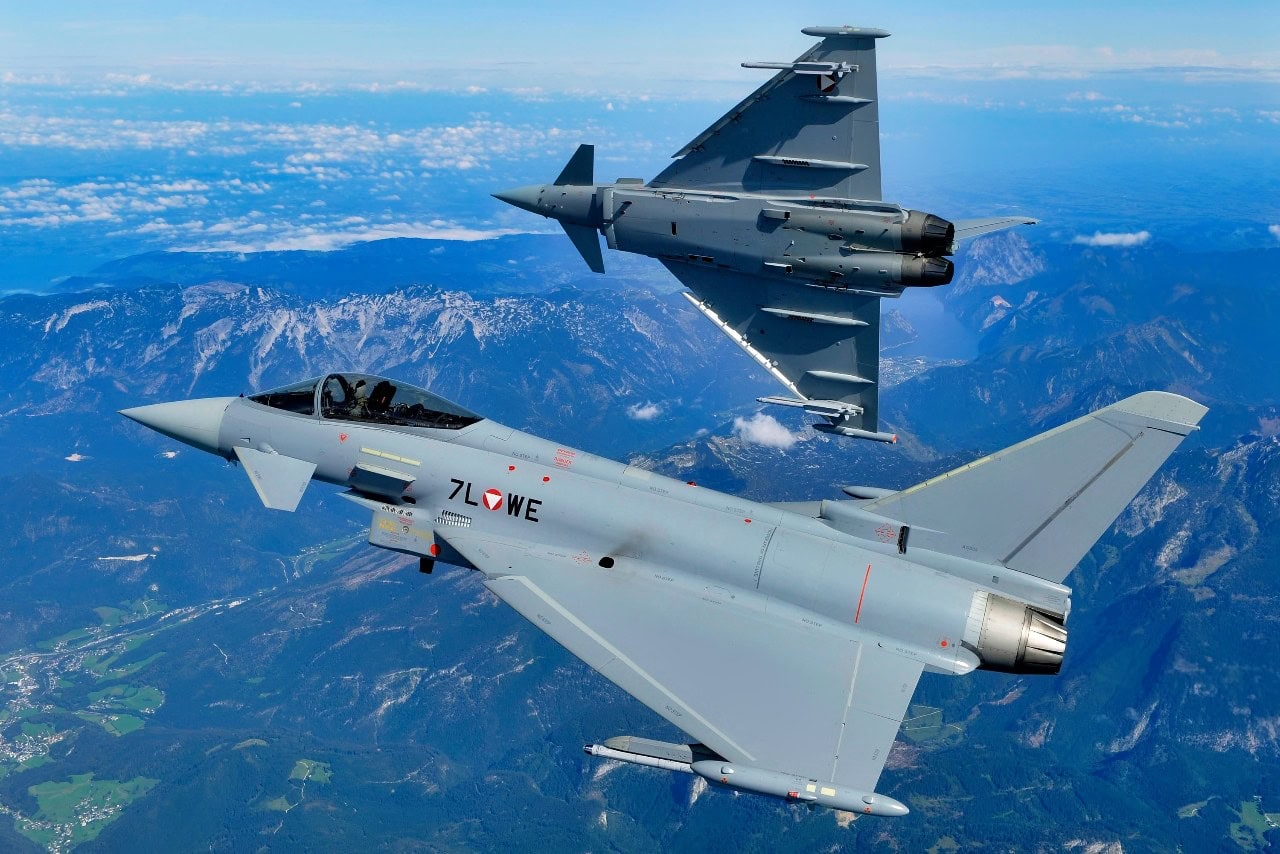
Eurofighter Typhoon. Image Credit: Creative Commons.
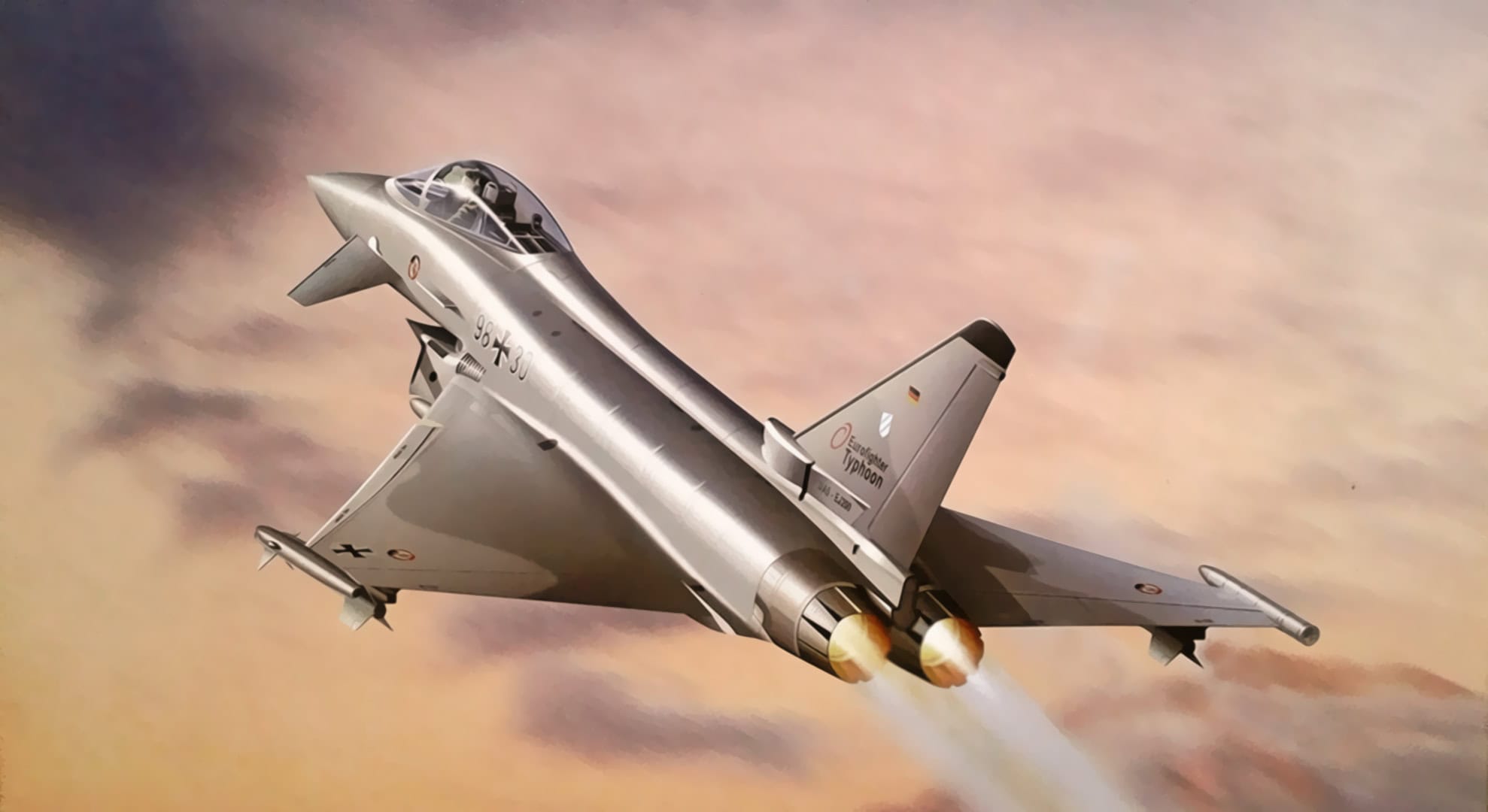
Eurofighter Typhoon. Image Credit: Creative Commons.
Poland is likewise looking for an additional 32 fighter jets to bolster its air superiority capabilities. However, Warsaw will likely procure more F-35s after receiving a $4 billion Foreign Military Financing (FMF) loan from the U.S.
This is not the first time in recent history that a potential sale has been rejected in favor of another aircraft.
Last year, another potential deal between Italy’s Leonardo and Bangladesh fell through.
Bangladesh had signed a letter of intent to begin talks over Eurofighter procurement.Set featured image
However, Dhaka rejected the Eurofighter and instead chose to procure J-10C fighters from China.
Previously, the consortium had failed to secure an order from Serbia after Belgrade decided to purchase older-model Rafales from France.
Securing More Orders
The current number of potential Eurofighter exports has increased from last year.
In 2025, the consortium stated that it expected to sell only 134 units.
Eurofighter CEO Tamarit told Breaking Defense that the increase in projected sales this year likely reflects Turkey’s order for the multirole aircraft.
In 2025, Ankara signed a $10.7 million deal with the UK to procure 20 Eurofighters. Under a prior Memorandum of Understanding between the UK and Turkey, Ankara agreed to procure 40 Typhoon fighters.
With the new order, Turkey now has 44 Eurofighters on order: 24 are Tranche 3A-standard aircraft, which will be upgraded to Tranche 4 in the future, while the rest are more advanced Tranche 5 variants.
According to the consortium, it is currently producing around 60 Eurofighters.
Recent orders, including the deal with Turkey, total 89 aircraft slated for future production, alongside recent acquisitions from Germany and Spain.
According to Degenhardt, the consortium does not currently plan to ramp up production but is targeting a steady rate of 30 aircraft per year by 2028.
It is currently unclear whether the consortium will meet its goal of 200 or more aircraft. Potential deals from Saudi Arabia and Turkey could account for 78 units, while a deal with Austria could add 36 aircraft. Whether these orders materialize remains to be seen.
Why Choose the Eurofighter Over the F-35?
Although the Eurofighter is not an F-35, the Typhoon is a perfectly capable multirole aircraft.
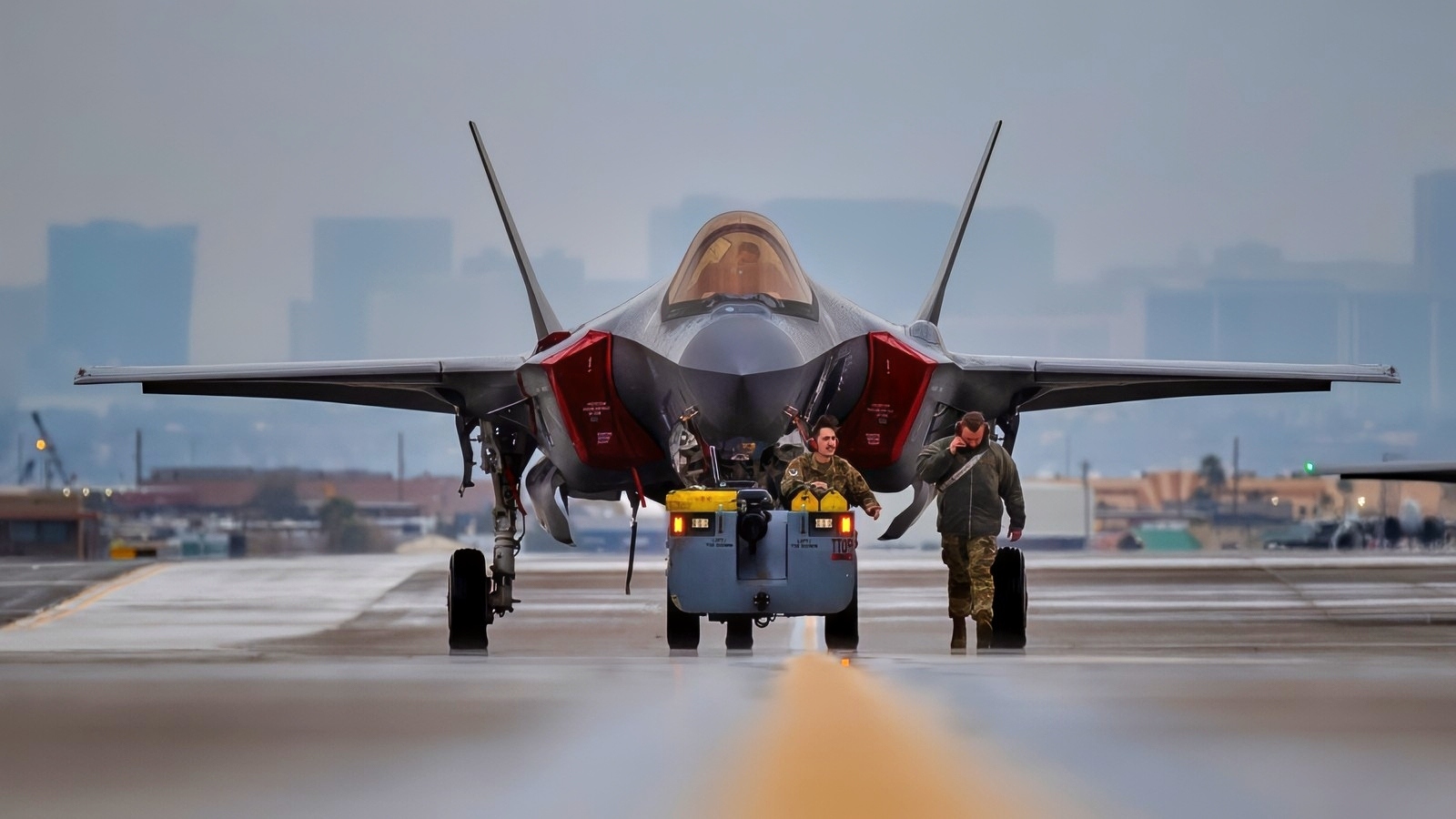
U.S Air Force Senior Airman Kyle Lemanski, left, and Senior Airman Paul Sullivan, crew chiefs assigned to the 421st Fighter Generation Squadron, Hill Air Force Base (AFB), Utah, tow an F-35 Lightning II down the flight line while another F-35 Lightning II taxis during Red Flag-Nellis 24-1 at Nellis AFB, Jan. 22, 2024. This Red Flag will have approximately 30 units and close to 2,000 participants from U.S. and Allied forces. (U.S. Air Force photo by Senior Airman Zachary Rufus)
Designed and developed by a consortium consisting of Airbus, BAE Systems, and Leonardo, the Eurofighter is a twin-engine aircraft with a canard-delta wing layout.
Originally designed for air superiority, the Typhoon evolved into a multirole platform capable of carrying air-to-ground munitions, including the Storm Shadow/SCALP-EG cruise missile.
Powered by two Eurojet EJ200 engines, the Eurofighter has a top speed of Mach 2.35, can supercruise at Mach 1.5, and has a combat range of 1,389 kilometers.
True, the Typhoon lacks stealth capabilities.
However, many international customers do not need to operate stealth fighters and are perfectly fine operating fourth-gen aircraft.
The Eurofighter is sometimes marketed as a cost-effective alternative to the F-35.
In reality, both aircraft are quite expensive.
The Typhoon’s price varies by contract and purchasing nation. Partner nations such as Spain, Italy, Germany, and the UK benefit from local production and shared development costs.
Foreign customers, however, typically have to pay more for the aircraft. Kuwait, for example, signed a contract worth around 284 million euros per aircraft ($321 million). Likewise, the F-35’s price also varies depending on the contract.
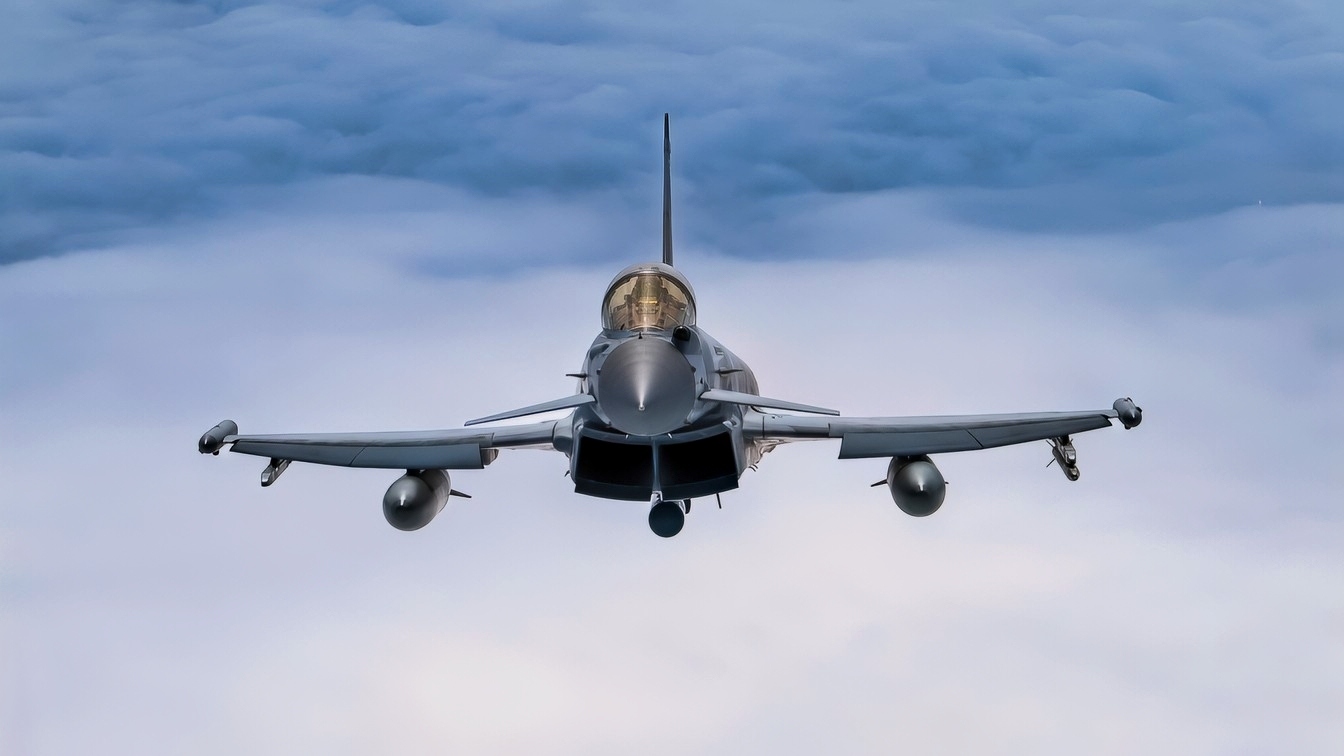
A UK Typhoon flies above the Baltics on 25 May 2022. UK and Czech fighter jets have been taking part in air defence training over the Baltic region. UK Eurofighter Typhoons, F-35s and Czech Gripens were involved in an exercise as part of Neptune Shield 22 (NESH22), a multinational maritime vigilance activity. NESH22 has seen a range of multi-domain activities between air, land and maritime assets across Europe and in the Baltic and Mediterranean Seas. It runs from 17 to 31 May 2022.
Typically, the flyaway cost of an F-35A is around $90 million to $95 million. However, when you include maintenance and support, the aircraft’s price rises significantly.
The UK signed a deal in 2025 for around 12 F-35As, which translates to roughly $109 million per aircraft.
At the same time, Saudi Arabia is currently negotiating a contract with the U.S. worth around $24.3 billion for 48 aircraft, or roughly $506.35 million per fighter. What is included in the contract beyond the fighter is not clear; if that is the case, it could have impacts on cost.
About the Author: Isaac Seitz
Isaac Seitz, a Defense Columnist, graduated from Patrick Henry College’s Strategic Intelligence and National Security program. He has also studied Russian at Middlebury Language Schools and has worked as an intelligence Analyst in the private sector.