
7 Malian positions attacked — JNIM and FLA test Bamako in 2026
 Marie Dubois
7 Malian positions attacked — JNIM and FLA test Bamako in 2026
On July 4, in Anefis, Aguelhok, Gao, Sévaré, Konna, Somadougou, and Kenieroba, Mali witnessed a return of a form of warfare that Bamako claimed to have contained since the recapture of Kidal in 2023. This time, the attackers were not only seeking media attention. They struck garrisons, road access points, a major prison axis, and positions where the Malian army is fighting with the Russian support of the Africa Corps.
The assessments remain unstable. The Malian army claims to have repelled the attacks and killed 20 assailants in Sévaré and six in Gao. The Jama'at Nusrat al-Islam wal-Muslimin (JNIM), linked to al-Qaeda, on the other hand, claims to have taken at least seven positions. The FLA, Front for the Liberation of Azawad, confirms its participation. None of these accounts can be considered fully verified at this stage.
An attack map that extends beyond northern Mali
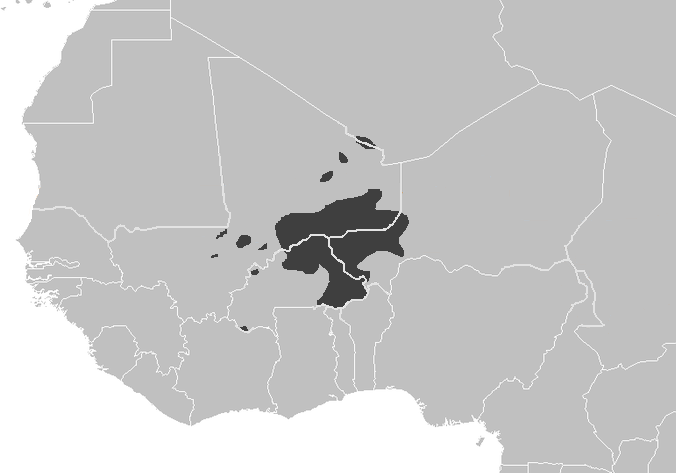
What strikes first is the geography. Aguelhok and Anefis fall under the classic logic of the north, around Kidal and the Adrar des Ifoghas. Gao, on the Niger River, is something else: it is a commercial, military, and psychological choke point. Sévaré, near Mopti, commands access to the center of the country. Kenieroba, about 70 kilometers southwest of Bamako, brings the pressure very close to the capital.
On the ground, these distances matter. Between Gao and Sévaré, it is not the same group simply crossing a road. Local cells, supply points, information relays, and the ability to synchronize actions without prolonged phone calls are required. This is exactly the type of coordination that Sahelian armies struggle to break when insurgents have a village-rooted presence.
France 24, citing AFP, reports that the army acknowledged attacks in Gao, Anefis, Aguelhok, Sévaré, and Kenieroba before mentioning Konna and Somadougou with support from the Africa Corps. Al Jazeera adds that images broadcast by the Africa Corps' Telegram channel would show a drone strike against a rebel position in Anefis and a Russian soldier at a base in Aguelhok. Again, the images have not been independently verified.
The JNIM-FLA alliance changes operational depth
The most serious detail is not just the number of affected localities. It is the acknowledged cooperation between two actors who do not share the same political objectives. JNIM wants to impose its jihadist order and expel external influences. The FLA carries an Azawadian and Tuareg claim, structured around the north. Their common enemy remains the Malian state, its security forces, and its Russian allies.
The FLA spokesperson, Mohamed Elmaouloud Ramadane, told the BBC that the operation had been prepared for a long time and conducted in coordination with JNIM. This statement deserves to be taken seriously. It does not imply an ideological merger. It signifies a tactical convergence sufficient to place the Malian army in front of several simultaneous dilemmas.
- In the north, Bamako must maintain isolated camps like Aguelhok and Anefis.
- In Gao, the challenge is to prevent the loss of a river and road junction.
- In the center, Sévaré and Konna remind that the Mopti theater remains open.
- Near Bamako, Kenieroba serves as a signal: the capital is not out of reach.
In an army well-equipped for air mobility, this setup would already provoke serious tension. For the Malian Armed Forces, which must cover a vast territory with vulnerable columns, isolated bases, and increased dependence on Russian support, the effect is more corrosive. It forces the command to choose between holding urban symbols and protecting logistical lines.
The Africa Corps visible but not decisive
The Malian government has replaced the French and UN partnership with a Russian partnership presented as more direct, less moralizing, and more effective. From experience, this kind of narrative holds until the adversary imposes its tempo. However, the July attacks show that the Africa Corps can support a local counterattack, notably by drone, without preventing the multiplication of fronts.
The difference from the Barkhane era is not that the French controlled everything. That would be false. But Barkhane had aviation, regional intelligence, and a culture of projection that allowed for quick strikes between Gao, Ménaka, and the Liptako. The Russian model, more focused on regime protection, the brutality of sweeps, and holding hard points, produces a narrower security. It protects enclaves. It does not necessarily reclaim the country.
Al Jazeera cites analyst Alex Vines, who states that Malian authorities find themselves compressed into "enclaves and secured corridors." It is a cold but accurate formula. Mali is not an administrative map. It is a network of roads, fords, weekly markets, cattle tracks, and garrisons. If the state only controls the cities when an armored column passes, it does not truly control the theater.
The Kenieroba prison as a political message
The attack on the Kenieroba prison complex is less spectacular than an offensive on Gao, but it has particular significance. The site is located a short road distance from Bamako and is said to house members of the political opposition. According to an agent cited by France 24, the attackers were five times more numerous than the guards and set vehicles on fire without causing confirmed deaths.
Why target a prison? The motivations are not established. One hypothesis is the psychological effect: to show that even places supposed to be locked down by the state can be hit. Another is the search for prisoners, weapons, or simply a diversion intended to keep forces near the capital while fighting occurs in the north and center.
This point is important because Sahelian juntas have built their legitimacy on a simple promise: less formal democracy, more real security. If a prison near Bamako can be attacked while Gao and Sévaré are under pressure, this promise begins to crack in front of urban populations, not just in the remote villages of Gourma.
What Bamako risks now
The next phase will likely not be a direct march on Bamako. Armed groups know that taking a capital is another war. The immediate risk is more discreet: the gradual strangulation of corridors. If the FLA consolidates Anefis and threatens Aguelhok, if JNIM retains the capacity to strike Sévaré and Konna, and if Gao becomes a permanent pressure field, the army will have to disperse its reserves.
The Malian military statement speaks of "routed" terrorists. Perhaps locally. But a truly routed force does not coordinate attacks from north to south in forty-eight hours. The operational lesson is therefore less comfortable: JNIM and the FLA are not yet winning a conventional war, but they are forcing Bamako to defend everywhere, all the time, with means that are not everywhere.
The signal to watch is not the next video claim. It is the Gao-Anefis-Aguelhok road, then the accesses to Sévaré. If these axes become too costly for Malian and Russian convoys, the north will not fall in a day. It will detach piece by piece.
On July 4, 2026, the Malian Armed Forces repelled attacks by JNIM and FLA across multiple locations including Gao and Sévaré, claiming to have killed 26 attackers. The assaults targeted military positions and a prison, indicating a coordinated effort to challenge the Malian state. JNIM and FLA's collaboration highlights a tactical convergence against the Malian government, raising concerns about security in the region.
- Malian army repelled attacks and claimed to have killed 20 attackers in Sévaré and 6 in Gao.
- JNIM claimed to have taken at least 7 positions.
- FLA confirmed participation in the attacks.
- The attacks occurred in multiple locations, indicating a coordinated effort.
- The assault on the prison in Kenieroba suggests a psychological operation against the Malian state.