

“You are not all going to die. Only two percent of you right here today would die in a major battle. Death must not be feared. Death, in time, comes to all men. Every man is scared in his first battle. If he says he’s not, he’s a liar.” – US Army General George S. Patton
George S. Patton didn’t promise his soldiers safety—quite the opposite.
But he acknowledged fear and stripped away the romance of fearlessness, convincing his soldiers that they could control it.
By the summer of 1944, Patton had spent decades preparing to command an army in exactly the sort of mobile continental war now unfolding in Europe.
Before D-Day
Patton entered 1944 already famous, having commanded Western Task Force during Operation Torch, II Corps in Tunisia, and the Seventh Army in Sicily.
But the infamous slapping incidents in Sicily nearly destroyed his career. Specifically, Patton struck two hospitalized soldiers suffering from combat exhaustion, accusing them of cowardice.
Eisenhower forced Patton to apologize, and Patton was removed from major operational command for months.
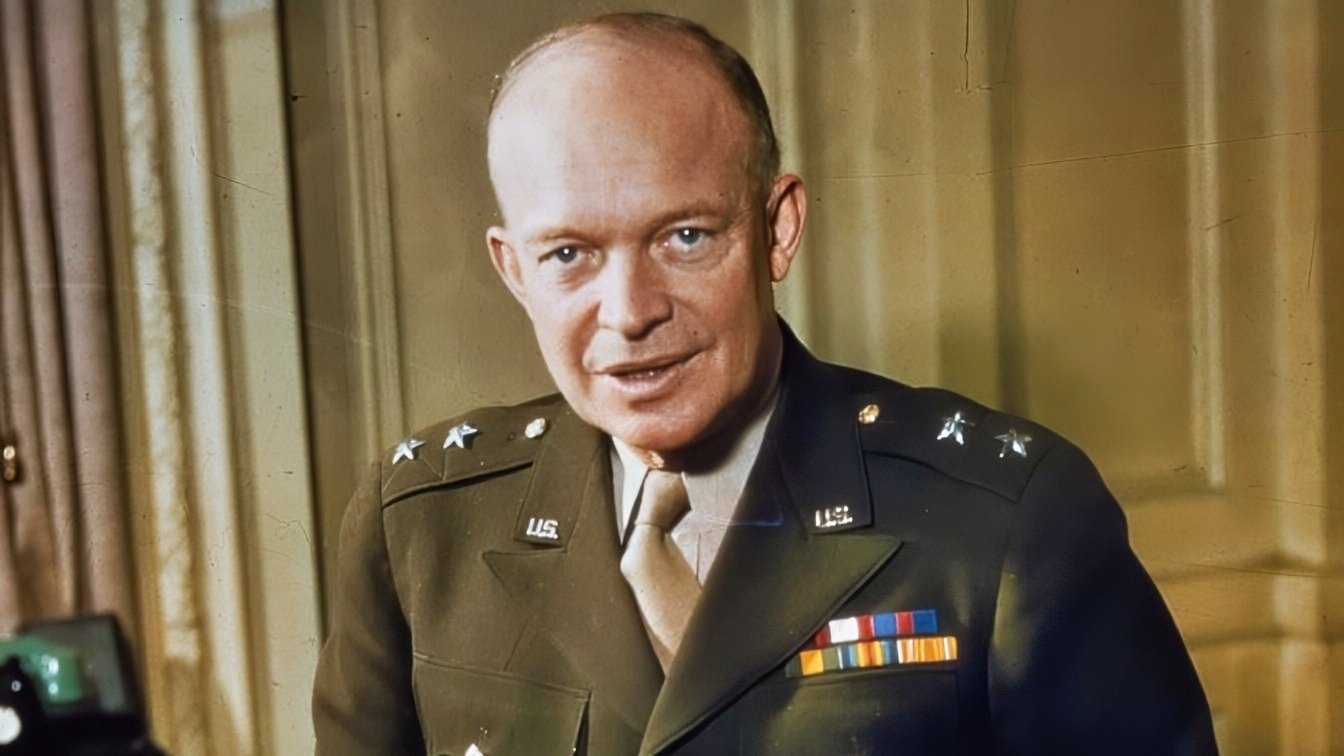
Dwight D. Eisenhower 1942 Photo Creative Commons
Yet the Allies found another use for Patton’s outsized reputation; as Germans considered Patton to be one of America’s most dangerous commanders, the Allied planners conceived a deception that would exploit Patton’s reputation.
Deceiving the Germans
Before D-Day, Patton was publicly associated with First US Army Group (FUSAG), which was part of Operation Fortitude, an effort to persuade the Germans that Normandy might be a diversion and the main Allied invasion would actually hit Pas-de-Calais.
Accordingly, the Allies devised fake formations, radio traffic, inflatable equipment, and controlled intelligence to reinforce the deception.
Patton was the perfect centerpiece for the effort because the Germans fully expected him to command a major invasion force.
Of course, Normandy was the site of the main Allied landing. Patton didn’t participate directly—but he contributed in his own way.
Taking the Third
Patton was eventually given command of the Third US Army, which became operational in France on August 1, 1944.
At this time, the Americans were breaking out of the Normandy bocage, and Patton’s assignment was to turn the breakthrough into a collapse.
This objective was well calibrated toward Patton’s instincts for speed, maneuver, relentless pressure, and the exploitation of gaps before the enemy could establish a new defensive line.
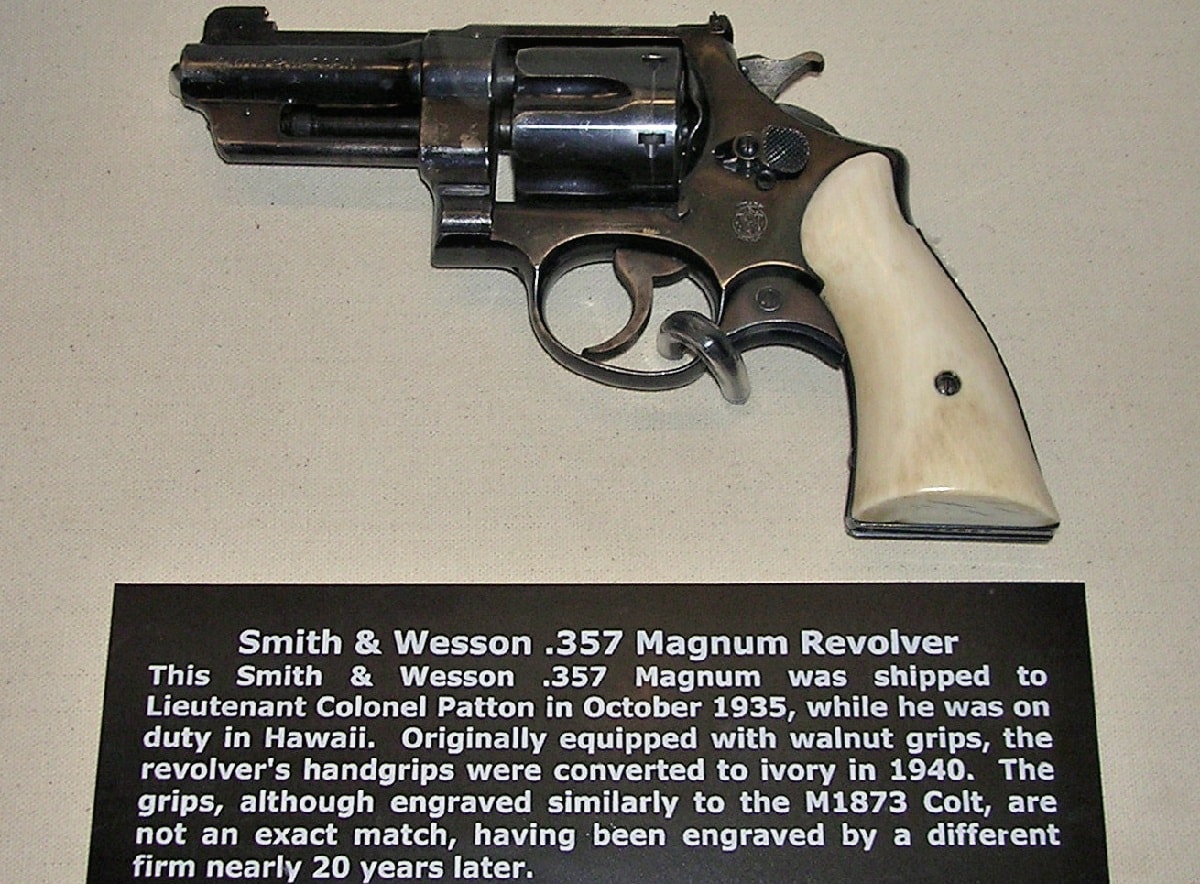
Patton’s well-known custom ivory-handled revolver.
The Third Army poured through Avranches into Brittany and eastward across France.
Patton believed excessive caution only gave the enemy time to regroup.
Patton held that his formations should bypass strongpoints where possible, leaving follow-on units to reduce them after the advance; he attacked flanks and rears, seized road networks, and maintained operational momentum—always pushing forward.
His expertise in tank warfare was especially useful here; he used the platform’s mobility with expert craft.
Once the enemy front cracked, Patton used armor to push a tactical breakthrough into a catastrophe for the Germans.
Pushing Forward
By late August 1944, Third Army had advanced hundreds of miles, helping to turn the German withdrawal from Normandy into a broader retreat across France.
Patton’s speed eventually collided with the fundamental limitation of mechanized warfare: logistics. Tanks, of course, require enormous quantities of gasoline, ammunition, maintenance, and replacement parts.
As Allied supply lines stretched from Normandy across France, the Third Army’s advance slowed to a crawl. Though Patton wanted to proceed as aggressively as ever, fuel trucks and spare parts ultimately limited his tempo.
The Defining Moment
His defining moment of the war came during the Battle of the Bulge in December 1944.
Executing a rapid pivot while surrounded, the Third Army turned 90 degrees to reorient its formations and move north through brutal winter conditions, where Patton opened a corridor for the surrounded defenders.
It was a great example of what made Patton effective: his aggression and speed paired with advanced preparation.
After the Bulge, the Third Army resumed its drive east, crossing the Rhine in March 1945, shortly before the European war ended in May.
Patton’s reputation would be cemented through his conduct in 1944 and 1945, shortly before his death, when he moved rapidly across France, operated flexibly during the Bulge, and advanced relentlessly into Germany.
About the Author: Harrison Kass
Harrison Kass is a writer and attorney focused on national security, technology, and political culture. His work has appeared in Tablet, City Journal, The Hill, The Spectator, and The Cipher Brief. He holds a JD from the University of Oregon and a master’s in Global & Joint Program Studies from NYU.