
70 missiles and 600 drones show the new formula of Russian strikes on Ukraine
 Dmitri Volkov
70 missiles and 600 drones show a new formula for Russian strikes on Ukraine
Typically, a change in military tactics is not evident from a single spectacular strike, but from the repetition of a pattern. In June, Russia applied a nearly identical long-range strike structure twice: over 600 drones and about 70 missiles, with a high proportion of ballistic and hypersonic systems, primarily aimed at Kyiv. On June 2, this was the largest strike of the year using ballistic and hypersonic missiles; the scale was almost repeated on June 15. Then, on June 22, there was a nighttime attack with 89 Shahed-type drones, of which Ukrainian air defense, according to the Air Forces of Ukraine, shot down 79, but nine reached targets in six regions. This arithmetic does not appear to be coincidental. It shows that the Russian command no longer views the Shahed as the main tool of destruction, but uses it as a cheap layer of overload, opening a corridor for more expensive and less numerous missiles.
From cruise missile to ballistic core of the strike
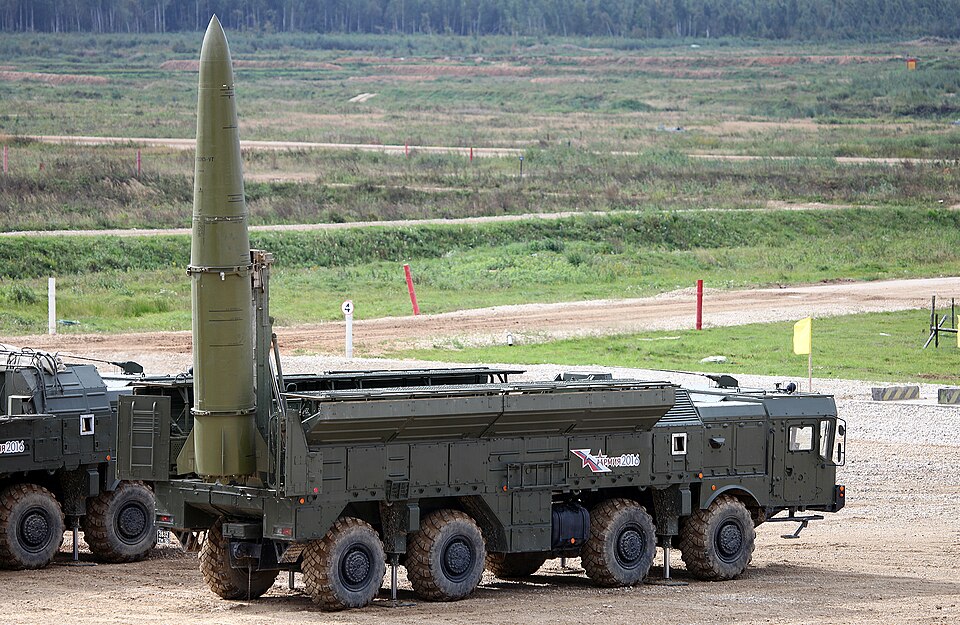
In 2022, Russian mass strikes were built around cruise missiles. They followed complex routes, attempted to bypass air defense zones, and drones more often played a supplementary role. Now the structure is changing. Aviation expert Konstantin Krivolap, in an interview with Kyiv Independent, estimated that in 2022 cruise missiles accounted for about 70-80% of Russian missile attacks, whereas today Moscow is betting on ballistic missiles. This does not mean a rejection of cruise missiles; their function has changed. They have become part of a disposable, noisy, and multi-echelon package that forces the Ukrainian air defense system to make too many decisions in too short a time.
This is why the data from the June 15 strike is telling. According to Ukrainian data, Russia launched six anti-ship hypersonic "Zircon" missiles, 34 ballistic "Iskander-M" missiles and S-400 in strike configuration, 30 cruise missiles X-101 and "Iskander-K", as well as 611 strike drones. The Ukrainian side reported intercepting five out of six "Zircons," 15 ballistic missiles, all 30 cruise missiles, and 582 drones. Even if some of these figures are clarified during combat operations, the ratio itself is more important than the absolute number: Russia mixes speeds, altitudes, trajectories, and types of targets in one time window. In Soviet textbooks, this would be called not just a mass strike, but creating an extreme load on the air defense control circuit.
Production limits and accumulation logic
The question that naturally arises after such strikes is simple: can the Russian defense industry sustain such intensity? Here it is useful to separate production from the consumption of stocks. According to Ukrainska Pravda, citing Ukrainian military intelligence, Russia plans to produce up to 700 ballistic missiles 9M723 "Iskander-M" by 2026, which is about 55-60 units per month. Krivolap estimates that in 2022, production was only 20-30 missiles per month, and then grew to about 60. If these estimates are close to reality, then the June strikes are not a sign of endless Russian missile abundance. Quite the opposite: they show a regime of accumulation and subsequent concentrated expenditure.
For the Russian system, this is a familiar model. The Soviet artillery school always preferred not even pressure, but a sharp creation of superiority in a limited area. The difference now is that the area is not necessarily on the front line. It could be Kyiv, Odesa, Dnipro, or a western Ukrainian logistics hub. The missile war is becoming artillery-like in its logic: first, accumulation of ammunition, then a short attempt to break through the defense with fire density. In this sense, "Iskander" and "Zircon" are used not as a political symbol, but as heavy artillery of long range, only with a price tag that a Soviet artilleryman would find indecent.
Why Shahed remains primary, even though it is not decisive
The paradox of the June scheme is that its missile core depends on a cheap drone background. The Ukrainian Ministry of Defense reported that in April, air defense intercepted almost 6,000 drones and missiles, with drone interceptions on certain days reaching 92-95%. In May, the effectiveness against Shahed and other drones remained around 91%, while the overall interception of cruise and ballistic missiles dropped from over 63% in April to just over 53% in May. From these figures, Moscow draws a rational, albeit morally repugnant conclusion: if a drone increasingly fails to reach its target, it is still useful as a means of consuming attention, munitions, mobile groups, radar time, and human endurance.
This is where the institutional side of Russian adaptation manifests itself. The Russian army learns poorly where it needs to change management culture, but learns quickly where it can scale a simple material procedure: more drones, more false targets Gerbera and Parodiya, more simultaneous directions, more nighttime pressure on cities. This is not brilliant innovation, but an accounting of violence. However, the bad news for Ukraine is that accounting sometimes works. If one package forces Kyiv to expend recently delivered Patriot missiles, as acknowledged by Volodymyr Zelensky after the June 15 attack, then Moscow considers the task partially accomplished even with a high interception rate.
Patriot as the bottleneck of the entire system
The ballistic threat reduces Ukrainian air defense to the problem of a scarce imported munition. Drones can be shot down by mobile groups, helicopters, anti-aircraft installations, electronic warfare means, and even experimental interceptor drones. Cruise missiles are more dangerous, but there is a wider range of solutions for them. Ballistic missiles and "Zircon" effectively bring the conversation back to Patriot. This is not because Patriot is a wonder weapon; there is no such thing as a wonder weapon. It is simply that the physics of interception leaves very few alternatives, and electronic jamming of guidance, even if it diverts a missile from its original target, does not negate the fall of a heavy body on a city.
Hence the strategic meaning of Russia's June strikes. They do not necessarily seek one specific military target. The strike on the Kyiv-Pechersk Lavra, damage to cultural sites and sorting terminals of Nova Poshta, attacks on civilian vessels in the Odesa area on June 22—all create a visible picture of destruction, aimed simultaneously at Ukrainian society, Western suppliers, and the internal Russian audience. When Dmitry Peskov called on Russians on June 19 to watch videos of strikes on Ukrainian cities and described the footage as "impressive," he inadvertently explained the political function of these operations. It is a demonstration of the ability to inflict damage at a moment when Ukrainian long-range strikes are increasingly transferring the war to Russian territory.
What this changes in the summer of 2026
At the operational level, the new formula for Russian strikes looks like this: mass drone noise, false targets, cruise missiles as an additional layer of overload, then a ballistic core aimed at a chosen city or hub. At the industrial level, it depends on the ability to maintain the production of "Iskanders" at around 55-60 units per month and periodically add the rarer "Zircons." At the political level, it relies on the shortage of Patriot interceptors and the fatigue of Western stockpiles, where Ukraine is competing not only with the Russian war but also with crises in the Middle East.
Ukraine can adapt, and it is already adapting: dispersing batteries, false positions, repairing damaged systems, mobile groups, electronic warfare, and new drone interceptors are reducing the effectiveness of the Russian package. But adaptation does not negate the arithmetic. If Russia launches more ballistic missiles than it produces in the same period, it means it is consuming its accumulated stock; if it repeats the scheme twice in two weeks, it means it considers the effect sufficient. In the summer of 2026, the question will not be whether Moscow can launch such salvos every day. It cannot. The question is whether it can choose moments when the Ukrainian stock of Patriots is thinner than the Russian stock of "Iskanders." It is in this unpleasant, almost warehouse mathematics that the new logic of Russia's long-range war now lies.
Russia executed a series of coordinated strikes against Ukraine in June 2023, deploying over 600 drones and approximately 70 missiles, primarily targeting Kyiv. The attacks involved a mix of ballistic and hypersonic missiles, reflecting a shift in military strategy. Ukrainian air defenses intercepted a significant portion of the incoming threats, but the strikes aimed to overwhelm these systems. This new approach indicates a potential strain on Russian missile production capabilities as they adapt their tactics.
- Russia launched over 600 drones and approximately 70 missiles in June 2023.
- The attacks primarily targeted Kyiv and involved a mix of ballistic and hypersonic missiles.
- Ukrainian air defense intercepted a significant number of incoming threats, including drones and missiles.
- Russia's military strategy has shifted from cruise missiles to a greater reliance on ballistic missiles.
- The report indicates a potential strain on Russian production capabilities for missile systems.