
74 missiles and 284 "Shahed" over Ukraine test the limits of air defense at NATO borders
 Dmitri Volkov
74 missiles and 284 "Shahed" drones over Ukraine test the limits of air defense at NATO's borders
The paradox of this night is that the Russian strike was both massive and largely intercepted. According to the Air Forces of Ukraine, on the night of July 30, Russia launched 74 cruise, ballistic, and hypersonic missiles, as well as 284 Shahed-type drones; Ukrainian air defense reported intercepting 55 missiles and 265 drones. If we take these figures as working numbers, then formally the interception rate appears high. However, the eight fatalities, dozens of injuries, and strikes in Kyiv, Lviv, Kryvyi Rih, and Poltava region reveal the unpleasant arithmetic of modern warfare: even 10-15 percent of penetrating munitions is enough for a strategic effect to be achieved. In Soviet textbooks, this was referred to not as "terror," but as the destruction of the enemy's rear resilience. Changing the vocabulary does not change the essence.
Combined strike as the Russian norm of 2026
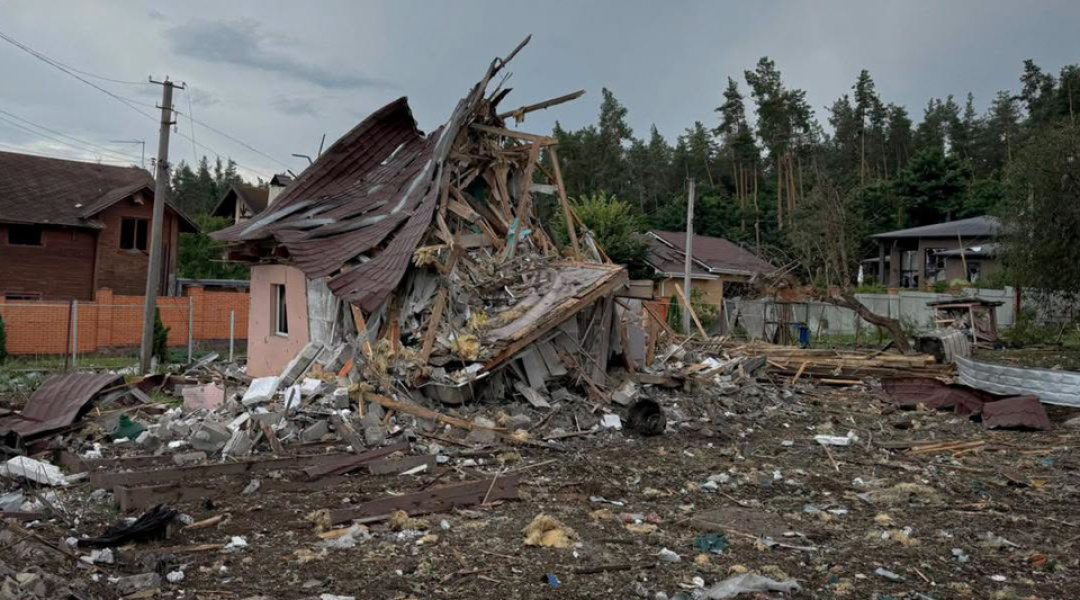
The main aspect of the attack on July 30 is not just the quantity of munitions. The quantity has ceased to be surprising. More important is the composition of the package: cheap Shaheds are used as a consumable layer to open routes, exhaust calculations, and force Ukrainian air defense to expend missiles; cruise missiles follow more complex trajectories; ballistic systems, including, according to Ukrainian reports, an Iskander-M strike on a residential building in Kryvyi Rih, remain the most difficult targets to intercept. Hypersonic systems in this scheme perform not so much a mystical role of "wonder weapons," but rather the function of operational pressure on the narrow resource of Patriot and other upper-echelon systems.
It is here that the institutional logic of the Russian army manifests itself. Moscow is not obliged to achieve a complete breakthrough of Ukrainian air defense. It is sufficient to create a regular deficit of time, guidance channels, and expensive interceptors. In this sense, the Shahed is valuable not for its combat part, but for its cost relative to the price of the Ukrainian response. This is an old Soviet idea of saturation, only transferred from the scenario of an air operation against NATO to the reality of a war with a state to which allies supply defense in a measured and politically nervous manner.
Lviv and the Polish border change the political geography of the strike
The western direction is of particular significance. Explosions in Lviv, about 70 kilometers from the Polish border, and reports of dozens of missiles over western Ukraine have turned the nighttime attack into not only a Ukrainian but also a NATO problem. The Polish operational command reported that at 3:40, an unidentified aerial object was detected in Polish airspace, and an F-16 fighter was scrambled for identification and interception; a few minutes later, the radar signal disappeared, and later the wreckage of the object was found in the Tarnawa-Kolonia area. The type of object is still being clarified, and caution is needed here: previous incidents have shown that both Russian munitions and Ukrainian interceptors could fall on Polish territory. However, the military significance of the incident does not diminish.
Russian headquarters understand well that a strike on western Ukraine carries the risk of crossing NATO's border. The likelihood of such an incident is not mere background noise; it becomes part of strategic pressure. It is not necessary to assume that Moscow consciously "aims at Poland" every time. A much more realistic view is that the Russian planning system accepts this risk as an acceptable price for complicating Ukrainian logistics and for testing the reactions of Warsaw, Washington, and Brussels. After the incidents of 2022, 2023, and the entry of Russian drones into Polish airspace in 2025, such a risk can no longer be called an accidental anomaly.
Iskander-M and the limits of Ukrainian missile defense
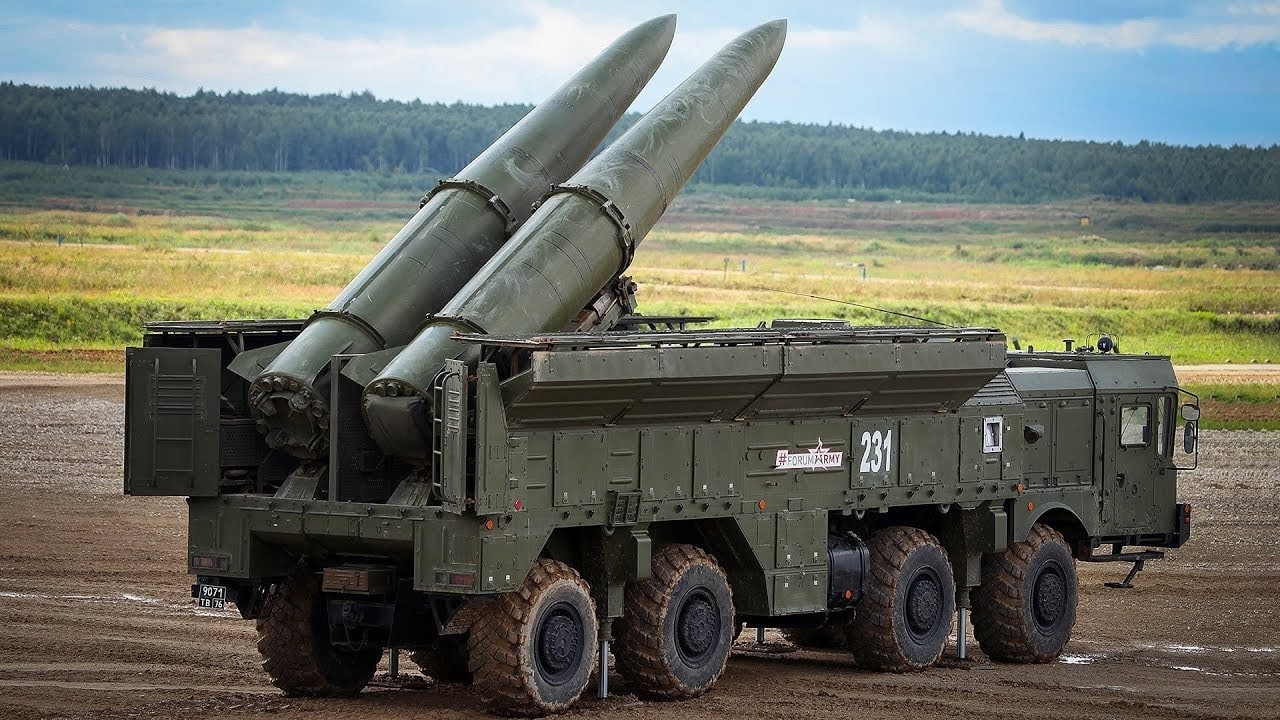
Kryvyi Rih shows the harshest part of the problem. Local authorities reported that a large family residential building was hit by an Iskander-M missile, resulting in the deaths of children and adults. From a military-technical perspective, the Iskander-M remains a complex target: its quasi-ballistic trajectory, high speed in the terminal phase, maneuverability, and small interception window require not just "the presence of air defense," but specific systems and specific interceptor missiles in the right place. Therefore, discussions about interception percentages often mislead the public. It is possible to shoot down most Shaheds and some cruise missiles, but allowing one ballistic missile to hit an urban target creates a political and humanitarian effect that is incomparable to dry statistics.
The Russian side will likely use this night as evidence of maintaining long-range potential. This is not entirely a lie, but it is not the whole truth either. Mass attacks of this scale require the accumulation of missiles, route planning, target reconnaissance, and coordination with the drone wave. They demonstrate capability, but at the same time show limitations: if the missile stockpile were truly free, such packages would be used even more frequently and with shorter intervals. The Russian defense industry has learned to sustain a war of attrition, but has not returned to Soviet levels of stockpiles. This is not a collapse, but an expensive resilience with signs of technological simplification.
Ukraine's response and Russian vulnerability in the rear
Context is important. ISW noted at the end of July that the Ukrainian campaign of long- and medium-range strikes on Russian energy and logistics infrastructure is already creating problems for the economy and front supply: since the beginning of 2026, according to ISW estimates, Ukraine has struck dozens of oil refining facilities, and fuel shortages have affected many Russian regions and occupied territories. Against this backdrop, Russian mass strikes on cities serve a dual function. The first is the familiar attempt to force Ukrainian society and leadership to make concessions. The second is a counter-bet that the pain of the civilian rear in Ukraine will be politically more sensitive than Russian queues for gasoline and damaged oil refineries.
But here Moscow faces a problem that was referred to in late Soviet military academies as a mismatch of goals and means. To stop Ukrainian strikes on the Russian rear, it is necessary either to expand the air defense umbrella over a vast territory or to destroy the Ukrainian production and reconnaissance chain of long-range strikes. The first requires systems that are lacking even at the front; the second requires reconnaissance accuracy and consistency, which the Russian army demonstrates less of than it would like. Therefore, strikes on Kyiv and Lviv become not a solution to the problem, but a politically loud way to show that the problem is acknowledged.
What the night of July 30 means
For Ukraine, the main conclusion is simple and unpleasant: relying solely on a high interception percentage does not save cities if the deficit of Patriot and other ballistic missile defense systems persists. For Poland and NATO, the conclusion is even more unpleasant: western Ukraine has become part of the practical space of NATO air defense, even if legally the Alliance continues to separate its territory from the Ukrainian war. Each mass strike on Lviv or Ivano-Frankivsk is now automatically a drill without declaring a drill for Polish radars, alert F-16 pairs, and the political mechanism of consultations.
The Russian strategy for the coming months will likely remain the same: rare but heavy combined packages of Shaheds, cruise, and ballistic missiles, especially during periods of diplomatic discussions about an "air truce." Moscow will try to prove that it is not under pressure, although the very intensity of these strikes suggests otherwise. The Ukrainian strategy will mirror this by exerting pressure on the Russian economy and oil logistics. Thus, a new phase of the war of rear against rear is forming. It does not promise a quick turnaround, but makes one thing clear: the line between Ukrainian air defense and the security of NATO's eastern flank is becoming increasingly thin.
On the night of July 30, 2026, Russian Armed Forces launched a massive strike involving 74 missiles and 284 Shahed drones against Ukraine, targeting cities such as Kyiv, Lviv, and Kryvyi Rih. Ukrainian air defense successfully intercepted 55 missiles and 265 drones, but the attacks resulted in eight fatalities and numerous injuries. The strikes have raised concerns regarding NATO's security, particularly due to the proximity of the attacks to the Polish border.
- Russia launched 74 missiles and 284 Shahed drones against Ukraine.
- Ukrainian air defense intercepted 55 missiles and 265 drones.
- Eight people were killed and dozens injured in the attacks.
- The strikes targeted cities including Kyiv, Lviv, Kryvyi Rih, and Poltava.
- The incident raised concerns about NATO's response due to proximity to Poland.